Small Block Chevy 383 Vs. Big Block Mopar 383: How The V8 Engines Compare
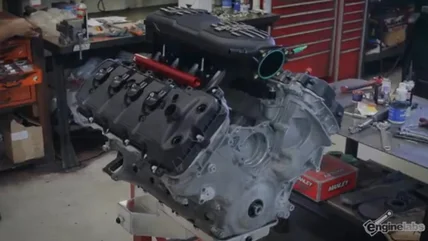
Despite having similar displacements, the small-block Chevy 383 and the big-block Mopar 383 have some interesting differences between each other.
Read MoreDespite having similar displacements, the small-block Chevy 383 and the big-block Mopar 383 have some interesting differences between each other.
Read MoreChevy offers the Super Cruise technology for hands-free driving. It isn't available on every model in its modern lineup, though, limiting buyers' options.
Read MoreIn 1962, Chevrolet introduced double hump heads on its small-block engines. These helped shape the incredible power of small-block V8s for around 30 years.
Read MoreAlthough they can be big enough to seat plenty of people, some SUVs don't usually have much legroom in the third row. Here are 14 SUVs that do.
Read MoreChevy made waves with its engine designs throughout history. Its small-block 327 proved that size wasn't the only thing that could help you win races.
Read MoreI wouldn't count on this singular patent bringing that ring-ding-ding sound to your local parking lot any time soon.
Read MoreThe rotary engine isn't very common today, but back in 1973, Chevy experimented with one of its own in a special concept design. It didn't get far, though.
Read MoreIt was nicknamed the Mystery Motor and the Porcupine. Whatever you call it, this engine is so rare that only nine examples are still known to exist.
Read MoreConcept cars are extremely interesting, even if many of them never make it to production. Here are some of the coolest Chevy concepts that never hit the road.
Read MoreChevrolet’s move to a mid-engine Corvette in 2019 marked a dramatic shift, rooted in early prototypes and plans halted by the 2008 financial crisis.
Read MoreThe term "torque tube" sounds exotic, as though Corvettes are somehow sliding torque all through the car. The truth is more mundane, but still crucial.
Read MoreChevy's LT1 engine was introduced in the seventh-gen Corvette, and the LT2 was introduced in the next. Check out the differences that make them stand out.
Read MoreWith all the hoopla that surrounds the Chevy Corvette these days, it's hard to remember the days seven decades ago when it was an endangered species.
Read MoreChevy's LT4 and LT5 engines were used in a wide variety of different car models. Despite the similar names, they're actually quite different from each other.
Read MoreAlthough the HEMI name is associated with Chrysler's iconic V8s, there are a handful of hemispherical engines that were made by entirely different companies.
Read MoreCurious what drove Chevy’s switch to a flat-plane crank in the Corvette? Here's how this setup boosts rpm, improves scavenging, and creates a unique sound.
Read MoreLarge SUVs can offer plenty of cargo space and high-end features. According to Consumer Reports, there are five in particular that stand above the rest.
Read MoreInterested in a perfect high-performance 30-year-old Chevy sedan with a mere 79 miles on the odometer and an interior that's still partially wrapped in plastic.
Read MoreYou wouldn't know it from looking at the outside, which looks entirely stock. It even has the original wheels.
Read MoreChevy and Ford might both have 400 cubic-inch small-block engines. They might seem similar at first, but just how well do these two engines really compare?
Read MoreDespite being under the same General Motors umbrella, Chevy and Oldsmobile developed their own versions of the 307. How are these two versions different?
Read MoreChevrolet has put out some powerful engines over the years. In particular, there are five Chevy small-blocks that were the most powerful of their time.
Read MoreWhat were the differences between Chevy's small-block 350 engine and the Oldsmobile 350? Plus, how did each of them fare throughout history?
Read MoreThe Chevy 454 and Pontiac 455 V8 engines both came from General Motors. What are the biggest differences between them, and how does their history compare?
Read MoreChevrolet's iconic Camaro cars have lasted up until their 6th generation. JD Power's rankings can provide a good idea of just how reliable that generation is.
Read MoreIt hit 60 mph in 2.7 seconds, ran the quarter-mile in 10 seconds flat at 144.1 mph, pulled 1.38 g in cornering, and completed the entire U-Drag in 28.9 seconds.
Read More