2
America's Only Upside Down Traffic Light Has A Fascinating History
In the 1920s, residents of one American neighborhood were sure that a right-side-up traffic light made a political statement they couldn't abide.
Read More

In the 1920s, residents of one American neighborhood were sure that a right-side-up traffic light made a political statement they couldn't abide.
Read MoreAround 1990, it looked as though the Lotus was going to get the Corvette's much more powerful engine. But to fans' disappointment, it never happened.
Read MoreThe automobile had been going strong for decades when increased recognition of the dangers of emissions brought the government to mandate catalytic converters.
Read MoreThe 6.0 Power Stroke engine had a distinctive whistle back in 2003, but later versions lost out on it. Here's why it had that whistle in the first place.
Read MoreFord's Mustang II didn't last long, but its front suspension ended up becoming popular with hot rodders. Check out why, as well as how it became so popular.
Read MoreThe third-generation Toyota MR2 had a very unique feature. It offered a sequential manual transmission, and its implementation actually made the car slower.
Read MoreBack in the 1970s, Ferrari and Lamborghini started producing cars with two-liter V8 engines. Here's why they used engines with such small displacements.
Read MoreFord offered the 351 Cleveland, 351 Windsor, and 351 Modified engines throughout the second half of the 1900s. Here are the differences between them.
Read MoreThe 427 SOHC was Ford's response to Chrysler's Hemi engines, which dominated NASCAR in the 1960s. But the Cammer's story didn't unfold the way Ford had planned.
Read MoreExternal sun visors date back to early cars like the Ford Model T and were once considered both stylish and practical. Why do opinions on them differ so much?
Read MoreGeneral Motors reined in and phased out division-specific V8s in the late 1970s. It wasn't just about the money — a combination of factors were at play.
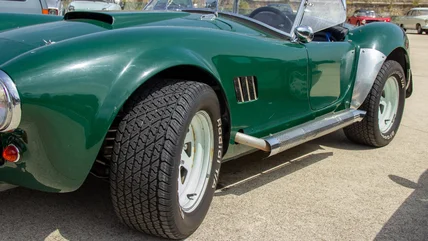
Read MoreSide exhaust pipes were an iconic part of muscle cars. But there are a few reasons as to why manufacturers stopped including them on most models.
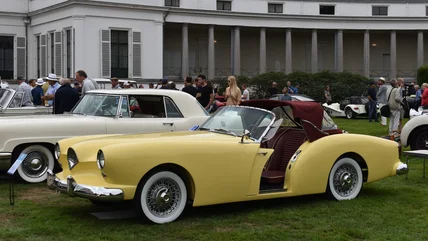
Read MoreAlthough sliding doors are usually synonymous with minivans today, the first car in America with them wasn't a minivan at all. Instead, it was a sports car.
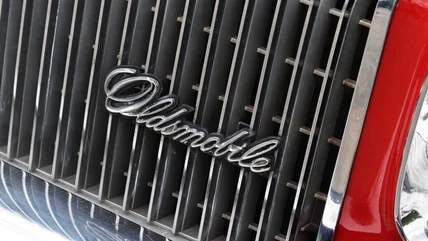
Read MoreOldsmobile has been around for over 100 years, and in that time, it was able to produce some powerful cars. These are the most powerful ones.
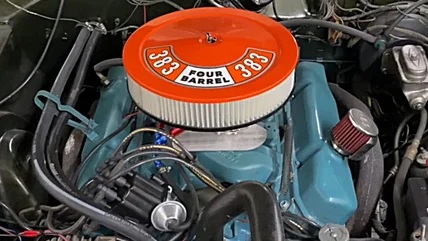
Read MoreDespite having similar displacements, the small-block Chevy 383 and the big-block Mopar 383 have some interesting differences between each other.
Read MoreSaab considered putting one of the worst V8s ever made into its cars. While this didn't pan out, half of that engine did technically appear in some Saab models.
Read MoreAt a time when a Model T cost $850, you could buy one of these for $500 less. Naturally, though, there was a reason why the price was so low.
Read MoreThe Mighty Mouse made its first appearance in 1942, while Chevy's 327 debuted in 1962. But what exactly do the animated mouse and the V8 engine have in common?
Read MoreIn 1962, Chevrolet introduced double hump heads on its small-block engines. These helped shape the incredible power of small-block V8s for around 30 years.
Read MoreChevy made waves with its engine designs throughout history. Its small-block 327 proved that size wasn't the only thing that could help you win races.
Read MoreAllison transmissions were featured in General Motors vehicles for almost a century. The breakup between the companies was a long time in the making.
Read MoreThe Japanese automaker has produced some fantastic cars over the years, but few compare to the S2000 that launched with a high-revving 2.0-liter VTEC engine.
Read MoreThe rotary engine isn't very common today, but back in 1973, Chevy experimented with one of its own in a special concept design. It didn't get far, though.
Read MoreThe history of the DTC stretches back to early 20th century, when inventors explored ways to make gear changes smoother long before modern electronics existed.
Read MoreIt was nicknamed the Mystery Motor and the Porcupine. Whatever you call it, this engine is so rare that only nine examples are still known to exist.
Read MoreFormula 1 racing wasn’t always at the forefront of automotive engineering. In the early days, the sport used front-engine cars, but eventually had to switch.
Read MoreCars used to use bench seats in the front, but now bucket seats are the standard choice today. Here's why that is, as well as whether bench seats could return.
Read More