

Flock Cameras Now Have Their Eye On Students, With Hundreds Of Thousands Under Surveillance
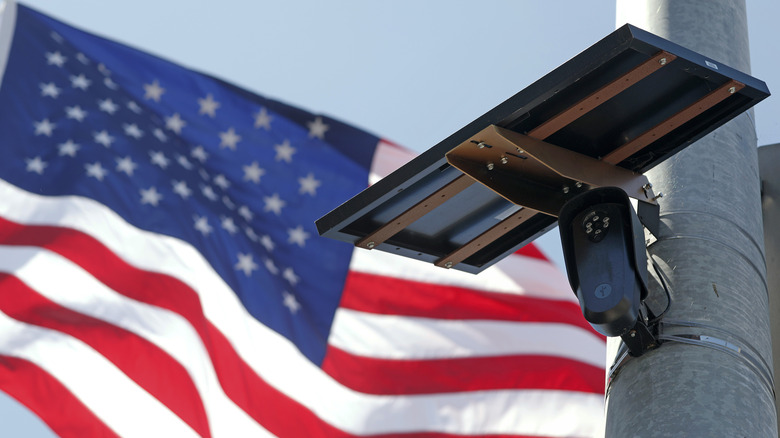
Over the last few years, Flock cameras and other AI-powered automatic license plate readers (ALPRs) have steadily spread across the United States, and until recently, the spread was relatively silent. Today, Flock Safety has over 145,000 cameras deployed throughout the nation, though their prevalence hasn't made the public any safer. And it's not just major roads being spied on and license plates being tracked.
Over 100 public school systems have let Flock Safety expand its private spy network onto their campuses, according to The 74, leaving hundreds of thousands of students nationwide surveilled without their consent. This is affecting students of all ages, too. Some 150 colleges and universities have introduced mass surveillance to their campuses through Flock cameras, too, per Policing and Society: An International Journal of Research and Policy.
If having your kids being spied on from the moment they enter the campus isn't concerning enough, there's also Flock Safety's track record to worry about. Flock cameras are notoriously easy to hack, and they collect an absurd amount of information, some of which lives unencrypted on the camera itself. In the past, Flock cameras have even been caught streaming on the open web, according to a report by 404Media.
What targeting students with the mass surveillance machine accomplishes
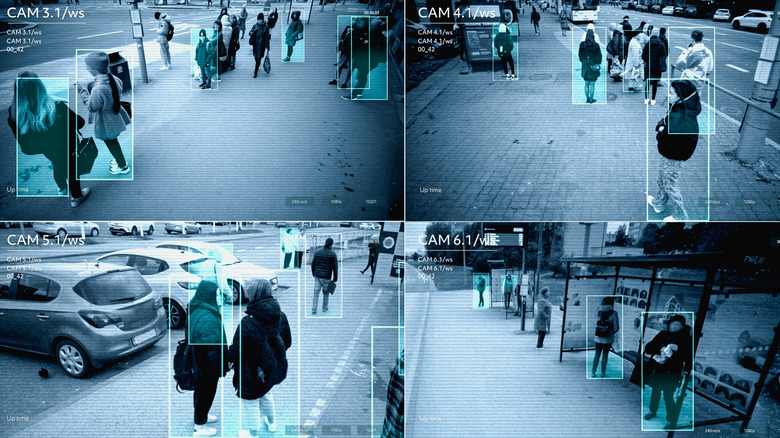
One question when looking at how many schools are targeted by Flock cameras may be, "Why?" Flock says its cameras "help communities deter crime, respond to emergencies, and investigate safety incidents." And law enforcement is supposed to use Flock data to help solve crime and aid investigations. But Flock cameras also have huge abuse potential, even beyond their numerous security issues. We know that cops are looking up stuff on Flock and putting "LMAO," "WEIRD KID," and "sexy" as reasons for the searches, and we know that in Georgia alone, 17 cops have been arrested for using Flock to stalk civilians.
We also know Flock info isn't entirely accurate and has led to the detention of auto journalists, wrong cars being towed, and traffic stops and tickets based on incorrect information. Couple that with Flock Safety's attempt to shut down DeFlock, a website that maps Flock camera's in public, and the fact that police don't like Flock-inspired cameras tracking their own movements, and the intent behind installing Flock cameras at schools seems less altruistic than the marketing material might suggest. Surprise.
What ALPRs at schools definitively can do is build and deepen profiles on cars that frequent the area, namely those driven by parents and students. And while Flock Safety claims that its cameras aren't capable of tracking people (or cars, for that matter), a recent hack of a Flock camera showed that the cameras do at least detect people and save images of them. Some have rightfully voiced concerns over the privacy concerns this presents near schools and questioned how accessible this information becomes once it's on Flock's servers.
Schools canceling Flock contracts may not be enough
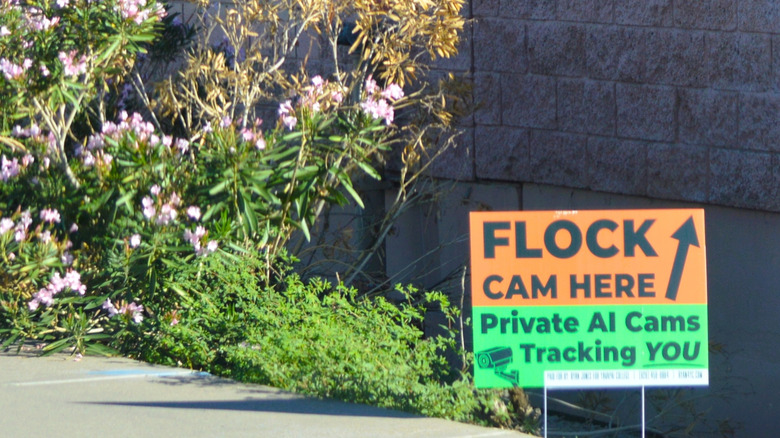
After public and student pushback, some schools are canceling their Flock contracts and removing the offending cameras. Take the University of Wisconsin–Milwaukee, which canceled its contract in September and called for Flock to remove the company's 20-plus cameras from campus. This came on the heels of two other UW schools discontinuing their use of Flock cameras.
This is part of a bigger trend of cities across the country dumping Flock en masse, and hopefully this trend continues to spread until not just Flock, but also Axon and all other privately owned cameras are off the streets. Or at least well-regulated enough to not threaten massive security risks, and not give police warrantless access to the public's data.
For now, though, the unfortunate reality is that canceling a Flock contract doesn't necessarily remove the issue, and it certainly doesn't undo damage already done. See, like many stalkers and creeps out there, Flock refuses to take no for an answer. The company doesn't always remove cameras after a contract ends, sometimes opting to keep them in service instead. Some officials have taken to removing the cameras themselves, while other discontinued Flock cameras are covered with garbage bags after contract termination.
Until the cameras are actually fully removed, there's no guarantee that they're not continuing to collect data still. Maybe if we're lucky, Republican U.S. Rep. Thomas Massie's anti-Flock bill will ban automated traffic enforcement and we won't have to worry about this mess anymore.