

5,000 Flock Cameras Cover Atlanta, Yet The Police Are Resolving Fewer Crimes
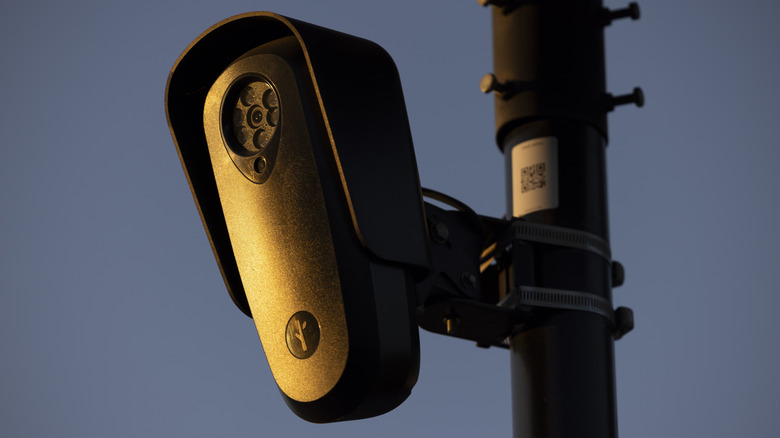
Flock is the name on the lips of a lot of fed-up American citizens as of late, thanks to the litany of ways this dystopian mass surveillance company has angered the public and caused harm. Despite the vast array of blunders, including (but certainly not limited to) creepy cops using the database to track down and stalk their ex-partners, and even the wrongful detainment of a fellow automotive journalist, some people still think the cameras are a good thing. Now, new data shows that Atlanta, the city with over 5,000 Flock Automatic License Plate Readers (ALPRs), and the city that Flock Safety calls home, has not seen a meaningful decrease in its crime clearance rates despite an eightfold increase in the number of Flock cameras.
In 2024, Flock claimed that "one additional Flock Safety License Plate Recognition (LPR) camera per sworn officer correlates with a 9.1% increase in clearance rate," but Atlanta Community Press Collective found that Atlanta Police Department's FBI Crime Data Explorer clearance rates have shown no such correlation. In fact, between 2021 and 2025, which are the first and last full years for which comparable clearance data are available, APD had its worst homicide clearance rate in 2025, at just 48% — despite the boom in Flock camera numbers.
The data is Flocked
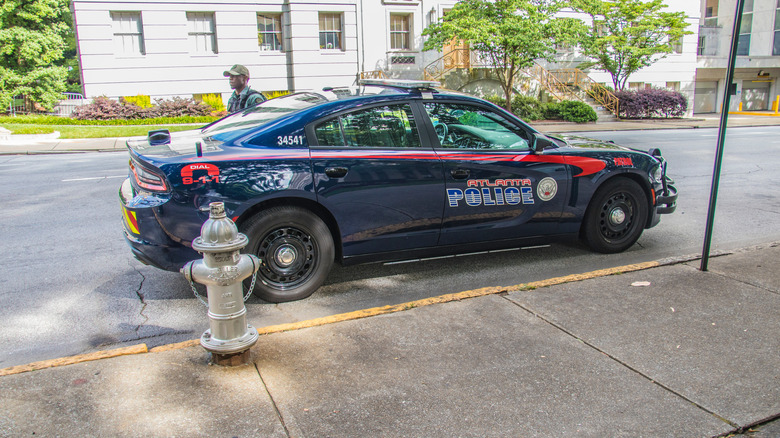
Flock cameras are touted as automatic license plate readers, so you'd think they'd be the most helpful in clearing vehicle theft, but the data does not reflect that. ACPC said, "In 2021, APD had a 9.9% clearance rate for motor vehicle thefts. Clearance rates dropped to 4.9% in 2023 and 3.9% in 2024 during a steep rise in motor vehicle thefts linked to the Kia vulnerability. The department rose back to a 10.2% clearance rate in 2025, amid an overall decrease in motor vehicle thefts—a trend seen throughout the county, according to the National Insurance Crime Bureau. Overall, between the fourth quarter of 2020 and the second quarter of 2026, the Crime Data Explorer shows 19,841 reported motor vehicle thefts and 1382 clearances, a 7% clearance rate."
The data used in this study shows that the rate at which the Atlanta Police Department resolves homicide, robbery, miscellaneous larceny, and shoplifting crimes has actually decreased between 2021 and 2025. This is despite Atlanta being the most surveilled city in the country, with over twice as many cameras per capita as the second-most surveilled city, Washington, DC.
Do you feel safer knowing that you're being watched?
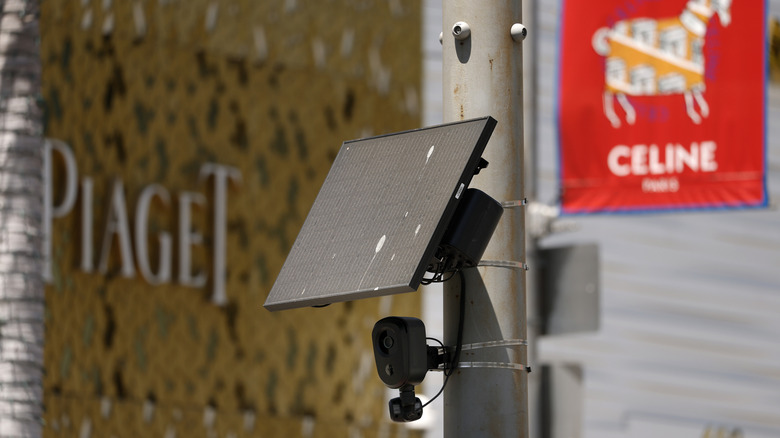
ACPC used crime data from the FBI's Crime Data Explorer tool, which shows a lot fewer cleared offenses than the data that Atlanta Police Chief Darin Schierbaum used in January when he claimed that APD reached a 77.55% homicide clearance rate in 2025; FBI data reflects a 48% APD homicide clearance rate for the same year. The FBI collects data from police departments nationwide through the national Incident-Based Reporting System, which U.S. law requires all police departments to use for crime data reporting.
According to the FBI, an offense is cleared in two ways: by arrest or "exceptional means". The arrest method actually includes an arrest, someone being charged with a crime, and the case being turned over to prosecutors. The exceptional means route typically refers to a case where the police have gathered enough information to make an arrest, but something stops them from doing so — like the death of a suspect or their relocation to a place they can't be extradited from. Clearance is basically the rate of cases solved in relation to the number of reported crimes of a particular nature, like vehicle theft, homicide, or robbery.
Flock cameras are touted as being some magic bullet for solving crime, which might justify the dissolution of privacy caused by constant surveillance, but in Atlanta, at least, the data doesn't reflect that. In fact, it shows that the proliferation of these cameras has caused no discernible upward trend in public safety.