

Genesis Magma Racing's Successful Le Mans Debut Was Thrilling To Witness
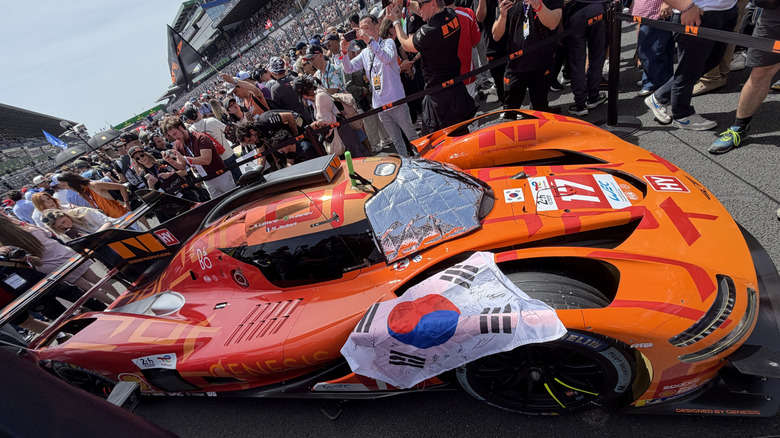
Just over 500 days ago, Korean luxury automaker Genesis announced that it was going to enter racing for the first time, after only existing as a brand for just over a decade. Genesis was really jumping into the deep end right away, too — not only would it be entering the FIA World Endurance Championship in 2026, but it would also do so in the top Hypercar class. With the reveal of its GMR-001 LMDh prototype in December 2024, four months after the initial announcement, it became clear that Genesis wasn't just blowing smoke.
Things got even more exciting in November 2025. By that point, we knew the GMR-001's twin-turbo V8 was two rally car engines put together, and we had seen the car in its final form and livery. The Magma Racing brand was spawning high-performance Magma road cars, making the racing efforts bankable. Six months before the team's first race at Imola in April 2026, Genesis brought me to France where we got a behind-the-scenes look at the team's Le Mans prep, and the company announced its intent to also join GT3 racing with the Magma GT concept. OK, now things were really getting serious.
Fast forward to last weekend, and as it promised, Genesis was on the starting grid at the 24 Hours of Le Mans — and I was there, being hosted by the team for what was also my first time at the race. Le Mans was only the Magma Racing team's third competitive start in its debut season this year. (To get acclimated with racing, Genesis fielded an Oreca 07 in the LMP2 class last year, and the GMR-001 was developed with Oreca.) At Spa last month, Genesis scored its first points, with the cars placing 8th and 13th, so the team was going into the weekend with enthusiasm.
Though one of its two cars had to retire two-thirds of the way through, Genesis Magma Racing did what it set out to do: Finish. The other GMR-001 survived the whole 24 hours, placing 13th overall. Beyond just making history in that regard, being the first Korean automaker to compete and finish at Le Mans, Genesis really showed itself and its ambition off to the world in a thrilling way.
Full disclosure: Genesis invited me to attend Le Mans with the Magma Racing team. It put me up at a hotel in Paris and a chateau in Angers, fed me some great food, arranged transportation, and bought my plane ticket home. Most important, we got access to Genesis' hospitality at the race, time with executives, and a backstage look at the pit garage. I skipped dinner the first night to see Disclosure Day at a Parisian IMAX; it was worth it.
The company has big growth plans
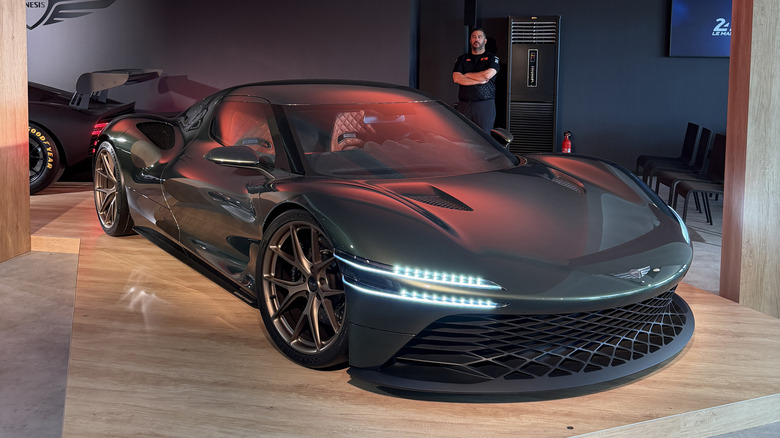
On Friday morning, once we got to Le Mans, Genesis immediately threw stuff at us. After a quick lunch, Genesis held a press conference about the Magma Racing team and the coming weekend, and then revealed an updated version of the Magma GT concept along with a new Magma GT3 race car variant. Those two cars really stole the show, especially given how the road car featured a production-ready interior, and the race car was said to already be built to existing GT3 regulations.
The presentations didn't stop there. Hyundai Motor Group CEO José Muñoz gave some updates about Genesis' extensive plans for five-times growth in Europe and 350,000 global vehicle sales by 2030, and touted how the company is "untethered from legacy thinking." Chief Creative Officer Luc Donckerwolke got on stage to talk about the company's design direction, both when it comes to road cars and race cars. It was his original idea for Genesis to enter racing. "Life without motorsports is a very, very boring life," he said, "we are audacious, no one else has managed what we are doing. I've worked for a lot of companies, but this is the best of the best."
In a better "one more thing" than Steve Jobs ever pulled off, Donckerwolke said that working at Genesis is like being in a huge toy store, before revealing the outrageous Box Buggy concept. This wild paddock cruiser is actually functional, and able to drive sideways or spin around in place. Genesis staff were driving it around the track all weekend, in fact, and the company will probably be building a few more of them in the future, putting them to use at car events and golf tournaments.
GT3 racing is next
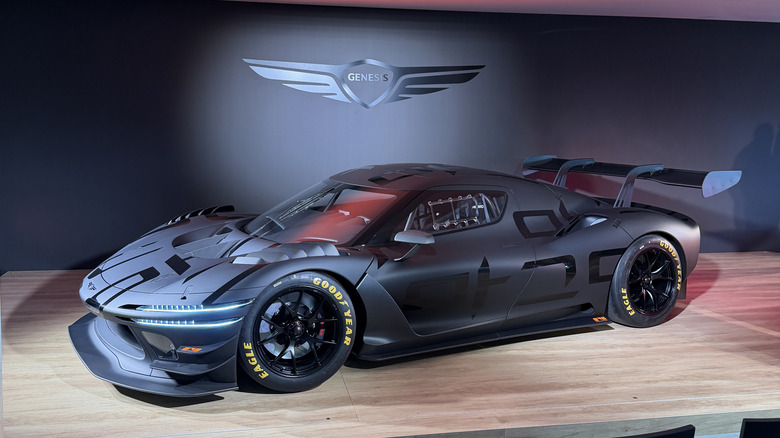
After the reveals, we sat back down for a roundtable with Muñoz, Donckerwolke, Genesis U.S. COO Tedros Mengiste, and Magma Racing Team Principal Cyril Abiteboul, who used to run the Renault F1 team. "Racing is critical for the brand, and we always work with the best. That's why we have Luc and Cyril," said Muñoz. They all talked about being ambassadors for Korea, and how different working for Genesis feels from other car companies and race teams — especially in terms of the freedom and resources the design, engineering and racing divisions have.
"There's nothing else in business that connects so directly between racing and selling," Mengiste said, "it's emotional, and luxury vehicles are emotional purchases." It's not just the execs saying that, either. "People who are aware of the racing are willing to pay more and are more interested, and there's more brand awareness, tracked all the way through the customer journey," said Abiteboul. That's part of why Genesis wants to enter GT3 racing and the equivalent road car market with the Magma GT — there can't be one without the other, and the car's been designed with racing in mind first. Abiteboul said that 50% of that segment's market share is taken up by three brands, which is why it's taking the challenge so seriously.
I asked Abiteboul if there was anything in the past 500 days that had been more difficult than expected, and easier than expected. "Yes, probably, but no good example. Everything is complex," he said of the first point. The ease came from how "we had the opportunity to think the plan through exhaustively in a holistic manner" when it came to both the sporting side of things and the marketing, he said. "Presenting in such a remarkable way shows the preparation in the company. The alignment of group and strategy, good planning and execution."
"We've seen in qualifying that people are concerned at the pace that we've been developing the program," Abiteboul said, joking that their competitors are worried that Genesis could do that with any program it starts. Say, like the GT3 class, of which cars compete in many different race series around the world.
Genesis nailed its look and feel
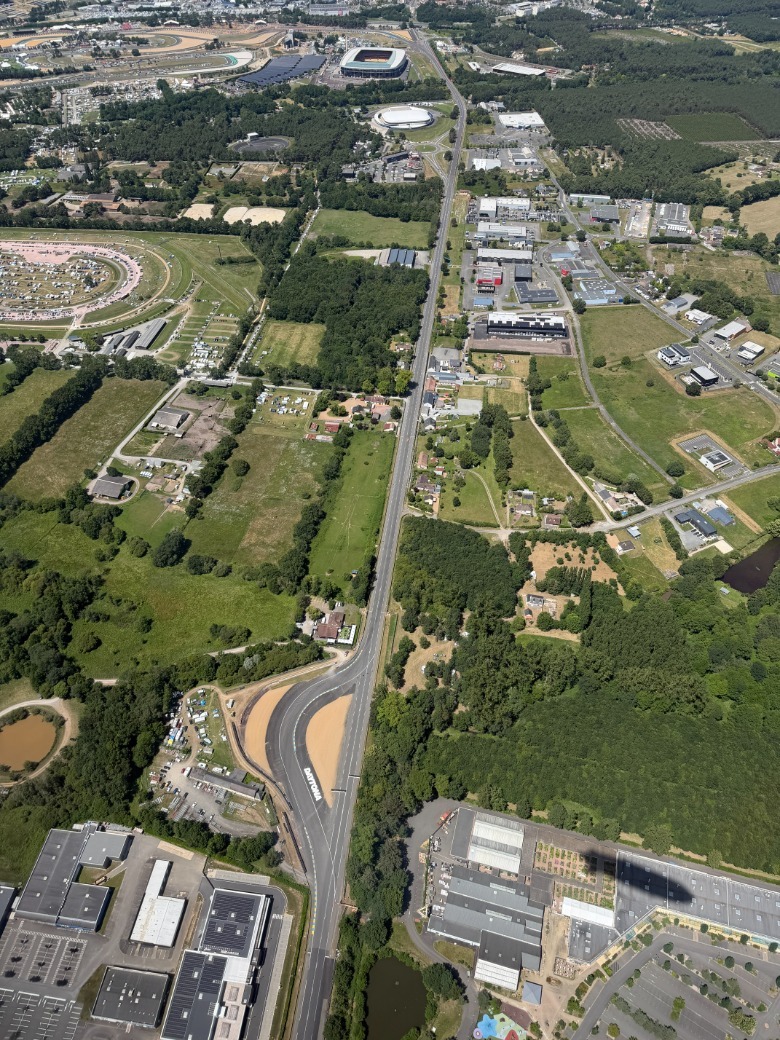
Genesis' presence at the race track was unmissable. From the outside, its hospitality building was fairly unassuming, painted black with small-ish Genesis logos, though at three stories tall it was bigger than the Ford, Aston Martin, Toyota and Ferrari buildings nearby. It was positioned just before the entrance to the pit lane. From the building, there was a view down the final straight and great sightlines for the last few corners, with viewing decks on all three floors. Inside, the space was beautiful and quiet, with lots of places to sit, eat, and watch the race on TVs or through the windows.
The Magma Racing team's branding is pretty phenomenal. The square-triangle-square logo is a stylization of the Korean characters for MGM ("Magma"), and all of the black and orange team kit and merch was simple and fantastic. Le Mans was the first time the team was racing with the orange gradient livery on the cars instead of a greyscale one. The gradient doppler effect symbolizes speed and heat, and it has the Korean characters for Magma stretched across the bodywork, a pattern also found on all the branding. Beyond the 400-ish media that Genesis invited (some of who wore swag on race day), it had tons of its own employees at the race, all decked out in the team's colors, and there were clearly scores of fans in the crowd as well. It can be hard to stand out in a field of eye-catching liveries and outfits, but both the Genesis team and its fans did so.
 Daniel Golson/Jalopnik
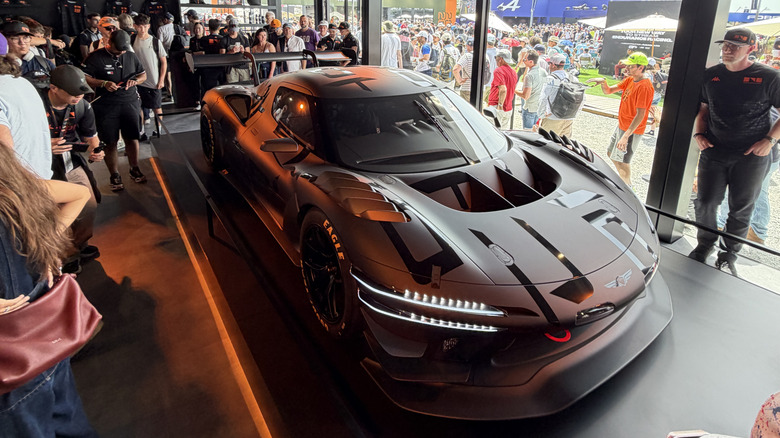
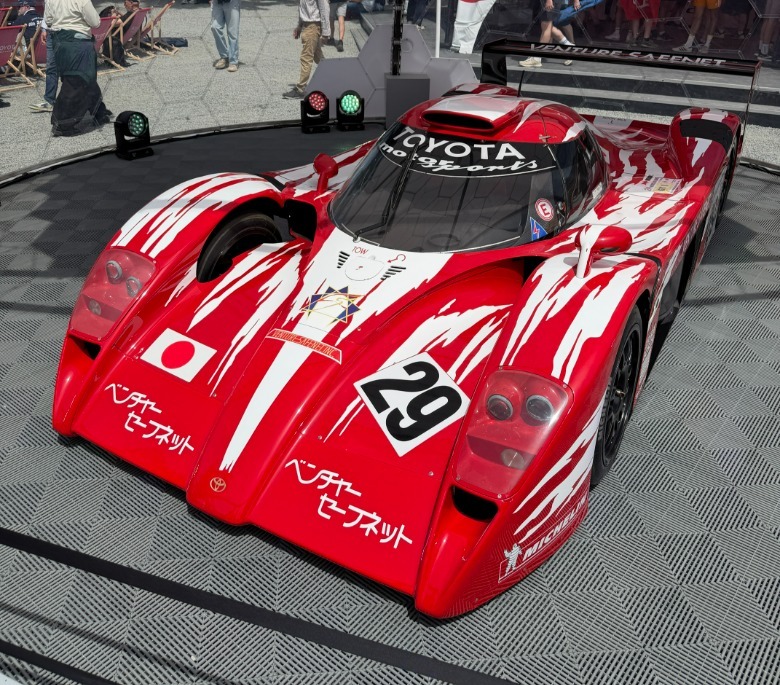
In the publicly-accessible Manufacturer Village, most of the automakers with cars in the race had big auto show–like stands showing off different vehicles and selling merch, as well as activations and activities. Toyota had a GT-One on display, which was incredible to look at, and I'm not too sad to have missed seeing the Ferrari Luce. Genesis' building there was once again huge, and more cool and shaded than the other stands. Inside there was an Electrified GV70, a long-wheelbase Electrified G80 and a full-scale model of the GMR-001, but everyone was staring at the Magma GT3 concept that had been revealed the night before.
I did not buy any of Genesis' merch, though lots of people did. Nor did I buy the Peugeot E-208 GTi shoes, which former Jalop Alanis King dubbed the Shoegeots. No, I spent my hard-earned Euros on a bunch of things with Bibendum on them at Michelin's huge booth, like a great trucker hat and an absolutely sick bomber jacket. Le Mans' official merch was pretty killer as well, and in general, it was hard to find anyone in the crowd that wasn't repping automotive merch in some way, be it a full outfit, a hat or bag, or a flag being waved around.
The grid (not the Tron one)
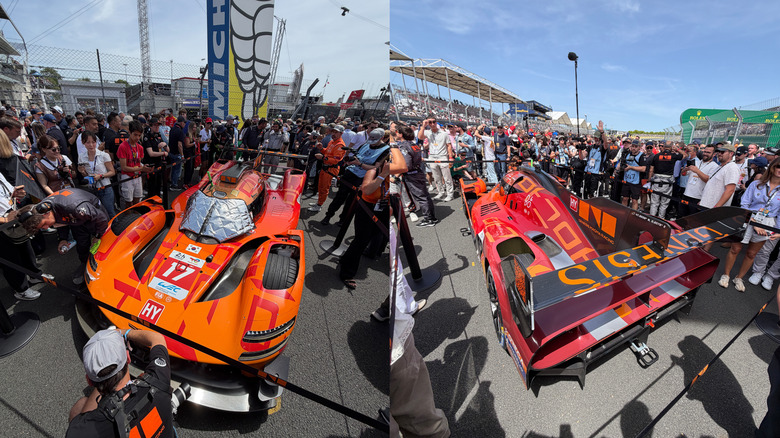
I've been to a lot of amazing grid walks, but the one at Le Mans was by far the busiest and most energetic. I spent most of my time around the two Genesis GMR-001s, which had qualified in sixth (car #17 with Pipo Derani, Mathys Jaubert and André Lotterer) and ninth (car #19 with Paul-Loup Chatin, Mathieu Jaminet and Dani Juncadella). The area with those two cars was constantly swarmed with people who seemed genuinely excited by the brand and the people on the team, and many South Koreans who were pumped to see their country represented at one of the world's greatest races.
 Daniel Golson/Jalopnik
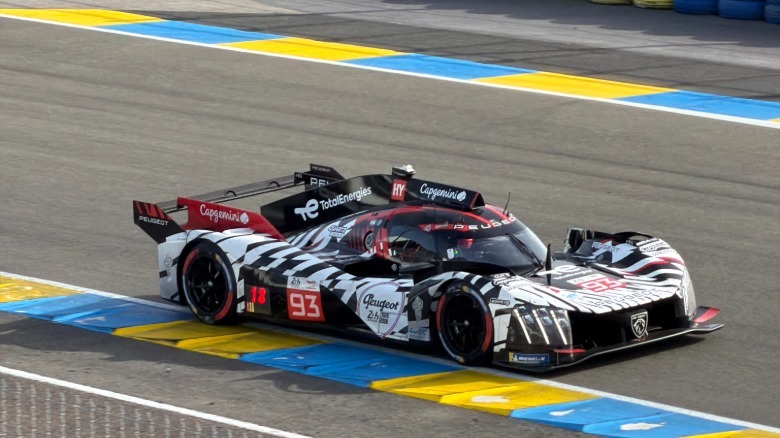
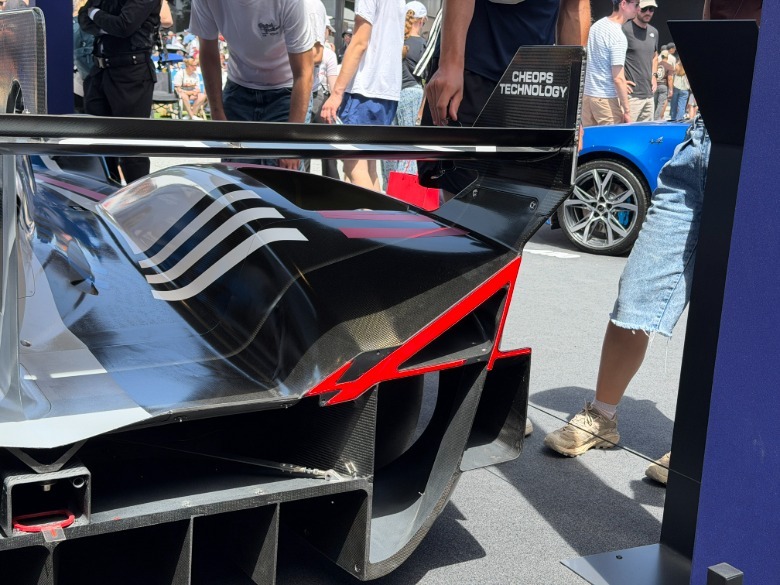
As stunning as the Genesis racer is, they weren't my favorite cars on the grid. That honor goes to the Peugeot 9X8, which, despite gaining a rear wing I wish didn't need to get added, is still the coolest Hypercar design to my eyes. I also loved seeing the Aston Martin Valkyrie, of course, and that car was probably the most popular overall with the Le Mans audience. It doesn't hurt that the Valkyrie is the only car in the top class that's based on something people can actually buy and drive on the street. More top-class endurance cars should have production equivalents.
 Daniel Golson/Jalopnik
My favorite design detail on any car at Le Mans was the Alpine A424's taillights, which are shaped like the brand's A logo. It's too bad Alpine is leaving WEC after this year to focus on Formula 1, especially given that team's Gucci partnership for next year. Hopefully Alpine will get back into endurance racing with the next-gen A110.
 Daniel Golson/Jalopnik
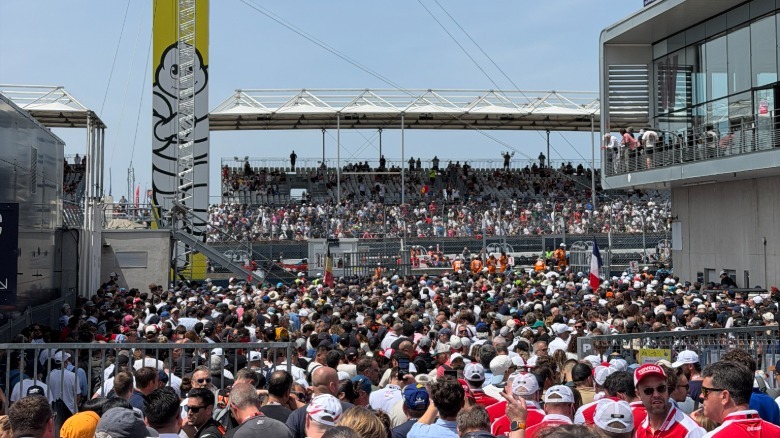
One thing that really struck me on the grid walk was how surprisingly respectful the crowd was. Yes, there were many people walking around and packed around each car, and it was hot outside, and French people don't like to wear deodorant for some reason, but no one was being particularly rude or shoving — people were respectful, and everyone just seemed so happy to be there. There was a lot more diversity in the crowd than you might have expected, too.
2026: A Race Odyssey
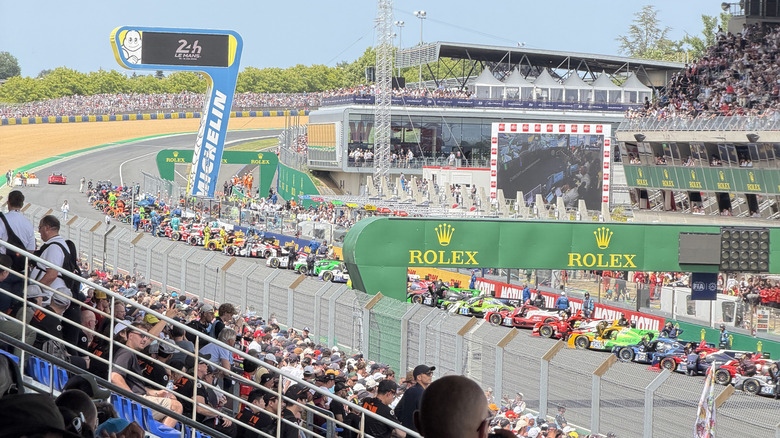
For the start of the race, we headed into the grandstands, with a view of the main straight. As people filtered off the grid and the actual race ceremonies started, our group kept cracking up at the song choices. The DJ was absolutely killer, playing everything from French electronic legends like Daft Punk and Justice, to remixes of "Sweet Caroline" and "Y.M.C.A." along with some other funny modern pop choices.
The crowd bristled with energy as all 62 cars on the grid fired up and started following the Porsche 911 Turbo S safety car for the formation lap. A few minutes later, the sea of brightly colored race cars came back into view on the final chicanes, as the DJ was blasting Strauss' "Also sprach Zarathustra," which had me really cracking up again. For some reason, I thought the cars would come to a stop at the start/finish line and do a standing start, but no! They rocketed past as the green flag waved, and the race was on.
The song playing at the start of Le Mans was cracking me up, and I didn't realize they do a flying start instead of stopping at the line first! Especially funny given how the DJ was blasting Justice and other French electronic music in the hour leading up to the start
— Daniel Golson (@dsgolson.bsky.social) 2026-06-16T02:50:19.972Z
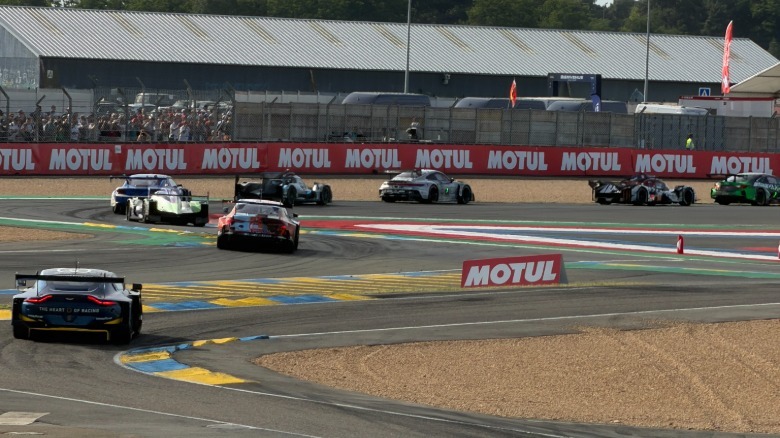
Circuit de la Sarthe is over 8 miles long and even the fastest laps take over 3 minutes, so in the early laps of the race, you're just sitting there twiddling your thumbs for a couple of minutes until a car drives by. But about half an hour in, the Hypercars had already caught up to the GT3 cars and some teams had done their first pit stops, so the field was quickly mixed up and the racing got really exciting. Now there were constantly cars driving by, with the super varied GT3 sports cars getting into scuffles with each other and the LMP2 cars, and the Hypercars zipping around them all.
 Daniel Golson/Jalopnik
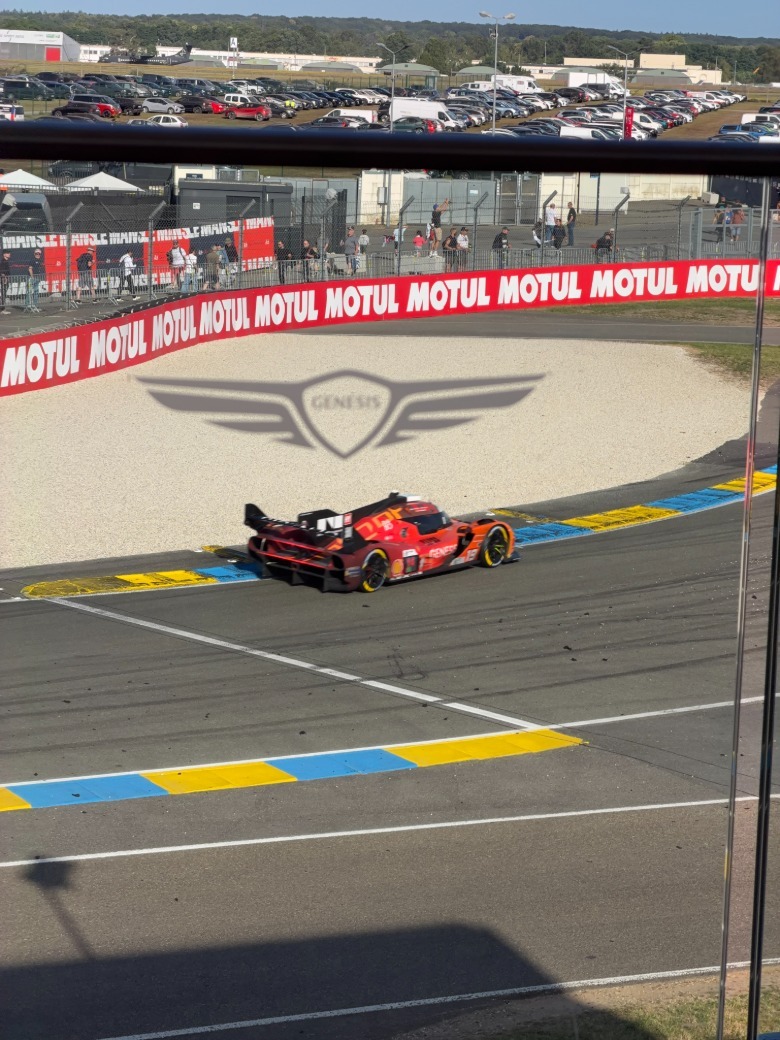
After watching from the grandstands for about an hour, I retreated back to Genesis' hospitality suite, with air conditioning, an open bar, and a better view of corners that you'd actually see action on. Cars were always passing each other in those last few corners, and they ran parallel with the pit lane entrance, so there was always something to watch. As with on the grid, there was a clear favorite race car among the crowd, including the people in the Genesis building: the Valkyrie. Its spaceship-like looks are certainly part of the appeal, but it's really the sounds made by the naturally-aspirated V12 that stopped people in their tracks every time either of the racing Valkyries flew by. The Genesis was probably the third best-sounding car on the field, after the Aston and Cadillac.
One car had to retire, but the other continued strong
Instead of staying the night at the track in glamping tents (that were apparently filled with spiders), I was one of a few people who opted for a sunset helicopter ride back to our chateau. Yes, you can yell at me in the comments for not actually experiencing night racing at Le Mans. We did sit in the living room watching the race on TV for a while, and were attacked by a giant stag beetle at one point, so I consider that my punishment. At midnight, an extended yellow flag coincided with a fireworks display and a drone show, with the flying bots transforming from a UFO to a racing suit to a trophy. The yellow flag didn't let up, so I crawled into bed at around 1 a.m., falling asleep quickly.
By sunrise the next morning, disaster had struck. Genesis' two cars had been running well with no incidents, consistently racing in the top ten, reaching as high as fourth place at one point and regaining their positions in the lead lap. They were outpacing the Aston Martins and Peugeots, two well-established manufacturers that have raced LMP1 cars for a long time. But at 4 a.m., car #17 suffered a major suspension failure with Jaubert at the wheel, and it had to be retired. Meanwhile, car #19 stopped on track with Chatin driving. The team had to cycle the power to get it back to racing, and the problem happened again soon after, taking the car out of the running for a competitive finish. A stop to solve a mechanical issue cost four more laps, but ensured the best chance for the sole remaining car to finish the race.
 Daniel Golson/Jalopnik
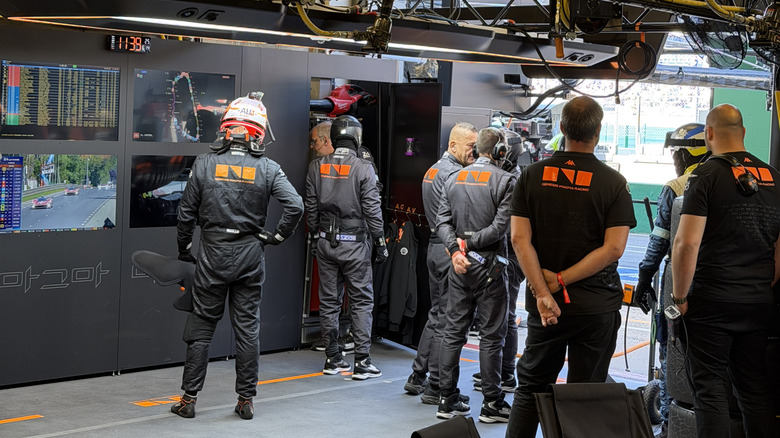
When I returned to the track at 9.a.m., the energy at Genesis was slightly dampened compared to the day before, but a lot of that can be chalked up to people being dead tired from staying up through the night. Car #19 had remained in a good groove since the problems of the night were behind it, and as the race entered the final six hours, the Genesis crew got giddy again. We got a tour of the pit garage, getting to see the engineering room full of people sitting at computers and monitors, and were able to watch a quick pit stop from afar.
It ended up being quite a dramatic finish to the race, though not for Genesis. Ferrari's three-year winning streak was broken by the Toyota Racing TR010. The Toyota pulled off a win over the BMW and Cadillac teams that long looked like the shoo-in winners, taking the lead in the last three hours. Excitement over the winner was felt everywhere, including in the Genesis house. Everyone has their favorite teams, cars, and drivers, and obviously you're rooting for them to win. But it's impossible not to get emotional, regardless of the winner, when you see drivers who've just spent 24 hours doing some of the most grueling racing in the world, celebrating with their crew and fans after crossing the finish line.
This was only the beginning
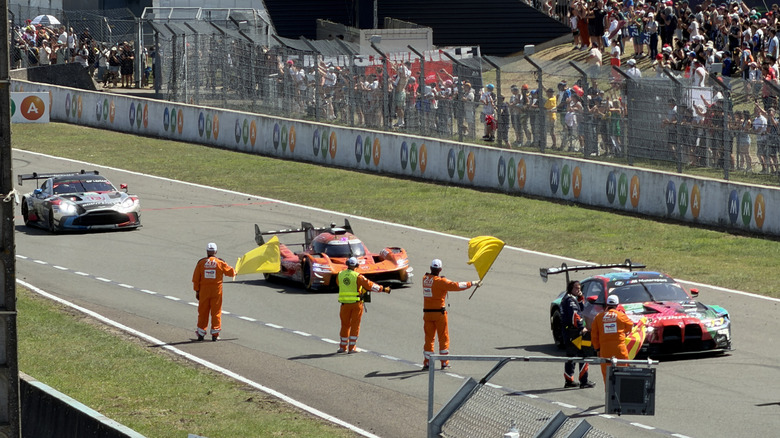
13th place is a good result for Genesis. It wasn't the absolute last in the Hypercar pack, and a bunch of other top entries from bigger teams also DNF'd. With 372 laps completed, #19 was only 9 laps off the winner. What really matters to the company and the team is that, on its first outing, a fledgling automaker with very little racing experience finished at Le Mans. Every person from Genesis that I spoke to following the checkered flag was just stoked that they did it, they crossed the finish line. They said how fun the race had been to watch, and how cool it was to be working for the brand at this moment in its history.
 Daniel Golson/Jalopnik
"We are in the learning phase, here to train and develop," Donckerwolke said the day before the race began.
"While we faced challenges, the team showed great resilience, composure and teamwork. Everyone stayed focused, reacted calmly to every situation and worked together to achieve our goal," Abiteboul said in a statement following the race's conclusion. "We leave Le Mans with the satisfaction of having achieved our main objective, but also with a very clear understanding of the areas we need to improve. Those priorities will help guide and unite us as we continue to build our foundations as a team."
My biggest takeaway from the weekend was the sheer passion and drive that everyone at Genesis has for racing. This is not going to be some flash-in-the-pan brand that disappears from FIA racing after just a couple of seasons. Genesis is in it for the long haul, in a way the racing world hasn't really seen before. That Magma GT3? It could be in competition by 2028. As global head of Genesis Sean Lee put it, "this is our way forward, and we're just getting started."