

Aston Martin's Worst Prototype Only Raced Twice And Never Finished Once
It's been a slow, albeit gorgeous-sounding, return to prototype racing for Aston Martin. The Valkyrie's long-awaited 2025 debut in the World Endurance Championship (WEC) & IMSA's WeatherTech SportsCar Championship returns the British brand to the top level of endurance racing for the first time in a decade, bringing a tremendous V12 soundtrack with it. While the Valkyrie had to skip the 24 Hours of Daytona to find more speed, things started to come to life during the tail end of the year as the Heart of Racing team drove the hypercar to a top five finish at the 6 Hours of Fuji and a podium at Petit Le Mans.
However, those deep in sports car racing lore already know the Valkyrie has seen far more success than Aston's most prior attempt at prototype racing. Back in 2010, Aston saw great success in endurance racing. Their DBR9 was winning, earning class wins at Le Mans and taking championships in GT1, while their Lola B08/60 prototype was starting to challenge the diesel-powered dynamos of Audi and Peugeot. With an LMP1 regulation change in 2011, Aston Martin could keep running their Lola chassis, but saw the opportunity to start from scratch and build their own Le Mans challenger from the ground up.
However, the decision came from Aston's executives at the buzzer. Where other teams were preparing for years to make their new LMP1 entries, Aston Martin only had a matter of months. The result would be one of the most humiliating programs in modern motorsports history — the AMR-One.
Six months and six cylinders
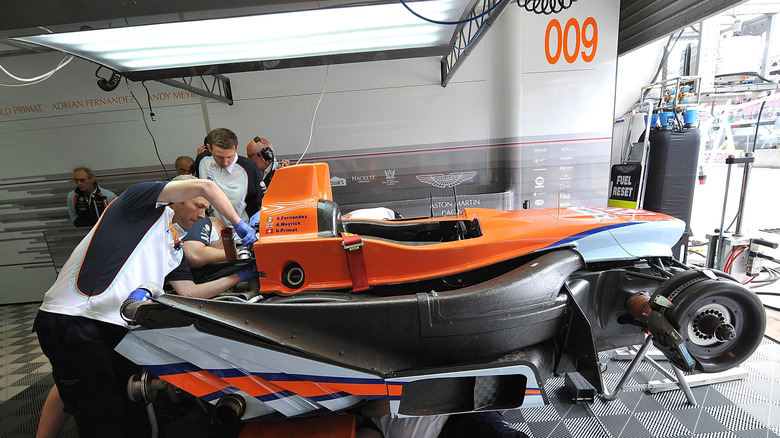
For the project, Aston retained its technological partners at Prodrive. After joining forces with Aston Martin in 2004, the company helped the marque to reach class wins at Le Mans in their DBR9 GT1 and assisted in the development of the B09/60 Prototype. Before the long-term partnership with Aston, the group helped Subaru to their halcyon days in the World Rally Championship and put Ferrari back on the board at Le Mans with the 550 GT1.
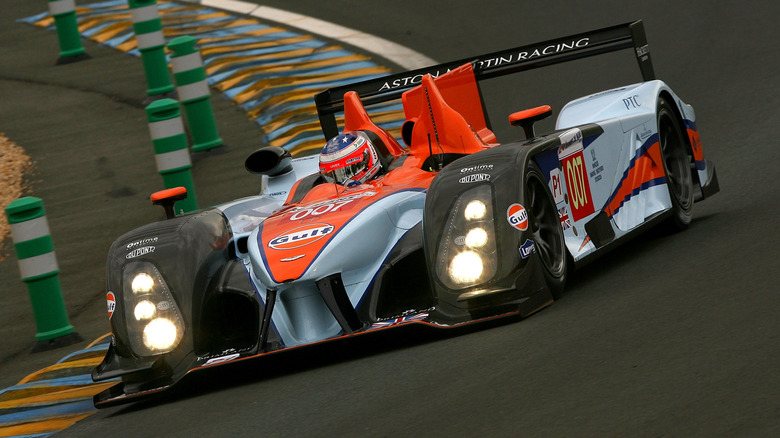
However, all this success came from modifying existing cars to go racing, and Prodrive had never built a race car from the ground up. Moreover, time and space at the factory had to be shared, as the team was also hard at work developing Mini's WRC entry. The result was an LMP1 that was against the grain in every way. As top teams like Audi and Peugeot elected to switch to closed canopies, Aston shockingly did the opposite, preferring the better visibility and cooling of an open-air cockpit over its closed-in Lola.
The cockpit's extra drag put additional stress on the engine, which was just as unorthodox. Where Peugeot and Audi used turbodiesel power, Aston stayed with petrol, but downsized to a turbocharged inline-6. While often seen in road cars, the straight six is almost unseen in the modern motorsports arena. Aston Martin, however, preferred the unit as it was narrow enough to allow air to flow through the car. The tailor-made 2-liter unit was given a single turbocharger, making roughly 540 horsepower.
Miraculously, Aston Martin and Prodrive were able to prepare the car complete the AMR-One in just half a year. Unfortunately, the car would have the pace and reliability of a car made in six months.
Two races of humiliation
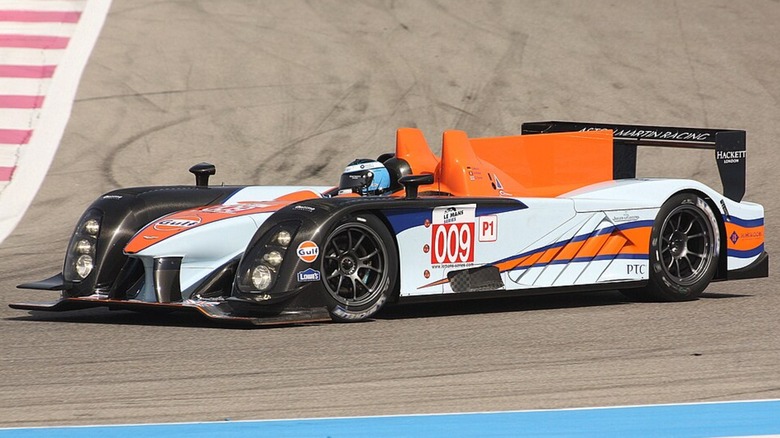
The AMR-One made its debut at the 6 Hours of Castellet at Paul Ricard. For qualifying, the car was over five seconds off the pace. To add insult to injury, the Rebellion Racing team ran a Lola chassis identical to what Aston had used the year prior. The race wouldn't fare better. After a troublesome six hours of racing, reliability issues dropped the car out of classification 89 laps behind the leader.
Aston Martin elected to withdraw from the following round, the 1000km of Spa-Francorchamps, in the hope of getting their two entries as prepared as possible for Le Mans. It wouldn't help. Come qualifying at La Sarthe, the fastest of the two AMR-Ones stood a whole 20 seconds off the pace of the front-running Audis. Quicker than just one LMP1 entry, the two cars would start the race behind nearly all of the lower classed LMP2 cars. Thankfully, the poor reliability of the cars put both entries out of their misery almost instantly, with the inline-6 on one car tapping just after two laps in, with the sister car doing the same by lap four.
Following humiliation at Le Mans, Aston Martin elected to pull the older Lolas out of retirement, running the B09/60 for the remainder of the 2011 season before focusing solely on their GT program from 2012 onwards.
The brand wouldn't be seen in the top level of endurance racing until the Valkyrie's debut at the Qatar 1812km. It was a chaotic return, with gearbox troubles sidelining the No. 007 car and the door flying off the No. 009. Still, despite the team finishing 23 laps off pace, the Valkyrie, in its maiden race, did something the AMR-One never accomplished: it finished in classification.