

10 Classic Coupes That Are Honestly Kind Of Uncomfortable To Look At
Enthusiasts love bashing automakers for their designs, like when BMW switched from the kidney grille to the nostril. But many people are willing to defend ugly cars, mostly minivans and econoboxes, because they were built to be cheap and practical — not good-looking. Two-door coupes, however, exist almost entirely for vanity. They offer little backseat space or utility in exchange for style and presence. Indeed, some of the best-looking cars in history are coupes — think the Lamborghini Miura, the Alfa Romeo Tipo 33 Stradale, and the Jaguar E-Type. Each of these brought a completely different flavor to the two-door formula, and they all nailed it.
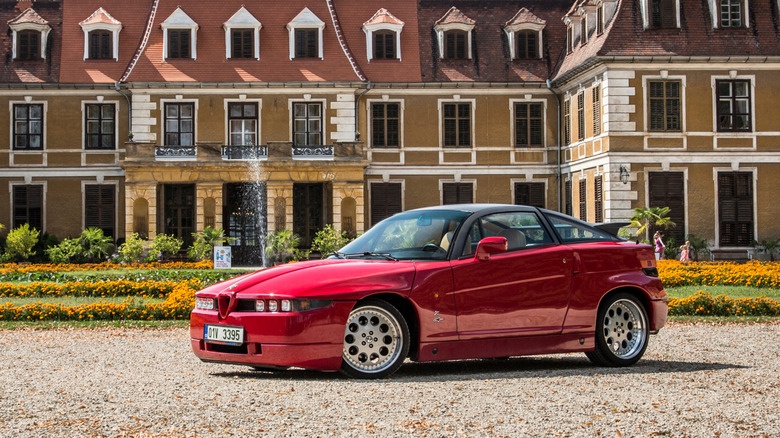
Still, for all of these stunners there are coupes so grotesque it's a miracle they reached showrooms. And we are not only talking backyard kit cars, but models that were signed off by legendary designers and storied marques, like the Alfa Romeo SZ, Lancia Flavia Sport Zagato, and Ferrari F512 M. Of course, you'll learn about some obscure coupes in this piece, but they also share the trait of being uncomfortable to look at. Whether designers botched an update of an iconic silhouette or simply had a bad day at work, these cars failed at their only real job: looking good.
1989 to 1991 Autech Zagato Stelvio AZ1
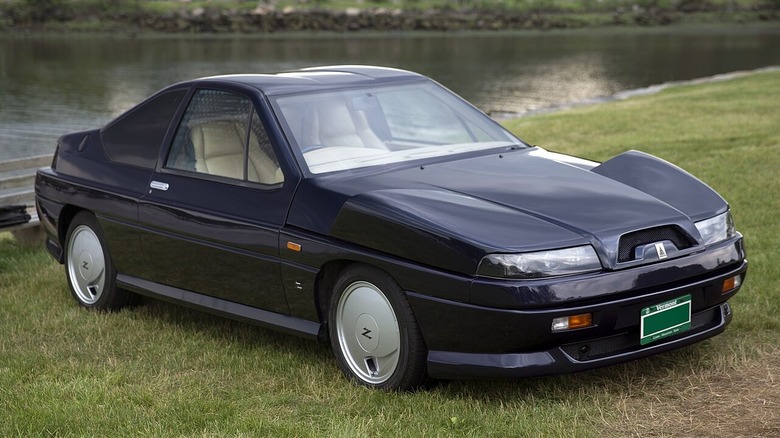
Fender mirrors have been a staple of JDM cars, adorning legends like the Toyota 2000GT and Mazda Cosmo. So when Zagato designed the AZ1 for Nissan, it set itself a goal — keep the fender mirrors, but make them appear as if they were integrated into the body.
One glance at the nose says it all: the Stelvio AZ1 has one of the most awkwardly sculpted hoods in automotive history. And, yeah, Zagato's master craftsmen actually molded that piece out of fiberglass, while shaping the rest of the body from hand-beaten aluminum. Still, the design simply doesn't catch the eye. The fascia doesn't help matters much, with the upper grille and hood creases making the front end even more convoluted. The awkward side proportions, massive rear end, and covered wheels with only one air inlet each add to the Stelvio AZ1's uncomfortable looks.
The interesting fact is that the Stelvio AZ1 is based on the Nissan Leopard, which looks classier and more elegant. It came from Japan's bubble era, when Nissan had so much money to burn it bought a controlling stake in Zagato. The Stelvio AZ1 carried the early 300ZX's 3.0-liter turbo V6 engine, tuned by Nissan's performance arm (Autech) to 280 horsepower. Unfortunately, it was only offered with a four-speed auto, so it was more of a luxury cruiser than an engaging sports car.
The real kicker? Nissan and Zagato charged roughly $160,000 for the JDM-only Stelvio AZ1 — enough money to buy two Honda NSXs at the time. So, although a 203-unit run was planned, production stopped at only 104 units. Seems like 1990s wealthy buyers did have some taste in cars.
1963 to 1967 Lancia Flavia Sport Zagato
Lancia was one of the most revolutionary automakers before and after WWII, pioneering everything from the first monocoque chassis to the first five-speed gearbox, production V6 engine, and the strange and clever narrow-angle V4.
In the 1960s, Lancia again came out on top of its national rivals with the Flavia — Italy's first front-wheel-drive car with a boxer engine. The Flavia didn't look as good as some of Lancia's previous cars, like the Aurelia, but it was far from ugly. So, Lancia asked Italy's top coachbuilders at the time, Pininfarina and Zagato, to pen the Coupé and Sport versions, while Vignale was tasked with designing the convertible.
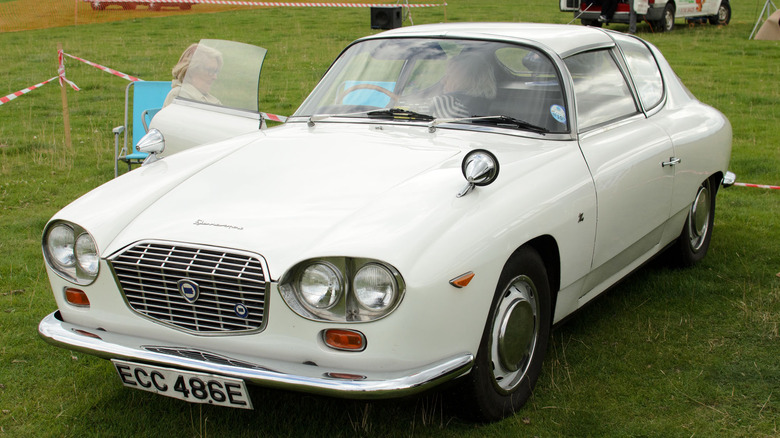
Pininfarina and Vignale did a good job streamlining the body while keeping the Flavia's original character. Zagato, however, went berserk — just like it did decades later with the Stelvio AZ1. Penned by Ercole Spada, the designer behind the stunning Aston Martin DB4 GT Zagato, the Flavia Sport Zagato is a case study in broken proportions. From the sunken oval mouth and stepped headlights to the tacked-on, bulbous rear end with wraparound glasshouse, the Flavia Sport Zagato is an awkward-looking car. It has some redeeming qualities, like the beltline that runs from the headlights to the taillights and a cool concave rear window, but the overall proportions are still hard to process.
Lancia held up its end, though. Yes, the Flavia is an FWD car, but one praised for its handling, four-wheel disc brakes, and sonorous boxer engine. The 1.8-liter unit was decently powerful for the time, producing 105 horsepower and 110 lb-ft of torque, enough to bring the lightweight Flavia Sport Zagato (2,337 pounds) to a top speed of 116 mph.
1989 to 1991 Alfa Romeo SZ
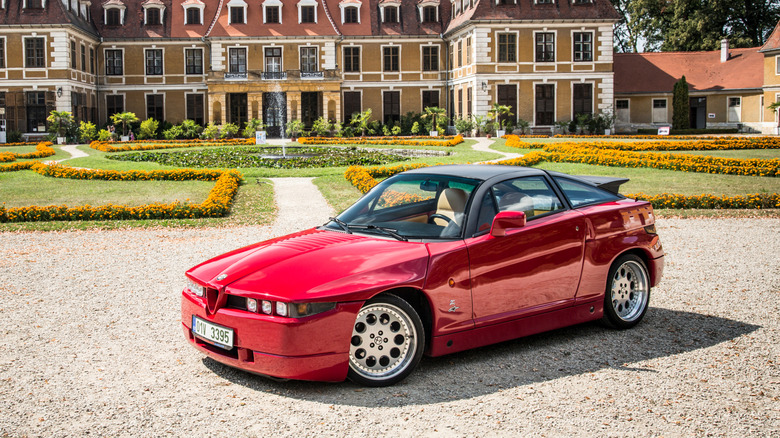
No other automaker has as many stunners as Alfa Romeo. From some of your favorite Alfas, like the Tipo 33 Stradale and GT Junior, to modern classics like the 8C Competizione, there is no shortage of beautiful Alfas to choose from. However, in that sea of automotive design sensations, there is one Alfa Romeo that stands out with its jarring, borderline-grotesque styling: the SZ.
Nicknamed Il Mostro (The Monster) for obvious reasons, the SZ had all the hallmarks of a great Alfa Romeo sports car. It was based on the Alfa 75 transaxle chassis for better weight distribution, featured racing-derived, height-adjustable Koni dampers, and under the hood it packed a 3.0-liter Busso V6. Furthermore, the SZ's body panels were made from composite materials to keep the weight at bay. So, although it produced a measly 210 horsepower, the 2,778-pound SZ reached a top speed of 152 mph.
And sure enough, Zagato's name is stamped right onto the SZ, too. This time, though, the coachbuilding company was only tasked with building the car — not designing it. That honor goes to Robert Opron, one of the most famous car designers, whose initial design was refined by Antonio Castellana using CAD/CAM software. Zagato's Marco Pedracini and Alfa's Walter de Silva also proposed their own designs, but they were ultimately scrapped.
Looking at the finished product, you can't help but wonder what Pedracini and de Silva had been working on. The Alfa Romeo SZ looks like a rolling brick with tall, slab sides, a small glasshouse, and six monstrous square headlights. The car's offense is that it has none of the visual grace of Alfa Romeo's, or even Opron's, best designs.
1994 to 1996 Ferrari F512 M
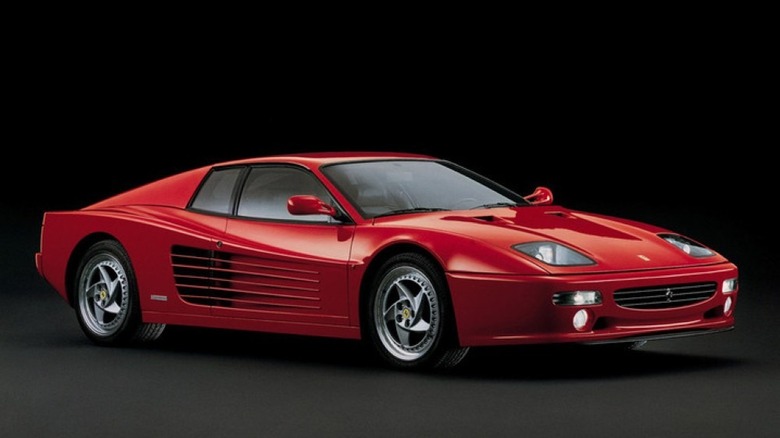
When it comes to design, the original Testarossa is considered Ferrari royalty. Penned by Leonardo Fioravanti's design team at Pininfarina, the 1984 Testarossa brought razor-sharp wedge geometry, hidden pop-up headlights, and those widened, iconic side strakes that turned it into one of the 1980s poster cars. The fact that it was powered by a 4.9-liter 180-degree V12 engine with 385 horsepower only added to its appeal. It proved so influential that Ferrari brought back the name for a 1,035-hp PHEV supercar.
Ten years after its introduction, Ferrari launched the ultimate version, the F512 M. The F512 M was technically better than the Testarossa in every aspect. It carried the same V12 engine as the Testarossa, but with 434 hp. At 3,208 pounds, it weighed less, too, and came with a sharper five-speed manual transmission. As a result, it reached a top speed of 196 mph — 16 mph higher than the Testarossa — while also being more engaging to drive.
Unfortunately, Ferrari also messed with the Testarossa's iconic looks when designing the F512 M. Ferrari had already produced a more hardcore Testarossa with the 1991 512 TR without changing the design much, but the F512 M wasn't that lucky. Ferrari's last 180-degree V12 car retained the recognizable side pods, but replaced the pop-up headlights with fixed units and the rectangular air intake with a friendly-looking oval one. Add to that the tacked-on hood ducts, directional wheels, and curved bumpers, and you have one of the goofiest-looking Ferraris ever made. What's more, the straked taillights were replaced with four small rounded units, robbing the rear end of its menacing stance.
1970 to 1971 Marcos Mantis M70
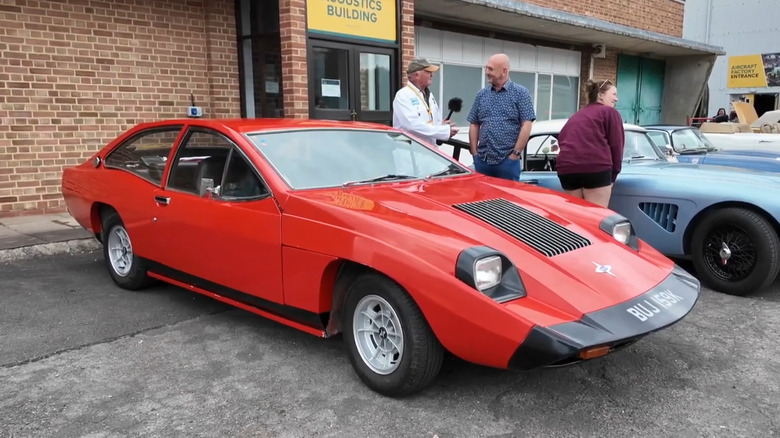
We'd love to have covered the photo above with a warning label so you could open it at your own peril, but since we can't do that, you'll have to take the full Mantis M70 impact straight to your retinas.
This is easily one of the worst takes on the low-slung aesthetic — it looks like its clay model was left too close to a heat lamp. Its sharp, downward-kinked nose features deeply recessed quad headlights and a narrow grille slot, looking quite grotesque and unappealing. And it only gets worse from there. The comically big and irregularly shaped side windows look tacked on next to the slab-sided flanks with awkwardly squared-off wheel arches. Out back, the long tail leaves the proportions looking stretched and out of scale.
So, how did this obnoxious thing reach production? Marcos Engineering, a British sports-car manufacturer that built its reputation on producing lightweight, high-performance sports cars, wanted to create a four-seater to compete with the grand tourers of its era. However, instead of going for the traditional GT shape at the time, championed by cars like the Ferrari 250 GT Lusso and Aston Martin DB5, Marcos decided to reinvent the wheel with this bizarre-looking thing.
What's funny is that Marcos knew a thing or two about designing cool-looking cars. The brand's Mantis XP prototype endurance racing machine is an absolute stunner with polygonal shapes and a svelte body, while its 1600 GT sports car gives off Jaguar E-Type vibes. Speaking of which, the Mantis M70 was offered for similar money to Jaguar's legendary grand tourer, while carrying a smaller 2.5-liter inline-6 engine. So, unsurprisingly, Marcos built only 32 units.
1971 to 1987 Stutz Blackhawk
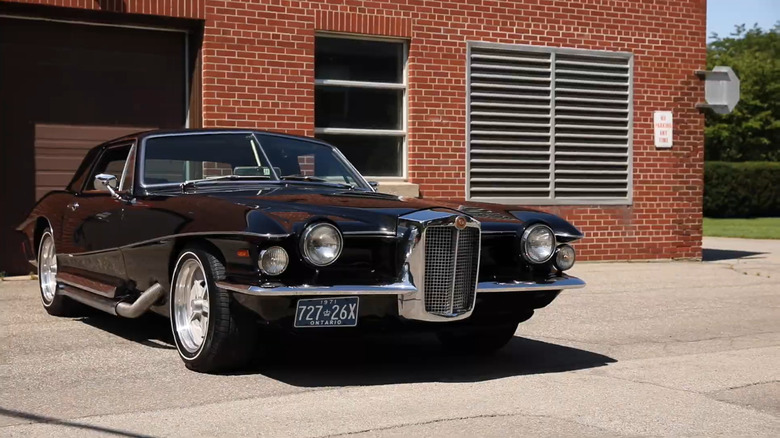
Nobody's putting 1970s Grand Prix Pontiacs in an art museum, but at least they didn't hurt to look at. Enter the Stutz Blackhawk, a neoclassical take on Pontiac's Grand Prix that steers things into uncomfortable waters. Imagined by investment banker James D. O'Donnell and penned by Chrysler's legendary designer Virgil Exner, the Blackhawk was built to revive the Stutz name and its early-century glory, when the company was known for its sleek, low-slung cars. Instead, it ended up being a chrome-drenched rolling assault on the eyes.
Now, sure, some of Exner's design ideas, like the free-standing headlights and grille, are interesting, but they look tacked on and don't work well enough with the rest of the body. Some parts were literally tacked on, like the side chrome pipes that weren't connected to the engine. Out back, the madness culminates with a semi-exposed spare wheel that bulges from the trunk.
Despite looking like a cartoon mobster's car, the Stutz Blackhawk ended up being popular with wealthy buyers. Elvis Presley famously owned a few, alongside fellow icons like Muhammad Ali, Dean Martin, and Elton John. This popularity helped Stutz keep making the Blackhawk until 1987, with later cars being based on the Pontiac Bonneville and Oldsmobile Delta 88/Buick LeSabre.
Perhaps the most curious thing about the Stutz Blackhawk is that it cost almost as much as a Rolls-Royce Camargue. Peek inside, though, and it immediately becomes clear where the money went, with the Blackhawk featuring leather, wood, and even 24-karat gold trim. The fact that Stutz had to ship each car across the Atlantic to Italy for the coachbuilt body further ballooned the price.
1975 to 1981 Triumph TR7 Fixed-Head Coupe
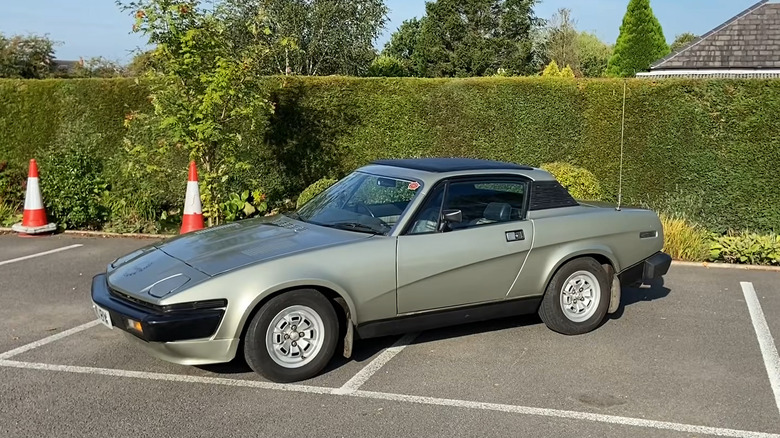
The Triumph TR7 was launched in 1975 as a fixed-head coupe, but it should've always been a convertible. The drop-top version arrived in 1979, and while it wasn't beautiful by any stretch of the imagination, it at least looked cohesive and balanced. Combined with Triumph's deep roots as a roadster brand, the cleaner design helped the convertible outsell its closed-roof counterpart.
Even though it shares the exact same design below the beltline, the coupe is a completely different story. Marketed with the optimistic slogan "The Shape of Things to Come," the TR7 looked like two different cars welded together at the beltline. Below the waist, designer Harris Mann went with a sharp, wedge-like aesthetic, with wider wheel arches and a deep diagonal crease giving it extra flair. The boxy roof, however, looks like it came from an economy sedan and features rear panels that cheapen the car's looks. This, alongside the flat trunk lid, completely killed the wedge momentum, leaving the TR7 looking awkward, disproportionate, and slow.
Maybe that was Mann's intent from the get-go, as the TR7 was indeed slow — particularly the U.S. version. The TR7's 2.0-liter four-cylinder engine produced 105 horsepower overseas, or only 92 hp in the U.S. Heck, it produced only 76 hp in California, a figure that has no place in a sports car. Piling onto the misery was the engine's woeful reliability, though it was at least efficient. The 2,200-pound coupe was good in the corners, too, unsurprising for a car carrying a Triumph badge. Recently, we discovered a carefully restored $7,000 Triumph TR7 — dirt cheap for a sorted classic, assuming you can handle its looks.
1995 to 1999 Buick Riviera
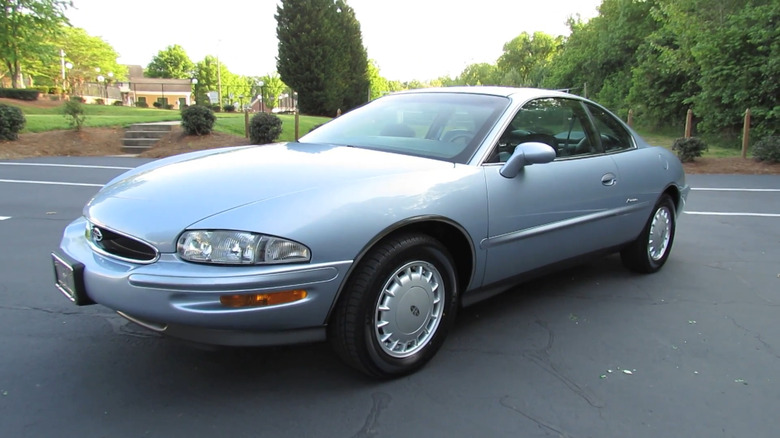
Classic grand tourers and sports cars live by the "long hood, short deck" formula, partly because it looks good, and partly because of their front-engine, rear-wheel-drive configuration. With that in mind, Buick tried to follow the same formula with the 1995 to 1999 Riviera coupe. The only problem — it was built on a front-wheel-drive platform, so nailing the traditional proportions proved challenging.
In fact, despite Buick's attempts at making the hood appear longer, the Riviera can't hide its cab-forward proportions from the side, especially since it's 207.2 inches long. And the bad news doesn't stop there. The Riviera's body looks too curvaceous, with its droopy front end looking like a fish that has been out of the water for too long. The aquatic theme continues from the side, with the bloated greenhouse killing any idea of sleekness. The boat-tail rear end makes the Riviera look somewhat symmetrical from the side, with the taillights looking like Cyclops's visor from "X-Men."
Buick's blubber never received a V8. Instead, it was offered with two variants of the 3.8-liter V6. The base naturally aspirated engine was good for 205 horsepower and 230 lb-ft of torque, while the supercharged version produced 225 hp and 275 lb-ft of torque initially. For 1996, Buick bumped the supercharged engine's output to 240 hp and 280 lb-ft of torque, and for the last two model years it dropped the base engine. Despite its FWD architecture and lack of V8 options, the last Riviera was praised for its handling and comfort.
1967 to 1971 Bond Equipe 2-Litre
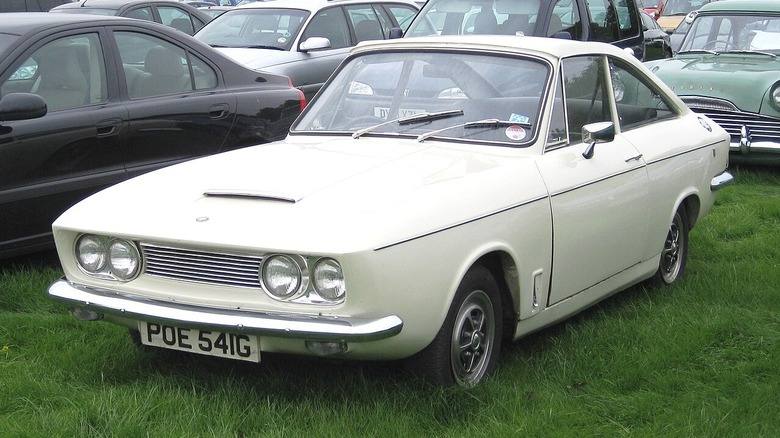
Bond Cars Ltd. got its start in 1949 building small three-wheeler vehicles for the British market. However, its appetite grew stronger in the 1960s, when the brand introduced the Equipe sports car. Based on the Triumph Herald, the Equipe GT carried a 1.1-liter four-cylinder engine and had a lightweight body made from fiberglass to extract the most out of the small capacity. Bond introduced a larger 1.3-liter engine in the 1967 Equipe GT4S model while keeping the forgettable design.
In 1967, however, Bond made the biggest performance jump with the introduction of a 2.0-liter inline-6 engine. This time, the Equipe 2-litre was based on the Triumph GT6 and carried a Vitesse-tuned 2.0-liter six making roughly 104 horsepower, which gave it a 0 to 60 time of 11.5 seconds. Unfortunately, it also introduced a brand-new design approach, which turned the sports car from boring to uncomfortable. Penned by Trevor Fiore, who had previously designed the sleek TVR Trident, the Equipe 2-litre is one of the saddest-looking coupes we've seen.
Of course, we need to start with the tiny, tucked-in wheels and swollen wheel arches, which give the impression of a grand-tourer body perched atop a golf-cart chassis. The pigeon-toed stance was further exacerbated by the upright greenhouse, with the fastback rear doing nothing to freshen up the design.
That's before we even start talking about the front end. Instead of the usual angry sports-car attitude, the Bond wears a permanently squinted expression, with quad round headlights buried inside a deep rectangular slot beneath an overhanging hood brow. Come to think of it, the Equipe's irritated face could easily pass for a grumpy villain in our imaginary vintage van cartoon.
1988 to 1993 Consulier GTP
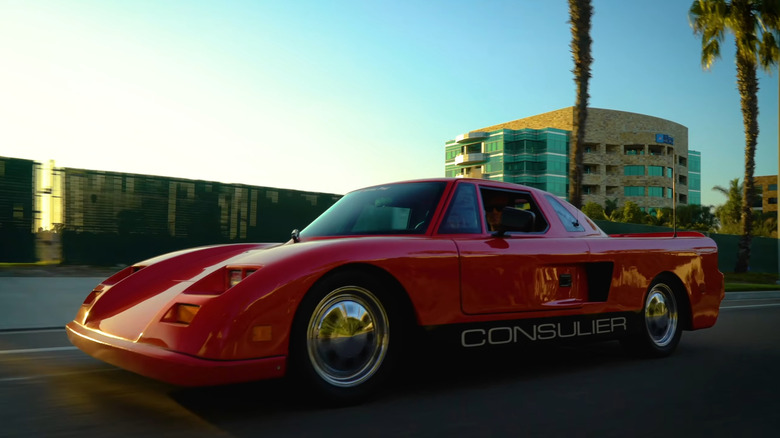
The term "supercar" has long been used to describe vehicles built around exotic engineering to achieve devastating pace both down the straights and through the bends. And throughout the modern automotive era, supercars also pushed the design boundaries with dramatic, striking looks.
Warren Mosler, a hedge fund manager and racing enthusiast, got only half of that memo when creating the Consulier GTP. By every conceivable metric — bar its looks — the GTP was a genuine American supercar. Mosler nailed the exotic engineering part with a world-first closed-cell foam, carbon, Kevlar and fiberglass tub, resulting in a curb weight of only 2,200 pounds. The 2.2-liter Chrysler-sourced turbo-four wasn't as outlandish, but 175 to 224 horsepower on tap, depending on the model year, was plenty for such a light car. Crucially, it sat in the middle, just like in a supercar.
The problem with the Consulier GTP is blatantly obvious — it looks like an amateur kit car. Up front, its droopy snout tapers down to four tiny rectangular headlights, without a grille to give it at least some aggressiveness. Then comes the convex windshield, which messes up the proportions by pointing down to the front wheels, and the bloated, boxy engine bay flanked by clumsily designed side scoops.
This should come as no surprise, as the Consulier GTP was designed around efficient airflow rather than aesthetics. As such, it was a menace on the race track, finishing second in the 1991 IMSA Supercar series with Lance Stewart behind the wheel. Still, while it was fast on track, the GTP was too ugly to sell, with Consulier building only 83 units, including 20 racecars.