

12 Famous Car Designers Every Gearhead Should Know
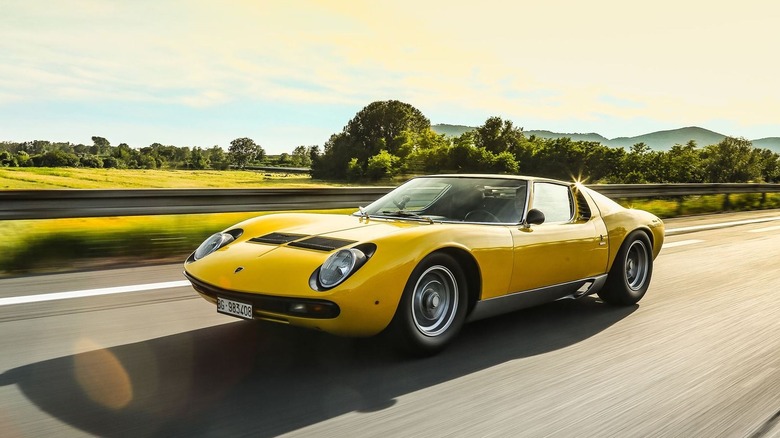
To the purely pragmatic, a car is just a glorified appliance. A cold utility on four wheels that gets you from point A to point B. Well, if that's the case, have you ever fallen in love with a microwave? Us neither. Fact is, plenty of people buy cars because they stir the soul. Buying a car is often a positive thing in life — a new beginning.
Car companies already know this and weaponize design to draw you into their ecosystem. Every automaker goes a different direction; some shock you with catchy looks, other go the more subdued, timeless route.
At the heart of this are designers who turned mobility appliances into pure art on wheels. People who broke norms to advance automotive design and give us classics we still lust for. In this piece, we'll take a closer look at 12 famous car design visionaries that left a permanent mark in the automotive landscape. Enjoy!
Giorgetto Giugiaro
Perhaps the most popular and influential automotive designer of all time, Giorgetto Giugiaro penned everything from compact family cars to voluptuous GTs and sharp supercars. The sheer volume of his output is mind-boggling.
It all started with the job interview sketch he did for Bertone: the Alfa Romeo 2000. A lightweight grand tourer, the 2000 is a perfect example of Giugiaro's tendency for clean, understated lines. The glasshouse is particularly well balanced with the sculpted body, giving passengers a panoramic view of the surroundings. His work on the Ferrari 250GT SWB Bertone, shows his skill in creating visual drama without disrupting the car's elegant lines. The 250GT SWB Bertone's sharknose front end is pure sculptural theater, designed as a nod Ferrari's F1 racing machines. The rest of the body? Elegant, swooping, and perfectly proportioned.
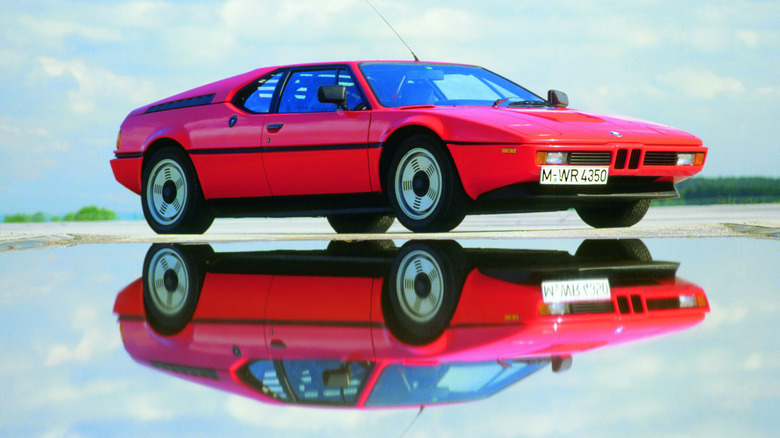
With the Golf Mk1, which he designed through his own company, Italdesign-Giugiaro, Giugiaro took a different direction. Instead of mimicking the Beetle's curves, the Golf's straight lines look almost utilitarian, but the perfect proportions make everything tick together. To say that he completely revised VW's signature design would be an understatement, really. The utilitarian yet cutesy look is even more evident in the Fiat Panda Mk1, one of our favorite Fiat cars ever made. And we didn't even touch on the supercars. The sharp, wedge-styled BMW M1, DeLorean DMC-12, and Lotus Esprit were all designed by Giugiaro. The swoopy Maserati Bora and De Tomaso Mangusta supercars? Also Giugiaro.
Marcello Gandini
Italian supercars have always had a visual flair that set them apart. That lineage of jaw-dropping automotive theater traces directly back to Marcello Gandini, the father of the modern supercar silhouette.
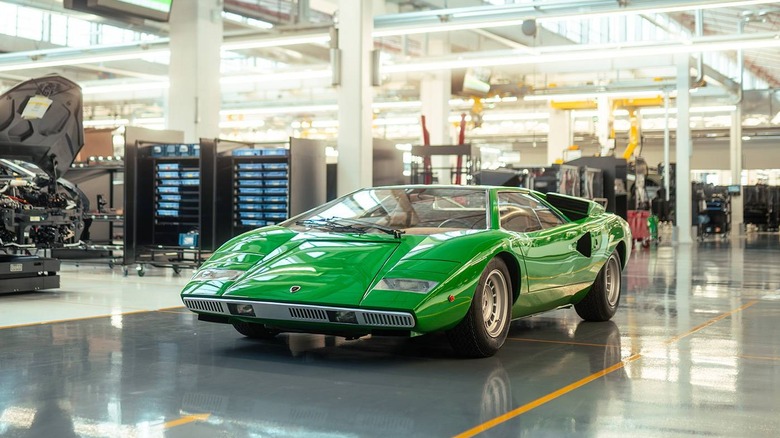
Funnily enough, Gandini actually stepped into the void left by Giugiaro at Bertone, instantly announcing his arrival by designing the breathtaking Lamborghini Miura. Universally celebrated as the blueprint for the modern mid-engined supercar, the Miura is a study in how to combine soft, feminine curves with a broad-shouldered, muscular stance. The beautiful oval pop-up headlights and stunning wraparound windshield add an extra flair that puts the Miura in a category of its own.
Perhaps even more ground-breaking is Gandini's work on the Miura's successor, the Countach. An exercise in sharp, geometric lines, the Countach is as visually striking today as it was when it first entered production in 1974. Every V12-powered mid-engine Lamborghini since then borrows the striking, razor-sharp cues from the Countach, including the eye-catching scissor doors.
Still, Gandini's skill didn't just show up in Lamborghini's supercars. The Alfa Romeo Carabo concept already shocked the world with its futuristic design and scissor doors back in 1968. Meanwhile, Gandini proved he can turn the mundane into beautiful with the understated BMW 5 Series E12 and the spaceship-like Citroën BX. Later, Gandini ventured into boxier designs with the industrial-looking Renault Magnum and the striking Maserati Shamal sports coupe with a windshield spoiler.
Harley Earl
Before Harley Earl arrived on the scene, cars still borrowed their styling cues from horse carriages. Too often, their bodies were upright, boxy, or just boring. Earl's designs were anything but boring, though. He started his career as a coachbuilder for Hollywood movie stars, but he was later hired by GM as the head of the company's Art & Color Section. The idea? To make GM's cars more glamorous.
To do that, Earl completely rewrote the industry's workflow. He pioneered the use of clay modeling in his design work, allowing him to experiment with round, fluid shapes. Then, in 1938, Earl introduced the world's first concept car — the 1938 Buick Y-Job. With the concept, Earl wanted to gauge public reaction to his radical design ideas, such as integrated fenders, horizontal grille lines, and hidden lamps that provided a cleaner, more streamlined look.
However, Harley wasn't done revolutionizing the industry. During the war, he started taking inspiration from aircraft and jet engines, and even brought his team to see the Lockheed P-38 Lightning fighter plane for inspiration. After the war, one of his designers, Frank Hershey, translated that visual spark into the Cadillac Tailfin — the car that spearheaded the tailfin era. Harley further refined the jet age styling with the 1951 GM LeSabre concept, which featured a jet-intake-like nose and a stunning wraparound windshield.
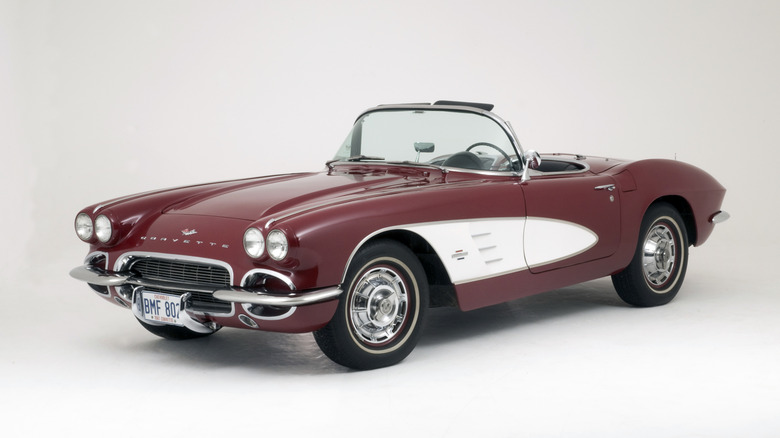
Harley reached his peak with the 1953 Chevrolet Corvette C1 — a long-hood, short rear deck, low-slung sports car that birthed one of the most popular automotive nameplates.
Bruno Sacco
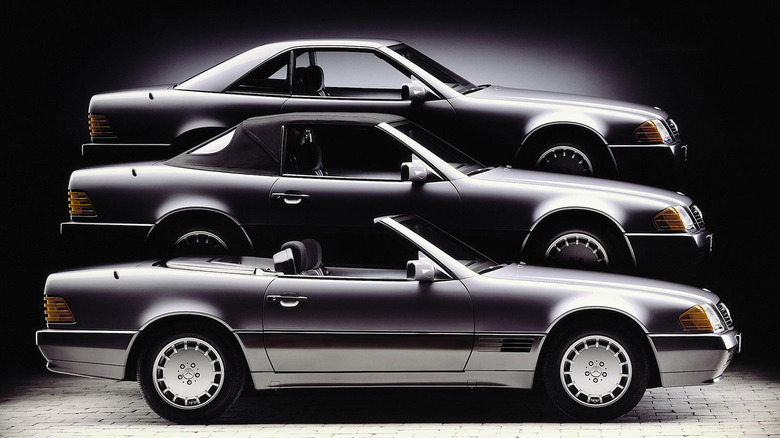
DNA. That's undoubtedly what Bruno Sacco created during his long, 25-year (1974 to 1999) tenure as lead designer at Mercedes-Benz. Sacco had already been at the company 15 years prior to that, during which time he designed the striking C111 mid-engine supercar concept revealed in 1969.
Still, Bruno Sacco's most iconic designs were much more understated. Cars like the Mercedes-Benz S-Class (W126), E-Class (W124) and 190 (W201) were designed on two core principles: Horizontal Homogeneity and Vertical Affinity. The former means that every Mercedes-Benz vehicle needs to share an unmistakable, core stylistic DNA, which is evident in the three vehicles we mentioned. The latter is about not making the car's direct predecessors look obsolete or embarrassing to drive. Sacco believed that buying Mercedes-Benz is a long-term investment, and his work reflected that. It's an important reason why these seemingly simple designs still look fresh today.
No car reflects that better than the SL-Class (R129). A perfectly proportioned lifestyle convertible, the R129 utilizes a subtle wedge profile that shows its sporty ambitions, a straight, unbroken horizontal beltline that adds low-slung elegance, and taut, brawny overhangs. The R129 is an impeccable case study in design minimalism — something the controversial styling of the 2027 Mercedes-AMG GT 4-Door Coupe EV does not aspire to.
Robert Opron
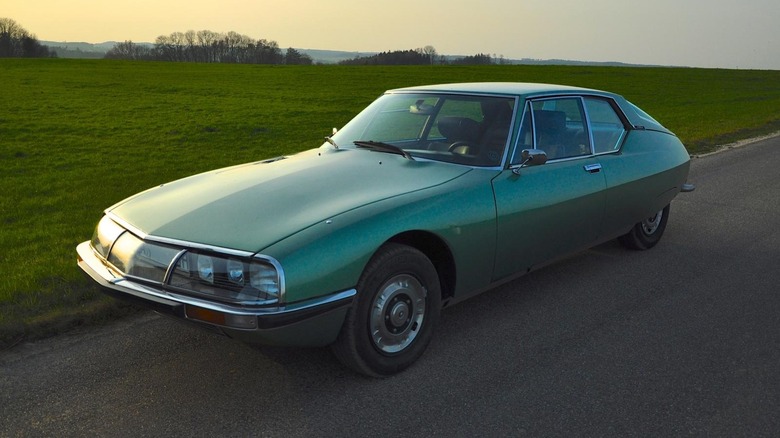
Robert Opron is perhaps the quintessential French car designer. A proponent of forward-looking, avant-garde designs, Opron injected regular passenger cars with a unique flair that set them apart from the competition.
Opron started his career at Simca, where he designed the 1958 Fulgur sci-fi concept, perhaps the closest a car got to a spaceship. With its hidden wheels, the Fulgur looked like it hovered over the ground, while the bubble glasshouse gave off UFO vibes. However, his true rise to stardom happened in 1964, when Citroën appointed him as the head of design. He succeeded Flaminio Bertoni, the star designer behind the cool and weird Citroën DS, so it's safe to say the pressure was immense. However, for Opron it was an opportunity to show his talent in creating even more flamboyant, futuristic cars.
No other machine encapsulates that space-age vision quite like the Citroën SM. Opron focused on fluid dynamics for this striking grand tourer, creating the most aerodynamically advanced cars of its era with an impressive drag coefficient of just 0.33. The natural teardrop profile, glass-enclosed headlights, and dramatic, anchoring C-pillar all scream jet-set luxury.
Opron's other designs are equally impressive. The Citroën CX turned the SM's fastback profile into a long, luxurious tourer that still looks fresh today. Later Opron had a tenure at Renault, where he designed the quirky Fuego and headed the design team responsible for the Espace MPV. Opron's most divisive work is the Alfa Romeo SZ, which looked perhaps too avant-garde for an Italian sports coupe.
Ian Callum

If Robert Opron defined the avant-garde automotive design movement, Ian Callum established the elegant yet effortless design philosophy. His work was mainly in the luxury segment, but he certainly made those cars look cool and timeless.
You can see his propensity for minimalist, timeless proportions in the 1994 Aston Martin DB7. The grand tourer's clean silhouette and graceful front hood made it look sophisticated, while the now traditional Aston Martin grille revealed its sporty pretensions. Later, he used the same formula for the Vanquish and DB9, both of which have proved equally timeless and elegant.
In 1999, Callum went to Jaguar, where he was appointed the head of design. There, he introduced a completely new design language, giving us the Jaguar C-X75, one of the most striking supercar prototypes of the modern era. Later, he also designed the F-Type, an aggressive-looking brawler that won the 2013 World Car Design of the Year award. The F-Type looks equally cool in coupe and convertible form, thanks to Callum's expertise in creating cars that look like a crafted sculpture.
His influence wasn't limited to sports cars. Callum also designed the I-Pace, which to this day is one of the best interpretations of a forward-looking EV design. The I-Pace has a very short front end, unlike Callum's previous works, as there was really no need for it in an EV. This cab-forward approach led to a more spacious interior, but also gave the I-Pace a very purposeful stance.
Chris Bangle
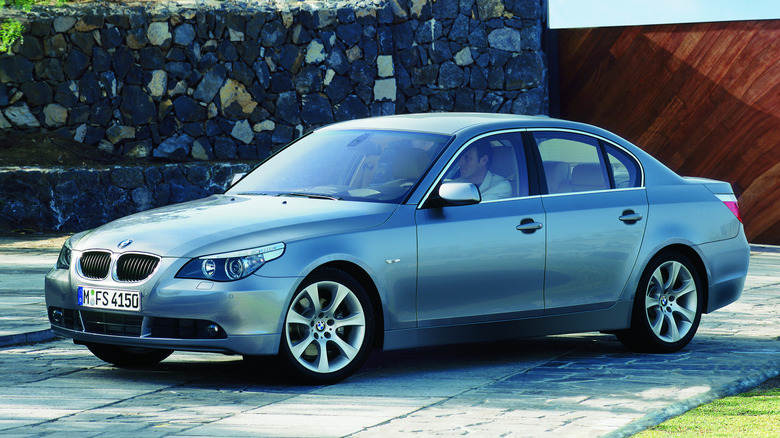
Erm, yes, we also included Chris Bangle. His work may be divisive, but you can't deny it's bold and interesting. A proponent of flame surfacing, Bangle used concave and convex surfaces on a single body panel, making his cars look like a moving sculpture. By doing this, he broke the traditional uniformity rule that you can see in designs such as Ian Callum's. Ultimately, Bangle demonstrated that great automotive design has no single, predictable template.
A very good representation of his early design work is the 1993 Fiat Coupé, which had unique diagonal lines above the wheels. These broke the sports car's beltline, but also made it unique and interesting to look at. His ideas were good enough for BMW, who appointed Bangle as a head of design in 1992, before the Fiat Coupé had even made its full debut. His Bavarian tenure kicked into high gear in 1995 when the smash-hit BMW Z3 arrived, but it's the 1999 Z9 Gran Turismo concept where Bangle's flame surfacing ideas really started to gain traction.
The first car designed with those principles that really caught the public attention, however, was the 2001 BMW 7 Series. For many BMW enthusiasts, it was an embarrassment, as it was a polar opposite of its sleek predecessor. The car's bulbous trunk immediately drew the nickname Bangle butt. Fortunately, the 2003 BMW 5 Series was a far better interpretation of his design ethos. Dare we say it, the E60 still looks graceful today. Same for the 2002 BMW Z4, which is perhaps the best representation of the flame surfacing leitmotif.
Luc Donckerwolke
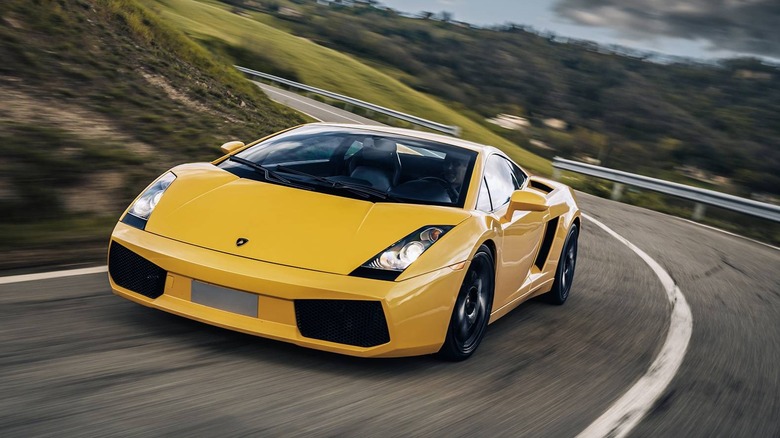
Luc Donckerwolke is a chameleon of a designer, able to shift his ideas depending on the task at hand. Donckerwolke began his career at Peugeot in the 1990s, but he was quickly snatched by Audi, where he helped the design team with the understated A4 B5 Avant. Then, he used his mettle to revive Czech automaker Skoda by designing the first-gen Octavia, which proved a massive hit in Europe.
However, his most famous Audi design is the all-aluminum A2 city car. With a minimalist, space-age design, the A2 looks like it just came out of dealerships today. You can certainly see some of that futuristic minimalism in the cars that were designed under his leadership at Lamborghini, including the Murcielago and Gallardo. Donckerwolke broke with the flamboyant Gandini-era design, and instead went with a cleaner look. Of course, the cars still had an aggressive wedge shape, but none of the excessive design features characteristic of Lambo's previous designs.
Today, Donckerwolke is President and Chief Creative Officer of Genesis, where he is helping the Korean premium brand build its own recognizable design signature. He also recently oversaw the design of the stunning Magma GT concept, Genesis' first planned halo supercar.
SangYup Lee
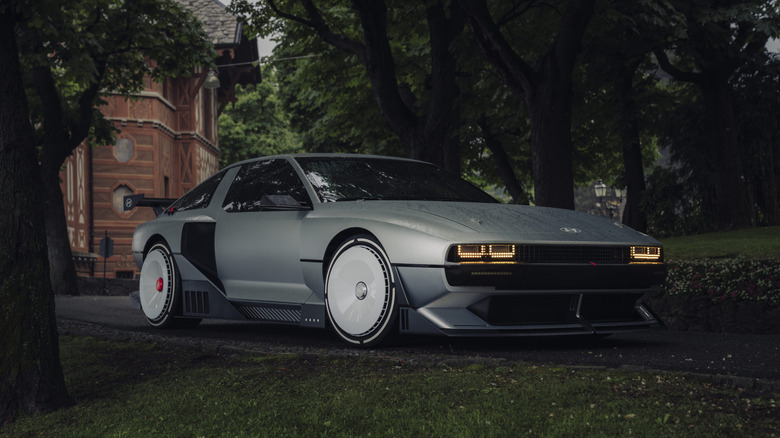
A discussion of Korean automotive design isn't complete without also mentioning SangYup Lee, the current Global Head of Design for Genesis. More importantly, though, he is responsible for Hyundai's recent design revolution, as he oversaw the design of the Ioniq lineup. That retro futurism you all love about Hyundai's latest EVs is all thanks to Lee's work. It proved so successful, that he was even awarded the 2023 World Car Person of the Year by the World Car Awards.
The striking Hyundai N Vision 74 Concept was also designed under Lee's supervision. The retro-futuristic coupe draws inspiration from one of Hyundai's first cars, the Pony, which was designed by Giorgetto Giugiaro, but looks decidedly more dystopian and DeLorean-like. It's an imagining on what a future sports car would look like, and Hyundai, please bring it sooner.
Before his stint at Hyundai Motor Company, SangYup worked for General Motors, VW Group of America, and Bentley, where he served as Head of Exterior and Advanced Design. During that time, he helped design iconic cars such as the Flying Spur.
Frank Stephenson
Automotive diehards certainly know about Frank Stephenson, who critiques modern car designs on his YouTube channel. His unfiltered thoughts might catch some off guard, but as a person who shaped modern automotive history, for many fans Frank's word is design law.
Stephenson started his career at Ford, where he helped the design team turn the regular Escort into the rally homologation special Escort Cosworth by adding the signature rear wing. Even to this day, that massive wing and the aggressive body kit give the Escort Cosworth a rally car for the road appearance. Then, he helped BMW establish itself in the SUV category with the first-gen BMW X5. Stephenson translated the sportiness of the brand's sedans almost perfectly in the X5, nailing the proportions and traditional BMW styling cues. The most impressive part? He penned the initial sketch during a two-hour flight.
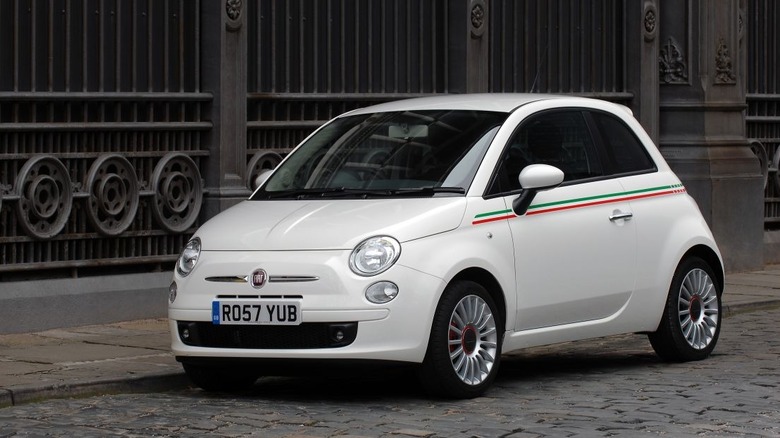
BMW then tasked Stephenson with redefining the Mini for the 21st century. Stephenson did an incredible job, giving the car a modern, sporty vibe, while also staying true to the original Mini. Even today, Mini's cars follow the same design signature. Heck, even Fiat snatched up Stephenson to design Mini's direct rival, the Fiat 500. Again, it's an almost perfect interpretation of the classic, and unsurprisingly, modern 500s look almost the same. And if that wasn't impressive enough, Stephenson also designed some legendary supercars and race cars, such as the Ferrari F430, the Maserati MC12, and the McLaren MP4-12C. Each different, but all attractive. His final work was McLaren's first hypercar, the P1, for which Stephenson famously borrowed cues from nature.
Alexander Sasha Selipanov
Speaking of modern supercars and hypercars, there are few designers more illustrious than Alexander "Sasha" Selipanov. The Tbilisi-born designer was enamored by Soviet warplanes at an early age, but after seeing them in action during the Georgian civil war, Sasha abandoned that obsession. Soon, though, he discovered a Ferrari race car in an old car magazine, which gave birth to a new passion.
He rose to prominence at Lamborghini after landing a job with the Volkswagen Group, where he impressed the brass with a supercar sketch that was later turned into the Huracan. His name finally appeared on no other car than the Bugatti Chiron, the first car to break the 300-mph barrier. Selipanov worked as a head of exterior design at Bugatti, where he also penned the Vision GT and 2015 Atlantic concepts.
His work at Bugatti didn't just captivate the public — it also caught the attention of Christian von Koenigsegg, who promptly recruited Selipanov to steer the visual future of his brand's hypercars. At Koenigsegg, he designed the striking Gemera "megacar" and CC850 hypercar.
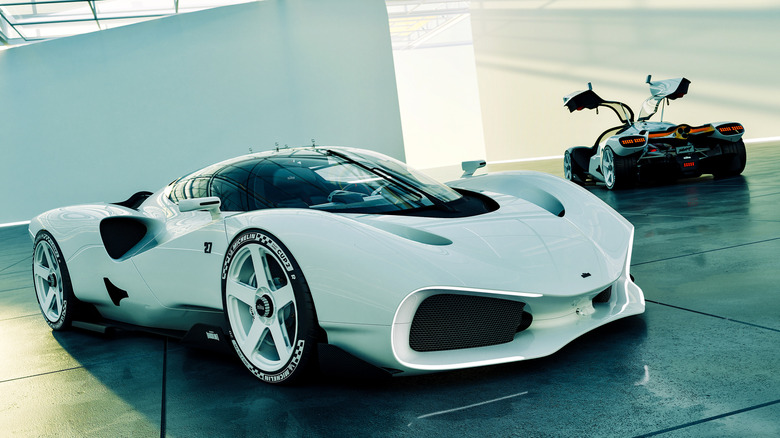
In 2024, Selipanov started his own hypercar company called Nilu. The first product from his entrepreneurship endeavors is the Nilu27 — a futuristic-looking hypercar with a decidedly old-school powertrain. The Nilu27 replaces hybrids and paddle shifters with a naturally-aspirated V12 and a seven-speed manual transmission, giving the owner a traditional driving experience.
Franco Scaglione
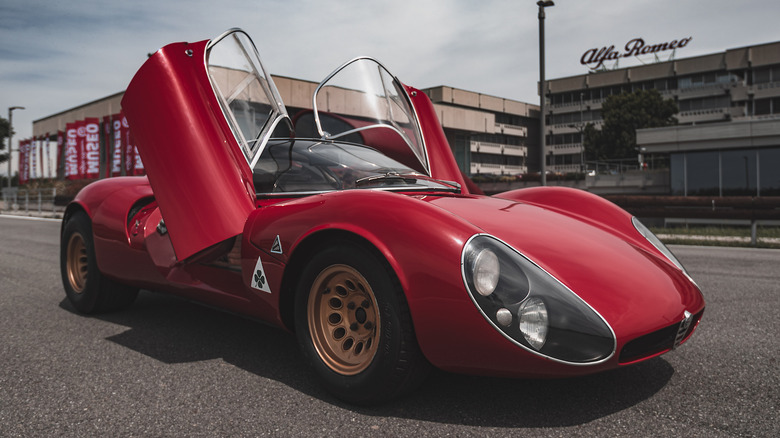
Some like to call the Jaguar E-Type "the most beautiful car ever made," but come on, it is utterly eclipsed by the Alfa Romeo Tipo 33 Stradale. Like the E-Type, the Stradale has no single sharp line, but instead of merely appearing elegant, it looks muscular and purposeful. Penned by legendary designer Franco Scaglione, the 33 Stradale combined flowing, organic body shapes and extreme proportions into one of the most sensual mid-engine cars ever designed.
To people in 1967, this design wasn't a surprise. Scaglione was already a legend, impressing everybody with the Alfa Romeo BAT concepts revealed at the 1953, 1954, and 1955 Turin Auto Shows. These exercises in tailfin design led to concepts that were highly aerodynamic, with the 1954 BAT 7 concept boasting a drag coefficient of just 0.19. Scaglione's background in aeronautics helped him, sure, but he still achieved that figure without any computer-aided design. In fact, Scaglione was one of the leading aerodynamicists at the time, designing cars that were beautiful and functional.
The production car that most borrowed from those concepts is the 1957 Alfa Romeo Sprint Speciale (SS), which looks exquisitely crafted from any angle. Scaglione also designed the prototype for Lamborghini's first car, the 350 GT, establishing an elegant, timeless shape that would be adapted by Touring when creating the final bodywork. Another one of his great designs is the ATS 2500 GT, the first mid-engine sports car built in Italy.