

Flock Cameras And Their Contracts Can (And Do) Have State-Specific Provisions
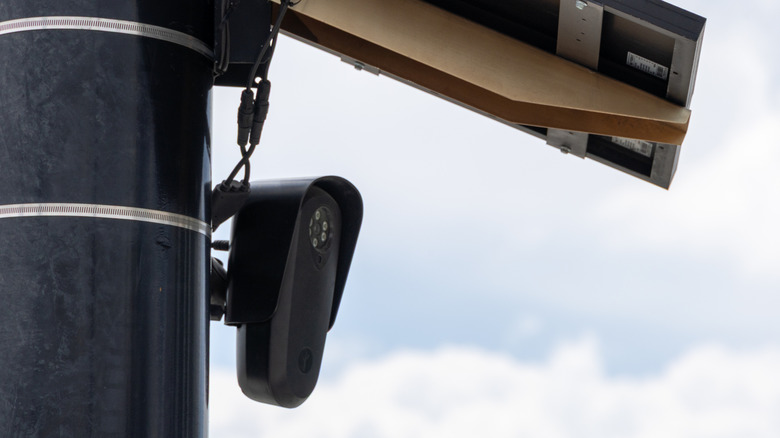
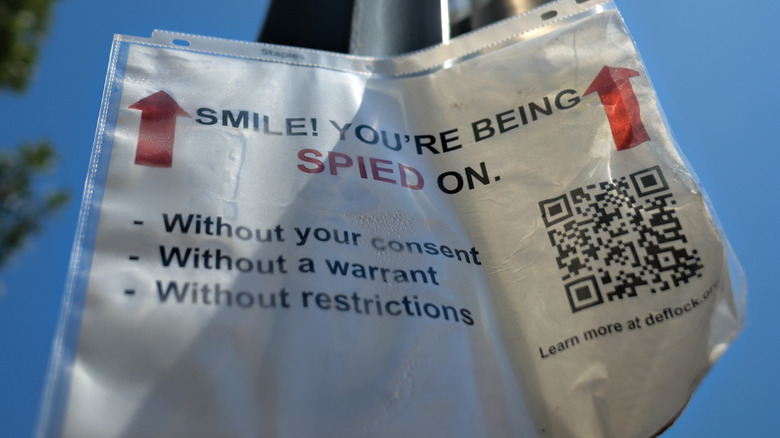
Lately, and far too often, we seem to ask, "What the Flock?" You tired yet? Private citizens across the country are, and interestingly, so are the cities, counties, and towns that hired the Automated License Plate Reader (ALPR) company in the first place. Because, (no) thanks to Flock's contracts and a lack of state statutes, breaking up with Flock Safety can be as frustrating as finding bird poop on your freshly washed car.
For example, Flock's Evidence Policy states that customers, who are usually police departments, wholly own and control the data its cameras collect. Except when they don't. Per the company's retention policy, said data is also kept for only seven days by default before being wiped from the cloud server. Except when it isn't: state laws can allow longer retention.
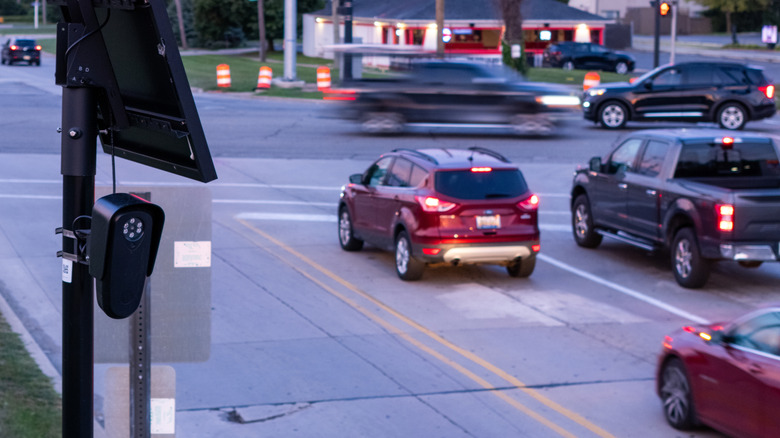
A growing number of cities are dropping Flock camera contracts, but that doesn't mean the data is gone or that the recordings have stopped. Even if garbage bags are thrown over a Flock camera's prying eyes, the police are still watching every move you make. Ostensibly, they're not doing it on purpose, but the rotten apples using ALPR systems for unprofessional reasons get plenty of attention, like the "good cop" who stalked his wife and the bad cops who conducted unlawful data searches. A silver lining is that sharing between agencies, particularly those out of state, is already restricted or outright illegal in some states.
Flock's blanket policy allows customers, whoever they may be, to share data as they see fit to "help solve crime." Where states have stepped in, though, the protections on the use of that data are clarified and far stricter, and any mishandling of it can be subject to penalties.
Flock's 7-day default isn't the whole story
This isn't the first time a state's provisions have the final say. Look at seat belts. While federal law requires a manufacturer-provided safety belt installed for every seat in a passenger vehicle, states determine whether wearing seat belts is required. For example, even though death is on the line, New Hampshire adults needn't buckle up. Click it or ticket is the rule of thumb everywhere else.
That level of engagement isn't the same with ALPRs, though. What seemed like a good idea at the time has converged into a rare consensus of everyone united in their dislike of Flock cameras, and politicos are just playing catch-up.
According to the National Conference of State Legislatures (NCSL), as of September 2026, there are 27 states with ALPR statutes in place with regard to government and law enforcement use. Indiana's rule applies only to homeowners' associations. In that state, the law says HOAs can host ALPRs only if they're installed on behalf of law enforcement, and HOAs cannot access the data. But that's the only specificity, meaning Indiana sets no deadline for deleting plate data. That isn't the case elsewhere.
Connecticut, Maine, Virginia, and Washington have a 21-day deletion deadline. Iowa, Missouri (by executive order), and Oregon have a maximum 30-day window while California (Highway Patrol only) and Minnesota opt for 60 days. Then you've got 90-day limits in Kentucky, Montana, North Carolina, and Tennessee; 120 days in Illinois (in select areas); and 180 days in Nebraska. These are limits for routine data, though. Data tied to an ongoing investigation or court case can generally be stored longer.
There are some pros to this con
Where some states do draw the line is data sharing. What's theirs is theirs. Even if asked by a federal agency, states can say nope. In California, Senate Bill (SB) 34 mandates that ALPR users be transparent and put into writing their privacy policy, the purpose of the camera installation, and how the data is used. SB 34 also prohibits the sale, transfer, and sharing of data with any out-of-state organizations, including federal departments. Adamant about the state's anti-sharing policy, the California attorney general issued advisories to law enforcement, reminding them of the prohibitions included in SB 34, especially due to privacy concerns.
California isn't an anomaly (for once): other states are also locking out federal agencies, like ICE, from accessing ALPR data. Connecticut, Illinois, New Jersey, New Mexico, and Washington expressly outlaw sharing of information for immigration enforcement purposes. In some states, the ban also extends to investigations related to receiving health-related care across state lines. Statutes for Connecticut, Illinois, New Mexico, and Washington explicitly state that obtaining certain health services is a protected activity. We already know the government can track supposed abortion travel through your cell phone, but potential prosecution is more difficult without visual evidence of your vehicle near a clinic.
But there remain too many states without additional protections for their constituents, leaving cities fending for themselves if Flock isn't playing fair. That being said, the pushback is bipartisan, with the Flock-Off Act introduced to Congress in September 2026, a positive step toward reversing the now-rampant abuse of the massive surveillance network. In hopes of spinning some positive public relations, Flock Safety provided law enforcement with a guidebook on building trust with cities but also on how to "own the narrative before someone else does." Villains gonna villain.