

Flock Cameras Come With Guidance For Police Agencies On How To 'Own The Narrative'
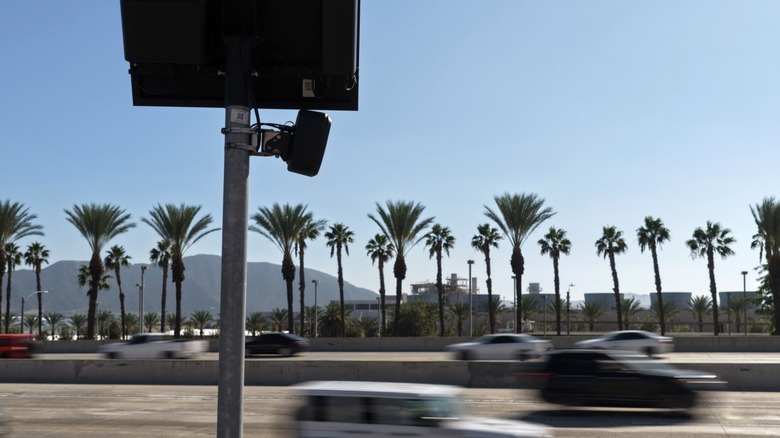
There is no shortage of fair criticism to levy against Flock Safety and its 100,000-plus-unit network of Fourth Amendment-violating mass surveillance cameras. Besides the obvious issues with a privately owned surveillance network, for which, according to the ACLU, the company removed the phrase "Flock does not own and shall not sell Customer Data" from the service contract, the cameras have been repeatedly and totally predictably abused by law enforcement across the country. Thanks to 404Media, the public now has access to an internal handbook that Flock Safety gives to law enforcement to teach them how to "own the narrative."
Owning the narrative is an interesting phrase given the fact that police officers have been involved in cases such as getting caught stalking their wife and tracking down an ex-girlfriend who changed her identity to escape their abuse, with the assistance of Flock cameras. To help police departments sell the idea of Flock cameras and ALPRs to city governments, the Flock Safety guide recommends that officers "meet with city council members before votes occur" to curtail any potential criticism when a city puts Flock consideration up for public comment.
According to the document, the agencies most successful in selling Flock cameras to cities are those who persuade city council members before any public comment period. Questions they are encouraged to address with elected officials include, "What can police do with Flock cameras?" "How do you tell if you're under police surveillance?" and "What if you don't want a private company to track your every move while in public?"
The narrative Flock wants to sell falls flat
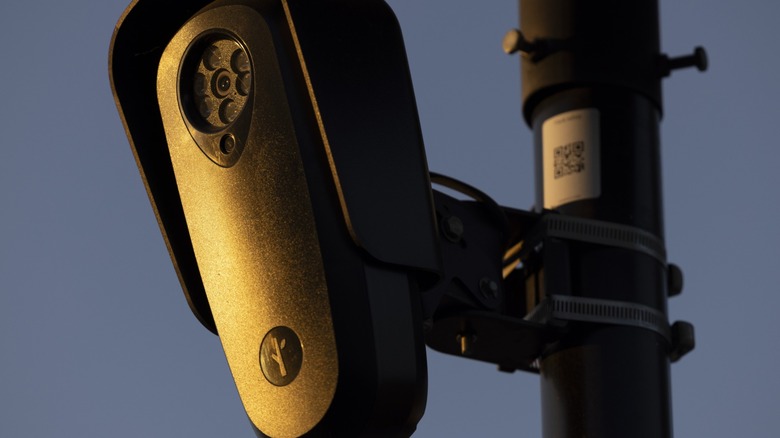
Flock Safety positions its camera network as a safety tool that can improve communities and reduce crime, or at least solve it more effectively, simply by collecting license plate and car data — nothing else. But this narrative doesn't play out. For one, 5,000 Flock cameras cover Atlanta, and police there are resolving fewer crimes. And despite the company's claims, Flock cameras collect more than just license plate information.
To convince cities to take the plunge on an expensive new technology, the Flock guide also recommends police highlight unresolved crime and its impacts rather than discussing actual financials. They encourage agencies to assuage fears about who has access to the data by noting that the police must opt-in to data-sharing tools. However, as reported by NPR, it may not be as straightforward as the company suggests. "Many city officials have realized after the fact that they were sharing their data more broadly than they had known, and that federal agencies, including U.S. Border Patrol, had searched their data." In addition, without specific legislation, which varies by municipality, police can share the data with other law enforcement agencies, even across state lines, as they see fit.
If safety and security are as big a priority as Flock Safety claims, you might expect that they take measures to protect the collected data at every step. However, as another 404Media report showed in early 2026, some Flock cameras were found to be streaming data completely unsecured over the internet. Needless to say, the use of the term "owning the narrative" is problematic. And while the Atlanta-based company is making all the headlines, Flock cameras aren't the only license plate trackers stalking your car's every move, and another company offering the technology, Axon, is not that different.