

Surprise, Surprise: Short-Sighted Automakers Back Trump's Fuel Economy Standards Rollback
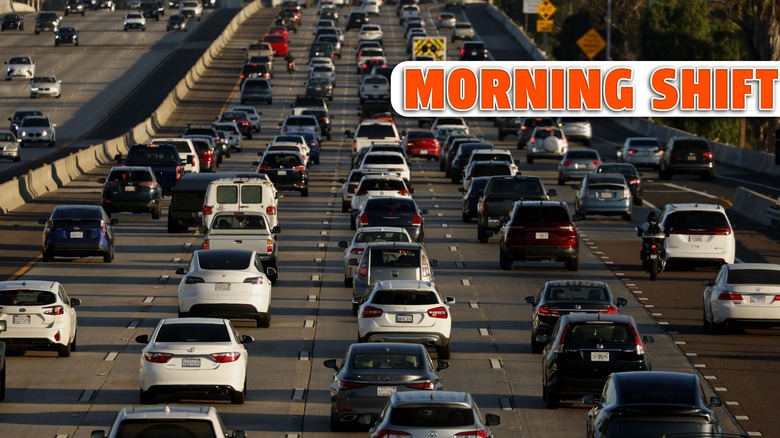
Good morning! It's Tuesday, November 3, 2026, and this is The Morning Shift, your daily roundup of the top automotive headlines from around the world, in one place. This is where you'll find the most important stories that are shaping the way Americans drive and get around.
In this morning's edition, car companies are all in favor of the Trump administration's rollback of fuel economy rules while they simultaneously urge Congress to pass the permanent ban on Chinese vehicle imports they've been whining about. Also, Europe has all but forgiven Tesla CEO Elon Musk and a chip shortage at Stellantis could hamper Fiat output in Italy.
If you'd like a recap of the latest auto news sent to your inbox each weekday, you can sign up for Jalopnik's free Morning Shift newsletter here.
1st Gear: Automakers love Trump's rolled-back fuel economy regulations
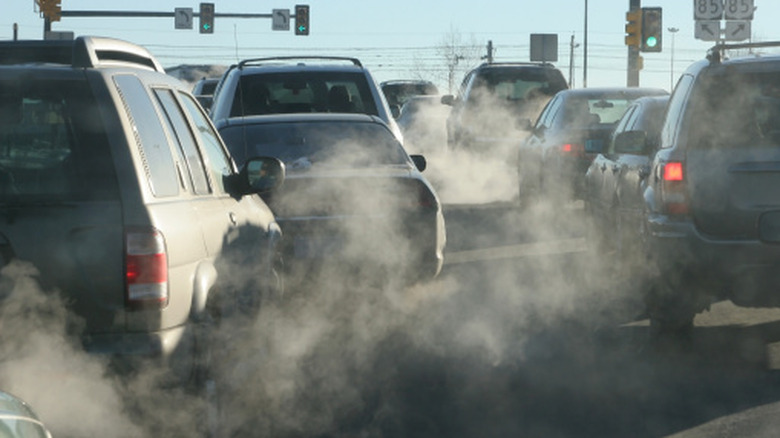
The Alliance for Automotive Innovation, a group representing some of the biggest automakers in the world, including General Motors, Toyota, Hyundai, Ford, Stellantis and Volkswagen, said it was backing the Trump administration in a legal challenge to its sharply lower vehicle fuel economy standards that had been filed by California, New York and two dozen other states, cities and counties around the country. I'll tell ya what, I'm not surprised, but I'm sure those automakers will be once those fuel economy rollbacks are changed in the next administration (whenever that comes).
Last month, the U.S. Department of Transportation said it was finalizing a fleet-wide fuel economy average of 34.9 mpg by 2031. That's down from the 50.4 mpg mark that was set by the Biden administration in 2024. The group argued that automakers require "certainty and stability" in standards. From Reuters:
It added that if the standards were set aside, it "would affect automakers' business, endangering the capital investment planning, product development, and performance validation for hundreds of new vehicle models intended for the US market."
The states said the Trump administration was ignoring the presence of millions of electric vehicles, "leading to a flawed, dramatically distorted analysis of the 'maximum feasible' fuel economy level." The automaker group said the court should reject those arguments.
The revised Trump administration standards seek to reverse Biden's push toward greater fuel efficiency and electric vehicles. A coalition of environmental and consumer groups also filed a separate lawsuit challenging the new rules.
The Transportation Department said the regulation reduces manufacturers' average cost per vehicle to comply by $1,289 but increases fuel costs by more than $1,600 over the life of the vehicles.
The department said the rule would increase US gasoline consumption through 2050 by 4.6%, or about 121 billion gallons, compared with the Biden rules but also boost new car sales.
The American Petroleum Institute, an oil and natural gas industry trade group, also filed in support of the Trump administration's rules, saying they ensure the government sets standards that "do not force consumers to purchase vehicles that consume less fuel than they would otherwise choose."
Automakers can talk all they want about being environmentally sustainable and eco-friendly, but at the end of the day, it's very clear that what it all comes down to is the bottom line. It'll certainly be interesting to see what the fallout will be once a new, more eco-conscious administration enters the White House in a few years' time.
2nd Gear: They also want Congress to finally pass the Chinese vehicle ban
That same group, the Alliance for Automotive Innovation, is currently on a heater. Not only are they going after fuel economy standards. They're also continuing their push to get Congress to ban the import of Chinese EVs to the U.S. Automakers have been whining about this for years at this point, and now they'd like the bill to pass when lawmakers return next week for a quick session following today's midterm elections.
Back in September, the Senate sponsors of a bipartisan bill to effectively ban Chinese-made vehicles from entering the U.S. agreed to delay the effort to fast-track the bill until November, despite the fact it had overwhelming support from other congresspeople who apparently aren't a fan of a free market or freedom of choice for the consumer. There are some officials who believe that if Dems win control of Congress, there may not be enough time to approve the ban before the session ends in December. Whatever will these OEMs do??? From Reuters:
"We need to protect the US market from a flood of Chinese imports that carry surveillance risk and disadvantage current manufacturers that have made generational investments in American communities," said John Bozzella, who heads the Alliance for Automotive Innovation.
[...]
"Given the obvious national security risk and China's pattern of unfair behavior, Congress should protect our defense and advanced manufacturing base and stop Chinese automakers from doing here what they've gotten away with in Europe," Bozzella said.
Bozzella said in the first eight months of 2026, the EU imported more than 1.1 million vehicles from China — more than all of 2025.
A Senate committee passed the bill, which has significant momentum, in July and a House version now tops 100 co-sponsors. Automakers and legislative aides hope to win full passage this year.
[...]
A regulation imposed by the former Biden administration in early 2025 effectively banned Chinese automakers from selling or building passenger vehicles in the US because they could send sensitive driver data to China. Washington also maintains more than 100% tariffs on Chinese electric vehicles.
The Chinese foreign ministry has previously urged the United States "to respect the laws of the market economy and principles of fair competition," criticizing previous proposals against Chinese companies as "unreasonable suppression."
President Trump, wildcard that he is, sparked a hell of a lot of worry among key stakeholders when he said he would accept Chinese automakers building cars in the U.S., but so far no one has taken him up on the offer.
Of course, the whole "national security angle of this story is just steeped in irony. After all, I'm writing this article on my Chinese-made laptop, and you're reading it on your Chinese-made phone.
3rd Gear: Tesla is having a good time in Europe
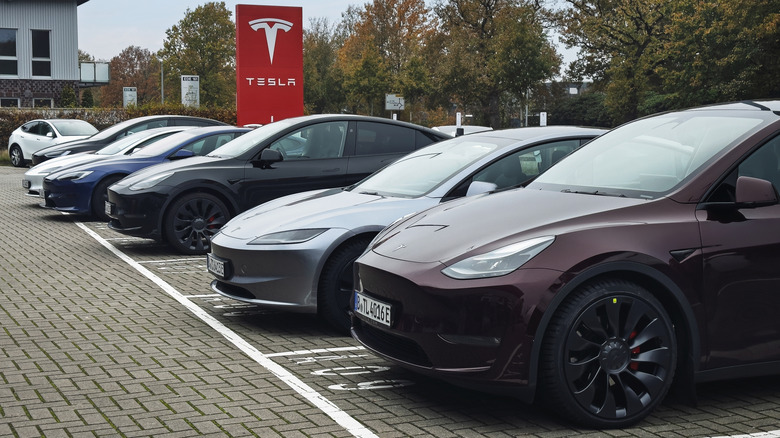
It would seem that Europe has all but forgiven Tesla CEO Elon Musk for all of the nasty crap he's pulled over the past few years, as registrations for his vehicles rose sharply across several European countries in October. It's an extension of the Austin, Texas-based automaker's recovery in the region, but the gains were admittedly a bit uneven as Chinese rivals continued to expand their market share. From Reuters:
Tesla registrations soared 248% in Sweden, 131% in Norway and 34% in Denmark, data from Mobility Sweden, Norway's OFV and Denmark's bilstatistik.dk showed.
The automaker also recorded strong growth elsewhere in Europe, with registrations rising 271% in Spain, 186% in Portugal and 94% in Italy, according to data from ANFAC, ACAP and Italy's Transport Ministry.
The rebound has been aided by easier year-ago comparisons, higher fuel prices, government incentives and continued growth in EV demand. But the pace of recovery varied significantly between markets, underlining the increasingly fragmented nature of Europe's EV sector as Chinese brands broaden their presence.
Tesla remains one of Europe's strongest EV brands, though its reliance on the Model 3 and Model Y has left it facing growing competition from rivals with broader lineups.
The automaker said in October it had ended the third quarter with its largest passenger vehicle order backlog in four years.
Norway remained a bright spot for Tesla. The carmaker recorded its best October on record and was the country's top-selling car brand with a 9.8% market share, according to OFV. Chinese brands continued to expand their footprint, accounting for 22.5% of new passenger car registrations, their highest monthly share on record.
[...]
"Northern Europe is quite open to the new players as long as they are efficient EVs. That's what allowed Tesla to get to a leading position and it's what is allowing the Chinese to gain ground fast," industry analyst Felipe Munoz, who runs the Car Industry Analysis platform, told Reuters.
I guess time really does heal all wounds. Well, that, and staying out of the spotlight as best as Elon really can.
4th Gear: Fiat's all outta chips
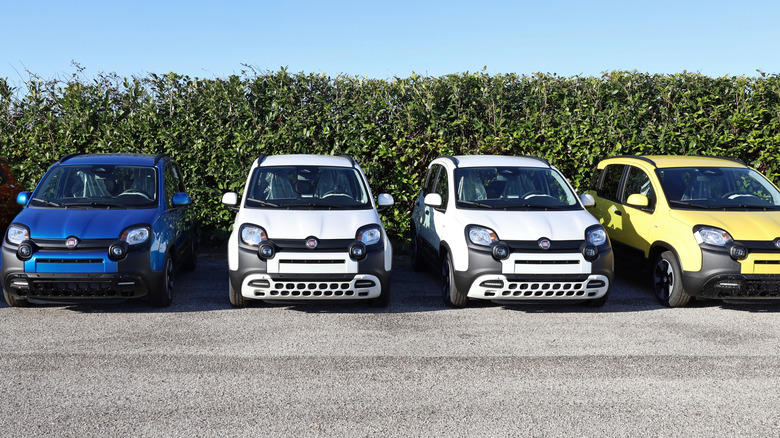
Stellantis is partying like it's 2021 again, because it's going through its own chip shortage in Italy. It says a shortfall for an electronic component used in an engine control unit is causing "significant" disruption to production of some Fiat models in Italy, and the issue could persist through the end of the year.
The shortage from a supplier has already weighed on October sales, especially for the Italy-made Fiat Pandina, one of the brand's best-selling models. There's a possibility that the shortage could lead to further issues, including production halts in the coming months at its plants in Pomigliano and Mirafiori — where it builds the Fiat 500. From Reuters:
"Stellantis and Fiat are working with the highest priority to identify alternative solutions and gradually restore normal operations," the group said.
[...]
The disruption could also impact Stellantis plants in Italy making engine components, including Termoli, where the N3 GSE engine used in both the Pandina and the 500 is assembled.
Mirafiori is currently undergoing a three-week production halt that started in mid-October due to a separate component shortage, with unions pointing at weak demand for the Fiat 500 as one of the factors behind the stoppage.
Mama mia! That's a spicy production nightmare — one an ailing company like Stellantis can hardly afford right now.
Reverse: Just go vote
 History.com
Folks, it's election day in America, so get out there and make your voice heard. If you're the type of person who says "voting doesn't matter," how about you do me a favor and kick rocks with open-toed shoes? It's your civic duty, and in a two-party system, harm mitigation and incremental gains are the name of the game. Go outside and get it done, and if you want to learn more about "Dewey Defeats Truman," head over to History.com.
The Fuel Up
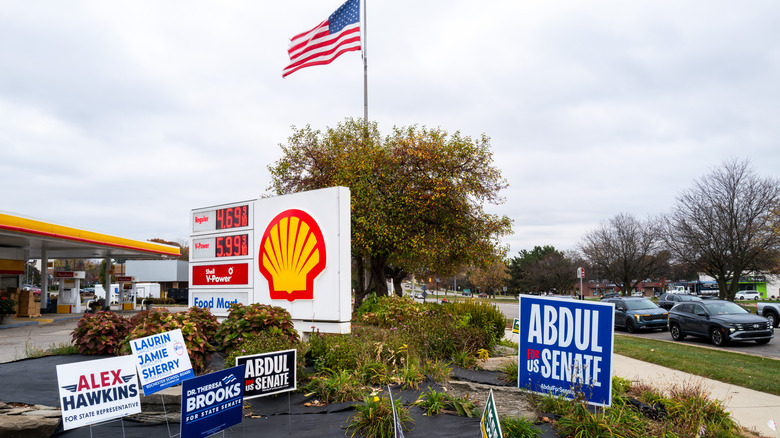
Gas prices are continuing their slow retreat back to relative normalcy, but certainly not at the pace the Trump administration would have hoped. Perhaps that's something to keep in mind while you're voting today. Usually the President has very little to do with fuel costs, but in this case, he's directly involved with the fact that WTI Crude Oil futures and Brent Crude prices remain elevated, sitting at $96 and $103, respectively, at the time of publication. You can thank his war with Iran for that.
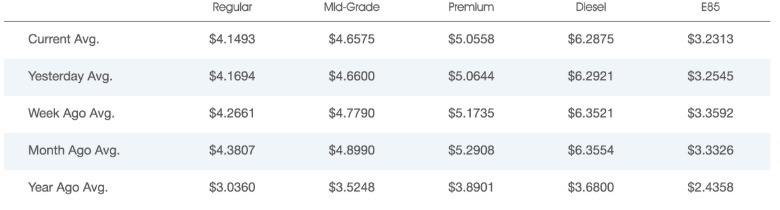
Anyway, here's where national average prices stand right now, according to AAA:
 AAA
This all shakes out to the average price of a gallon of gas dropping another 2 cents overnight to $4.15, according to AAA. Diesel, on the other hand, saw prices remain virtually the same at $6.29. Trump has said for a while now that prices will come down post-election, so I suppose we'll see what that's all about in the coming weeks and months. I wouldn't hold my breath, though.
On the radio: Willi Carlisle - Tulsa's Last Magician
Sometimes you go to a concert not knowing a single song and leave with them being one of your favorite new musicians. That's what happened to me last night with Willi Carlisle. A buddy of mine had an extra ticket to his show in Brooklyn, so I decided to go, even though I didn't really know his stuff, and let me tell you: I was blown away. Take some time today to listen to Carlisle's discography. It's haunting, funny, beautiful, tortured and deep — what all bluegrass and country music should be.