

Upcoming Senate Vote Would Make Already Banned Chinese Vehicles Even More Banned
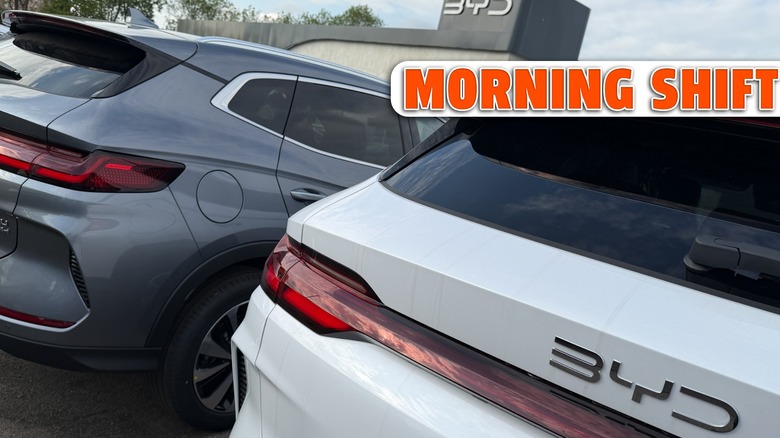
Good morning! It's Thursday, July 9, 2026, and this is The Morning Shift, your daily roundup of the top automotive headlines from around the world, in one place. This is where you'll find the most important stories that are shaping the way Americans drive and get around.
In this morning's edition, a bipartisan Senate committee is about to vote on making Chinese vehicles even more banned than they already are in the U.S., Polestar's inability to sell vehicles past 2026 has — as you may have imagined — hurt its sales, Aston Martin's creditors are starting to get antsy about the automaker's inability to make money and Kia is recalling over 460,000 Tellurides because the seat can catch fire.
Oh, and if you want a recap of the latest auto news delivered to your inbox each weekday morning because life is busy and you can't always head to our website, you can sign up for Jalopnik's free The Morning Shift newsletter right here.
1st Gear: Get outa here, Chinese cars! Oh, you weren't here? Well, get out anyway!
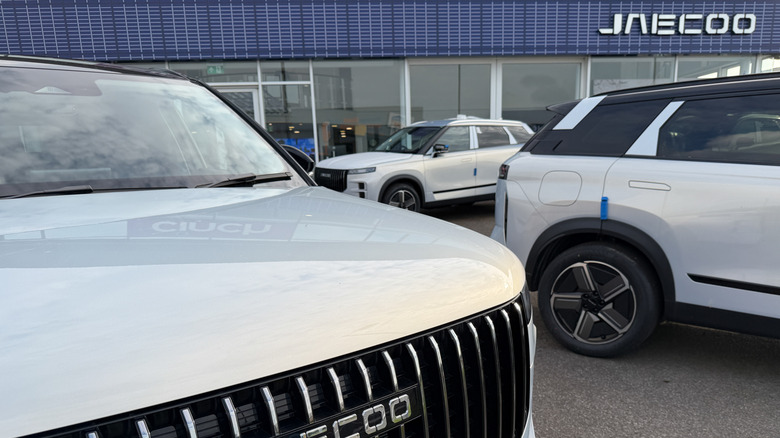
The U.S. Senate Commerce Committee is set to vote next week on a piece of goofy-ass bipartisan legislation that'll somehow toughen the already-tough government ban on Chinese automakers entering the U.S. vehicle market. The legislation, spearheaded by Republican Ohio Senator Bernie Moreno and Democratic Michigan Senator Elissa Slotkin, codifies regulations imposed by the Biden administration.
It effectively bans all Chinese automakers from selling passenger vehicles in the U.S. and takes other steps to prevent China from entering the light-duty market here. It would also ban vehicles designed in China if they had advanced connectivity as well as vehicle software.
Some could argue that this is government overreach; others, anti-competitive, anti-capitalists and anti-consumer. I'm not saying it is those things, but someone could certainly argue it. Of course, this is all being done under the guise of "national security." We can just assume the Flock cameras popping up everywhere aren't letting the U.S. government follow us wherever we go, and the Chinese-made phones in our pocket aren't enabling the Chinese government to do the same thing if they please. From Reuters:
The Biden administration imposed sweeping regulations in January 2025 that sought to ban Chinese automakers from selling passenger vehicles in the U.S., citing national security concerns linked to the ability of vehicles to collect sensitive data on American owners.
In March, auto trade groups representing nearly all major car companies — including the Detroit Three, Volkswagen, Hyundai and Toyota, parts manufacturers, auto dealers and others — urged the U.S. government to keep out Chinese carmakers, citing "serious concerns about China's ongoing efforts to dominate global automotive manufacturing and to gain access to the U.S. market."
They added China poses "a direct threat to America's global competitiveness, national security, and automotive industrial base."
Chinese autos face high tariffs, but U.S. consumers have become more interested in the vehicles, recent surveys show, and lower-priced Chinese EVs have gained significant market share in Mexico and Europe.
Of course, the low, low prices of Chinese vehicles are due in no small part to subsidies from the government, so I doubt we'd see the same sort of savings if they were to theoretically come over here. Still, it would still be great to see them stateside, because, by all accounts, they're pretty damn great.
President Trump seems to think so, too, because you never really know what the hell he's thinking. Back in January, he said he was open to Chinese automakers building vehicles in the U.S., but there hasn't been anything announced since then — not even after a Trump-Xi summit in May. My best guess is that he was just sort of shooting from the hip, and nothing will ever come of those comments.
2nd Gear: Polestar understandably isn't doing so hot after being forced to exit U.S. market
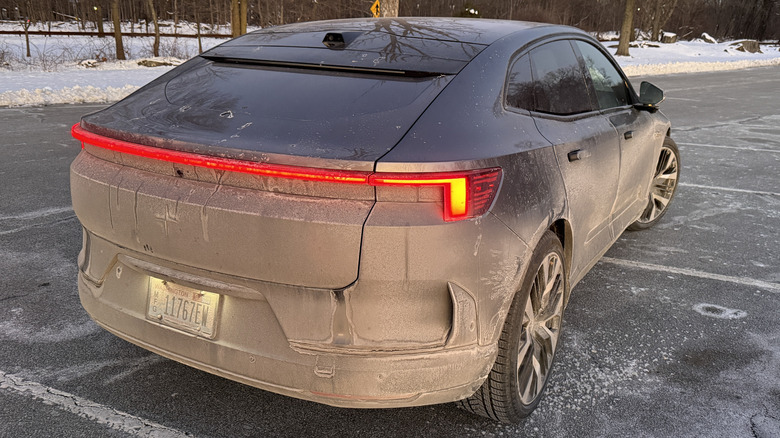
Speaking of bans, let's turn our attention to poor Polestar. The Swedish-Chinese automaker reported a 4% fall in quarterly sales after being handed a U.S. market ban following the 2026 model year. I suppose that's not entirely unexpected, but it only adds to the company's ongoing struggles to turn a profit.
As EV demand has slowed — especially in the U.S. — Polestar turned its attention to Europe, and that market accounted for 80% of its sales in the first half of the year. I'm sure that'll soften the blow of losing out on the U.S. at least a little bit. Regardless, it's still something that is going to inevitably hurt U.S. consumers who now lose out on some pretty solid products (and some really sick upcoming ones as well). From Reuters:
Second-quarter sales fell to 17,296 cars, compared with 18,026 vehicles sold in the same period last year.
The ban raises questions about the future production of the Polestar 3, its only U.S.-manufactured model.
[...]
Amid tariff pressures, Polestar has opted to refresh aging models rather than launch entirely new ones. The company in February announced refreshed versions of its best-selling Polestar 2 and Polestar 4 models over the next year.
In May, Polestar reported a bigger first-quarter loss, as pricing pressure and U.S. tariffs offset stronger sales.
"The first customer deliveries of Polestar 5 are set to start and production of the Polestar 4 SUV has started, with first deliveries expected during the fourth quarter," Polestar CEO Michael Lohscheller said.
Back in June, the U.S. Commerce Department denied Polestar authorization to sell vehicles here under the Connected Vehicles Rule, which restricts cars with connected-vehicle technology tied to China. It bans the automaker, which is majority-owned by Geely, from the U.S. market starting in the 2027 model year. Polestar says it will continue to sell off existing 3 and 4 inventory in the U.S., maintain access to its service network and continue selling second-hand cars.
Oddly, Volvo — Polestar's sister brand — was given special authorization by the Commerce Department a month earlier. So, it can continue on. I'm going to assume it's because the Trump administration has heard of Volvo but didn't know what Polestar was. I know that sounds stupid, but I really wouldn't be shocked.
3rd Gear: Aston Martin creditors are banding together as the company struggles
A group of Aston Martin's creditors have signed a cooperation pact as the automaker deals with mounting losses while it struggles to turn itself around. The ad hoc group of senior secured bondholders is holding the bag on more than 50% of notes, and the new agreements binds them to act in concert in negotiations with the company.
Groups like this have been used by debt investors to preserve a united front when working with a struggling firm — like Aston Martin. Participation is open to anyone who holds a note against Aston Martin, and it's inviting others to join in as well. From Bloomberg:
The British luxury carmaker has struggled to restore profitability after it was rescued in 2020 by a group of investors led by Canadian billionaire Lawrence Stroll, which has repeatedly injected fresh cash into the business. Other shareholders include Geely's founder Li Shufu, Saudi Arabia's Public Investment Fund and Mercedes-Benz AG.
The company has been hit by product delays, quality issues, weak demand in China and US tariffs. While first quarter revenue rose 16% as deliveries of higher-end models increased, the carmaker posted a pretax loss of £65.5 million and net debt climbed to £1.46 billion ($2 billion).
[...]
Aston Martin's debt has fallen to distressed levels amid ongoing earnings pressure. Its $1.05 billion of secured notes due in 2029 traded at about 72 cents on the dollar on Wednesday, down about 4 cents on the day, according to pricing firm Trace. The notes were trading at about 95 cents at the beginning of the year, the data show.
Aston Martin also has a £595 million senior secured sterling-denominated bond due in 2029, according to data compiled by Bloomberg.
Fitch Ratings last downgraded the company's credit score in May, and said that it expects Aston Martin will "need significant cash injections over the next four years to meet shortfalls."
As a way to stem some losses, CEO Adrian Hallmark has done his best to rein in spending. That includes cutting jobs and putting new vehicle launches under review. The automaker has also pursued alternative financing measures, including a deal with Stroll's struggling (to say the least) Formula 1 team for future Aston Martin naming rights.
4th Gear: Kia recalls nearly 463,000 Tellurides for seats that could catch fire
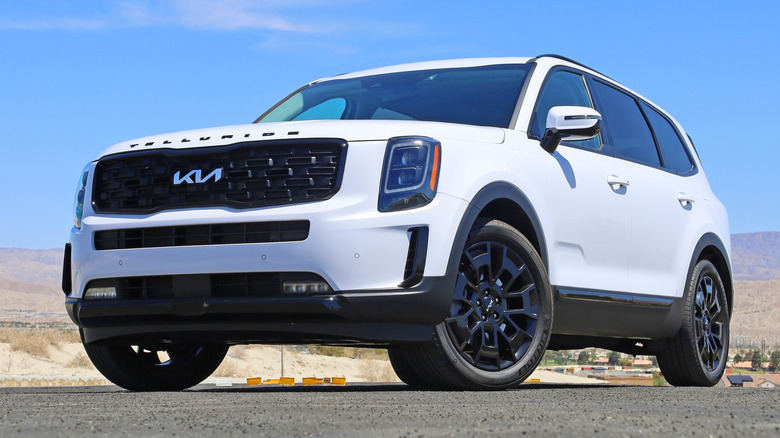
Kia is recalling just about 463,000 2020 to 2024 Telluride crossovers because — get this — the seats could catch fire while being driven or parked, according to the National Highway Traffic Safety Administration. No, I'm not kidding. From CBS News:
The front power seat motor may overheat due to a stuck power seat slide knob or an improper repair during a prior recall, and the result could be a fire while the vehicles are being driven or parked, the agency says.
As a result, the NHTSA is advising owners of the affected Tellurides to park outdoors and away from structures until the latest recall repair is done.
Dealers will install an electronic fuse assembly free of charge, the agency says, adding that letters notifying owners about the issue are expected to be mailed on Aug. 13.
There's no word on whether the Telluride's mechanical twin, the Hyundai Palisade, will have the same recall done. I guess you could argue the heated seats work a bit too well.
Reverse: Pretty great
 History.com
Has anyone else watched "The Great" starring Elle Fanning and Nicholas Hoult on Hulu? It ended a few years ago, and it's incredibly inaccurate from a historical perspective (on purpose), but it is fantastically funny and a great watch. I cannot recommend it highly enough. That Catherine was not a very chill lady, I'll tell ya that much. Anyway, if you want to learn more about the actual Catherine the Great, head over to History.com.
The Fuel Up
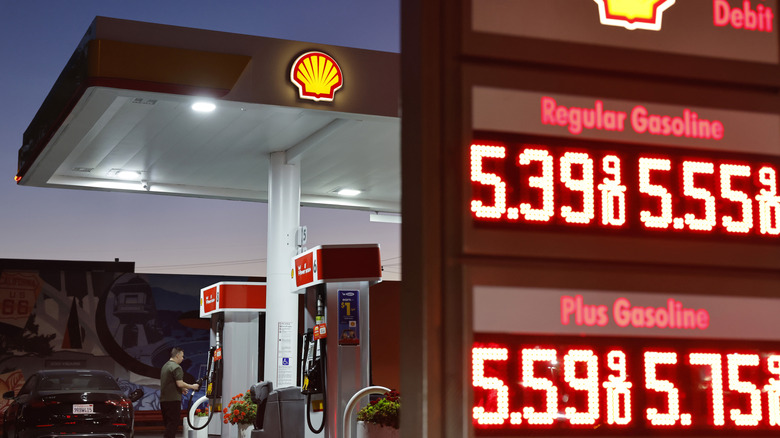
Welp. As soon as news broke that the peace deal between the U.S. and Iran had fallen apart, it was pretty much a guarantee that gas prices were going to go back up, so here we are. I've got little doubt this trend will continue as the situation deteriorates in the region and drives fuel prices up even further. WTI Crude Oil futures and Brent Crude prices were sitting at $73 and $77, respectively, at the time of publication.
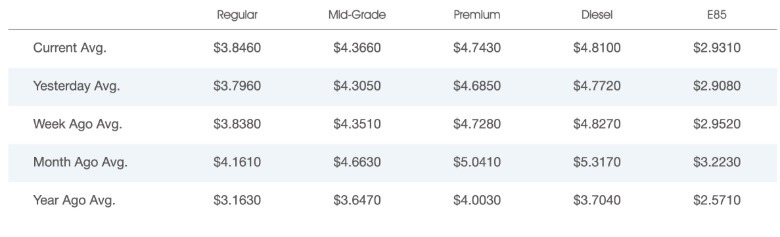
Here's where national average prices stand right now, according to AAA:
 AAA
AAA
What this all means is that the average price of a gallon of regular gas jumped 5 cents overnight to $3.86. There have only been a handful of times during this entire war where prices jumped 5 cents, so this is really indicative of a bad shift. Still, we're a good ways away from the 2026 peak we saw back on May 21, when prices hit $4.56 per gallon. Maybe we'll get there again. Who the hell knows anymore?
On the radio: Bonnie Tyler - Total Eclipse of the Heart
Today, we're all turning around in honor of Bonnie Tyler. It's really the least we can do. Rest easy, icon.