

Trump Administration 'Resets' CAFE Standards, Claiming It'll Lead To The Affordable Cars Americans Asked For
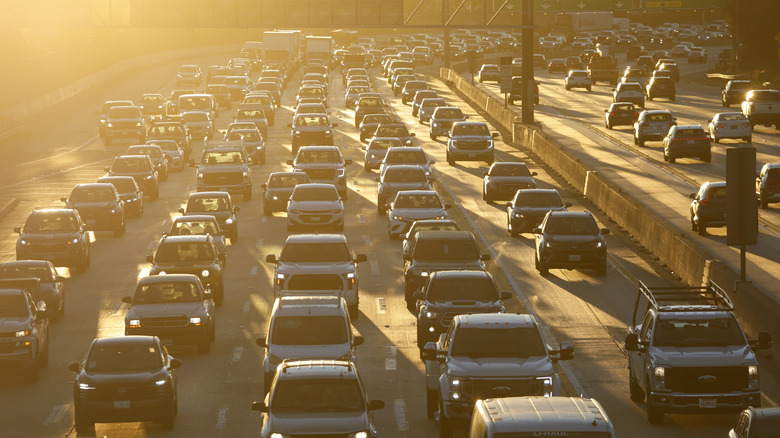
For a president who claimed prior to his election that he'd help make America affordable again, the reality is that Trump's done the exactly opposite. The Iran war has already cost Americans an extra $100 billion at the pump, and as gas prices continue to hover in the extra-expensive territory, that number is rising somewhat exponentially into the midterms. Fear not, as Trump and Co. have a solution to help make things cheaper: booting current fuel economy standards to the curb.
Americans who still choose to rot their brains on the bands of Truth Social were treated to another "victorious" proclamation from the President over the weekend. "America is back," he wrote, explaining that his administration introduced new fuel economy standards in order to give Americans the cars they actually want, while saving them "thousands." On Monday, the U.S. Department of Transportation along with the National Highway Traffic Safety Administration shared the official plans for U.S. Transportation Secretary Sean Duffy's "Freedom Means Affordable Cars" initiative along with detailed guidance on the reset of CAFE standards in an 892-page document.
Changes included dropping current average fuel economy standards goal for 2031 by nearly 33% from 50.4 miles per gallon to 34.5 mpg. Vehicle classifications as to what qualifies as "passenger vehicles" are also adjusted. The new rules designate a selection of light trucks into passenger vehicles, which will have a fairly significant impact on a brand's overall fuel economy numbers. That will take effect in 2030.
Another impact is the end to the inter-manufacturer trading of credits earned for manufacturing vehicles exceeding CAFE fuel economy standards. Typically these could be traded between automakers to help those with struggling fleets to reach regulations. While a manufacturer can trade among its own brands, it can no longer use other companies' credits.
Another empty promise to make things cheaper, again, for Americans

The Department of Transportation claims these new standards are meant to drop yearly oil consumption in 2050 by 1.3 billion barrels. It's also supposed to save Americans about $1000 on a future new car purchase. But saving a $1000 on a new car purchase isn't likely, nor are the fuel usage or the costs associated with it. Part of that is in hopes that manufacturers actually take part in lowering their own fuel economy standards, which will all be dependent on where they want to sell cars (and other countries are much more strict on future fuel economy standards).
It'll also be difficult to convince Americans this is a good plan, since as of September they've already spent an extra $771 this year on fuel costs alone. Lowering new cars' average fuel economy will likely cost them even more. If the administration really wanted to save Americans money, they'd end the war in Iran, and get rid of those egregious tariffs that have also increased the cost of vehicles from parts and materials to destination and delivery charges.
Duffy is convinced otherwise, though, saying, "With our commonsense standards in place, we are making the dream affordable again, putting safer cars on the road, and investing in the American autoworker." NHTSA administrator Jonathan Morrison added, "By reducing vehicle prices, more American families will be able to afford newer vehicles, and sensible standards allow automakers more freedom to design and produce vehicles consumers actually want."
What consumers really want right now is not to pay an extra $4.50 a gallon for regular gas in their truck or crossover. Or to stop paying twice the amount for the same groceries they purchased back in 2020. Yet here we are with a plan that sounds more like a crappy marketing campaign using buzzy numbers and words to get people to remember the claimed savings come November. And much like everything promised in Trump's six total years in office, the results will continue to cost Americans even more.