

Chinese Automakers Could Take Over 10% Of The U.S. Market If Given The Chance

We've talked a lot about how U.S. lawmakers, car companies, suppliers, dealerships and pretty much everyone else in the auto industry are doing their damnedest to keep Chinese automakers out of the U.S. Currently, a Biden Administration-era measure virtually bans China-made vehicles from being sold here, and legislation could make it even stricter, but what would really happen if Chinese vehicles were allowed to be sold here? Would it really be that bad?
Well, according to market research firm Mobility Global, if restrictions were eased and China-based automakers were allowed to do business Stateside, they'd be selling as many as 1.7 million vehicles per year by 2038, Bloomberg reports. That translates to about 11% of the world's second-largest automotive market (right behind China itself). That's a sizable chunk of sales, and a hell of a lot of money that could go out the window, so it's sort of easy to see why stakeholders don't want these companies coming over here. Sure, they can blame the idea of "national security" and "privacy," but you're reading this on your China-made phone, and I'm writing this on my China-made laptop, so that doesn't really pass the smell test.
The roadmap
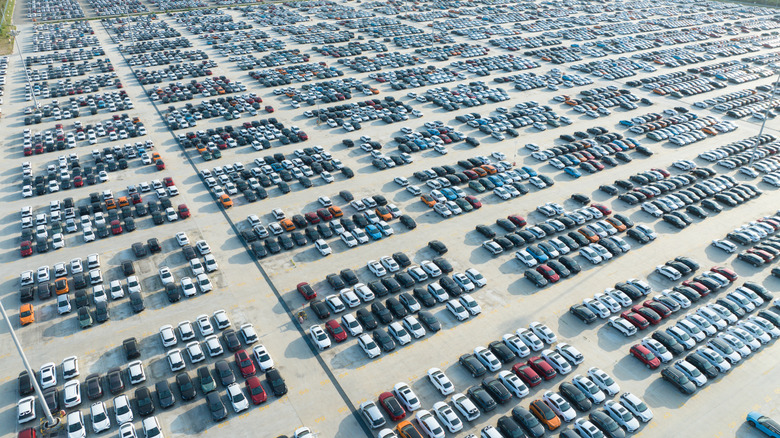
If these restrictions were theoretically lifted tomorrow, top Chinese automakers like BYD, Geely and SAIC would probably seek to export vehicles to the U.S. from plants in Mexico starting as soon as 2029, Peter Nagle, Mobility Global's associate director of U.S. vehicle forecasting, told Bloomberg. After that, those companies could then shift production to new U.S. factories within the next decade, once sales for popular models exceed about 40,000 vehicles per year.
In theory, demand for those models could boost new car sales in the U.S. by about 600,000 vehicles per year. That's a good thing for the economy, even if they're not home-grown products. After all, the U.S. vehicle market has remained relatively flat for the past few years, and since Chinese cars tend to be cheaper than their Western counterparts, they could offer a more affordable solution to buyers who are finding the fact that — according to Automotive News, the average new car cost $52,669 — a bit unpalatable.
Of course, any inroads from Chinese automakers would come at the expense of car companies already doing business here, and Bloomberg says they'd shed about 1 million sales per year. It certainly makes sense why they're fighting so hard to keep China out.
Never let 'em know your next move
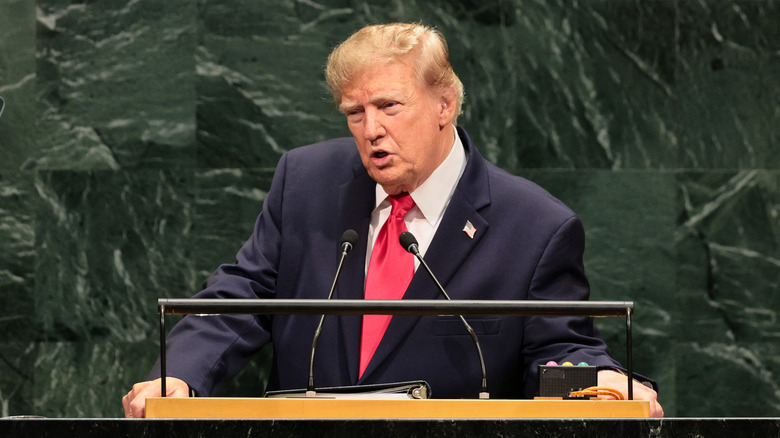
For the time being, it does seem like this contingent — currently being led by Ohio Republican Senator Bernie Moreno and Michigan Democratic Senator Elissa Slotkin — is going to get its way. Mobility Global says there's "low-to-moderate probability" that barriers will be lifted over the next decade that would allow China-made vehicles into the U.S. This prediction assumes imports from China remain prohibited because of high tariffs in the U.S.
Policymakers would also have to lift rules blocking cars with Chinese infotainment, mapping and other connected services. President Trump has also enacted punitive trade restrictions against those that target imports from Canada and Mexico, and there's really nothing to indicate that those are going to ease anytime soon, according to Bloomberg.
The real wildcard in all of this is Trump. As we've previously reported, during an interview with FOX News, he mentioned how he wouldn't be opposed to Chinese car companies building cars in the U.S., much to the chagrin of everyone I've previously mentioned. You really can't ever tell what this dude is thinking.