

The Trump Administration Is About To Gut Biden-Era Fuel Economy Standards

Good morning! It's Tuesday, September 1, 2026, and this is The Morning Shift, your daily roundup of the top automotive headlines from around the world, in one place. This is where you'll find the most important stories that are shaping the way Americans drive and get around.
In this morning's edition, the Trump administration is poised to slash EPA fuel economy standards and open the door for more gas guzzlers, Genesis is still serious about Europe, Volkswagen is in talks to build Iron Dome parts for Israel once again and Ford is recalling nearly 150,000 Mustangs for a wiring issue that could shut down the engine, headlights, windshield washing system, air conditioning, or engine cooling fan. Never change Ford.
If you'd like a recap of the latest auto news sent to your inbox each weekday, you can sign up for Jalopnik's free Morning Shift newsletter here.
1st Gear: Worryingly low fuel economy standards are coming

You know what I find terribly woke? Breathable air and a livable planet. That may be why Transportation Secretary Sean Duffy said the Trump administration is about to announce drastically lower fuel economy standards — a sharp reversal of Biden-era standards that were meant to push automakers into building more fuel-efficient and environmentally friendly vehicles.
There's no official word from Trump or his goons on what the new standards will be, but automakers apparently expect it'll be similar to a December proposal from the National Highway Traffic Safety Administration. By 2031, that proposal would bring fleet-wide averages to 34.5 mpg, down from the Biden-proposed 50.4 mpg they're currently supposed to hit. From Reuters:
"We are about to announce a common-sense fuel economy standard because we want Detroit to build cars that Americans want to buy — not cars that Democrats want Washington to build," Duffy said at an appearance in Michigan.
Biden focused on reducing U.S. greenhouse gas emissions and fossil fuel use, accelerating a transition to clean energy and making the U.S. a global leader in clean-energy technology and manufacturing.
NHTSA in December proposed retroactively revising down the 2022 fuel economy standard and then raising it between 0.25% and 0.5% annually through 2031. Biden increased required fuel efficiency for cars by 8% annually for model years 2024 and 2025, 10% for 2026 and 2% annually from 2027 to 2031.
Automakers get future compliance credits for achieving higher-than-required efficiency in prior model years, so the Trump administration's retroactive change to 2022 will make it easier for the companies to meet future fuel standards.
Biden's rules sought to prod automakers to build more electric vehicles to meet the rising fuel-efficiency standards.
[...]
Congress decided in 2025 to no longer collect penalties for failure to meet vehicle fuel economy standards, saving automakers hundreds of millions of dollars, and ended $7,500 tax breaks for consumers who buy EVs. It also rescinded California's authority to outlaw gasoline-powered vehicles by 2035, a move the state is challenging.
NHTSA says the proposal it put forward would cut new vehicle costs by a whopping $930 each. While those incredible savings might seem worth sacrificing your firstborn over, let me tell you a few numbers: it also says fuel consumption would increase by about 100 billion gallons through 2050, carbon dioxide emissions would rise by about 5% and, oh yeah, fuel spending would increase by $185 billion. I've got a feeling that $930 in savings will be wiped away pretty quick.
Goddamn, I am so tired of winning.
2nd Gear: Genesis isn't giving up on Europe
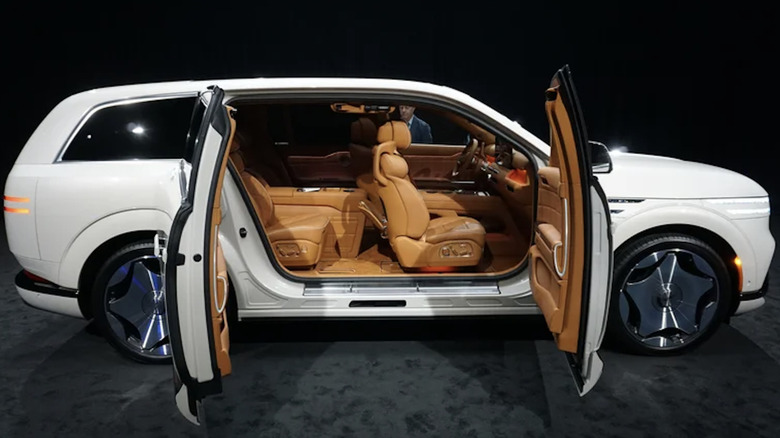
Genesis is doubling down on Europe despite sales falling 19% as its German rivals continue to dominate. It hopes a planned expansion into Austria, Denmark, Poland and Portugal, as well as a push toward more electrification, can help overcome meh-at-best sales in the region. It first showed up in the UK, Germany and Switzerland in 2021, and has added a handful of other countries since then.
The Hyundai-owned luxury marque aims to sell 350,000 vehicles by 2030 — up from 221,482 in 2025. To help accomplish that, the Korean automaker plans to expand its presence to 40 markets by the end of the decade, increasing from the 24 it's currently in. From Automotive News:
Genesis aims to tap global demand for luxury electrified vehicles with an extended-range electric SUV to be launched globally in early 2027. The model combines a combustion engine with a large battery and will offer a total range of 1,030 km (640 miles). Genesis has not said where it will be sold.
The brand will also add the GV90, a flagship electric SUV that has a 123-kilowatt-hour battery and luxury-focused features including optional rear coach doors, crystal-style controls and front seats that swivel.
[...]
Europe remains a weak spot for Genesis. The brand's European sales fell 19 percent in the first seven months to 1,448 vehicles, according to market researcher Dataforce, putting the brand below Maserati.
Genesis has since shifted its European lineup almost entirely toward electric vehicles. EVs accounted for 95 percent of Genesis sales in the region through July, led by the GV60 and GV70 electric SUVs, Dataforce figures show.
European demand for battery-powered luxury vehicles is growing. Full-electric models accounted for 27 percent of premium sales in the first seven months, with plug-in hybrids taking a further 18 percent, according to Dataforce. Among volume brands, EVs accounted for 22 percent of sales and plug-in hybrids 8.3 percent.
Hyundai says Genesis is the world's fastest-growing premium brand, reaching cumulative global sales of 1 million vehicles in seven years and eight months. That compares with nine years for Lexus and 14 years for Infiniti.
Hyundai says Genesis is the world's fastest-growing premium brand, reaching cumulative global sales of 1 million vehicles in seven years and eight months. That compares with nine years for Lexus and 14 years for Infiniti.
[...]
Genesis is betting that continued expansion of the premium market will create room for new players. Hyundai expects the segment to grow to more than 3 million vehicles by 2031, driven by the U.S., Europe and China.
Outside of BMW, Mercedes-Benz and Audi, luxury automakers are having a fairly miserable time in Europe. Those three combined to account for 71% of premium sales in the region for the first seven months of 2026, according to Dataforce. Volvo came in fourth with a 10% share, then Mini with 6.3% and Land Rover with 3.6%. Everyone else is just competing for scraps. If Genesis wants to make headway there, it's going to need to stick its elbows, or in this case, Neolun Arch Gates, out.
3rd Gear: VW, Rafael are still working out their Iron Dome parts deal
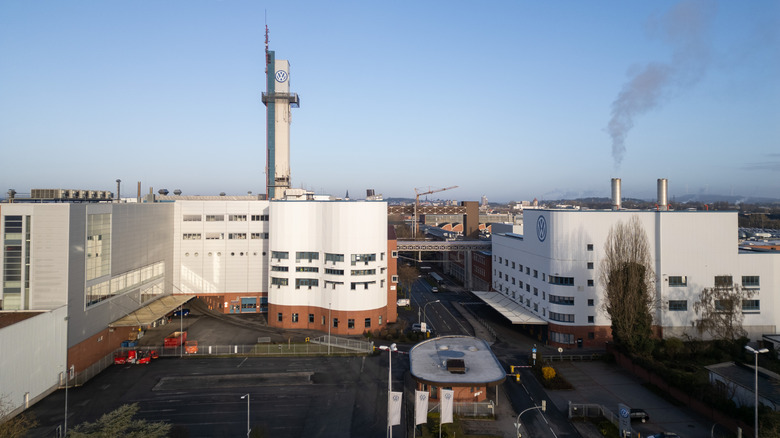
Who's ready for some grossness this morning?! I sure am, which is why I'm here to tell you that Volkswagen, the German state of Lower Saxony and Israel's Rafael Advanced Defense Systems are closing in on a deal to produce military equipment for Israel's Iron Dome air-defense system at the automaker's Osnabrück factory. The plan was nearly derailed by key shareholders who objected to the plan, and talks are still under way, so a deal still isn't certain.
The plan would see Volkswagen's Osnabrück factory building things like heavy-duty trucks that'll be used to transport missiles, launchers and power generators. It has been opposed by the Qatar Investment Authority, which owns more than 10% of VW and controls 17% of the voting rights.
Qatar doesn't formally recognize Israel, and relations between the two have been frosty-at-best since the latest war in Gaza started in October of 2023. From Bloomberg:
One of the options under consideration is that Volkswagen could transfer parts of the Osnabrück site to Lower Saxony, which would then form a joint venture with Rafael, one of the people said. In that scenario, Volkswagen wouldn't directly cooperate with the Israeli state-owned defense company, a workaround that would address the concerns of Qatar's sovereign wealth fund.
Lower Saxony is currently examining how it might participate in a potential future industrial solution for the Osnabrück site, a spokesman of state premier Olaf Lies said. Spokespeople for Rafael and Volkswagen declined to comment. QIA didn't immediately respond to a request for comment.
A deal could help resolve one of the most contentious issues in Volkswagen's restructuring negotiations ahead of a Sept. 4 supervisory-board meeting. Chief Executive Officer Oliver Blume is seeking billions of euros in savings as high labor costs, underused plants and intensifying Chinese competition weigh on profitability, while powerful labor representatives have rejected factory closures.
The project would offer a lifeline for the struggling Osnabrück plant, whose last Volkswagen model, the T-Roc Cabriolet, is due to end production next year.
[...]
The Qatar Investment Authority has two supervisory-board seats, but doesn't have a blocking minority and couldn't stop the project on its own, the people said.
Theoretically, this deal with Rafael could provide Volkswagen with a template for similar deals at other underutilized plants. Blue has said in the past that the automaker will seek partners, investors, and new industries where replacement vehicle production isn't feasible. That's all well and good; it's just sort of a shame that building parts for the Iron Dome is where we ended up.
4th Gear: Ford recalls nearly 150,000 Mustangs for goofy wiring harness messs
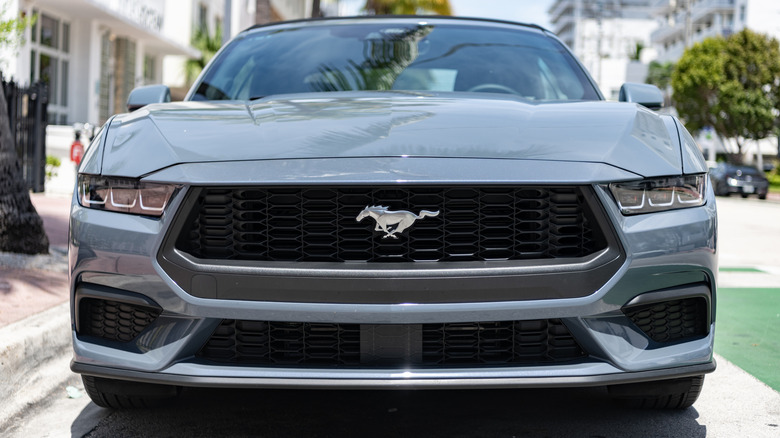
Ford, bless your heart. The Blue Oval is recalling 148,663 Mustangs built between September of 2022 and June of 2026 because of a wiring harness issue that can do all sorts of fun things like shut down the engine, turn off the left, right or both headlights, disable the windshield washer fluid pump, kill the air conditioning or turn off the engine cooling fan. It's truly impressive. At the very least, just 1% of these vehicles are expected to actually have the issue. From the National Highway Traffic Safety Administration:
Heat shrink that can result in broken engine compartment wiring harness ground eyelets was added to the harness beginning with 2024 model year production with corrective actions to address the condition introduced on June 9, 2026.
[...]
Dealers will replace the engine compartment wiring harness ground terminals, free of charge. Interim letters, notifying owners of the safety risk, are expected to be mailed August 31, 2026. Additional letters will be sent once the remedy is available, anticipated in March 2027.
For those keeping score at home, this is now Ford's 67th recall of 2026 — literally lapping the field, as Stellantis is currently in second with 30 recalls. Those 67 recalls also account for a whopping 13,809,029 vehicles. Keep in mind, during 2025's record-setting year of recalls, the 153 it issued only account for 12,930,717 vehicles. Good work, Ford. We're all proud of you.
Reverse: That's how you build a sub, Stockton
 History.com
Finding the Titanic in 1985 must have been such a trip for the entire world. I truly cannot even imagine. Shoutout to Bob Ballard for that one, because I was very much a Titanic kid growing up. Without this, who knows? Maybe we don't get "Titanic" in 1997, which is somehow underrated while also being one of the highest-grossing films of all time. That's a discussion for another day, though. Anyway, if you want to learn more about this discovery, head over to History.com.
.
The Fuel Up
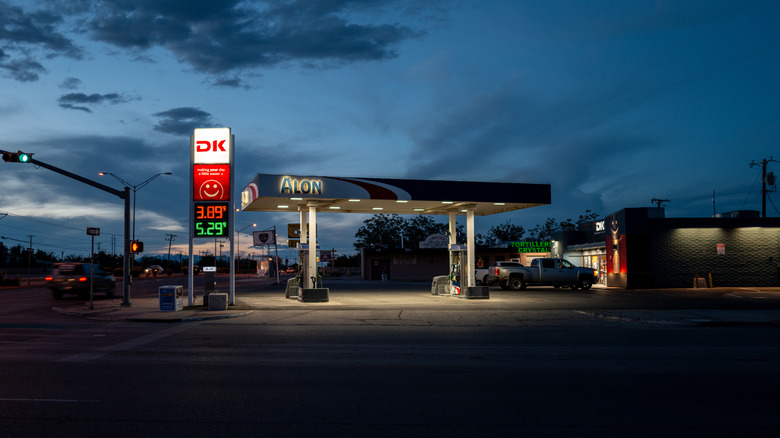
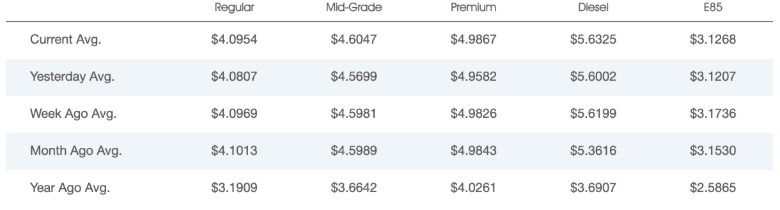
'll give you one guess as to what the average price a gallon of gas is currently sitting at. That's right! It may be the beginning of a new month, but we're exactly where we have been for the past, uh, I don't even know how long it has been at this point. At least things are stable, I guess. Worringly, WTI Crude Oil futures and Brent Crude prices are elevated — sitting at $88 and $93, respectively, at the time of publication. Perhaps we'll see some changes soon.
Here's where national average prices stand right now, according to AAA:
 AAA
AAA
What all this means is the average price of a gallon of regular gas was up 2 cents overnight to $4.10, according to AAA. We're still a good bit off from the 2026 high of $4.56 that we saw back in May, but we've now been stuck within a few cents of $4.10 for well over a month, so I'm not entirely sure we'll get back to $4.56 before the year is up.
On the radio: Le Tigre - My My Metrocard
It's the first day of September, which has me feeling very angsty in, I guess, a very late-'90s sort of way. Though the Metro Card may be dead, its ethos lives on. Also, kudos to Le Tigre for clocking how big a loser Rudy Giuliani was decades before most other people did.