

Stingy Automakers Mean Fewer Shoppers Are Leasing Cars

Good morning! It's Thursday, July 30, 2026, and this is The Morning Shift, your daily roundup of the top automotive headlines from around the world, in one place. This is where you'll find the most important stories that are shaping the way Americans drive and get around.
In this morning's edition, lease numbers have dipped as automakers pull back on deals, Stellantis turned a profit in the second quarter (but it's not good news everywhere), Carvana is thriving like never before, and over 300,000 Mercedes-Benz vehicles are being recalled because a broken door sensor could make it roll away. New cars are so weird.
Oh, and if you want a recap of the latest auto news delivered to your inbox each weekday morning because life is busy and you can't always head to our website, you can sign up for Jalopnik's free The Morning Shift newsletter right here.
1st Gear: Americans lease fewer cars as automakers get cheaper

The average new car is currently $52,105, according to Automotive News — the highest price it's ever been — so you'd think leasing would also be at an all-time high to help folks afford these prices, but that's very much not the case. In actuality, vehicle leasing has been declining in the U.S. in recent years. Prior to the pandemic, leasing made up about 30% of the new-vehicle market. That number dropped to 17% following post-pandemic car shortages. To this day, leasing hasn't recovered, and in the first half of 2026, leases accounted for 23% of new car deals.
It's not because Americans don't want to lease cars anymore, and it's not because there's still a shortage. It's because automakers have gotten stingier. They're no longer willing to offer the low monthly rates that have enticed buyers to lease in the past. Shoppers returning at the end of their term are often being presented with monthly rates on their next leases that are hundreds of dollars higher, and it just doesn't make the same financial sense anymore. From Reuters:
The decline in leasing has contributed to a broader affordability crunch for U.S. car shoppers, and crimped the flow of returning customers to dealerships. The lack of cheap leases has pushed some buyers to instead stretch their financing terms, sometimes to as long as seven years.
[...]
Leasing typically gives buyers lower monthly payments than on a financed purchase. For automakers, leases are generally less profitable, but they help boost new-vehicle deliveries and keep a steady stream of buyers coming back.
Leasing is especially popular among luxury car buyers who like new features and designs.
But automakers learned a lesson amid a vehicle-availability crunch from 2021 to 2023, which stemmed from a computer-chip shortage: Keeping dealer inventories tighter curbs the need for discounts and other incentives, including lease deals.
That new approach, along with higher interest rates in recent years, means lease customers are paying more.
Leases still offer lower monthly payments – the average is about $650 a month compared with $800 to finance a new vehicle, according to JD Power.
But "they're still nowhere near as good as they used to be," said Ivan Drury, director of insights at car-shopping site Edmunds.
The leasing decline is also partly why 23% of new-vehicle purchases in the second quarter included 84-month (seven-year) loans, according to Edmunds data.
A lack of leasing is also having downstream effects for dealers and used-car shoppers. Those dealers are now losing out on a steady stream of customers who return regularly every two or three years.
Additionally, the newfound drop means a key supply of off-lease cars for the used car market is now gone. Used cars have been in short supply since the pandemic, and it has driven up prices. The average selling price of a three-year-old used vehicle has increased 43% since before Covid as off-lease volume has gone down.
Unfortunately for all of us, the pandemic taught automakers there were a lot of very creative ways they could squeeze customers for money, and there's very little we can do about it.
2nd Gear: Stellantis hits in North America, misses in Europe
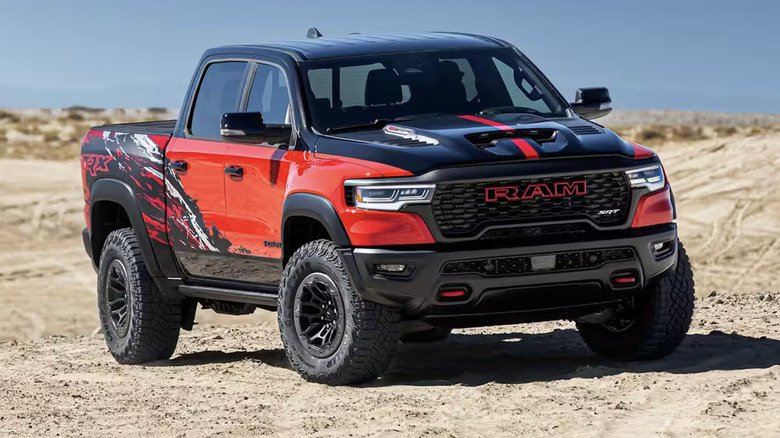
Stellantis laid out an incredibly ambitious turnaround plan in May, and we might be seeing the first evidence of it working ... somewhat. The transatlantic automaker managed to turn a second-quarter profit thanks to solid demand in North America for vehicles like the Ram 1500. However, it's not all good news. The automaker's European arm was still in the red.
Net income for the quarter increased to $336 million, which is mighty impressive when you consider the fact it took on a $2.15 billion loss during the same period last year. Adjusted operating earnings rose to $887 million from $244 million a year earlier, but high raw-material costs and weak pricing in Europe hurt its results. Strong competition from Chinese automakers certainly didn't help matters, either. Stellantis' European operating margin improved but was still negative, with the region posting a $108 million loss. From Automotive News:
CEO Antonio Filosa is rebuilding Stellantis' North American business after the automaker lost market share for several years. Sales and adjusted earnings improved in the quarter, though higher recall costs cut into profitability. The company earlier this month named new leaders for its Jeep and Ram brands.
In Europe, where Stellantis is partnering with China's Leapmotor, shipments increased 5 percent on demand for smaller models including the Fiat Grande Panda, Citroen C3 and C3 Aircross, and the Opel Frontera, as well as the new Jeep Compass and Leapmotor vehicles, notably the T03 and B10, Stellantis said.
Stellantis's net revenues in the quarter were flat at €16.4 billion as higher volumes were offset by negative net pricing.
Adjusted operating income improved by €300 million. Europe's €94 million loss made it Stellantis' only region to lose money in the quarter.
In South America, adjusted operating income declined by 49 percent to €402 million, primarily due to the non-repeat of a Brazilian indirect tax credit. Middle East and Africa adjusted operating income was flat at €121 million while Asia Pacific increased adjusted operating income by 35 percent to €27 million.
[...]
Stellantis estimates a full-year net tariff headwind at €1.0 billion to €1.2 billion. Net tariff costs in the first half were €300 million, including a U.S. tariff refund of €400 million in the first quarter under the International Emergency Economic Powers Act, which gives the president authority to regulate commerce during national emergencies.
Stellantis confirmed its full-year targets of a mid-single-digit percentage increase in revenues and a low single-digit adjusted operating margin.
Overall, the news is encouraging for Stellantis, which has its work cut out for it if it wants to return to the form it once had. The plan Filosa laid out in May to achieve this is an ambitious one. It's a $70 billion overhaul of the company's vehicle portfolio that includes 60 new models by the year 2030, with nine priced under $40,000 for North America as well as a slew of high-performance vehicles made for lunatics like me.
Fingers crossed this is just the beginning.
3rd Gear: Carvana can't stop winning
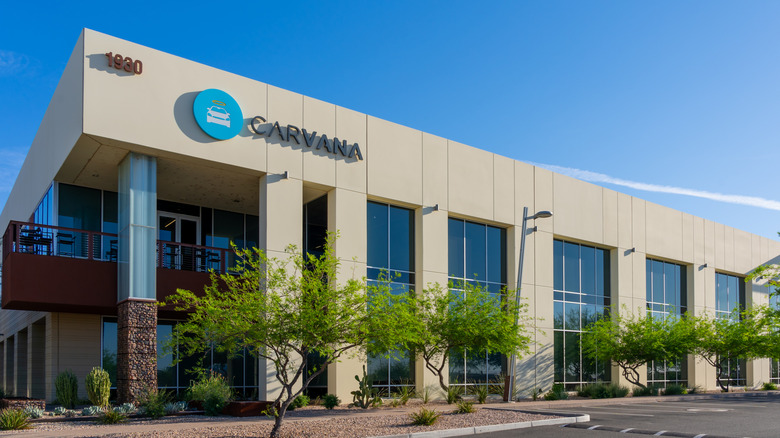
Carvana is having a great time right now. Its decision to enter into the land of new-vehicle sales has paid off, and then some, and its used vehicle business is doing better than ever. The two combined businesses have driven the company to record second-quarter profits, with a net income of $513 million — up from $308 million the same time a year ago. Revenue also jumped 52% in Q2 to more than $7.3 billion. That's also a quarterly company record.
During the time period, Carvana sold a record 197,325 vehicles, up 38% over the same period last year, but its gross profit per used vehicle sold was actually down slightly to $3,547 — an $89 decrease. From Automotive News:
The retailer is growing to meet a goal of selling 3 million retail vehicles by 2030 to 2035. Carvana said it made progress during Q2 on increasing ADESA, the company's wholesale auctioning and reconditioning business it acquired in 2022 and integral to its growth strategy. Carvana started with 56 U.S. ADESA locations. The company now has 19 integrated sites, including three completed during the second quarter, Carvana said.
[...]
Carvana CEO Ernie Garcia said the company's entry into new-vehicle sales — it has acquired seven Chrysler-Dodge-Jeep-Ram dealerships since February 2025 — is making money and customers are responding well so far.
[...]
The used-vehicle retailer said its CDJR stores are generating high Net Promoter Scores, Garcia said — a customer loyalty metric that measures how likely a buyer will recommend a product.
"The most important thing whenever you're testing anything is to make sure you're delivering an experience the customers love, because that's the fuel that ultimately powers everything." Garcia said.
It's wild to think that just a few short years ago, we made a compilation of the dozens of stories of Carvana's misfortunes that happened in a single year. It truly has been a turnaround for the ages.
4th Gear: 310,000 Mercedes recalled for a door issue
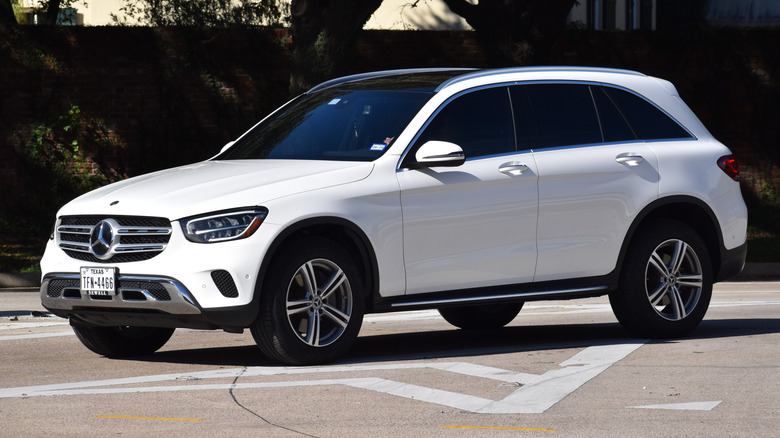
It's fascinating how the systems within modern cars interact with each other. Who would have thought that a corroded micro-switch in a door could make a car roll away? Welp, that's exactly what's going on with 310,667 Mercedes-Benz vehicles. Wild, I know. From the National Highway Traffic Safety Administration:
Mercedes-Benz USA, LLC (MBUSA) is recalling certain 2020-2021 CLA, 2019-2022 A-Class, 2022-2023 C-Class, 2024 CLE, 2020-2026 GLA/GLB, and 2023-2024 GLC vehicles.
[...]
The micro-switch in the driver's door lock may corrode and fail to detect an open door, preventing the electronic parking brake or "Auto-Park" feature from engaging automatically. This may result in a vehicle rollaway.
To fix the issue, Mercedes dealers will replace the driver's door lock for free. Simple enough, I'd say. Owners will be sent notification letters on September 18, and until then, just double-check that the car is in park ... just in case.
Reverse: GOOD
 History.com
Everyone needs an enemy, and mine is the original Volkswagen Beetle. I've never believed in its disingenuous hippy/free love rebrand from the 1960s and 1970s. I instead choose to remember the conditions under which it was designed and built in late-1930s Germany. Sorry, I hold a grudge. Sue me. I guess if you want to learn more about this poser of a vehicle, head over to History.com.
The Fuel Up
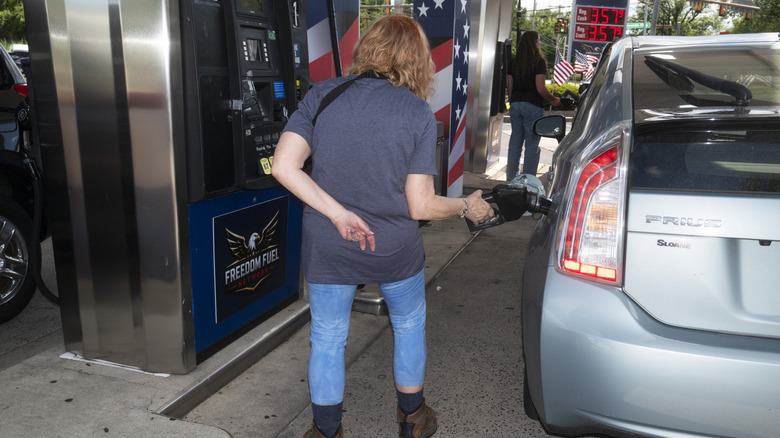
Gas prices have largely stalled over the past handful of days, which isn't great, but I suppose it's better than having them go up. Of course, President Trump has directed releases of our Strategic Oil Reserve, which is now under tremendous stress, so that's not exactly ideal. Additionally, WTI Crude Oil futures and Brent Crude prices are holding steady at slightly elevated levels, sitting at $84 and $87, respectively, at the time of publication.
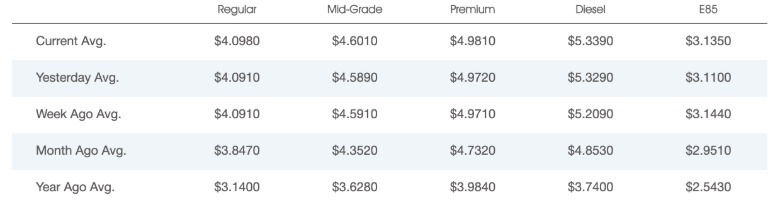
Here's where national average prices stand right now, according to AAA:
 AAA
AAA
This all shakes out to the average price of a gallon of gas rising another cent overnight to $4.10, according to AAA. We're still a good bit off from the 2026 high of $4.56 that we saw back in May, but I wouldn't be surprised if we got there sooner rather than later.
On the radio: Steely Dan - Peg
Happy ThursDan to all who celebrate. "Peg" might not be the band's biggest hit, but a little Michael McDonald backing vocal action is always the right way to start the day. Get your groove on, folks.