

Stellantis' $70 Billion Turnaround Includes 60 New Models By 2030

Good morning! It's Thursday, May 21, 2026, and this is The Morning Shift, your daily roundup of the top automotive headlines from around the world, in one place. This is where you'll find the most important stories that are shaping the way Americans drive and get around.
In this morning's edition, Stellantis has a $70 billion plan to turn things around with 60 new models by 2030 and nine priced under $40,000 for North America, Nissan is mulling over the idea of importing thousands of vehicles per year from China to Canada thanks to favorable tariffs, and Vietnam's VinFast plan to shift $7 billion in debt is raising concerns for some analysts.
1st Gear: Stellantis has massive plans for the next four years...
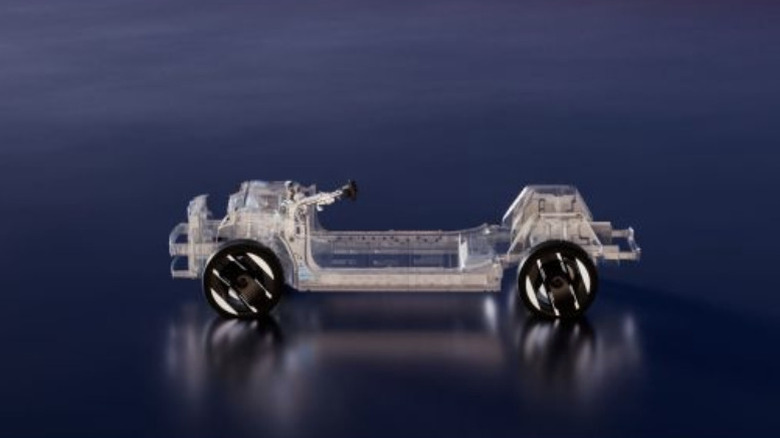
Stellantis has been down in the dumps for quite a while at this point, but CEO Antonio Filosa has a plan to change all of that — and it's massive. By 2030, he wants to roll out 60 new gas and electric vehicles, invest in new technology, partner up with other automakers, and make better use of the company's manufacturing capacity. There's also an all-new platform, called STLA One, that can fit all sorts of powertrains inside it, and the bill to do all that is going to be no less than $70 billion. Scared money don't make money, as they say.
The Transatlantic automaker said it would focus the bulk of its spending on four brands: Jeep, Ram, Peugeot and Fiat, as well as commercial vehicle unit Pro One. They'll get 70% of Stellantis' brand and product investment, and its other 10 automakers will — theoretically — see the fruits of their labor. It's something we've reported on in the past, but now the finer details are coming into focus. From Reuters:
The world's No. 4 automaker seeks to turn its structural disadvantage of having far too much unused factory capacity into a revenue-generating contract manufacturing business for Chinese automakers in Europe and other carmakers like Tata Motors unit JLR in the United States.
Unlike his predecessor Carlos Tavares who left the automaker's sprawling portfolio of 14 brands largely untouched and spent heavily to develop new tech, Filosa has shown a willingness to focus on the company's money-making brands and outsource expensive technology development to firms like self-driving startup Wayve.
[...]
The company also said it is targeting 25% revenue growth by 2030 in its key North American market, with a margin on its adjusted operating income (AOI) seen between 8-10%.
For Europe, its other key market, revenue is expected to grow 15% over the plan period, with an AOI margin seen between 3-5%.
As part of the plan, Stellantis is earmarking $28 billion for investing in global platforms, powertrains and other new technologies. It's also targeting about $7 billion in annual cost cuts by 2028 versus its outlays in 2025.
Needless to say, things are cooking at Stellantis across the globe right now.
2nd Gear: ...Including nine sub-$40,000 vehicles for North America

And, they're cooking in North America, too. Stellantis is planning to launch nine vehicles here under $40,000 by the end of 2030, and two will actually be under $30,000. I know that still sounds like a lot of money, but in today's car market, that's not half-bad.
Right now, there's no word on what sorts of cars those might be, what'll power them or how they'll be disbursed among Chrysler, Jeep, Dodge, Ram and Fiat (I assume Maserati and Alfa Romeo will miss the $40,000 mark). All in all, Stellantis says it plans to launch 11 all-new vehicles, so a few will come in over that $40,000 price point. It's in an effort to hit adjusted operating income margins of 8% to 10% with revenue growth of 25%. The automaker also wants to increase its volume in North America by 35% and expand its market coverage. From Automotive News:
Stellantis expects increased U.S. production to improve capacity utilization to 80 percent by 2030.
In Europe, the automaker expects factory utilization to rise from 60 percent to 80 percent by 2030 as it cuts annual capacity by 800,000 units.
[...]
Overall, Stellantis will invest more than $27 billion in global platforms, powertrains and new technologies under a strategy it's calling FaSTLAne 2030.
"FaSTLAne 2030 is the result of months of disciplined work across the company and is designed to drive long-term profitable growth," Filosa said in a statement. "With the customer at the center of everything we do, the plan will deliver our purpose — 'to move people with brands and products they love and trust' — powered by our unique combination of strengths."
It's not clear yet what platform these vehicles will run on, but odds are that a good few of them will be underpinned by SLTA One. The automaker says that 50% of its global volume will be produced on three platforms by 2030, and that specific platform is designed to maximize commonality and competitiveness."
3rd Gear: Nissan could import thousands of cars from China to Canada
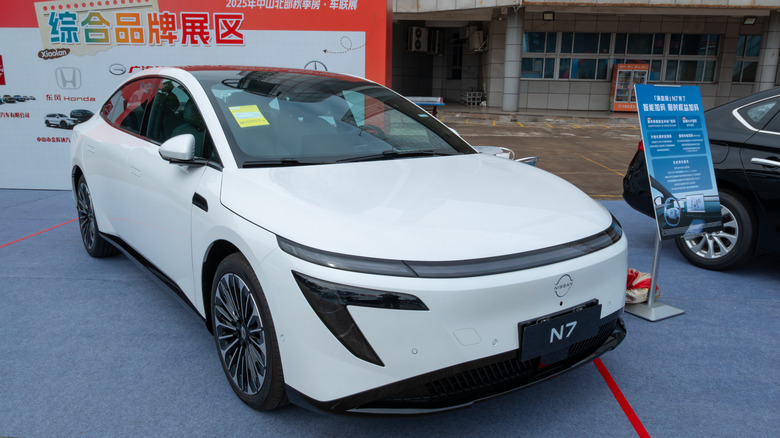
Nissan is considering importing one or two of its Chinese-made models into Canada in an effort to soak up excess production capacity at its Dongfeng joint venture factory. The automaker would ship between 3,000 and 4,000 entry-level electric Nissans to Canada, targeting low-cost shoppers in Quebec, where the car is supposedly best suited. From Automotive News:
The Dongfeng Nissan joint venture builds about a dozen Nissan-branded passenger vehicles in China, including the N7 sedan and NX8 crossover.
The plan follows Canada's January agreement to permit up to 49,000 China-made electric vehicles in 2026 at a 6.1 percent most-favored-nation tariff. The import quota is set to increase by 6.5 percent annually starting next year.
U.S.-built Nissans, by contrast, face a steep 25 percent reciprocal tariff to enter Canada, making Chinese production more attractive in terms of cost.
Chinese automakers, eager to expand their foothold in the lucrative North American market, have expressed interest in shipping EVs to Canada.
[...]
Nissan's existing dealer network in Canada offers an advantage over Chinese brands such as BYD or Xiaomi, which would need to build a distribution network from scratch for limited volumes, Keating said.
[...]
Nissan would have to homologate its Chinese imports to Canadian safety regulations. And introducing unfamiliar models would require investment to build consumer awareness.
Nissan isn't the first non-Chinese company to consider bringing its Chinese-made cars to Canada because of favorable tariffs. Tesla recently brought a low-cost variant of the Model 3 to Canada that is likely built at the company's plant in Shanghai.
4th Gear: VinFast's handling of $7 billion in debt is causing concern
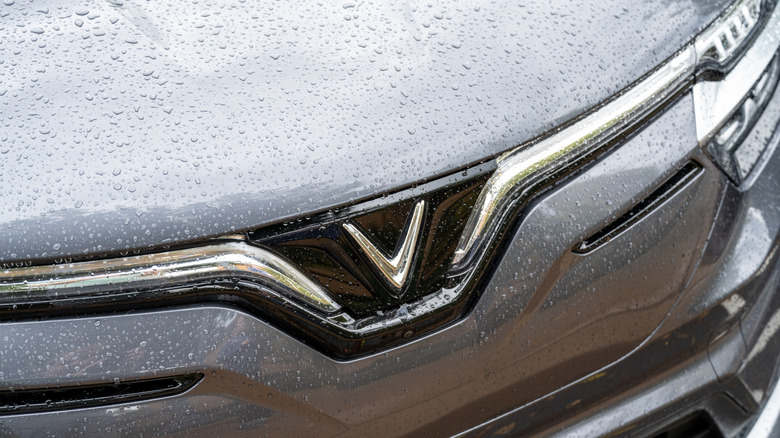
Something strange is afoot at VinFast. Over the past decade, the Vietnamese EV maker has burned through billions in cash in the name expansion, but now it plans to sell its two main factories and shift $7 billion worth of debt off its books. The moves have sparked concern about governance at billionaire Pham Nhat Vuong's Vingroup conglomerate. From Reuters:
Under a multi-party deal unveiled last week, VinFast will sell its Vietnamese manufacturing business for 13.3 trillion dong ($506 million) to a group of investors who will also assume roughly $6.9 billion in debt. In a regulatory filing, the company said this will allow it to adopt an "asset-light" model focused on research and product development rather than manufacturing.
With the manufacturing unit off its books, VinFast will become largely debt-free, Vingroup told Reuters in a statement. Manufacturing costs were a major driver of the EV maker's $3.9 billion loss last year and VinFast has yet to turn a profit since its 2017 founding.
But the deal has raised eyebrows among some analysts and retail shareholders both for its complexity and the involvement of investors with ties to Vingroup and Vuong, the founder.
"From a strategic and financial perspective, this move makes sense and provides a solid foundation for VinFast to grow," said Mehdi Jaouadi, an auto industry analyst and partner at Singapore-based consultancy YCP. "However, from a governance perspective, this strategic decision has some red flags and raises some question marks."
One issue is the involvement of real estate businessman Nguyen Hoai Nam, who just this month took control of the company that will acquire more than 95% of the manufacturing business. Nam is a board member of Vincom Retail, which was formerly Vingroup's shopping mall arm.
Days before the factory deal was unveiled, he acquired majority control of Future Investment and Trading Development (FIRD), a company that was carved out of VinFast and until January, was owned by Vingroup and Vuong. FIRD holds patents for VinFast's first-generation EVs and has registered capital of $4.6 billion, nearly 92% of which is contributed by Nam.
It is not clear why FIRD "became the lead buyer so soon after these ownership changes," Jaouadi said.
There are also cancers about the transaction structure. The manufacturing business is going to first be acquired by Vuong, FIRD and a third company before the ownership is reshuffled once again. Once that deal is done, only two of the tree investors will remain: FIRD (which will get 95.5%) and Vuong (which gets the remaining 4.5%) Confused? Me too. I think that's sort of the point.
Reverse: Oh, Lucky Lindy
 History.com
It's admittedly very cool that Lindbergh crossed the Atlantic in the Spirit of St. Louis. It's just sort of a shame he had all of those... opinions. Really, he was born in the wrong era. Anyway, if you want to learn more about Lindbergh's journey, head over to History.com.
The Fuel Up

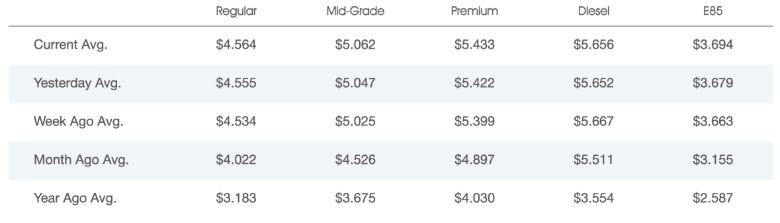
Well, folks, I've got some bad news. We've officially tied the 2026 record for the average price of a gallon of gas. Technically, it happened yesterday, but only if you rounded. Today makes it officially official. Oh, happy days. WTI Crude Oil futures and Brent Crude aren't looking much better either, sitting at $100 and $107, respectively, at the time of publication.
Here's where national average prices stand right now, according to AAA:
 AAA
AAA
All of this is to say that the average price of a gallon of gas is now $4.56, according to AAA. It ties a record we saw back on May 7, and it means that average fuel prices are up a whopping 46 cents in the past month alone. Overall, the average price of a gallon of gas has increased $1.58 — or 53% — since the U.S. and Israel's war with Iran broke out on February 28.
On the radio: Shenandoah - Two Dozen Roses
I'm not a country music fan by any strech of the imagination, but "Two Dozen Roses" is something that's truly special. Maybe if country music still sounded like this, I'd be more into it, because this is just amazing. Also, just take a second to look at every band members' hair. Everybody is so perfectly '90s. I love it.