

These 7 Car Parts And Fluids Typically Need Attention And Replacement By 100,000 Miles
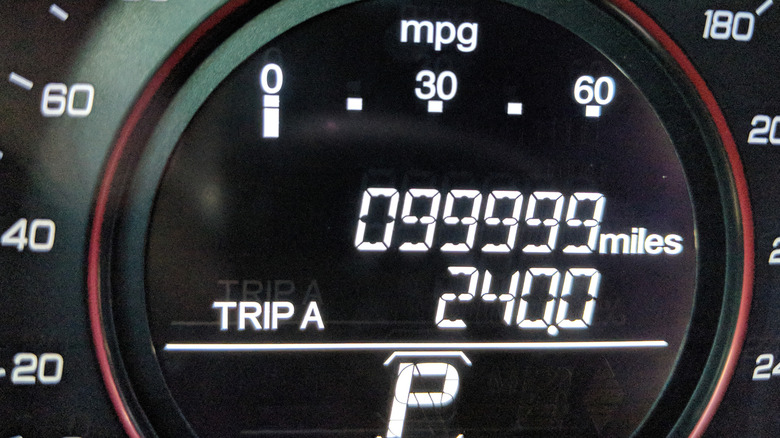
All cars, whether old or new, need maintenance to run dependably. But once the odometer reaches 100,000 miles, your car will need more than a typical oil and filter change or wheel rotation. However, not all car brands have similar maintenance prescriptions, with some requiring periodic services more often in certain areas. For instance, Honda generally recommends brake fluid replacements at 45,000 and 90,0000 miles, while Ford says brake fluid changes every 3 years are mandatory for the F-150.
Of course, the guidelines will change if the car operates in severe driving conditions, and regular towing of trailers and heavy loads fall under the "severe driving" category. Towing will affect how often the vehicle needs oil changes, and frequent heavy-duty work will also necessitate regular servicing of the cooling system, tires, and suspension.
The point is how your vehicle looks, feels, and performs at 100,000 miles depends greatly on whether it received proper care and maintenance. If the vehicle didn't receive periodic maintenance as prescribed in the owner's manual, you can expect more work to be done when it reaches 100,000 miles. Regardless, your spark plugs, timing belt, water pump, radiator (and radiator hoses), brake fluid, dampers, and automatic transmission fluid are the parts and fluids that typically degrade and need replacing when your car reaches or passes the six-digit milestone.
Spark plugs
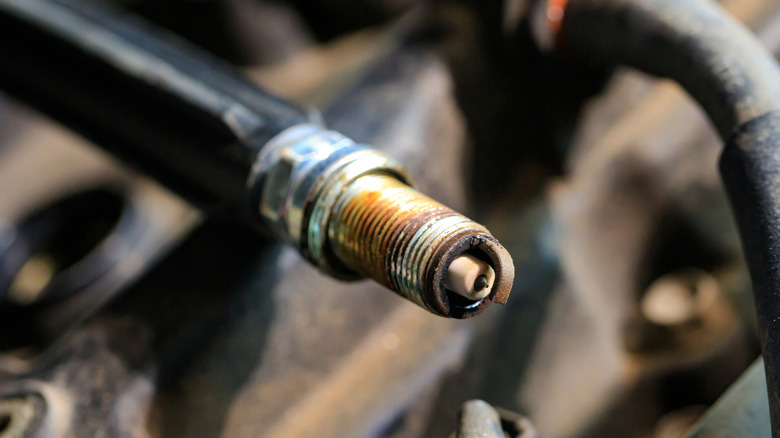
Under normal and severe operating conditions, Honda recommends changing the spark plugs every 30,000 miles. By the time the car reaches 100,000 miles, the engine should have gone through three sets of plugs. On the other hand, Ford recommends replacing the plugs every 60,000 miles, which means you probably won't need to change them until the odometer reaches 100,000. If you're unsure when the plugs were last serviced, Kelley Blue Book recommends replacing copper plugs at 25,000 to 30,000 miles or at 60,000 to 100,000 miles for platinum and iridium varieties. Poor fuel economy, rough idling, hard starting, and engine misfires are just a few symptoms of bad plugs.
Spark plugs are more complicated than they look. They come in different types and heat ranges, and using the wrong variety can be disastrous for any engine. Check the owner's manual on whether your car's engine needs iridium or platinum plugs. Besides the plugs, it's imperative to check the ignition coils that power the plugs. The coils are relatively durable and can last multiple oil changes, but they typically need replacement between 80,000 and 100,000 miles, or if diagnosed as faulty. Symptoms of faulty ignition coils often mirror those of bad spark plugs.
Timing belt
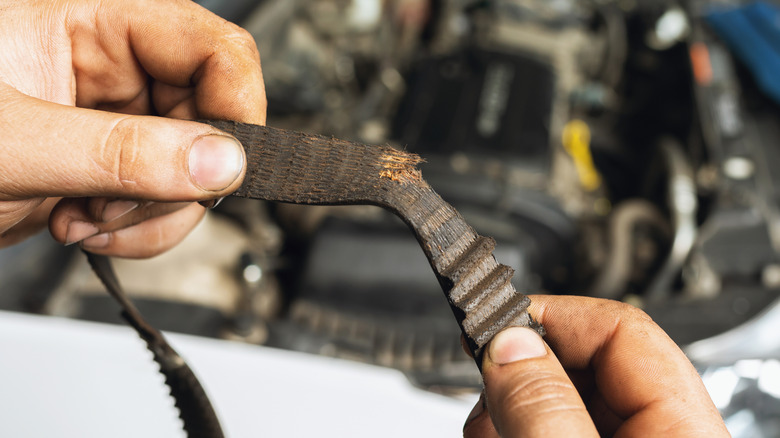
Some manufacturers recommend swapping a timing belt between 60,000 and 100,000 miles, while some automakers don't. Your owner's manual will outline necessary requirements. Not all engines have timing belts (some have timing chains). However, the consequences of a timing belt breaking are enough reason for you to care about whether your engine has a belt or a timing chain, especially if you have an interference-type engine. When a timing belt breaks while driving, the engine will run out of sync and bend valves, break pistons, and damage the cylinder heads, for starters.
A timing belt replacement means you'll need to change other parts, too. In most cases, the tensioner bearings, idler pulleys, and some gaskets and seals will need to be replaced along with the belt. Expect to pay around $100 to $350 for a timing belt kit (or $500 to $1,500 for a complete kit) and $400 to $1,000 for labor on average.
Water pump
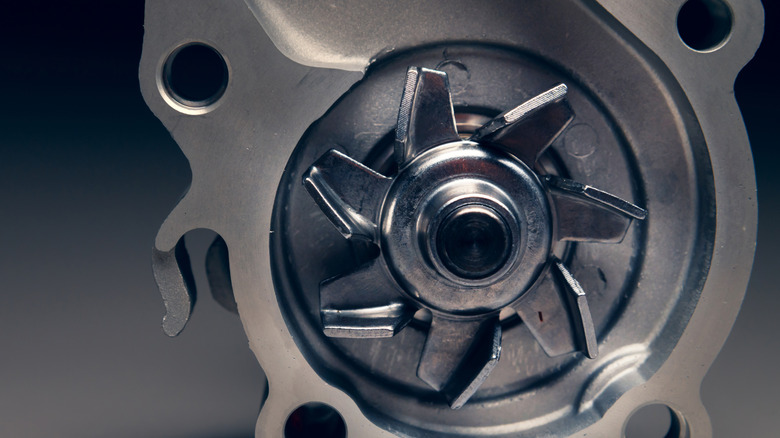
Tearing down the water pump in unison with the timing belt is a wise move. Water pumps typically last 60,000 to 100,000 miles on older cars and upwards of 100,000 miles on newer vehicles. Since the timing belt drives the water pump, not replacing it now and waiting for it to fail later will cost you twice the teardown costs, since accessing the water pump means disassembling the same parts as when replacing the timing belt.
Dealers will typically charge $900 or more in parts and labor to replace a water pump, and the part alone would most likely cost $200 to $400. A failing unit is hard to miss, since you'll hear squealing or unusual grinding noises when it's failing. Periodic coolant inspection and flushing are the best ways to protect the water pump from rust buildup and to prolong its service life. Manufacturers often prescribe coolant changes every 50,000 to 100,000 miles (or 3 to 5 years), so it's best to pair a new water pump with fresh coolant.
Radiator (and radiator hoses)
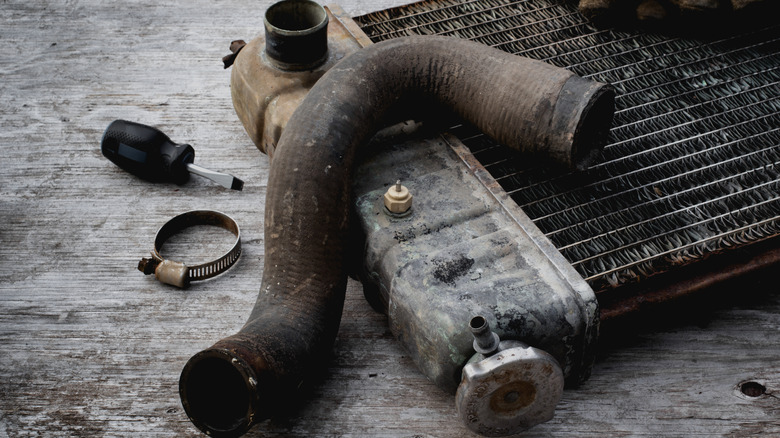
The radiator is the backbone of your car's engine cooling system. It works with the radiator fans to cool the hot, scalding coolant before recirculating it back inside the motor. A quality radiator has a long lifespan and can last 8 to 12 years. However, it's not unusual for it to clog, fail, or develop rust before that, especially if you neglect periodic coolant changes. Even if it looks okay from the outside, this part is worth inspecting closely at 100,000 miles to determine if replacement is necessary.
Another thing worth checking is the cooling hoses. Although fairly durable, rubber hoses can fail, crack, or burst with years of exposure to intense heat and pressure. Don't wait for hoses to leak or fail before replacing them, especially if they're in rough condition by 100,000 miles. Kelly Blue Book outlines 60,000 miles or a car that's four years old as an ideal hose replacement time. Many owners replace a radiator and its hoses together as a preventative measure. Silicone hoses are worth the upgrade if you want more longevity.
Brake fluid
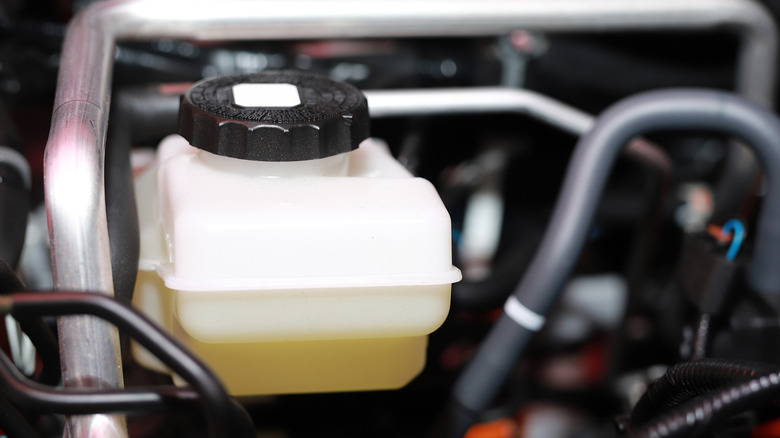
Depending on the vehicle type and driving conditions, the brake fluid should be flushed every two to three years or every 40,000 to 45,000 miles. Brake fluid comes in many types, and it's also worth checking the fluid condition at 100,000 miles and replacing it when necessary to ensure reliable stopping power. Remember that brake fluid is hygroscopic (it's a water magnet) and won't remain fresh for long once the bottle is opened, and make sure you don't accidentally pour or spill glycol-based brake fluids on painted surfaces.
It's easy to know if your car needs a brake fluid flush. Park the vehicle, open the hood, find the brake fluid reservoir, and open the cap. Fresh fluid should have a slightly clear, bluish, greenish, or mildly orange hue. Dark or murky fluid is a sure sign of contamination and should be flushed as soon as possible. Meanwhile, a soft or spongy brake pedal could also mean that a brake fluid change is necessary.
Dampers or shock absorbers
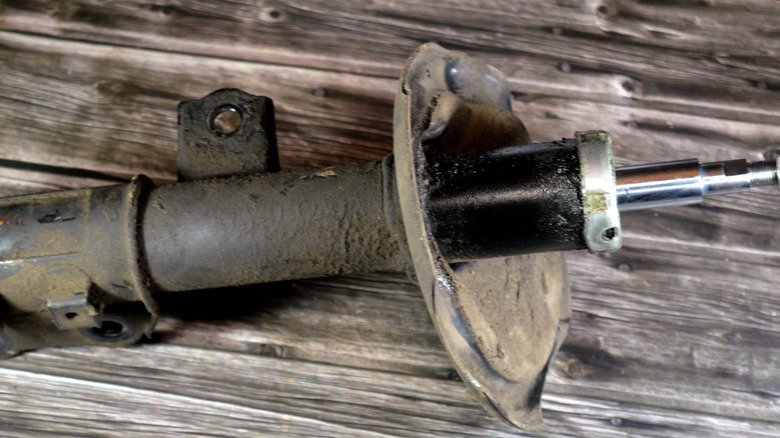
Driving with worn shocks or struts is not worth the trouble. Shock absorbers are responsible for smoothing bumps and keeping the tires aligned with the road. Vehicle dampers typically come in gas or hydraulic, and choosing between the two depends on the vehicle type. Shock absorbers are relatively durable and are capable of lasting 50,000 to 100,000 miles, so it's best to check them during your car's 100,000-mile servicing.
Fluid leaks around the shock body, a bumpy ride, an overly stiff steering feel, and uneven tire wear are among the telltale signs of bad shock absorbers. Keep in mind that shocks and struts are not the same, despite essentially performing the same job underneath your car. A shock absorber or damper controls suspension movement and is an individual piece. A strut integrates the damping unit and a housing to provide structural support. Replacing shocks and struts will cost $450 to $1,100 on average, while labor is $150 to $300 per assembly (two or four assemblies).
Automatic Transmission Fluid (ATF)
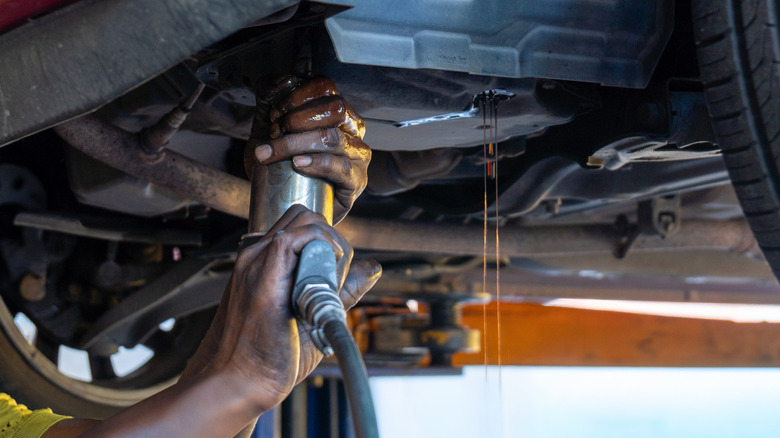
Unlike engine oil, the automatic transmission fluid (ATF) does not require flushing and replenishment every 5,000 or so miles. The ATF can last longer than that, but it helps not to exceed 30,000 to 60,000 miles (or two to five years) before replacing it. Check your owner's manual for guidance while also inspecting ATF condition at 100,000 miles.
Like how oil functions in a car engine, transmission fluid (ATF or continuously variable transmission fluid, depending on the vehicle) is the lifeblood of any transmission. Instead of reducing friction, old, degraded, or contaminated fluid will cause more abrasion, overheating, and transmission problems like poor shifting and premature clutch wear. When replacing the ATF at 100,000 miles, make sure you're pouring in the right type of fluid, as ATF and continuously variable transmission fluid are not the same. ATF is often dyed red as a distinctive measure, while CVT fluids may be green or yellow.