

Waymo's Stopped Testing Robotaxis In New York City, So What Now?
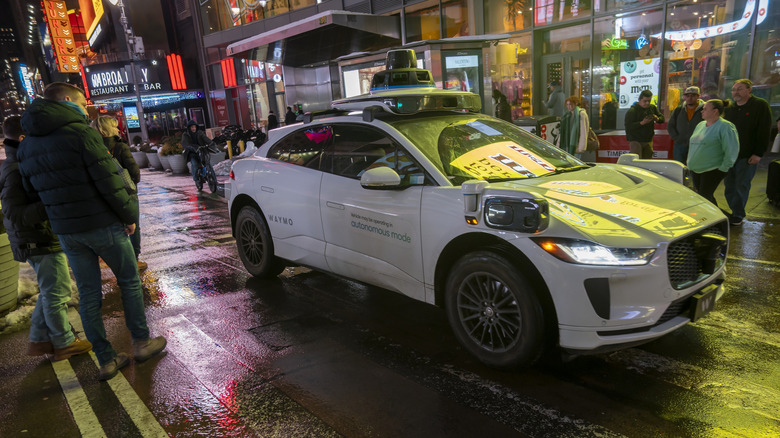
Waymo has been expanding its robotaxi fleet to so many cities lately that it's hard to keep up. One place its efforts have stalled, however, is New York City. Two permits that allowed Waymo to test there expired on March 31, reports The City, bringing Waymo's test program there to an end. The New York Department of Transportation has given no indication whether the permits will be renewed or expanded.
The company began testing its robotaxis on the streets of NYC last July. Its standard operating procedure in a new city, after clearing all the legal hurdles, is to deploy a few cars with human operators behind the wheel to test out the tech and map the territory to the detailed level necessary for self-driving cars. This is the phase Waymo was at before the permits expired, with a fleet of just eight cars operating south of 112th Street in Manhattan and in downtown Brooklyn. Human drivers may still operate the cars manually, but at this point Waymos in New York have fewer autonomous privileges than a Tesla.
As recently as January, the program seemed like a success. Governor Kathy Hochul had praised it as "potentially great for street safety and transportation options outside of New York City," according to the New York Post, referring to Waymo's hopes to expand to four cities beyond NYC. Just one month later, however, Hochul reversed direction and removed funding for this from the state budget.
They're coming for our jobs
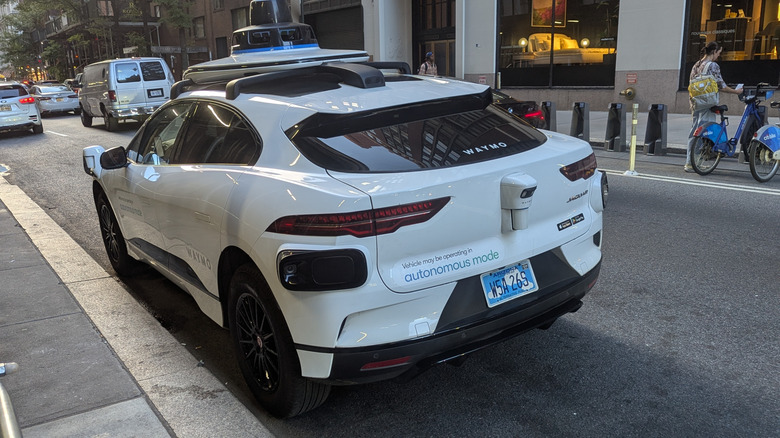
Proponents of robotaxis cite lower crash rates and fewer fatalities than human drivers as reasons why cities like New York would benefit from having them, and there have been no reported crashes during Waymo's test period. However, the Transport Workers Union argues that not only is the opposite true, it would also endanger the jobs that thousands of human drivers rely on to make a living:
Waymo vehicles have caused havoc on streets across the country. In San Francisco, Waymos have impeded emergency responders, in Arizona Waymos have driven into oncoming traffic, and the company admitted at a recent public hearing in Boston that Waymos are not prepared to drive autonomously in snowy conditions.
Indeed, wayward Waymo vehicles have blocked an ambulance responding to a mass shooting, driven into oncoming traffic (more than once), and are not programmed for winter conditions that equally affect Boston and NYC. All of these issues, including job security for human drivers, are why Boston flipped the bird to Waymo last year. NYC Mayor Zohran Mamdani added his support at a press conference:
Look, if a company like Waymo finds itself in New York City, what they will also find is a City government that is committed to delivering for the workers who keep the city running, and those workers also include our taxi drivers who, for far too long, have been sold a dream of being able to work their way to the middle class, only to have the rug pulled out from under them.
The human factor
Protecting jobs is important, but it's also worth having people out there who can think for themselves and take action in an emergency. For example, in 2024, a New York City bus driver rescued a toddler who was walking down the middle of the road, according to ABC News. He not only carried the toddler to safety, but also used his bus to intentionally block an intersection to protect the toddler and himself. I'd genuinely like to see a robotaxi use critical thinking in edge cases like this instead of blowing by stopped school buses or getting confused by a dead-end street. The Transport Workers Union agrees:
"Transit workers are essential eyes and ears on our roads and their work goes beyond simply driving a bus or subway from point A to point B," [TWU International President John] Samuelsen said.
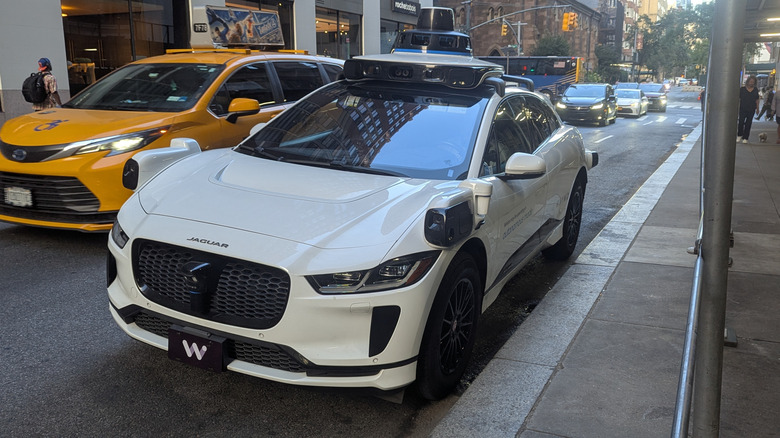
I've only taken a cab in NYC once, but that experience showed me that cab traffic operates on its own unique set of rules that may or may not have anything to do with actual traffic laws. But because all the cabbies play by the same rules, their organized chaos works. Robotaxis are required to obey all traffic laws, which would completely disrupt the flow of NYC's ocean of yellow cabs. I don't know how you could program a computer to drive like a cabbie, because it's more art than science. Plus, no Waymo can have a conversation with you or give you local info about the city. There's a lot to be said for human contact.