

Here Are Five Cheaper Alternatives To Driving A Big Diesel Truck
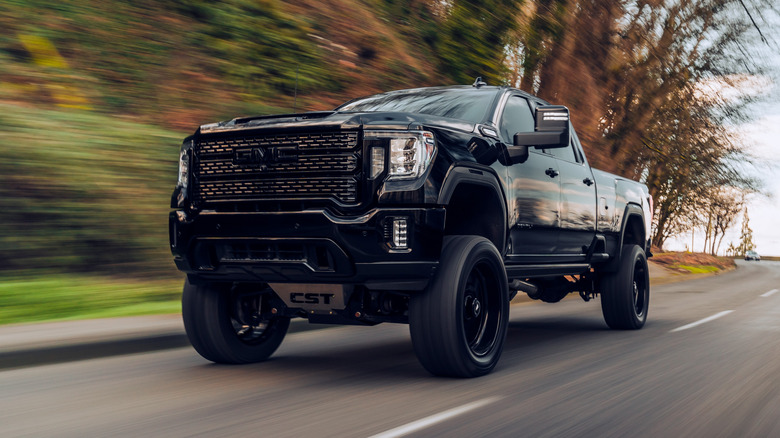
The current state of fueling your diesel pickup in America is positively abysmal. With the national average holding steady at over six dollars for a gallon, and some places on the West Coast seeing pricing above eight dollars, it's never been more expensive to simply drive around. Even my relatively light, aerodynamic, and efficient Porsche Cayenne Diesel is suffering under the weight of $200 fill-ups at the moment. An absurd ongoing war with Iran is holding all of us hostage at the fuel pumps, and there's no amount of importing oil from Russia, selling "red diesel" for road use, or short-term fuel tax holidays that can ease the pain.
There are plenty of reasons for buying a diesel truck or SUV, but these reasons tend to get less convincing as the cost of driving rises exponentially. I bought my Cayenne because I thought I would be towing a whole lot more than I actually am, but fuel costs (along with the inflationary response of the market) are pricing me out of the motorcycle track days I promised myself in the spring that I would be doing all summer. My recent trip to Alaska was budgeted for about half what I ended up spending on fuel, to the tune of hundreds of dollars.
I think the time has come to turn our backs on diesel and try to figure out an alternative. Maybe you still need your truck for heavy-duty hauling and towing jobs, which is what they're built for. But the truck should serve as a tool to be used sparingly, supplemented by something more fuel efficient when the Super Duty doesn't call. Here are some money-saving alternatives for your next trip that will help you get where you need to be without paying big bucks to get there.
Buy anything else
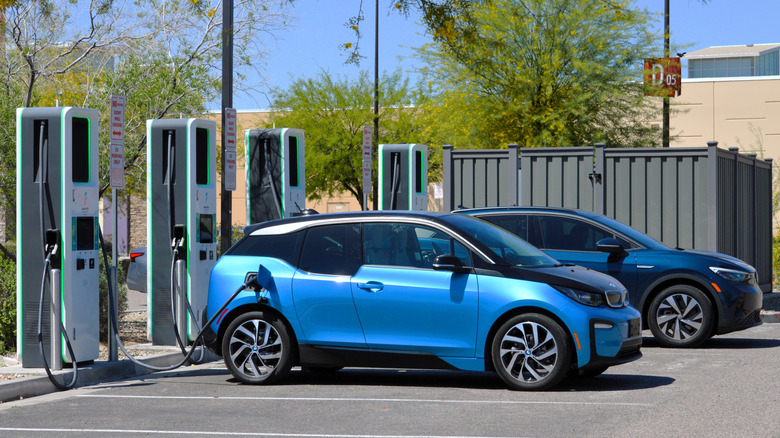
I'm not saying you have to immediately give up your truck and buy something electric, but there has never been a better time to get a used EV. If you can fit one into your life, they can be excellent transportation tools. Used prices are up slightly for EVs in the last few months, but there's still a pretty good supply of them out there and, for the most part, they're much less expensive than they once were. The American charging infrastructure is robust and relatively easy to figure out. More than anything, EVs are incredibly cheap to drive and maintain.
Let's look at a real-world example. My 2013 Porsche Cayenne Diesel returns an observed average of about 29 mpg in the real world. With Ohio's current statewide average gallon price at $6.06, that translates to about 21 cents per mile of driving, not accounting for increasing maintenance, insurance, and registration costs. A modern electric commuter, say a new base model Nissan Leaf, achieves around 3 miles per kilowatt-hour of electricity. The average residential rate of electricity in Ohio is 18.04 cents per kWh, meaning that each of those miles costs about 6 cents. This is a bit of an apples to oranges comparison when it comes to each vehicle's capabilities, but purely for cost of driving, the Leaf is a clear advantage. Driving the Cayenne 10,000 miles costs $2,100 in fuel, while the same mileage in the Leaf is just $600.
If you aren't ready for a full EV experience, driving a plug-in hybrid can deliver similar fuel savings around town, and the gasoline engine allows you to continue driving long-distance as though it were a regular gas car. It's kind of the best of both worlds. In a two-vehicle household, it typically makes financial sense to have one with a plug.
Convert your diesel to run on vegetable oil

You might remember hearing some scuttle about waste vegetable oil conversions for diesel vehicles back during the 2008 financial crisis. People were looking for ways to reduce their spending and found that the proliferation of fried fast food throughout the nation was potentially a good source of fuel. The used oil from a deep fryer could be filtered and burned in a diesel vehicle almost as though it were fresh out of the pump.
Sometimes restaurants will just give it to you, as they're required to pay someone to cart it away for recycling, but if enough people in your area start needing WVO for their diesels, the restaurants (or opportunistic employees) may start charging for the privilege. Even at a buck a gallon, you're getting it significantly cheaper than at the pump. You will also need to build yourself a purifying filter system at home, which can be messy and dangerous.
You'll have to do quite a lot of research to see if it's even possible to convert your vehicle. It's much easier with older vehicles, and it will require a second fuel tank, extra fuel lines, pumps, and switch valves. Because vegetable oil isn't as liquid as diesel when the temperatures get chilly, you will have to start your vehicle on regular pump diesel from an auxiliary tank, then once it's up to operating temperature, you can swap over to the WVO tank. To avoid the WVO congealing in your lines or injectors, it's wise to drive the last couple of miles on diesel as well.
If all of this sounds like a pain in the butt, that's because it is. But how much is your time worth to you? Everyone needs a hobby, and saving money sounds like a good one to me.
Ride an e-bike
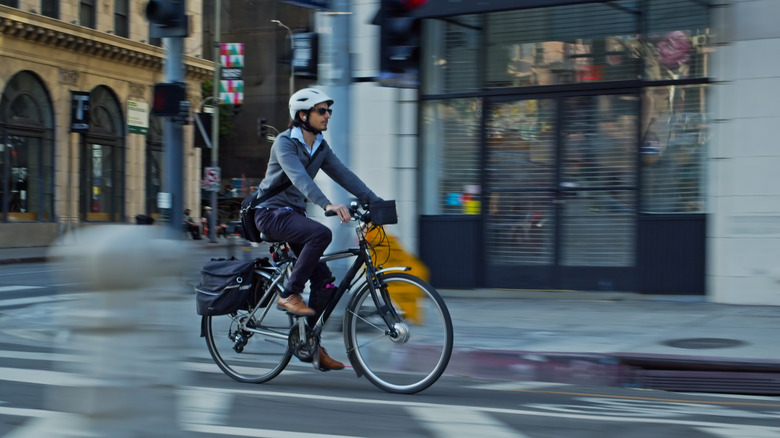
If you think driving a four-wheeled EV or converting to WVO were good ways to get around on the cheap, then you'll be blown away by the per-mile costs of an electric-assist bicycle. A small 500Wh battery can provide up to 50 miles of assist range, depending on terrain, rider weight, and assist strength. Given the same electricity costs as the Nissan Leaf example above, we can estimate your e-bike's charge will cost as little as two tenths of a penny per mile ridden. Now that's some inexpensive transportation.
A good used e-bike will still probably run you a thousand dollars or so, meaning it would take quite a lot of miles and trips replaced to pay itself off. This is also much less convenient than driving a big diesel truck around, but it costs a whole lot less. Compared to my Cayenne Diesel real world example, I'd have to ride a $1,000 e-bike about 4,808 miles before it paid for itself and I started actually saving money. Can I commit to riding that many miles in a single year? I'm not sure I can, but maybe you can.
There is also something to be said for the extra exercise and time to yourself in the fresh air without the distractions of a smart phone. This is a great way to commute if you don't have to go too far in a day, and the weather is nice, and you have the extra time. It's probably not a bad idea to get one anyway, just to keep yourself moving as you get older. Maybe start by trying to replace your commute one day a week, and see if you like it enough to progress up to two days.
Find a work-from-home job

I understand that as a professional writer, I'm extremely privileged in that I've been working from home for a decade. Not having a regular daily commute is probably the thing that has saved me more money than any other aspect of my life. Simply by reducing the number of miles I must drive in a day to zero, I've saved thousands of gallons of gasoline and diesel.
The average American works 14.4 miles from home, and the average year has 250 business days. That totals up to 7,200 miles per year, just to get to work and get back home again. In the example of my diesel Cayenne, I would be burning a gallon of $6.06 diesel per day, even if I didn't go anywhere else. That means no off-campus lunch, no after-work errands, and no pre-work coffees unless they're on my route. And that's just the average. I've had longer commutes than that, and I've had cars with fuel economy worse than that.
Here's a fun anecdote for you; I remember when gasoline first crested $2 per gallon ($3.53 in today's money), where I lived in Michigan, in 2005. I was in my first year of college, and I was driving an old 318-powered Dodge Ram 1500 from the 1990s. I worked in a Pacific Sunwear in the mall, which paid state minimum wage of $5.15 per hour ($9.10 in today's money). My boss called and asked if I could cover a two-hour shift one winter evening, and I had to tell them I couldn't because it would actually cost me more in fuel to get there than I would earn during the short shift. Every time I think about the cost of fuel, I'm forced to wonder how many Americans are in a similar position today.
Move to a walkable city with robust public transportation

Trains are just plain cool, man. Every time I visit American cities with robust public transit—New York, San Francisco, Chicago, end of list—I get jealous that we don't have frequent and reliable train systems in every city. There's an ease-of-use and quality of life benefit to having access to public transit. It's significantly less frustrating to sit on a train than it is to sit in bumper-to-bumper traffic in car-dependent cities like Los Angeles.
Not only is public transit significantly safer than traveling by automobile, potentially reducing your chance of being in a crash by more than 90%, but it's also a money-saving endeavor. Commuters using public transit spend, on average, 16 cents for every dollar a car commuter spends. Buying, maintaining, and operating a car is the second-most expensive line item in your budget after housing. Switching from a two-car household to a one-car and one-rider household can save $13,000 per year or more. Your diesel consumption would go way down if you swapped a big, inefficient truck for a massive bus or even more massive train. If bigger is better, you can't get a car bigger than a train.
Perhaps instead of continuing to subsidize fuel and the corn industry, we could spend some of our hard-fought tax dollars on improving transportation options in major cities and suburbs in an effort to reduce our dependence on cars. Wouldn't it be great if, as an enthusiast, you could save your car driving for the fun weekend times in the mountains or at the track instead of gridlock? Save your money for stuff like high-performance tires and brakes that you knew you'd never have to deal with the downsides of in traffic? I know I deeply enjoy fun drives, and I often despise driving in traffic.