

Here's Why You Should (Or Shouldn't) Run The Alcan 5000
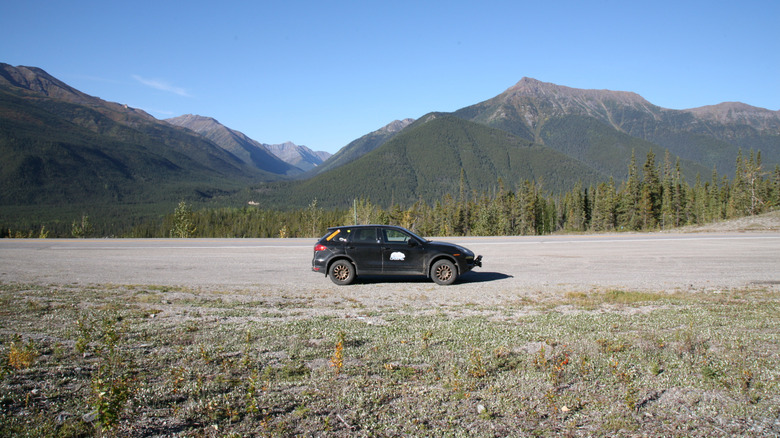
I recently became educated to the fact that the most remote location in the lower 48 United States is found in the deepest depths of Yellowstone National Park. Just a few miles east of the Continental Divide on the southern end of the park is a documented area that is 21.7 miles from a road of any kind. You only need to go 21.7 miles to be as far from a road as you can anywhere between the 49th parallel and the Rio Grande. Venture to the north of the border, into the depths of Canada and Alaska, however, and you'll quickly find yourself in locales more remote than you might have thought possible.
Sometimes a person just needs to go out on a limb to test their own mettle. Doing a hard thing explicitly because it is hard is my favorite way to find out who I really am deep down. There's a level of self-actualization in completing a task that very few others would, or could, attempt. I honestly think that's a lot of what makes the Alcan 5000 rally a tremendous experience. It's equal parts enjoyable and exciting, beautiful and terrifying, fun and grueling. Me and 40 of my new friends departed for the northern reaches in early September and spent two weeks in search of something — not something out there, but something inside ourselves. Moxie, swagger, chutzpah, sauce, vigor, verve, BDE, courage; whatever you call it, we wanted to see if we had enough in supply to make it on this journey.
 Bradley Brownell/Jalopnik
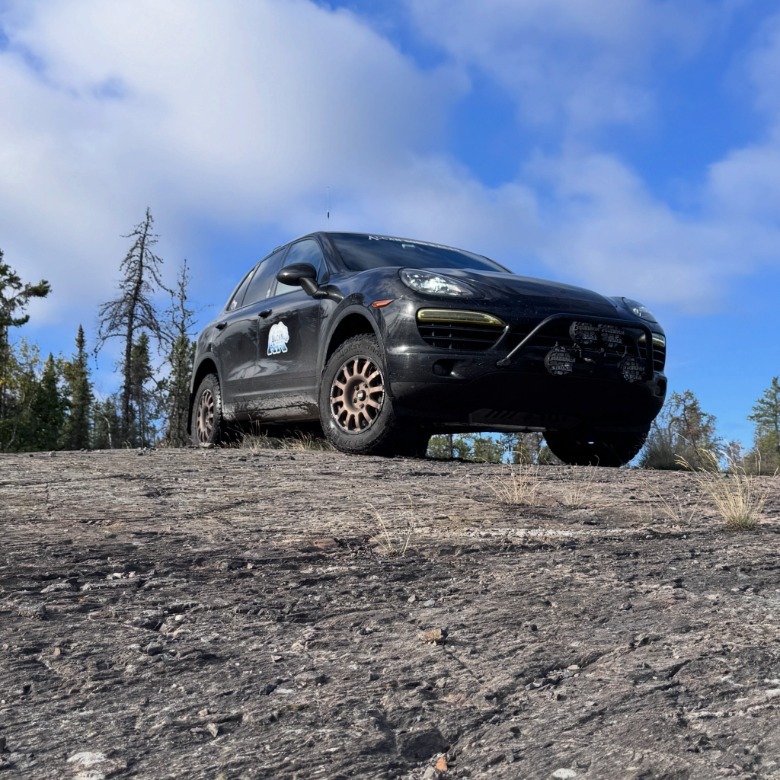
Before the 5,200-mile rally began, I'd already added 3,200 miles to the odometer of my old faithful German diesel steed. I started my trek to the start line a few weeks out, leaving my home in Cleveland, Ohio, to visit Reno, Nevada, for a few weeks, logging 2,300 miles en route. My driving partner Alex and I left his home in Santa Rosa, California, two days before we were scheduled to start the rally. If mileage is a way to test your mettle, we certainly had an intense test in front of us.
It's far
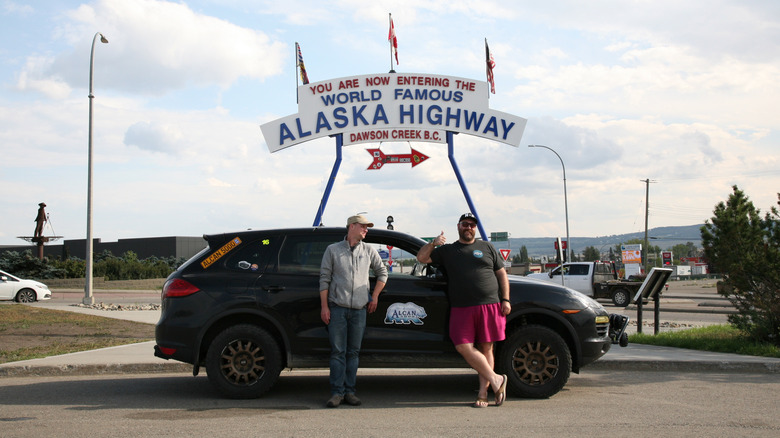
I'd prepared for the rally as well as I could, only knowing what it was like by reading/listening to accounts of others who had come before me. But no amount of podcasts or blogs could possibly have prepared me for what this journey was like. This was a truly unforgettable journey, and in spite of the time and money it cost, I couldn't be happier to have gone. I do, however, have to pause here to recognize the work of Andrew Comrie-Picard and Mercedes Lilienthal for giving me a crash course on what it's like to run an Alcan. Their experience was invaluable.
Societally, I have noticed that many Americans are chasing an increasingly frictionless existence. It's so much easier to just float through life commanding the worker ants in your phone to go pick up your groceries, bring you hot food, and deliver whatever your heart desires from Amazon. There's no app for experience or existence, though. And the more cloistered our existence, the less it means. I have ambitions to participate in the difficulty, to truly swim in it. Getting out of your comfort zone, taking a calculated risk, meeting new people, and seeing what's left of the wild world is the only thing we have left in this life.
 Bradley Brownell/Jalopnik
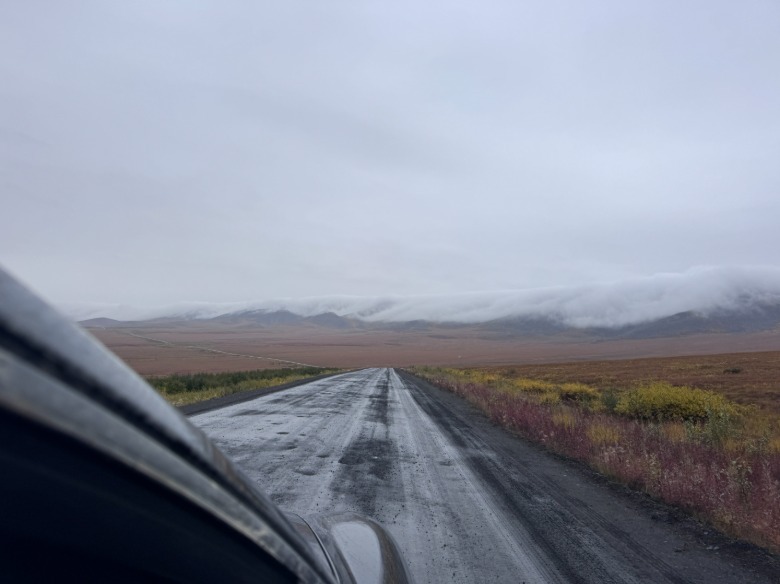
Driving a combined 10,000 miles in 16 days can hardly be described as frictionless. We crossed four Canadian provinces and five different states. I'd never been to Alaska before, so I can knock that one off my list (now just one state remains untrod by my sole, South Dakota). There were incredibly long days in the saddle; up at dawn, drive all day, arrive at that night's hotel by dinner time. Fortunately for all involved, we drove up, over, amongst, and through some of the most beautiful locales in existence.
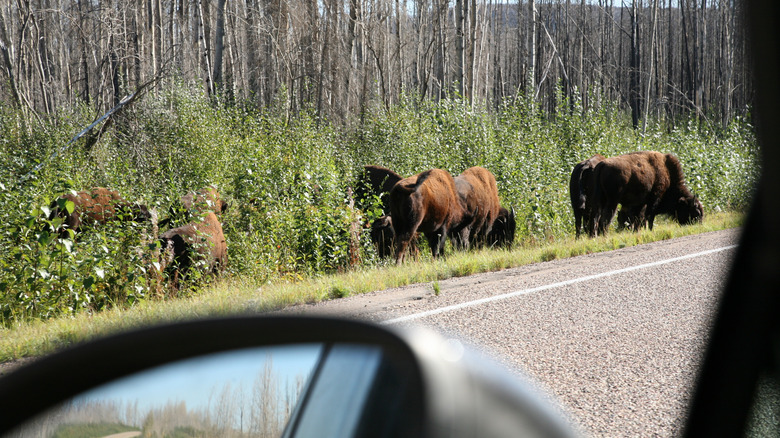
This rally isn't just long miles and a change of routine. It forces you to confront your own mortality, your place in society, and the existential center of the universe. Perhaps this event could even cause some introspective reflection, and you'll realize you're not the main character of the narrative. The herds of bison crossing the road don't care if they're holding you up. The bears hardly take notice. The hordes of ravens gathering at every fuel stop are hoping you'll drop a peanut or two on your way to your car, but otherwise pay little mind. They don't need you here, and will soon forget you exist. So, too, will this landscape and whatever scars you've made upon it.
It's terrifying
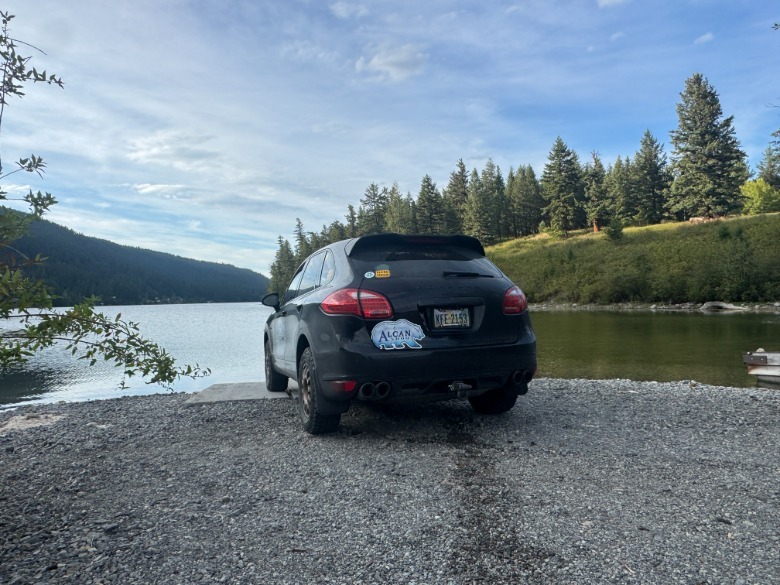
One thought that I simply could not keep from my mind while I was on this drive was that I was laying eyes on sections of the planet that have potentially never been explored by humanity. Not the roads, but the old-growth forest and deep mountainous permafrost that are inhospitable to our fragile fur-free bodies. Without the promise of oil, furs, or gold, what need would we possibly have to explore these grandiose ranges? While life in the Continental U.S. is largely that of a documented and trodden path, there are lakes up here that have never been disturbed by the hull of a boat, and there are forests that have never heard the echo of a chainsaw. Venturing out this far from the so-called civilized world will force you to see the beauty of the world we stand to lose.
Who you are will change if you let it. While I have no way of knowing what it actually feels like to go to space, astronauts often describe something called the overview effect, and I think that is a bit of what I'm feeling after having traversed this glorious section of Earth. Humans returning from space often have intense emotions and a greater appreciation for the planet and its fragility. I've seen what this place looks like without human intervention, and I know how easily we can interrupt millions of years of pristine wilderness, because we've already done it. I want to believe better of us, that we can band together to keep this beauty intact — that we'll risk some friction to prioritize the preservation of earthly charm.
 Bradley Brownell/Jalopnik
By driving this adventure amongst 40 or so newfound friends, it wasn't lost on me that we'd all entered the lonesome north as a crowd. We set out to find nothingness, and we managed to find something in each other. With each instance of a rally participant stopping to help another, my enjoyment soared. We'd left behind the rugged individualism of connected cityscapes for the kind of terrain that engenders community. The people who live out here rely on their neighbors and family for survival, and we were slowly learning their ways. Perhaps there's a takeaway there.
There's nothing like it
While the Alcan 5000 was ostensibly a Time Speed Distance rally with a short stage of competitive math and rule-following each morning, Alex and I quickly dismissed it as anything more than a conversation piece at each night's gathering point. We were on this rally to see new places more than we wanted any kind of trophy for our ability to fervently abide by a prescribed speed. We were on this rally to eat great food, see great places, meet locals, and enjoy the drive. Whether you decide to care about that or not, it won't really impact your enjoyment of the drive; it's rather inconsequential.
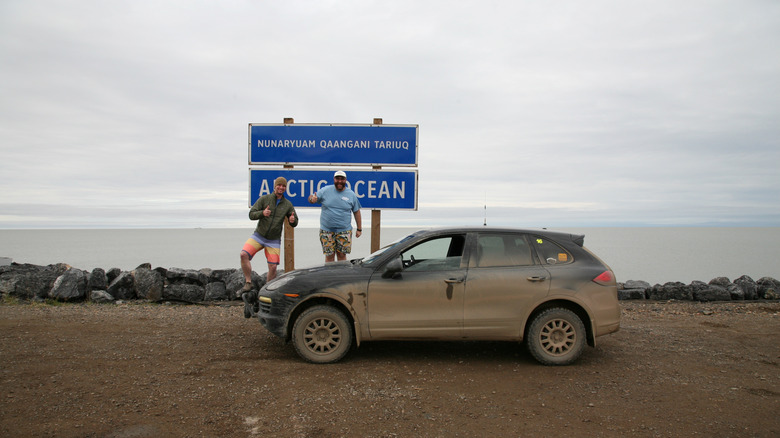
My one source of anxiety as this event unfurled was found in the morning headlines and tweets I woke up to each day, touting new record prices for diesel fuel. Perfect timing, of course, for me to bring a diesel-powered German SUV into the far reaches of the globe. Watching the loonies fly by into the hundreds with each fuel stop definitely made me cringe. At one point I found myself paying around $11 for the equivalent of a gallon of fuel. Life is short, and the value of the U.S. dollar is going to be much less in ten years than it is today, so I guess smoke 'em while you got 'em, but that still hurt. The pain of my diminished savings account will eventually dull, though, while the memory of jumping into the Arctic Ocean and going for a swim will never be forgotten.
If you're feeling disconnected from your increasingly connected life, maybe plan a trip for the northern reaches. The drive alone makes the trip worth it, but the fist that I had at Bullocks Bistro in Yellowknife was maybe the best meal I've had in my life. While you're up there, you should also visit the souvenir shop in Tuktoyaktuk to get yourself a hand-crafted ookpik to commemorate your trip. Get yourself to Dawson City and do the Sourtoe challenge. Be a tourist; it sure beats sitting at home all day. The vertical videos, gambling, and pharmaceutical ads will still be there when you get back.
If you're afraid of what you'll find out there, stay home. If, however, you want to see if you've got what it takes to do something difficult, give it a go. What's the worst that could happen? You might like what you find, but you won't know until you find it.