

8 Of The Most Reliable Ford Engines Ever Made
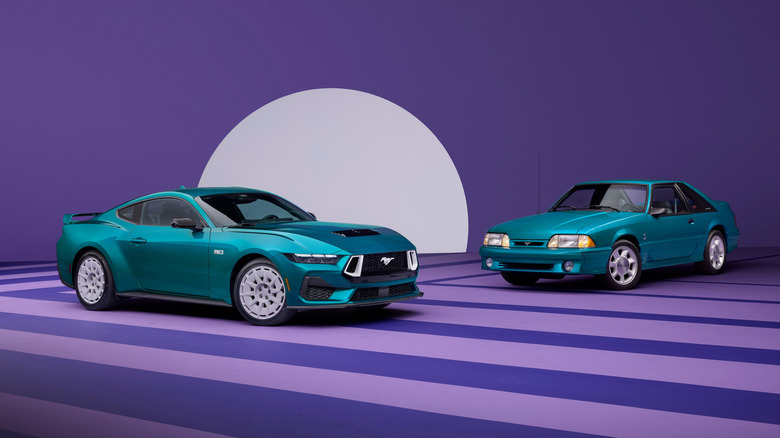
High horsepower figures certainly grab headlines at launch, but the reliability and longevity of an engine turn it into a legend. And Ford had plenty of legends in its 123-year history. The Blue Oval developed V8s that etched its name into racing history alongside road-going blocks that ignited the pony car era. It has also built reliable workhorses that powered its beloved F-Series trucks for decades, leading to the popular "Built Ford Tough" slogan.
What often gets overlooked, however, is that most of Ford's most reliable engines are powerful and reliable at the same time. Our list of the most reliable Ford engines ever made has the usual low-horsepower/high-durability suspects, sure — but it also consists of engines that excite without requiring frequent visits at the mechanic. In many cases, the brand proved it can integrate high-tech solutions without hurting reliability. Crucially, Ford did all this across radically different eras and with various engine configurations. You might expect to only see gas-powered V8s here, but this list also includes an unkillable inline-six, a heavy-hauling V10, and multiple commercial diesels.
1965 to 1996 Ford 300-Series 4.9L inline-six
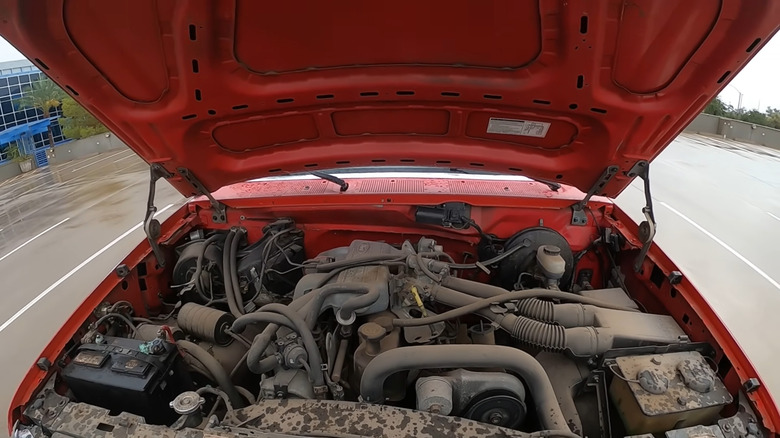
The 300-Series might not be very popular among muscle car enthusiasts (because it was never used in one), but truck enthusiasts love this thing thanks to its excellent reliability and low-end torque. It's also one of Ford's longest-lasting engines, spanning across three decades. The 4.9-liter (300 cubic-inch) naturally aspirated inline-six was never built to amaze with high horsepower figures. In the 1996 Ford F-150, which was the 300's last year on the market, it only produced 145 horsepower at a relatively low 3,400 rpm. However, thanks to its long-stroke design, it also had an outstanding torque figure of 265 pound-feet available at just 2,000 rpm, almost like a diesel engine.
The low-end torque made the Ford 300-Series perfect not just for trucks, but also industrial and agricultural applications. It certainly helped that it was built like a tank. Ford opted for a cast-iron block and head, forged connecting rods, hydraulic lifters, and seven crankshaft bearings for durability. In addition, this inline-six features a set of timing gears, which further increased its reliability over chains. That said, while it's generally robust, Ford's inline-six workhorse has zero tolerance to overheating, which is its only reliability-related issue.
Ford also produced a smaller 240 cubic-inch (3.9-liter) version, but it wasn't as sturdy or torque-y, so Ford scrapped it after a decade. Meanwhile, the Ford 300 served various workhorses for more than three decades. It also received various upgrades over the years, like an OBD-I connector in 1981 and fuel injection in 1987. The engine remained reliable during that time, with many owners covering over 300,000 miles.
1994 to 2003 Navistar/Ford 7.3L Power Stroke V8 diesel
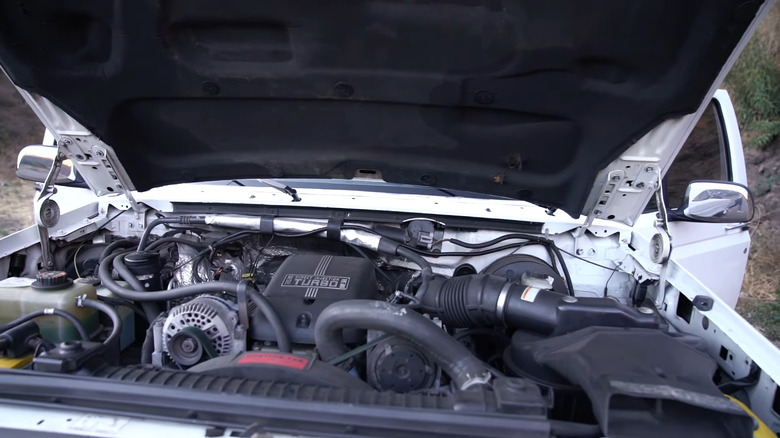
The 7.3-liter V8 Power Stroke diesel's production lasted for only nine years. But its influence can be seen in today's Ford Super Duty trucks, which are massively more capable when equipped with the optional 6.7-liter Power Stroke turbodiesel engine. Built by Navistar but designed by Ford, the 7.3-liter Power Stroke completely changed the truck segment when it arrived in 1994. The first iteration produced 210 horsepower and a massive 425 pound-feet of torque, compared to the 175 horsepower and 420 pound-feet of its rival, the Cummins 5.9-liter inline-six turbodiesel. What's more, the final 7.3-liter Power Stroke produced 275 horsepower and 525 pound-feet of torque.
Still, this massive V8 is mainly remembered for being a reliable diesel engine that just won't quit. There are a few reasons for this, but the most important one is the HEUI hydraulic injection system developed by Caterpillar and Navistar. The system was electronically controlled, which might scare some, but it proved as reliable as mechanical injection in the long run. Thanks to its precise electronic control and high injection pressures (21,000 psi), HEUI also allowed high power, low emissions, and excellent fuel economy.
It certainly helped that the engine's internals were also built to last. The 7.3-liter Power Stroke had a cast-iron engine block and head, forged steel rods, and hydraulic valve lifters. The result: 400,000 to 500,000 miles of service life with regular maintenance. Sure, 7.3 Power Stroke owners still face issues, but those are small and easily repairable. Just make sure you avoid 2001-2003 Power Strokes, as some were equipped with less durable powdered metal rods.
1991 to 2014 Ford 4.6L modular V8
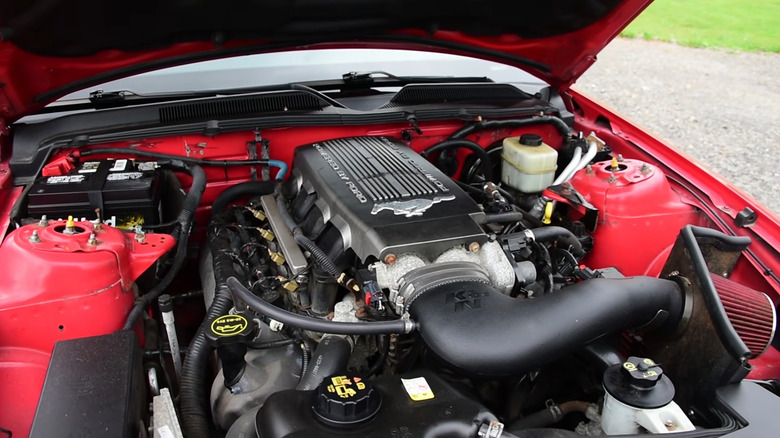
Ford's first modular has been used in so many different cars. It was first installed in the Lincoln Town Car, but it rose to prominence in the Ford Crown Victoria police and taxi vehicles, with some examples covering 400,000 miles without serious issues. Hardly surprising, as all 4.6-liter modular V8s featured strong and durable deep-skirt blocks. The modular engine also replaced the pushrod V8 in the Mustang GT — much to the displeasure of enthusiasts who thought the older 5.0-liter suited the pony car better. Ford also used it in trucks and SUVs, and a supercharged four-valve version even powered the Koenigsegg CC8S supercar.
Ford's modular V8 isn't without issues. Units produced from 1996 to 2001 have fragile intake manifolds, and the engine's short spark plug threads can be easily damaged. But in all other aspects, it's a very sturdy engine, especially considering all of its different configurations. For instance, the two-valve and three-valve versions had cast-iron blocks and SOHC aluminum heads, while four-valve versions were all-aluminum and had DOHC heads. In fact, thanks to the modular architecture, Ford uses the same tooling to produce the latest 5.0-liter Coyote V8, as both engines have a 100-millimeter bore spacing.
Yes, the two-valve version in the 1996 Mustang GT was underpowered, producing only 215 horsepower. Still, subsequent Mustangs saw an increase to 260 horsepower, while the three-valve versions, introduced in 2005, produced up to 315. The four-valve modulars were even crazier; the supercharged 2004 Mustang SVT Cobra packed as much as 390 horsepower.
1962 to 2001 Ford Windsor V8
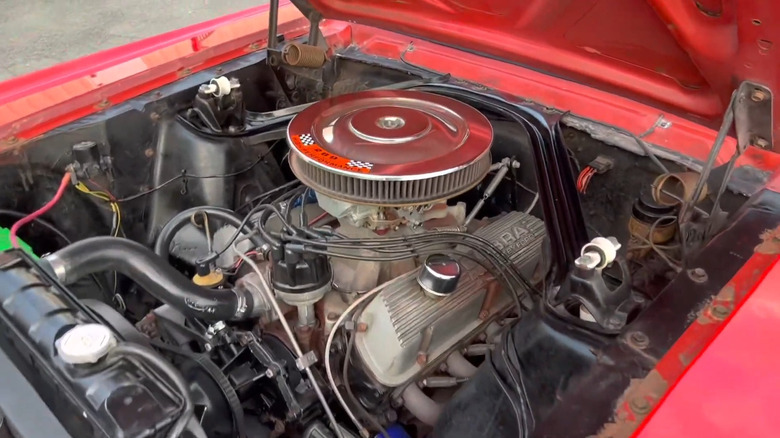
The predecessor of Ford's modular V8 is a legend in of itself — although "legends," plural, might be a more apt term. The family of small-block V8s produced at the Windsor engine plant in Ontario, Canada, consisted of engines with different capacities, ranging from 221 cubic inches (3.6 liters) to 351 cubic inches (5.8 liters). They were all designed to provide improvements over the Blue Oval's Y-series V8s, featuring cast-iron heads and blocks with thin-wall castings.
That said, the first 221 cubic-inch Windsor V8 wasn't quite enthusiast-worthy, as it produced only 145 horsepower. Later, though, the 289 cubic-inch (4.7-liter) and 302 cubic-inch (4.9-liter) small-block V8 shaped the muscle car era with competitive power figures and good efficiency. So, unsurprisingly, Ford's Windsor V8 family has found its way in many iconic performance cars, such as the Shelby Cobra, DeTomaso Mangusta, Mustang Hi-Po 289, and fox-body Mustang SVT Cobra. Windsors are also very popular as swap engines, particularly in the hot rod community.
Decades later, however, it's the excellent reliability that made the Windsor V8 family iconic. This was true for the regular, truck-oriented, and high-performance variants, but especially the larger 351 cubic-inch model. Another huge plus is the unmatched aftermarket support of the Windsor family, which makes reaching higher horsepower figures a breeze.
1997 to 2019 Ford 6.8L Triton V10
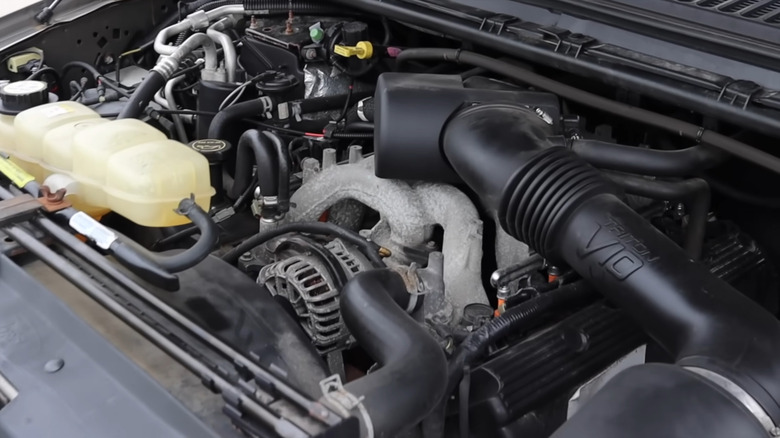
Back in the 1990s, Ford needed a replacement for its aging 7.5-liter V8 heavy-duty truck engine. However, developing a brand-new big-block V8 was costly, so Ford did the next best thing. It added two cylinders to its modular small-block 5.4-liter Triton V8 and turned it into the 6.8-liter Triton V10. Yes, this is the same engine family that started with the reliable 4.6-liter modular engine, amped up to 10.
The result was a beast of an engine with up to 362 horsepower and a meaty 460 pound-feet of torque, figures that were comparable to the Blue Oval's 7.3-liter Power Stroke V8 turbodiesel. It was almost as reliable, too. Properly-maintained Triton V10s regularly cover over 300,000 to 400,000 miles, thanks to the stout cast-iron block and strong internals. Accordingly, the 6.8-liter Triton V10 was capable of serving the brand's Super Duty trucks, E-Series vans, and buses. However, it also found its way into a "family SUV" — the big and bad Ford Excursion. The largest three-row SUV of its time, the Excursion V10 was 18.8 feet long, weighed over 7,000 pounds, and covered only 13 miles to the gallon on the highway.
Beyond its notorious thirst for fuel, certain model years of the Triton V10 had mechanical gremlins. In particular, early units had the same finicky spark plug threads as the 4.6-liter modular V8, and all Triton V10s have crack-prone PCV hoses. Still, these issues can be easily prevented with proper care, and they don't detract from the stout overall package.
1968 to 1997 Ford 7.5L 460 Big-Block V8
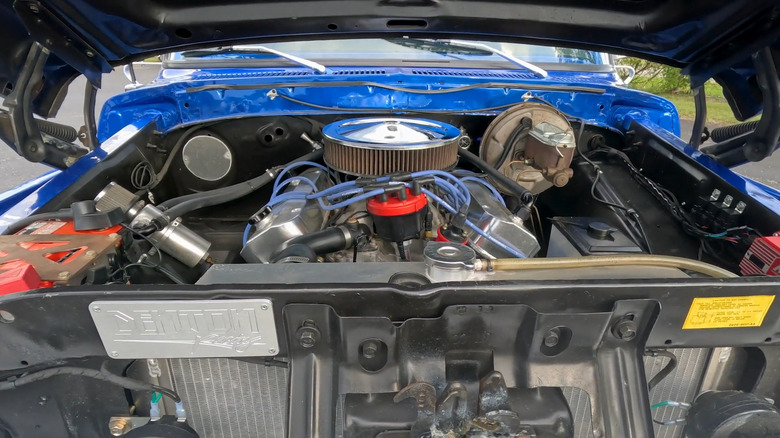
The big-block V8 that the Triton V10 replaced is another legendary truck engine known for its reliability and longevity. Based on the 385-Series of big-block V8s, the 460 — also known as the "Lima" because it was produced at Ford's engine plant in Lima, Ohio — didn't start its life in trucks. Instead, Ford installed it in the Lincoln Continental Mark III, where it produced 365 horsepower and 500 pound-feet of torque. But these are gross figures, not net, meaning their real-world output is actually lower under today's measuring standards.
Ford later installed the 460 cubic-inch (7.5-liter) behemoth in Ford's and Mercury's fill-size cars, but its true rise to prominence happened once it settled in Blue Oval's trucks and vans. In these vehicles, the low-end torque provided excellent grunt for hauling and towing, with the cast-iron block and head providing durability. On average, these engines last between 200,000 and 300,000 miles. They also suffer from a few issues, like warping exhaust manifolds, worn-down timing chains, and oil/coolant leaks. But these are things that should not surprise you in old, high-mileage engines.
Because of its stout construction and massive capacity, the 7.5-liter Lima V8 is also very popular for project builds. According to Jon Kaase from Jon Kaase Racing Engines (via Hot Rod), the 460 can be tuned to 900 horsepower with the stock block. Heck, the large bore centerlines allow stroker builds that push the capacity to 545 cubic inches (8.9 liters) with that same block.
2011 to Present Ford 5.0 Coyote V8
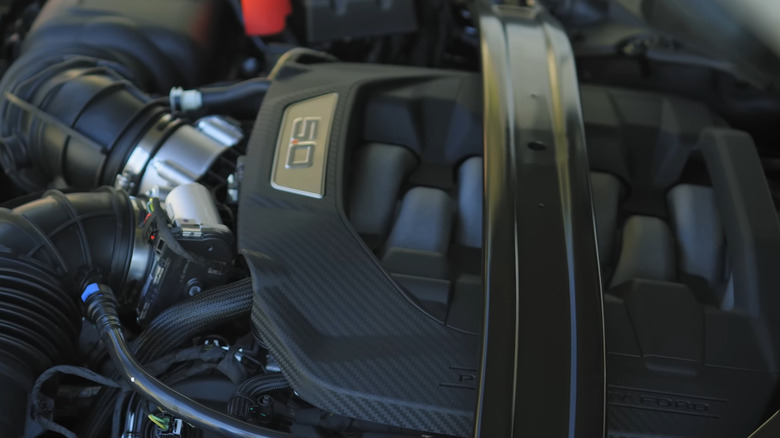
Back in 2024, we called the Mustang GT "the last great V8-powered muscle car." A big reason for that is the outstanding 5.0-liter Coyote V8, which performs and sounds like a muscle car engine should. It also produces 480 horsepower, which increases to 486 with the performance exhaust and up to 500 in the Mustang Dark Horse. It's rev-happy, too, redlining at 7,500 rpm.
You surely wouldn't expect such a high-strung naturally aspirated engine to also be reliable, but the Coyote V8 is as bulletproof as high-performance blocks get. Yes, the fact that it uses no turbos helps with reliability. But it's also part of Ford's modular family, which consists of the 4.6-liter V8 and 6.8-liter Triton V10. Not to mention, it features stout internals, like a forged steel crankshaft, powdered metal connecting rods, and a deep-skirt block with four-bolt main bearing caps.
Although Coyote V8s are all-aluminum engines, pre-2018 models had cast-iron cylinder liners. Meanwhile, newer models utilize Ford's Plasma Transfer Wire Arc (PTWA) technology, which aids durability while maximizing bore spacing. Older, pre-2018 Coyote V8s also only used multi-port injection, while newer models combine direct and port injection to eliminate carbon buildup while also improving efficiency. But the 5.0-liter Coyote V8 is far more than just a high-rpm machine; Ford techs claim it's also the most reliable Ford F-150 engine. Of course, the F-150 version doesn't rev as much, producing 400 horsepower at 6,000 rpm, but it still has that easy-to-love V8 sound.
2011 to Present Ford 6.7L Power Stroke V8 Diesel
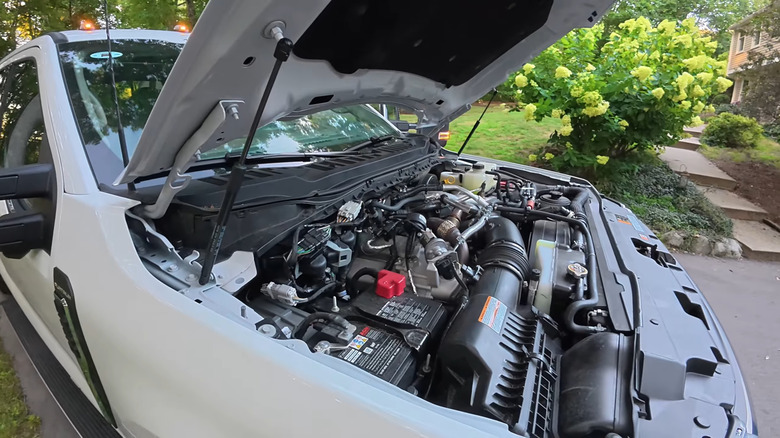
Ford/Navistar's replacements for the legendary 7.3-liter Power Stroke V8 weren't up to the same quality standard. The 6.0-liter Power Stroke V8 had a pretty bad reliability record, and the 6.4-liter successor wasn't much better, either. However, that all changed when Ford launched the 6.7-liter Power Stroke V8 diesel. This time, the Blue Oval developed and manufactured the engine entirely in-house, packing it with durability-enhancing features — including a compacted graphite iron deep-skirt block. As a result, the latest Power Stroke is incredibly reliable, matching the fabled 7.3-liter behemoth with a lifespan between 300,000 and 500,000 miles.
Like with most engines, though, early 6.7 Power Stroke years had some issues. In particular, they were equipped with finicky Bosch fuel pumps and fragile turbochargers. However, as outlined by Driving Line, these issues aren't very common and are easily preventable using cheap aftermarket add-ons. Newer 6.7-liter Power Stroke diesels are almost faultless, though, and they're also incredibly capable. Ford's latest Super Duty trucks are offered with two variations of the Power Stroke engine; the less-potent version produces 475 horsepower and 1,050 pound-feet of torque, while the high-output model bumps those numbers up to 500 and 1,200, respectively. The Power Stroke also gets 20 mpg, and with a gooseneck hitch, it can tow an unbelievable 40,000 pounds.