

12 The World's Most Prestigious Motorsport Events Every Gearhead Should Know About
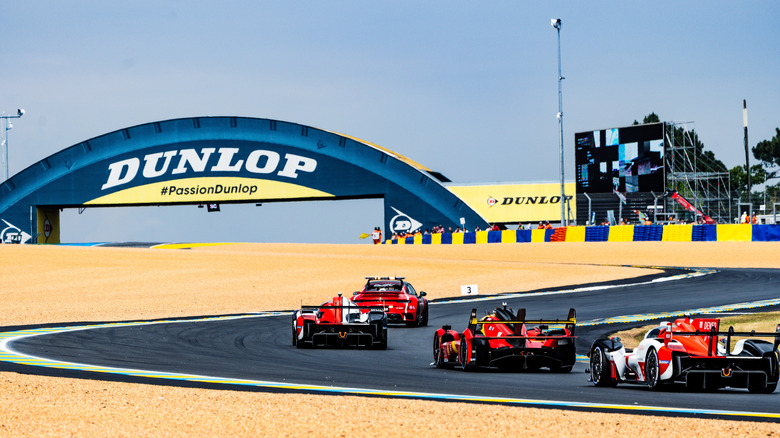
Auto racing is an inherently glamorous undertaking. It takes money and engineering prowess to build the cars, and it takes almost insane bravado to drive them. Even with the roll cages, fireproof suits, and real-time safety tech in the digital age of scrutineering, a mistake can easily turn fatal. Racing offers higher stakes than almost any other sport, and that gives it a mystique that transfers to some of the most legendary tracks and off-road courses in motorsports.
As our list below will show, racing prestige comes in many forms. Sometimes, the sheer age and history of a race make it venerable. Incredible performances by legendary drivers can impart an air of greatness. A dramatic or exotic location can create a glamorous atmosphere. Rivalries between automakers can play out on the asphalt. The difficulty of a course can make its winners famous. Then, add the sheer drama inherent to this dangerous sport — some of the worst crashes in motorsports history have occurred during some of the most famous races.
There isn't really room in this article to do justice to the sport, as we could easily list 50 motorsports events. The toughest Formula 1 tracks alone could make up a list of prestigious races. But we've narrowed it down to a dozen because, well, this is the internet. Feel free to add more to the comments, as we're sure you will!
Macau Grand Prix
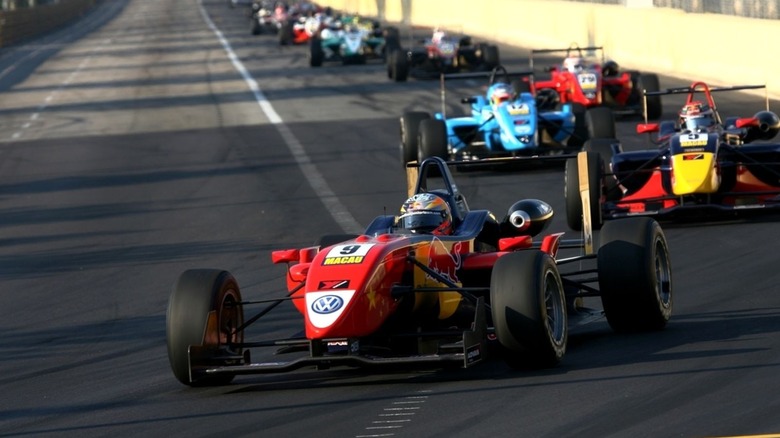
The crowded, densely-populated gambling destination of Macau lies within a tropical zone on the southern coast of China and, as such, serves as a dramatic backdrop for the Macau Grand Prix. The race grew out of humble origins as a local club race in 1954, but within a year, its street course was being converted from cobblestones to asphalt to enable serious racing. In time, it became one of the premier Formula 3 (F3) races in the world.
In 2024, however, it switched to being a Formula Regional event, which features smaller and slower cars that some argue are better suited to the tight course, even though many fans were upset by the change. However, according to an article by Motorsport, today's Formula Regional cars are as fast as the Formula 3 cars of the 1980s, when the Macau Grand Prix first switched to that racing format.
Drivers need to earn their Formula 1 Super License in lesser racing circuits. Macau became a showcase for up-and-coming talent because it was a non-championship race held after the racing season had ended. The late, legendary Ayrton Senna (then racing under the name Ayrton da Silva) won the first Formula 3 race on the course in 1983. Michael Schumacher won in 1990, defeating Mika Hakkinen in a hard-fought contest. These and other great drivers contributed to the mystique and prestige of this race.
Monte Carlo Rally
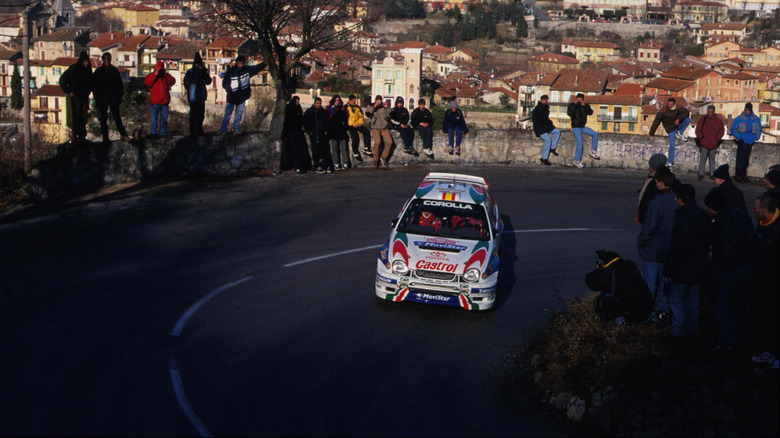
The Monte Carlo Rally combines a famously difficult course with a tremendous amount of history to earn its prestigious status. The first edition of this race, which was created by the Automobile Club de Monaco and inaugurated by Prince Albert of Monaco, took place all the way back in 1911. Monte Carlo is one of the districts of Monaco. Like Macau, it's a gambling paradise, which, in this case, is set into the base of a mountainous escarpment overlooking the Mediterranean, imparting an extra touch of glamour.
It also makes the course one of the most challenging rally-car races in the world. Starting down in the city streets, where competitors can find themselves mixing with city traffic, the course continues up into the Alpine terrain of the mountains. Combined with the fact that the race occurs in January, this means drivers may encounter ice and snow. Plus, the stages are lined with fans, and rally spectators are known for getting recklessly close to the action.
The Monte Carlo Rally became a proving ground for both drivers and cars, including Erik Carlsson in a Saab 96 in 1962, Paddy Hopkirk and his 1275cc Mini Cooper S in 1964, and Vic Elford and Björn Waldegård in Porsche 911s between 1968 and 1970. Four-time winner Sandro Munari first won in 1972 in a Lancia Fulvia 1.6 HF, launching Lancia on a long reign of dominance in the Rally. In the modern era, Sebastién Loeb and Sebastién Ogier have dominated the race.
Belgian Grand Prix
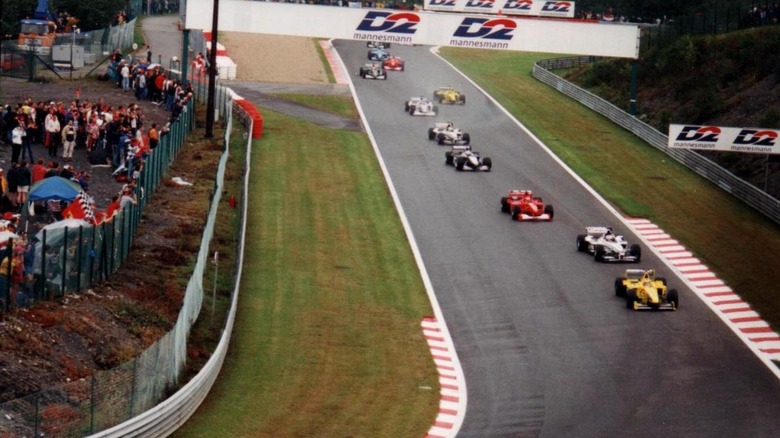
The Belgian Grand Prix combines a long history, a dramatic and challenging course, and a legacy of great drivers to earn a spot on the list of prestigious races. The event takes place on the Circuit de Spa-Francorchamps, which has hosted Grand Prix races since 1925. It became one of seven courses in Formula 1's inaugural season in 1950, when Juan Manuel Fangio took the checkered flag in an Alfa Romeo.
Fangio was just the first of many legendary drivers to win the Belgian Grand Prix, along with Ayrton Senna and Michael Schumacher. The track is considered one of the most challenging Formula 1 circuits in the world, with its mix of high-speed straights and 5G corners. The original course was downright dangerous, leading the legendary Jackie Stewart to campaign for safety improvements after he endured an awful crash in 1966.
The Belgian Grand Prix will switch to a biennial schedule after the 2027 race, running every other year to make room for more races on the F1 calendar. The tough track and Belgium's rainy weather have led to numerous spectacular crashes and hard-fought wins. These include Michael Schumacher's first win on the track in 1992, a rain-soaked 1998 race with so many crashes that only 8 cars finished, and an even more chaotic race in 2021 with no green flags and only two official laps completed.
Pike's Peak Hill Climb
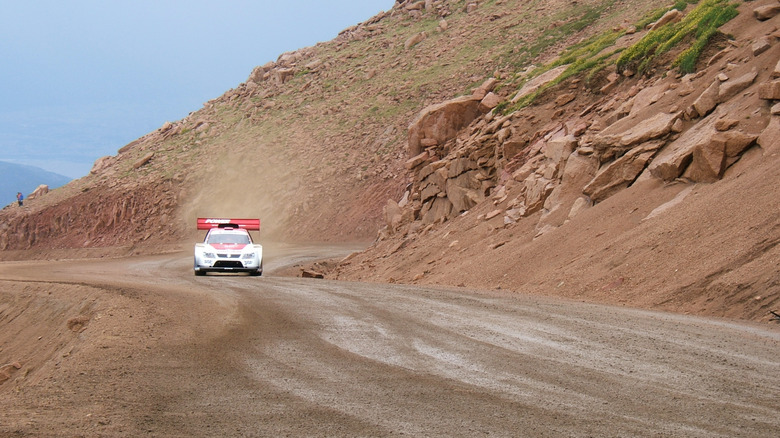
The Pike's Peak Hill Climb originated in 1916 as a "Race to the Clouds" to celebrate the opening of a toll road to the mountain's summit. With the exception of some years during the two World Wars and 1935, the race has been run annually since then. Among American races, only the Indy 500 is older. For generations, Pike's Peak has tested the nerves of drivers with curves above 800-foot drops and no guardrails.
It's also a grueling test for cars, since engine power drops while driving at high elevation -– and Pike's Peak's 14,110-foot elevation certainly counts as high. Even the beginning of the route is over 9,400 feet above sea level. The road unwinds over more than a dozen miles along the mountainsides. Over the years, different classes of cars and motorcycles have run through the route's 156 curves.
Famous drivers who drove in the Hill Climb included Mario Andretti, the Mears brothers, and a whole bunch of members of the Unser clan. Today, the race's website, ppihc.org, describes the classes of racers as including "everything from production-based Time Attack challengers to purpose-built Open Wheel racers and state-of-the-art Unlimited vehicles." The 104th running of the race took place on June 21, 2026, with Frenchman Romain Dumas winning in a Ford Super Mustang Mach-E EV.
Isle of Man TT
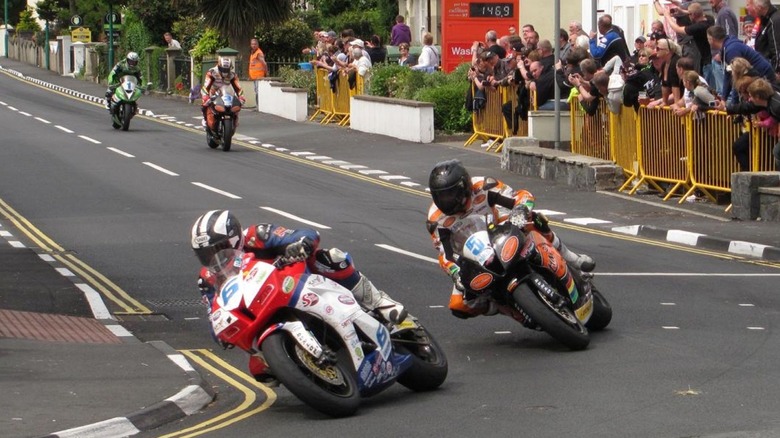
We come to the one motorcycle-only race on our list: the Tourist Trophy, aka The Isle of Man TT. It's also one of the oldest races, having first taken place in 1907, although the hills of the Island proved a bit too much for the early bikes, and the race didn't happen again until 1911. The location had been chosen because of automobile-friendly legislation recently passed by the Manx government.
The Isle of Man is not part of the United Kingdom, but rather an independently governed crown dependency, and apparently they have long held a more relaxed attitude toward these newfangled motorized machines than their UK neighbors. Even today, it's one of the few places in the world that has highways with no speed limit. As such, it was a natural home both for car races, first held there in 1905, and the Isle of Man TT.
The motorcycle races emphasized road touring in the early days with two classes of machines initially allowed, determined not by power but by fuel efficiency: 90-mpg single-cylinder bikes and 75-mpg two-cylinder models. Over the decades, performance took center stage, with the race becoming a proving ground for motorcycle manufacturers. The event's modern Superbike class features machines with 200 or more hp from Ducati, Honda, BMW, Yamaha, and several other manufacturers.
Bathurst 1000
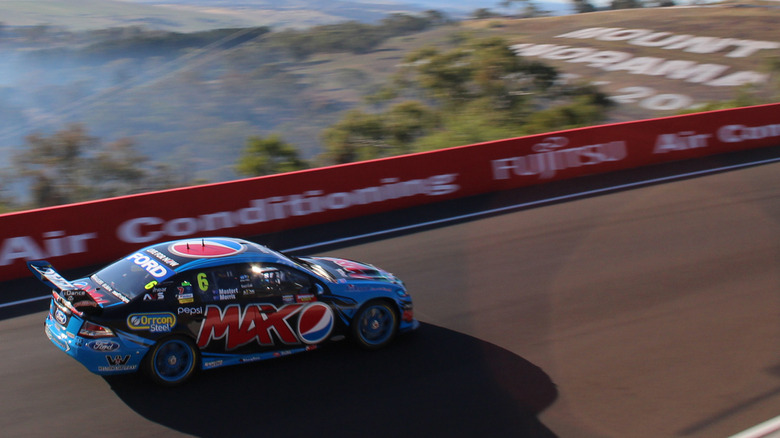
From the land of Mad Max comes one of the most challenging endurance races in the world, the Bathurst 1000. Today, it's run on the Mount Panorama course on the Australian mainland, but it started on Phillip Island as the Armstrong 500 in 1960. Deteriorating track conditions led to the race being moved to its current location in New South Wales in 1963. Australians refer to it simply as The Great Race. Bathurst is one of the tracks our readers most want to drive.
In its early days, the race was broken down into classes based on engine displacement, with the smallest being under 750cc and the largest being the 3500cc class. This resulted in a field of cars that could be bought at any local dealership, and, indeed, dealers often sponsored teams driving cars like the Mini S, the Peugeot 403, the XK Ford Falcon, or the Mercedes-Benz 220SE. You could even show up and race your family car.
By the mid-1990s, the race became known for a rivalry between Australia's Ford and Holden brands. This led to the high-performance V8 Supercars class, and the race became less of a "run what you brung" course and more of a genuine world-class sporting event. Since 2001, only the V8 Supercars have run on the scenic and dangerous course.
24 Hours of Nürburgring
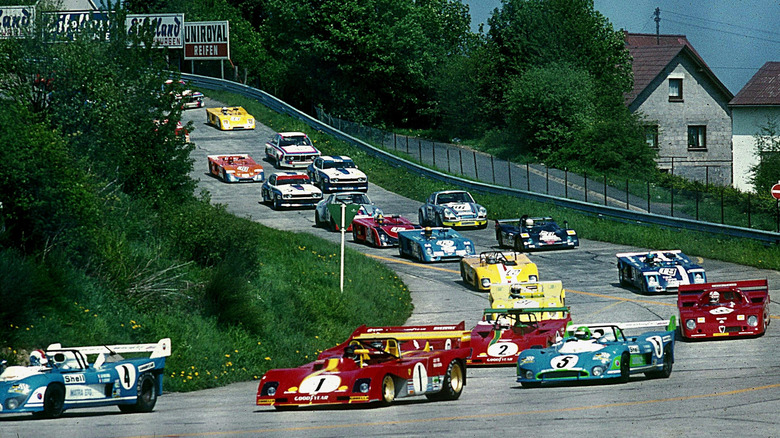
The original Nürburgring track was built between 1925 and 1927 under the boring moniker of the "German mountain, racing and test road." However, over the past century, its insanely challenging curves and hills have earned it a much more colorful nickname from drivers: the Green Hell. There are actually two courses: the original Nordschleife or North Loop and a modern Grand Prix course, both of which are linked together for the 24-hour endurance race.
The two tracks together make up a 15.7-mile circuit that winds through the Eifel mountains and around whole villages. The mountainous landscape makes the course particularly challenging and dangerous, and the huge field of entrants (161 cars for the 2026 race) makes conditions in Pit Row crowded and difficult for crews. Fans love the race, though, with more than 350,000 turning out for this year's event, partying hard on the green hillsides.
The race features an almost bewildering variety of car classes –- more than 20, in fact. They can largely be sorted into three groups, including the Nürburgring 24 Hours Specials (SP), the VLN Production (V) classes, and the single-make Cup Classes. The latter includes some classes specific to BMW models like the M240i and 325i. BMW even raced an M3 wagon at this year's event.
Dakar Rally
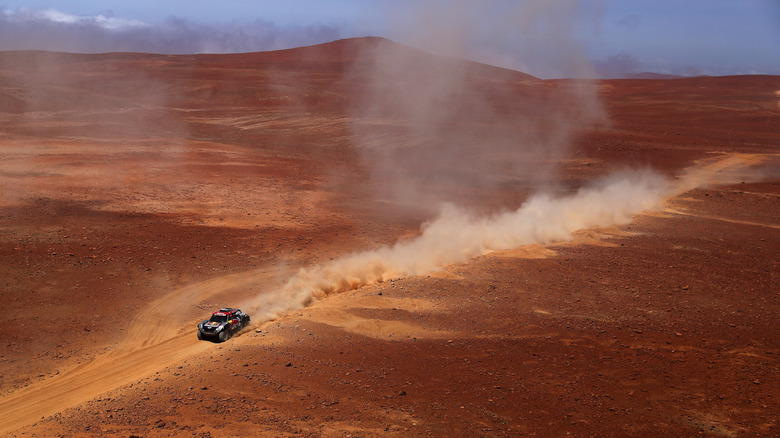
The Dakar Rally may be the most famous desert race course in the world. It famously grew out of the experience of its founder, Thierry Sabine, after he got lost in the North African desert during the 1977 Abidjan-Nice Rally. Enchanted by the desert, he established the first Paris-Dakar Rally in 1979, challenging racers to complete the 6,000-mile course from Paris to Dakar, the capital of Senegal.
Only 74 out of 182 teams completed that first race, a testament to its grueling nature. Yet, racers couldn't resist the challenge, and the event grew rapidly. Within a few years, 382 competitors entered the race, and manufacturers began backing the teams. Unfortunately, terrorist activity in Mauritania scotched the 2008 Rally and caused it to be moved to South America and later to Saudi Arabia. The name of the race became simply the Dakar Rally.
Today, the race has gone high-tech, with GPS checkpoints to guide the drivers through the harsh and trackless Saudi desert. Even with GPS, drivers and their co-drivers can get lost in the seemingly endless expanse, and even the toughest 4x4s can get stuck in the sand. Temperatures can reach as high as 113 degrees Fahrenheit. Just completing the race is a triumph. Audi made Dakar Rally racing history with the first EV to win the race in 2024.
Daytona 500
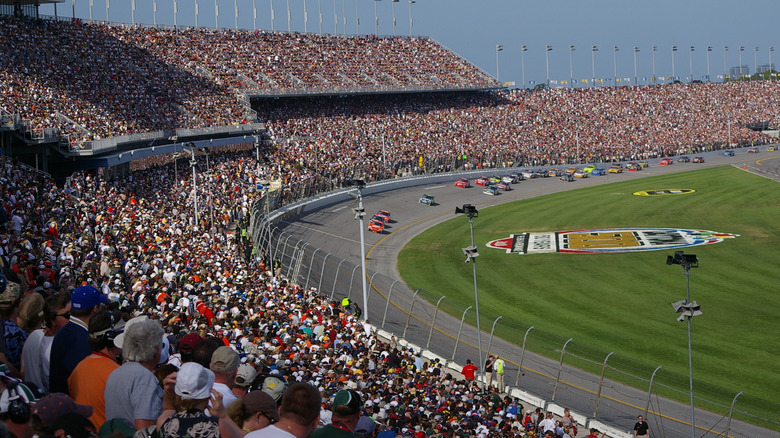
Daytona claims to be the "birthplace of speed," thanks to one of the world's first car races taking place on its beach all the way back in 1903. This gave birth to a tradition of beach racing that eventually grew to include both the beach and the streets of the adjacent city of Daytona. However, the Daytona area was growing by leaps and bounds and making it difficult to find room to race, so a mechanic-racer named Bill France recognized the need for a dedicated track.
France also recognized the need for standardized rules and governance to rein in the sometimes dodgy sport of auto racing. This led him to found NASCAR in 1947, establishing rules for every stock-car track and a point-based national championship. In 1954, he also began construction of a world-class, 2.5-mile track with 31-degree banked turns. The first Daytona 500 took place on this track in 1959, with Lee Petty beating Johnny Beauchamp by 2 feet to become the race's first winner, although it took more than two days for the result to be determined.
The list of great drivers who have won the Daytona 500 is far too long to include here, although some of the most famous names include Richard Petty, Mario Andretti, Cale Yarborough, A.J. Foyt, Bobby Allison, Darrell Waltrip, Dale Earnhardt Sr, Dale Earnhardt Jr, Jimmie Johnson, and dozens of others. The race's history, its drivers, and its role in the founding of NASCAR make it one of the sport's most prestigious events.
Indianapolis 500
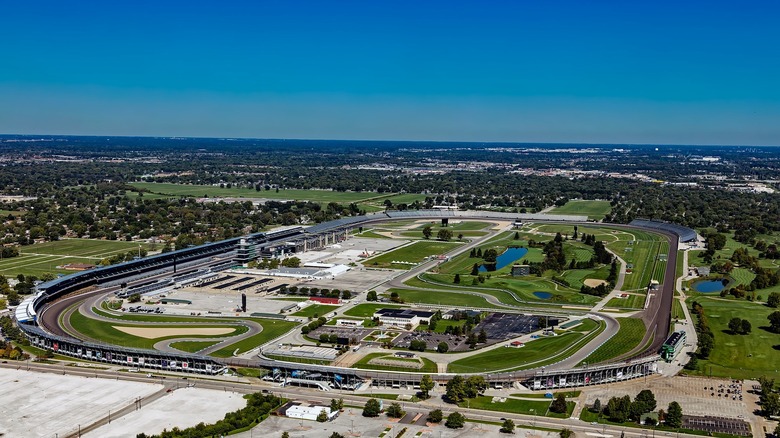
The finish line at the Indianapolis Motor Speedway features a 3-foot-wide strip of bricks, a nod to its original brick paving surface that gained it the nickname of the Brickyard. The Indianapolis 500 race has been run on this track since 1911 and gained its own nickname, "the greatest spectacle in racing." A headlight manufacturer named Carl G. Fisher built the track out of concern that American carmakers were falling behind their European competitors.
Fisher and his partners envisioned a test track that could also host races, which commenced in 1909. The track proved extremely dangerous due to its poor surface, so it was replaced with more than 3 million bricks. On the safer surface, speeds soon exceeded 100 mph. Originally, the track hosted a whole series of races, but Fisher and his partners decided to gamble on hosting a single, huge event in 1911, and the Indy 500 was created. 40 racers in 23 car makes participated — Ray Harroun won the race in a Marmon Wasp.
In 1935, the turns on the 2.5-mile track were paved with asphalt, and in 1961, the rest of the track was paved with asphalt except for the finish line. By 1977, speeds had reached and exceeded 200 mph. Like the Daytona 500, it would be impossible to list all of the famous winners, although, notably, only A.J. Foyt and Mario Andretti have won both races.
Monaco Grand Prix
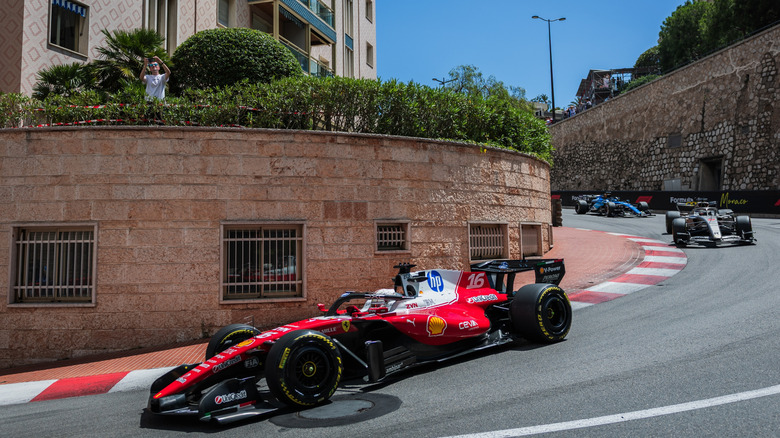
The Monaco Grand Prix is the second race to appear on this list from the Principality of Monaco, after the Monte Carlo Rally. Like that other race, the Grand Prix gains prestige from the exotic setting and the historic nature of the race. It has been part of the World Championship since 1950, and since then, drivers have been challenged to navigate the super-tight corners of the course that winds through the narrow streets of Monte Carlo.
According to Formula 1, three-time Formula 1 champion Nelson Piquet described the race as "like riding a bicycle around your living room." It's the shortest Grand Prix track, but it's also one of the most difficult, with overtaking and passing proving to be especially hard. Drivers must maintain full concentration at all times, making it one of the ultimate tests of skill and stamina.
The 1982 race is an excellent example of the unforgiving nature of the track, with one leader after another crashing, spinning out, or running out of fuel. Eventually, Riccardo Patrese won, despite having spun out and stalled earlier. Other famous results included Sterling Moss's hard-fought victory in a Lotus 18 in 1961 and a 63-lap duel between Lewis Hamilton and Max Verstappen in 2019, which Hamilton eventually won.
24 Hours of Le Mans
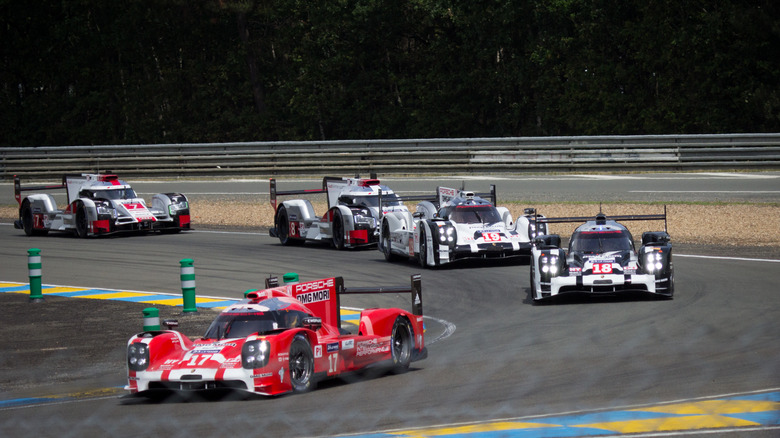
Since it was first run in 1923, the 24 Hours of Le Mans has held prestige as the most famous and grueling endurance race in the world, and arguably the best-known auto race on the planet, period. This incredible event is really three races in one, with the Hypercar, LMP2, and LMGT3 classes each straining to endure 24 hours on one of the toughest tracks on Earth.
By rule, each car must have three drivers, and each driver must drive for at least 6 hours but not more than 14. Driver swaps often take place during pit stops to save time. The race runs through the night, with the rising sun bringing the added challenge of glare. The 8.5-mile Circuit de la Sarthe course runs largely on public roads and features straightaways and corners that have become almost as famous as the track itself, such as the Mulsanne Straight and the Porsche Curves.
Victory at Le Mans brings so much prestige that manufacturers devote millions of dollars to enter cars in the race. This includes not just famous performance brands like Porsche and Ferrari, but even carmakers that you may not expect, such as Toyota. This year, the Genesis Magma made a successful debut, entering the Hypercar class to make history as the first Korean manufacturer to enter the race.