

2027 BMW X5 Hybrid And iX5 EV Reinvent The Crossover That Changed Everything 27 Years Ago
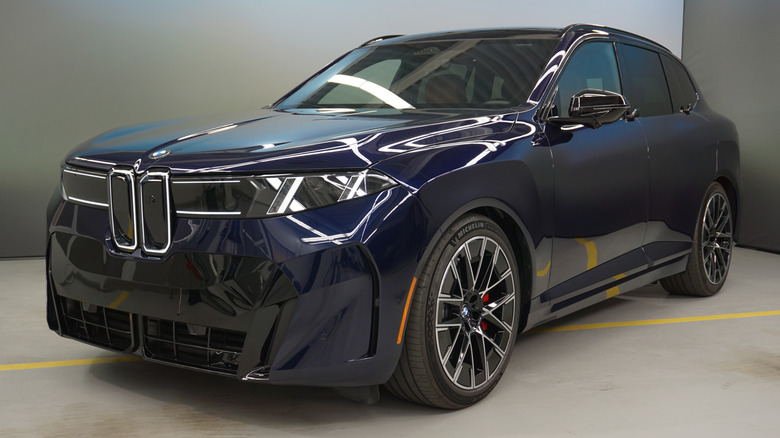
When BMW first introduced the X5 back in 1999, it changed the game for the Bavarian automaker and the industry as a whole. Now, over 3 million X5s later, the company is pulling the covers off its fifth-generation model, and BMW is looking to shake up the game once again. The new X5 gets the model's first battery-electric powertrain options with the introduction of the iX5, Neue Klasse design elements inside and out, and the same sporty and tech-y yet incredibly comfortable interior we've come to expect from BMW's mid-size crossover. There will even be a hydrogen version, too.
It's hard to believe that the X5 has been around for 27 years already. Each new generation, to this point, has seemed a bit like an evolution of design rather than revolution. With the 2027 X5, though, there's a lot of revolution happening here. Its looks are very in line with what we've seen from other Neue Klasse vehicles like the i3 and iX3, despite the fact it runs on BMW's CLAR architecture that underpinned the outgoing X5. Still, it's a huge departure from the G05 X5 of old, and not just because of the all-electric iX5. Don't worry, gas cucks, there are still plenty of fuel-burners available. But while a lot has been added to the new X5, there is one staple of the X5 that's now gone: the split-folding tailgate. It's a tragedy, I know, but more on that later.
Full Disclosure: BMW flew me out to Spartanburg, South Carolina, put me up in a very nice hotel and fed me, all so I could check out the new X5 in person.
X marks the spot
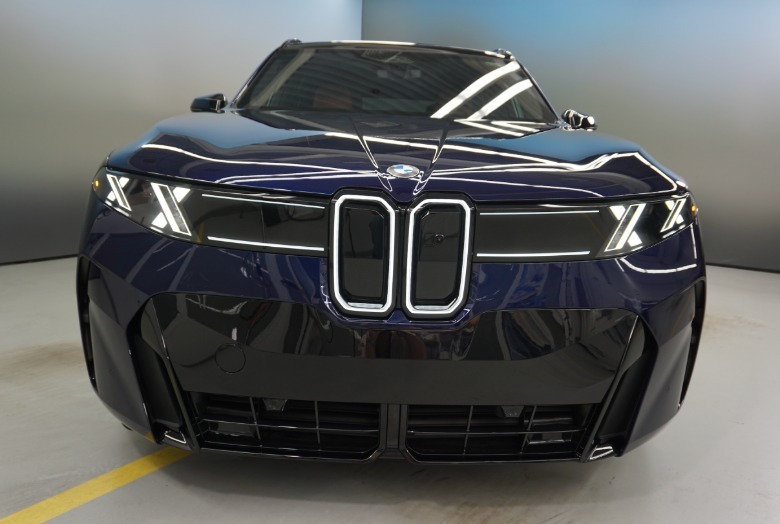
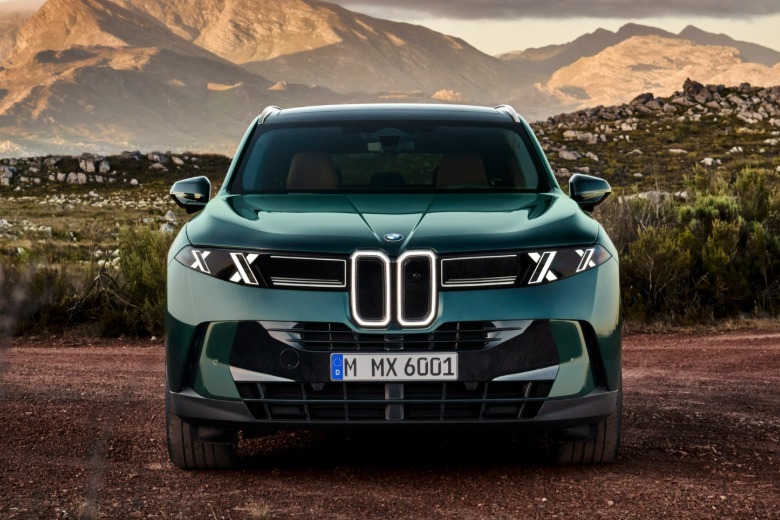
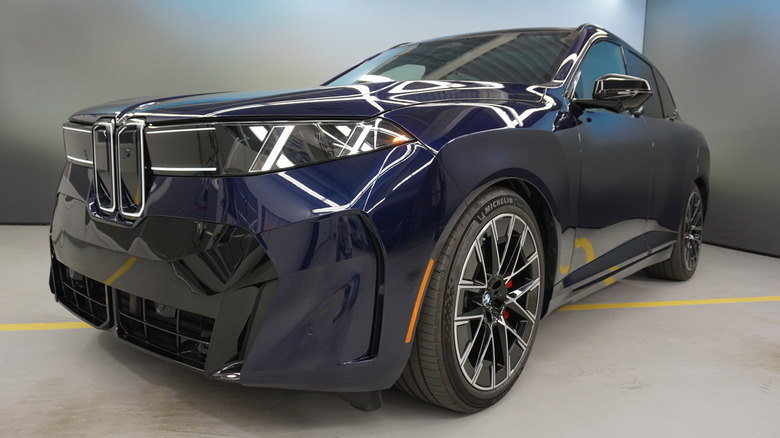
I dig how the 2027 X5 looks, mostly because the entire Neue Klasse design language really speaks to me. Hell, I think it even looks good when grafted onto cars that didn't originally have it, like the facelifted 7 Series. Before we get into exact details, I do need to point out that the new X5's X-shaped running lights look like the eyes of a cartoon character when animators try to convey that they're dead by putting X's over them. I guess the headlights are sort of fun and goofy and may be paying homage to the BMW 328 Hommage Concept, but I can't help but think the straight lines of the iX3's headlights would look better. Someone at BMW thankfully agrees with me though, because the "double-X icons," as the company calls them, can be switched off to reveal a look closer to the iX3.
 Andy Kalmowitz / Jalopnik
Aside from the headlights, the X5's front end looks a hell of a lot like the iX3, just embiggened. It has the same narrow, upright kidney grilles that harken back to BMWs from almost 100 years ago, with the X5's kidneys being a bit bigger and more squared-off than those of the iX3. They're flanked by a larger black space on either side, with illuminated contours and the trapezoidal headlights pushed to the very edges of the fascia. BMW says the front end is even taller than before, which is sure to anger the pedestrian-conscious folks reading this, and I've gotta say, it certainly looks imposing. I wouldn't want it in my rearview mirror on the highway, that's for sure.
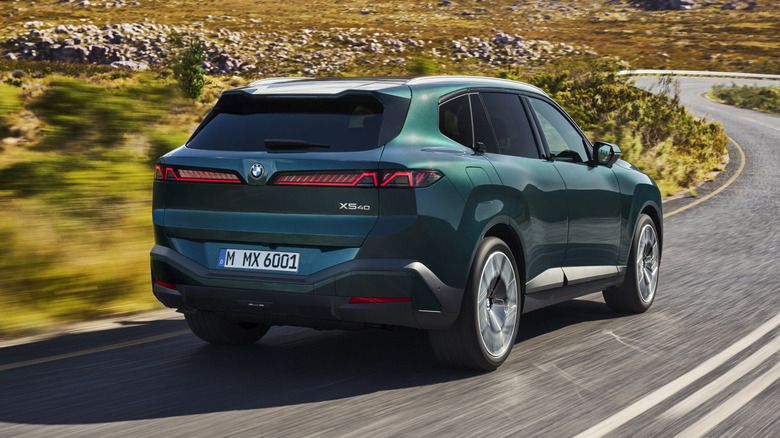
If it was in my rearview mirror, though, I'd have a hard time distinguishing the gas car from the iX5, because other than the gas model having a few extra air intakes in the lower bumper, the two SUVs look identical — the base six-cylinder X5 (the green one above) doesn't even have exhaust tips. The X5's horizontal air intakes are meant to emphasize the "sportiness and stability" of gas models, while the iX5 has a continuous apron design that's meant to look a bit more "elegant."
 BMW
BMW
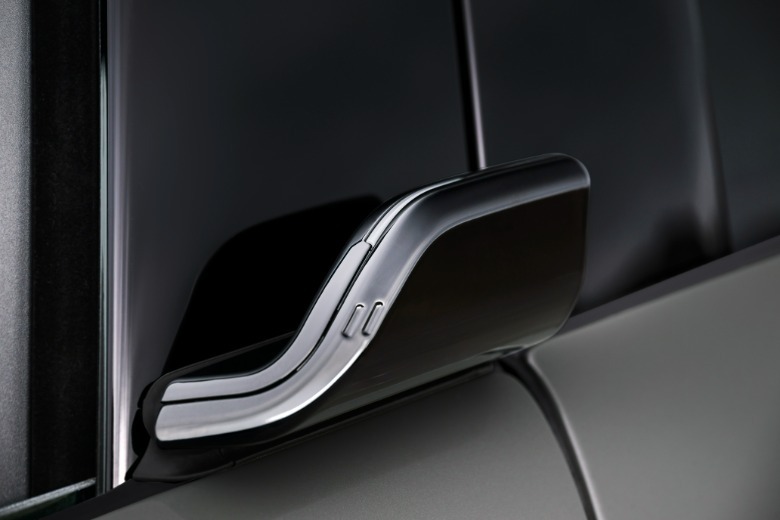
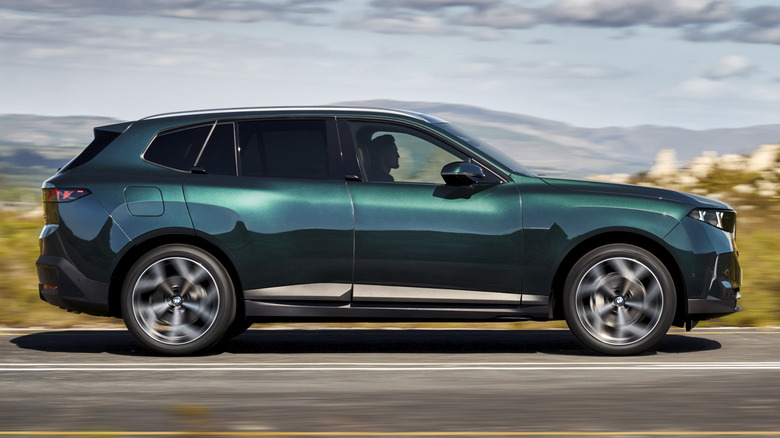
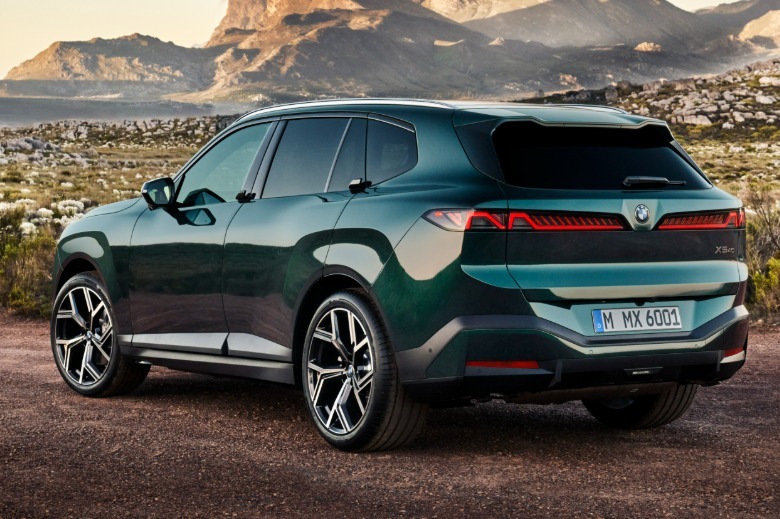
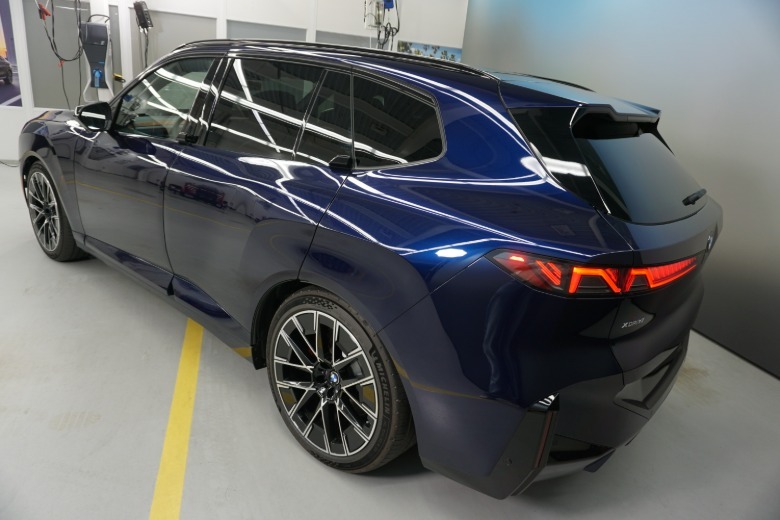
The X5's side view is also in keeping with BMW's current Neue Klasse looks. Monolithic is the word I'd use; it's fairly slab-sided and awfully similar in terms of surfacing to the now-dead iX. There are still some funky details, like the squared-off scoop-outs above the wheel arches that make them look more aggressive than they really are, the wide side skirts you'll definitely knock your shin into (as I did multiple times), and BMW's signature Hofmeister kink in the D-pillar. Other neat features include hidden window seals that make a flush transition between the paint and glass, and the new "BMW Winglet" touch-sensitive door handles on the B- and C-pillars that are used to open and close the car's four passenger doors. There's a fully electrical power option that'll swing the doors all the way open with a light touch, and soft closing comes standard.
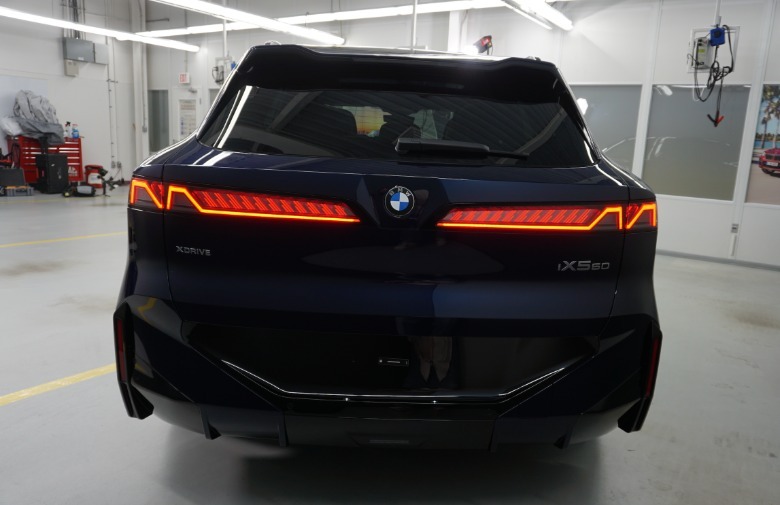
You might also notice the wheels have been pushed out to the corners a bit more than before, thanks to 2.4 inches in added wheelbase, though BMW has yet to say exactly how long the new X5 is. Similarly to the front end, the rear is reminiscent of the iX3 with long, intricate taillights that make the X5 look even wider than it really is. It certainly has a good stance that is aided by a gloss black lower bumper and diffuser section, and what almost looks to be a shelf above the taillights.
 Andy Kalmowitz / Jalopnik
As with all BMWs at this point, buyers can add on an M Sport package that makes the X5 and iX5 look just that bit more aggressive with more sculpted bumpers, wider side skirts, active M suspension, special wheels and a few other odds and ends. The M Sport Professional package turns that up to 11, adding in 22-inch wheels, red M Sport brakes and some more black trim on the exterior.
To ring in the new X5, BMW is offering up 10 wheel designs between 21 and 23 inches, and there are 11 exterior colors. Hell, five of them are actually new for 2027, though three of them are different shades of gray. (No, I'm not kidding.)
Tailgate time
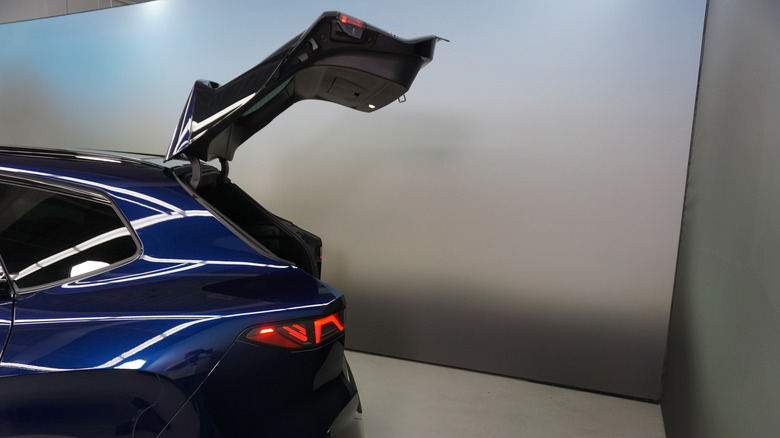
Overall, it's a really nice piece of design from the outside if you like what BMW has been cooking up as of late, but one thing is missing: a split-folding tailgate. It's been a staple of the X5 since it was introduced, but the two-piece tailgate is no more for this fifth-gen crossover. A spokesperson for BMW told me that the decision to axe it was threefold: weight, packaging, and customer demand.
There's no getting around the fact that the X5 is a big fella. BMW hasn't released exact weight figures, but when it comes to efficiency, whether gas or electric, you want to save weight where you can. Dropping the electric motors of the lower half of the tailgate, along with everything else they require, saved weight. Those small savings can make a difference.
 Andy Kalmowitz / Jalopnik
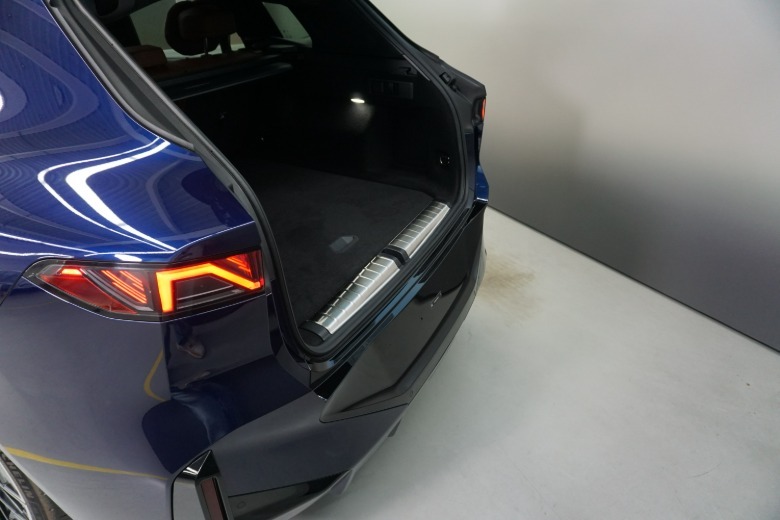
I was also told by the spokesperson that, because the motors and drainage channels of the lower half of the tailgate were removed, BMW engineers were able to widen the X5's hatch opening. Now, we don't have cargo space numbers either, so I can't tell you how much it's been improved, but I'm going to bet every bit helps when it comes to owners who want to load up their X5s.
Speaking of X5 owners, they're the third reason the split-folding tailgate is gone. Apparently, despite the fact they're so damn cool, owners were mostly annoyed by having to reach over the lower section to get things in and out of their X5s. Personally, I think it's because Ford added a split-folding tailgate to the Expedition and Lincoln Navigator, and there can only be so many on the market at once. Perhaps there's a finite number of split-tailgate parts on Earth.
Neue interior
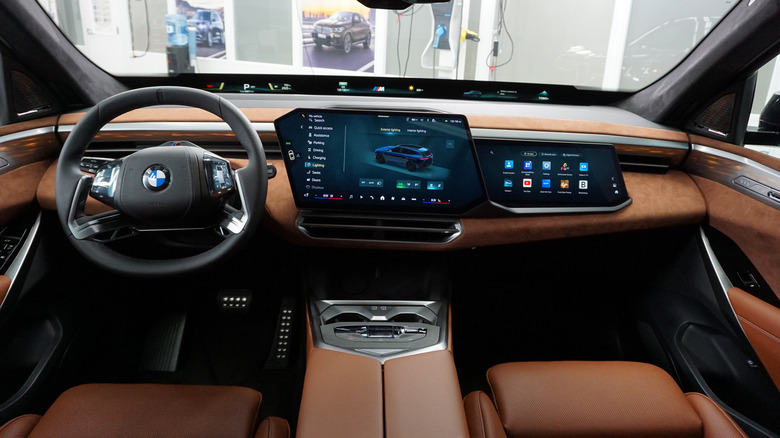
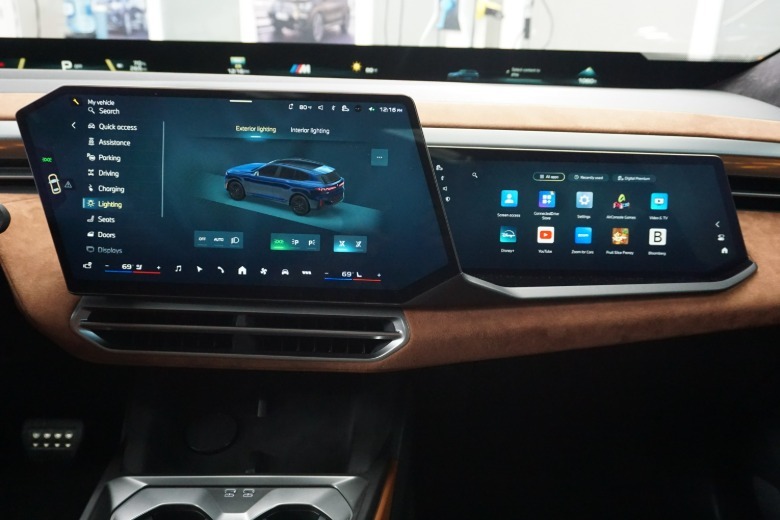
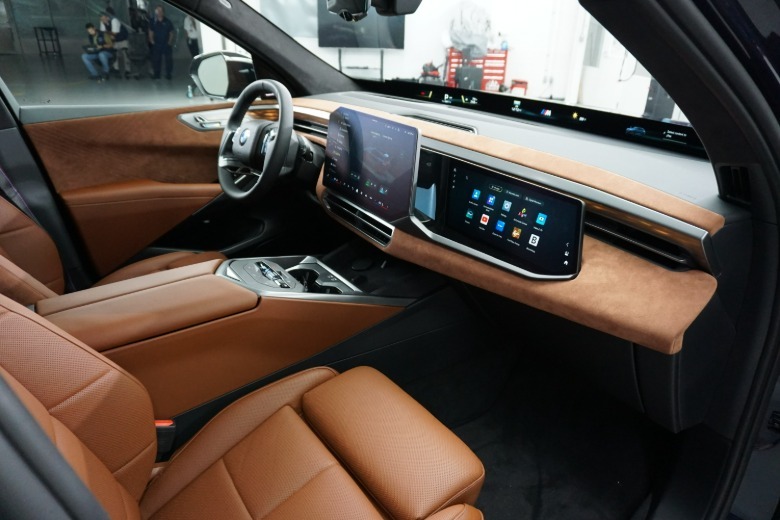
The X5's interior has gotten the same all-encompassing overhauls that the exterior got, especially when it comes to technology. All Neue Klasse-era BMWs (even though this SUVs runs on the CLAR platform) get the Panoramic iDrive setup running the company's Operating System X. It makes use of a projected Panoramic Vision display that spans the entire length of the windshield's base, while a 17.9-inch rhombus-shaped touchscreen stands as the centerpiece of the dashboard, flanked to the right by am optional 14.6-inch display with all sorts of passenger-focused entertainment features (even some games).
On the left of the rhombus screen are BMW's funky new steering wheel designs that I think look great, but I guarantee you will probably hate. There's also a 3D head-up display above everything, just in case you needed a touch more information. Don't worry, tech-spooked people — BMW says the center display can be hooked up to Apple CarPlay and Android Auto, and if you hate pressing screen-based buttons (since that's really your only option), you can just talk to the damn thing and not have to worry about menu jumping whatsoever. Don't fret about things getting out of date, because the whole system will remain as current as possible with ConnectedDrive over-the-air updates.
 Andy Kalmowitz / Jalopnik
Another element that really stood out to me as I poked around the interior of a preproduction X5 was the ambient lighting. BMW has thankfully moved away from that fully illuminated plastic trim it introduced on the 5 Series and X3; in its place are more subtle, almost wave-like ambient lighting elements throughout the cabin that have their own animations and react to different vehicle controls.
 Andy Kalmowitz / Jalopnik
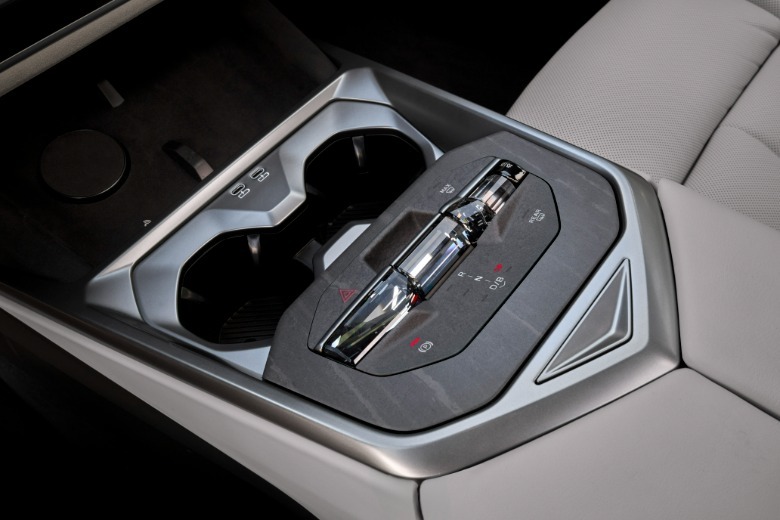
Overall, there's an art deco look and feel to the car's interior, and a lot of super interesting material choices. Of course, you've got your standard woods, leathers, metals, plastics, and suedes, but BMW has taken it a step further by adding something I've never seen before: slate. No, not the truck company that'll definitely work out — the material. Part of the Individual Clear & Bold package, BMW says the "process applies a thin layer of genuine slate to the base material, allowing it to be shaped precisely to the cabin's contours." It's found most notably on the center console control panel, and it feels pretty damn cool to use, I must say.
As standard, the X5 comes with a 280-watt 12-speaker audio system, but I must implore you to get the optional 775-watt 18-speaker Bowers & Wilkins Surround Sound system, or everyone is going to think you're a poor loser. You don't want that, do you?
 BMW
BMW
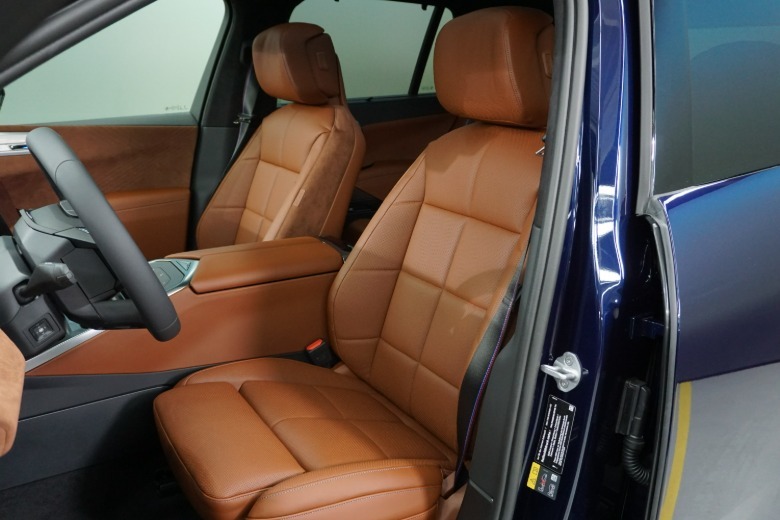
I won't get into every granular thing that has to do with the front seats, because who has the time or energy, but BMW does say there's added cushioning, and they can be finished in all sorts of vegan leathers (or real leathers if you aren't a woke lib). Ventilated and massaging seats are also available as an option. As with all X5s, there's plenty of rear-seat room for at least two adults, but now there's even more thanks to that aforementioned increase in wheelbase, and they can be folded down in a 40:20:40 split to increase cargo capacity.
She's electric
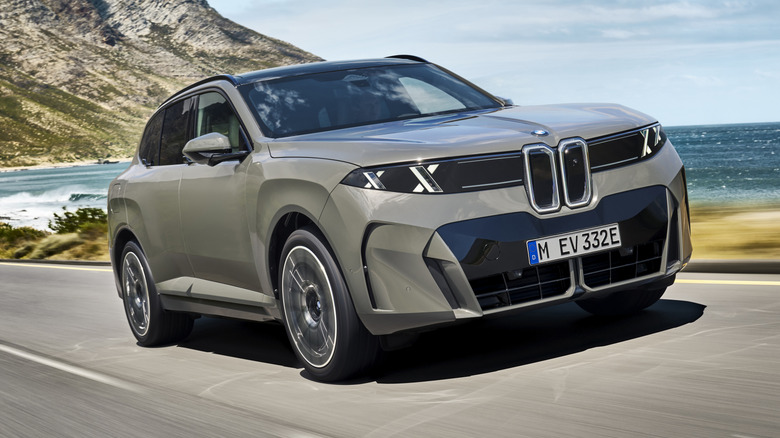
While everything we've covered so far is very well and good, the big news with the fifth-generation X5 is undoubtedly its all-electric iX5 variant. It runs on an 800-volt architecture and features all sorts of goodies like bidirectional charging, a standard NACS charging port, and newly developed electric motors and batteries with cylindrical cells for greater energy density than the old ones. For now BMW is just talking about the iX5 60 xDrive model, which has a 144-kWh net usable battery pack that BMW says is enough for 435 miles of range on a single charge, per BMW's testing.
 Andy Kalmowitz / Jalopnik
Even after running out of juice, charging up is a cinch since it can handle up to 460 kW of charging power. Charging from 10% to 80% takes just 22 minutes, and in only 10 minutes of charging you can add about 170 miles of range. That's pretty damn legit. On an AC charger, the iX5 can handle 15.4 kW of juice.
Equally legit is the power. The iX5 60 xDrive has one motor at each axle that make a combined 570 horsepower and 593 pound-feet of torque, enough oomph to get the big bruiser from 0 to 60 mph in just 4.4 seconds. If you keep your foot in it, you'll hit an electronically limited top speed of 130 mph.
All hybrid all the time
Things are slightly less interesting when it comes to the gas-powered X5s, but that doesn't mean they should be ignored. The rear-wheel-drive X5 40 and all-wheel-drive X5 40 xDrive are powered by BMW's tried-and-true B58 turbocharged 3.0-liter inline-6, which now has a 48-volt mild-hybrid system. Power is now up by 19 hp and a whopping 46 lb-ft of torque, bringing both models to 394 hp and 429 lb-ft — that's good enough for a 5.1-second 0-to-60 time in the RWD model with the help of its 8-speed automatic transmission, and a 155 mph top speed when properly spec'd.
If you're the sort of person who finds electric power interesting, but you're not ready for that type of life yet, then perhaps the plug-in hybrid X5 50e xDrive is for you. It teams up that B58 with a 194-hp synchronous electric motor housed inside the 8-speed automatic transmission and a 26.5-kWh battery. Combined, the system pumps out 483 hp and 516 lb-ft of torque and can move the X5 PHEV to 60 mph in just 4.6 seconds, also going on to a 155 mph top speed. It's able to drive at up to 87 mph in pure electric mode and has a BMW-estimated 44-mile all-electric driving range. Not too shabby.
 BMW
BMW
BMW says more X5 variants will come down the line, including a V8-powered M Performance model. There's also apparently going to be a hydrogen iX5 at some point, but, uh, I won't waste anyone's time with that one.
Underneath, the chassis and suspension are largely the same as they were before — not that that's a bad thing. I've always been a fan of how the X5 rode thanks to its double wishbone front suspension and five-link rear axle. There have been some tweaks, though. BMW says the X5's track has increased, as has body stiffness, which is meant to make the car feel — you guessed it — more sporty. It maintains the near-50:50 weight distribution BMW is so famous for, and there are a slew of suspension settings within the car's infotainment system that can help tailor your driving experience.
 BMW
BMW
There's an optional air suspension that'll raise and lower as the car's brain sees fit (up to 1.6 inches when parked) that'll help with highway aerodynamics and with traversing the rough terrain you're sure to encounter in an X5. Electric and PHEV models are available with Adaptive Chassis Control Professional that uses a 48-volt electric motor in the center each axle and active anti-roll bars to stop the thing from leaning so damn much in the corners, and it's paired with rear-wheel steering that'll help you navigate around tight corners by turning the back wheels up to 3.2 degrees.
I don't need to tell you this, but the car is available with basically all of BMW's advanced driver assistance software. Pretty much anything you can think of, this SUV has, including an optional Highway Assistant system that'll enable hands-free driving on "suitable highways" at speeds up to 85 mph. If you merely glance at one of your side mirrors, it'll even change lanes for you.
Revolution over evolution
I know I threw a hell of a lot of information at you, and if all of it still sounds enticing and you're a bit well-to-do, you're probably going to want to know that the 2027 X5 is going to hit the market in October of this year. First to launch will be the X5 40 xDrive, which will carry a base price of $73,550, including destination. It'll be followed by the rear-drive X5 40 ($71,250), plug-in-hybrid X5 50e xDrive ($78,950), and the all-electric iX5 60 xDrive ($81,250) sometime in the first quarter of 2027.
Without a doubt, BMW is taking some big swings right now. Cars like the X3, X5 and 3 Series were always a bit conservative in their designs, but with the introduction of Neue Klasse, BMW has turned over a neue leaf, and it's all the better for it. For a car like the X5, one that has always remained evolutionary since its revolutionary introduction at the end of the last millennium, this is by far the biggest swing BMW has taken, and that's a good thing.
It's also a car that perfectly represents where the automotive industry is at right now, considering how many powertrains are meant to fit under its hood. With the new X5, there's supposed to be something for everybody. Gas? Check. Hybrid? Check. Diesel (in Europe)? Check. Electric? Check. Hydrogen? Check. We've left an automotive industry that focuses on a singular drivetrain behind, and now our cars need to be a jack of all trades. What better car to really put that trend to the test than one of the original sporty SUVS?