

BMW Designers Explain Why The New 7 Series Facelift Works So Damn Well
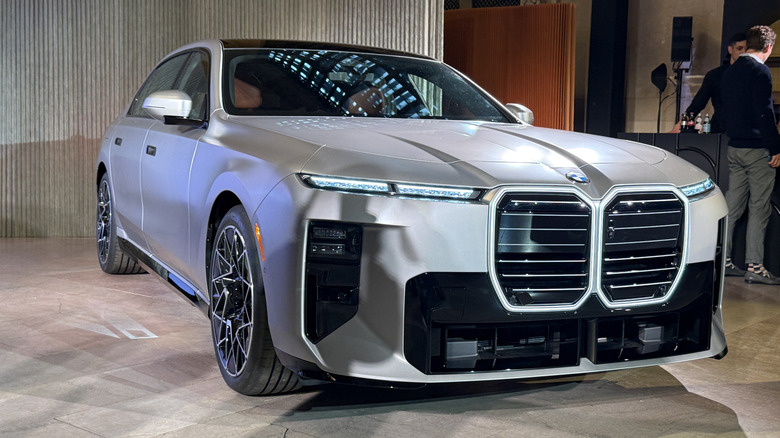
Usually, mid-cycle refreshes are a fairly subdued affair. A nip here, a tuck there. Maybe there's a new wheel option on the outside and a few different color options on the inside, and some nicer convenience features, but that's about it. That is very much not the case with the recently revealed 2027 BMW 7 Series. Inside and out, the large executive sedan got a major overhaul (BMW's most extensive ever, it says), bringing it perfectly in line with BMW's Neue Klasse design language and interior technology suite.
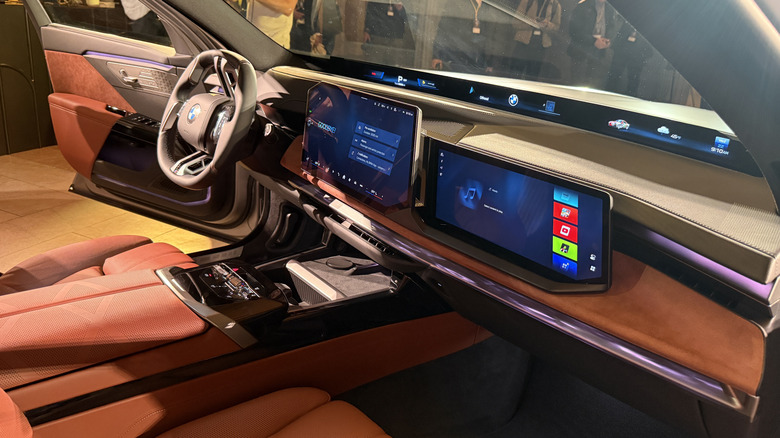
This is far from the first time an automaker has attempted to graft a new design language onto an old car, but I'm struggling to think of an example where the execution has been cleaner. What BMW's designers pulled off here is pretty damn impressive, because the refreshed 7 Series looks like it was always meant to wear the Neue Klasse design elements. Hell, I'd even argue it looks better than the car it replaces. Inside, front occupants are treated to a dashboard like the ones in the iX3 crossover and i3 sedan, but elevated and enhanced. There's a seamless incorporation of the Panoramic Vision display, 17.9-inch center infotainment rhombus, and BMW's first passenger display; the screens look like they were always meant to be inside this car.
 Andy Kalmowitz / Jalopnik
Contextualizing just how impressive this feat is, all you've gotta do is look at BMW's cross-country rival, Mercedes-Benz. It also gave its flagship sedan, the S-Class, a mid-cycle refresh for 2027. However, unlike BMW, its refresh was far more minimalistic in its design scope, and it leans on older tech like the Superscreen, rather than fitting it with the latest and greatest it has to offer, like the GLC's seamless Hyperscreen.
To find out why BMW decided to go all-out for the 7 Series' facelift, I spoke with Maximilian Missoni, BMW's Vice President of Design, and Maximilian Huber, Product Manager for the new 7 Series. Simply put, I was MaximilianMaxxing at the big sedan's reveal at Grand Central Terminal in New York City.
Making a Neue 7
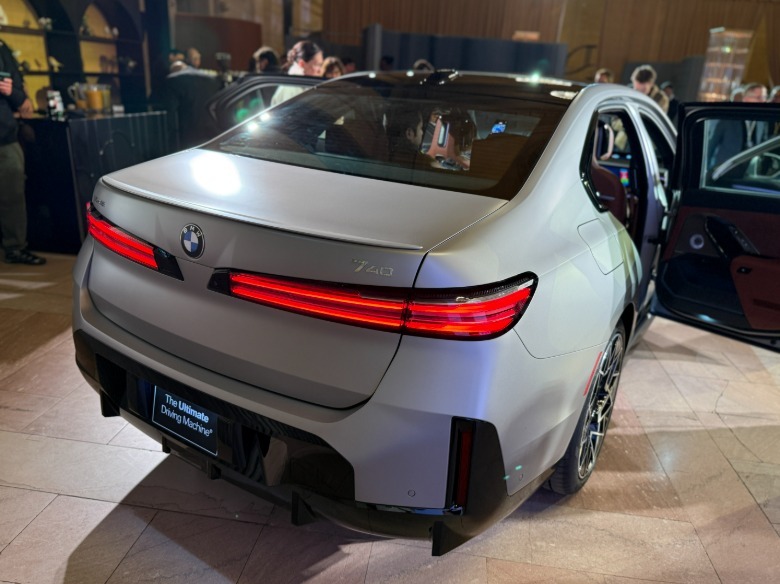
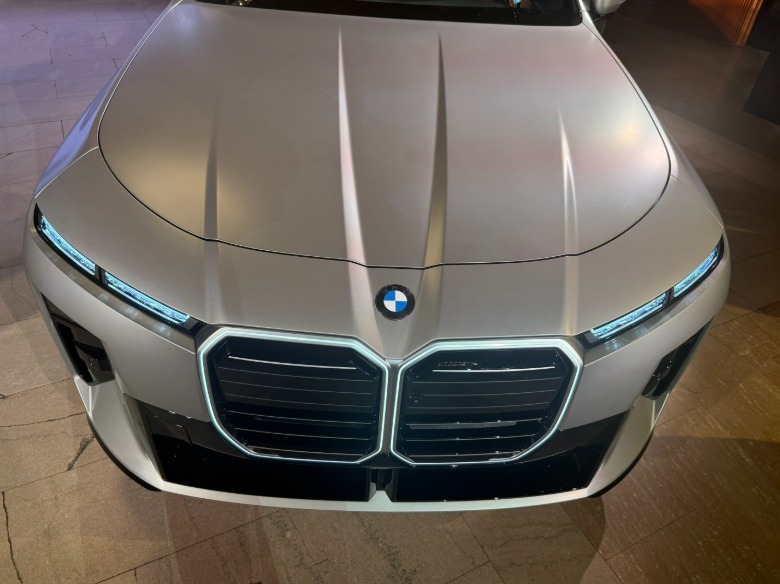
Huber led myself and a group of other journalists around the car, showing off all of the design elements pulled from the Neue Klasse models and grafted onto the 2027 7 Series. Elements like a strong horizontal line across the front, an upright fascia and BMW's redesigned roundel logo placed in a valley in the body work on both the front and back of the car are distinct Neue Klasse features. He also touted the new wheel designs that are more cohesive with the rest of the design language, the re-separated kidney grilles up front, and the much longer taillights, which are very reminiscent of both the i3 and iX3.
 Andy Kalmowitz / Jalopnik
Really, the only parts of the car that don't look terribly different from the one it replaces are the side panels, the greenhouse profile and the rear seats. That's not exactly a bad thing. The 7 Series has a wonderful rear-seat setup, and that 31.3-inch rear display isn't going anywhere. Missoni said that, while the new 7 certainly looks very different from the pre-facelift car, its character throughline is still apparent.
Missoni added that the updated 7's presence is a calling card for it. "I think it does a very good job in having a very, very strong and unique character, and that's what I believe creates the presence," he said. "The architecture of the front, I think, is a great combination of the character of the previous 7, but combined with a whole lot of elegance and status."
A really solid statement
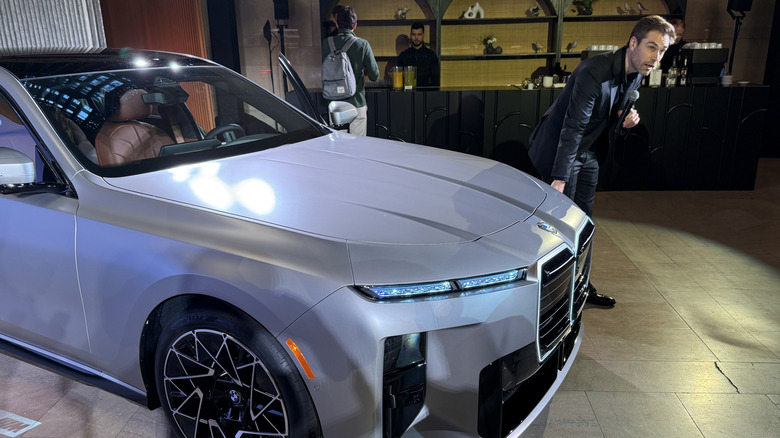
While speaking with Missoni, he explained that the 7 Series was also a great candidate for getting the Neue Klasse's language because it has always been both a "monolithic and pure statement" in the automaker's lineup. "I think applying the Neue Klasse formula was the most obvious match," Missoni told me. "It works really, really well here, but the extent to which this car has been modernized in this process is quite striking."
He pointed to the redone front fascia and interior tech, saying the changes made the car "basically new," in contrast with other mid-cycle refreshes that don't go nearly as far. "Doing it so seamlessly and so flawlessly integrated, I think it was a relief to everybody to see how well it worked — how much more contemporary and modern it was," Missoni said.
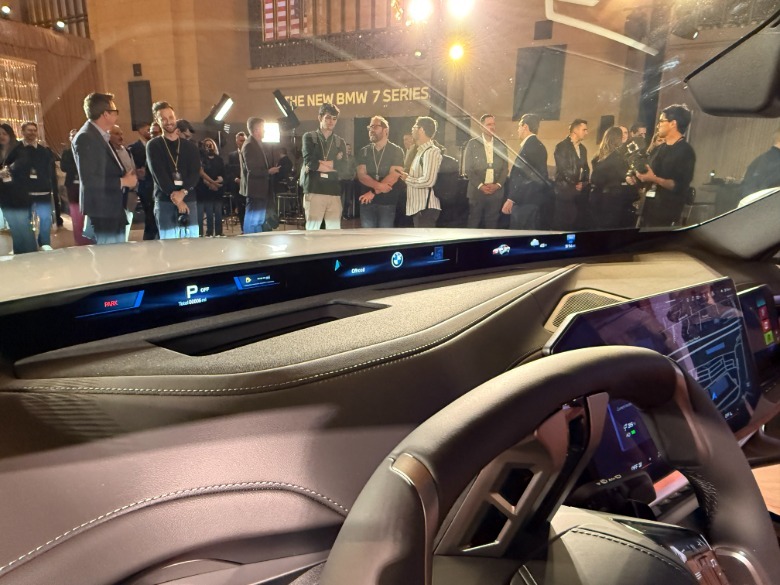 Andy Kalmowitz / Jalopnik
The designer, who joined BMW in May of 2025 after spending six years at Polestar, said that integrating the design language inside and out wasn't without its challenges, especially since the 7 Series carries both gas, electric, and plug-in-hybrid powertrains in the same body structure and chassis. In an ever-so-slight shot at other automakers, Missoni said that an undertaking like this is really "only something BMW could do."
From where I'm sitting, and based on what I've seen from other automakers, there may be a bit of truth to that. "It is quite a substantial upgrade, but without feeling grafted," Missoni told me. "It's a really solid statement."