

Japanese Automakers Could Be Dealing With $40 Billion In Added Costs Thanks To Trump's Policies
Good morning! It's Friday, June 12, 2026, and this is The Morning Shift, your daily roundup of the top automotive headlines from around the world, in one place. This is where you'll find the most important stories that are shaping the way Americans drive and get around.
In this morning's edition, Trump policies are costing Japanese automakers tens of billions of dollars, Subaru is planning to send the Indiana-built Ascent to Japan, Waymo is rolling out a $30 membership program and Honda is recalling over 1 million vehicles for an issue that has nothing to do with the cars themselves.
1st Gear: Trump's policies could cost Japanese OEMs over $40 billion by next year
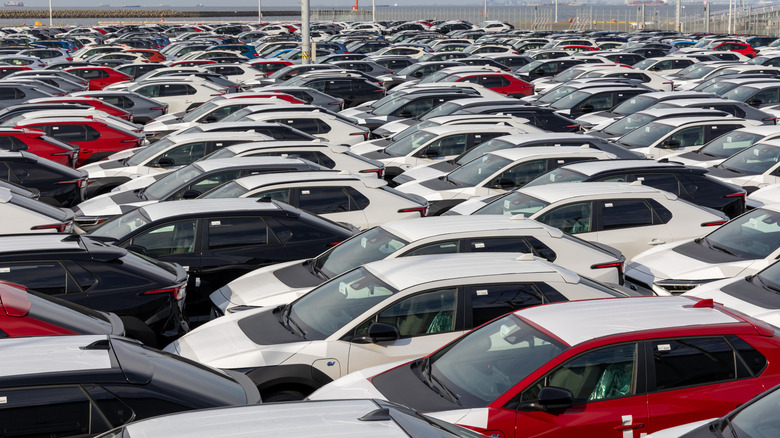
In the grand scheme of things, Donald Trump hasn't been president for very long, but that hasn't stopped his policy shenanigans from costing Japan's automakers big time. So far, they've racked up about $28 billion in added costs, thanks to tariffs, electric vehicle disasters and emissions rollbacks, and that spending isn't expected to change anytime soon. By March of 2027, it's their costs could top $40 billion.
Toyota expects its impact to total about $17.2 billion over the two fiscal years ending March 31, 2027, and that's just from Tariffs. Honda isn't far behind, either, with cots coming in at $15.2 billion. Nissan, which is admittedly smaller than the other two, could take on about $3.1 billion in added costs. From Automotive News:
The pain is coming from multiple fronts, including tariffs imposed by the U.S. last year not only on Japan, but on Mexico and Canada, where Japanese automakers have substantial production.
Last year's repeal of a federal tax credit, which sharply curtailed demand for EVs in the U.S., also forced a reassessment of electric vehicle portfolios, with several Japanese automakers dropping models or delaying plans, triggering write-downs.
Meanwhile, relaxed U.S. emissions regulations compounded the accounting headaches for automakers that had budgeted funds for stricter rules or had already spent the money.
[...]
Japanese carmakers set operating strategies largely around Biden-era policies that supported free trade and electric vehicles. The mounting costs underscore their struggle in adapting to change under U.S. President Donald Trump with a mixture of investment, rejiggered operations and diplomatic charm.
[...]
All told, Japanese automakers bore up to ¥4.42 trillion ($27.58 billion) in extra costs, impairments and losses across tariffs, EVs and emissions rules in the fiscal year ended March 31, according to an Automotive News analysis of earnings reports from Toyota, Honda, Nissan, Mazda Motor Corp., Subaru Corp. and Mitsubishi Motors Corp.
[...]
Tariffs account for the biggest chunk. The six major automakers doing business in the U.S. put the tariff total at ¥2.44 trillion ($15.23 billion) in the just-ended fiscal year. They estimate tariffs will cost an additional ¥1.92 ($11.98 billion) in the current fiscal year, even as they race to adjust production and other costs under the new trade landscape and shuffle manufacturing footprints.
[...]
The industrywide rollback on EVs also embroiled some Japanese makers, most notably Honda.
Honda's premature all-in bet on electric vehicles forced CEO Toshihiro Mibe to book ¥1.45 trillion ($9.05 billion) in write-downs as the company canceled EV models and paused production plans. The hit resulted in Honda's first-ever annual loss in nearly 70 years as a publicly traded company.
Honda is expecting some ¥500 billion ($3.12 billion) in additional EV charges this fiscal year.
There's really no telling what these costs could balloon to past March of 2027 or what will happen once a (theoretical) more liberal, environmentally conscious White House comes into power. I just hope Akio Toyoda likes his Trump merch.
2nd Gear: Subaru is sending the U.S.-built Ascent to Japan
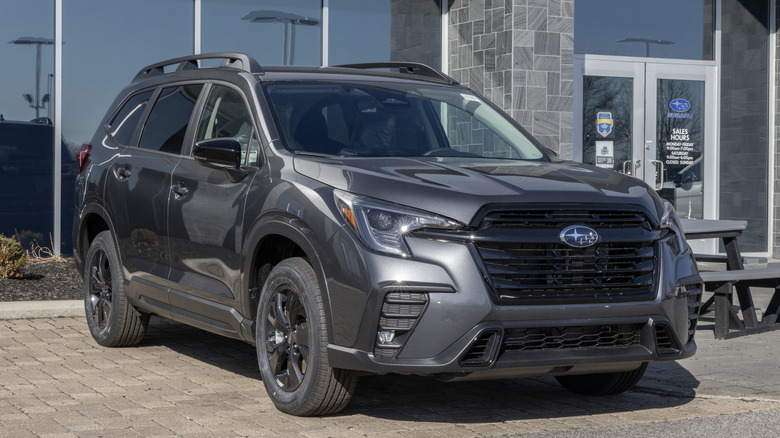
So, we know Japan's automakers are struggling and need to find ways to make money, and that might explain why Subaru is about to send its massive (for the market) three-row Ascent crossover to Japan. The Indiana-built vehicle will join a slew of U.S.-built larger Toyotas like the Highlander, Tundra and Camry that are being sent over the country.
Subaru said it was weighing the move and "plans to leverage the certification system implemented by Japan's Ministry of Land, Infrastructure, Transport and Tourism following Japan-U.S. trade agreement." I'm not sure how popular a vehicle as big as the Ascent will be in a country where kei cars are pretty much the norm, but hey, more power to 'em. From Automotive News:
Under new streamlined guidelines negotiated between the two countries, passenger vehicles produced in the U.S. and certified for safety in the U.S. are now accepted for sale in Japan without additional testing.
The Ascent plan reflects Subaru's effort to tap new markets for a slow-selling model and capitalize on revised trade terms between the U.S. and Japan. It also follows a broader industry shift: American-made vehicles returning to the Japanese market after decades of one-way exports.
The three-row Ascent, which has been assembled in Indiana since its 2018 debut, is Subaru's fourth-bestselling model in the U.S., but sales pale in comparison to the brand's two-row Crosstrek, Forester and Outback lines.
[...]
Subaru currently exports the Ascent in small numbers as the Evoltis to the Philippines, Israel and markets in South America, all of which are left-hand-drive nations like the U.S. The Japanese automaker did not indicate in its news release whether it would remain so in Japan, or be converted to right-hand drive as other vehicles sold there are.
Subaru actually delayed the Ascent's redesign in 2024, awaiting the outcome of the U.S. election, because it wanted to figure out what sort of emphasis would be put on electrification policies. Now, a mid-cycle refresh is due for 2028, and a full redesign is slated for 2030.
3rd Gear: Waymo debuts a invite-only membership program
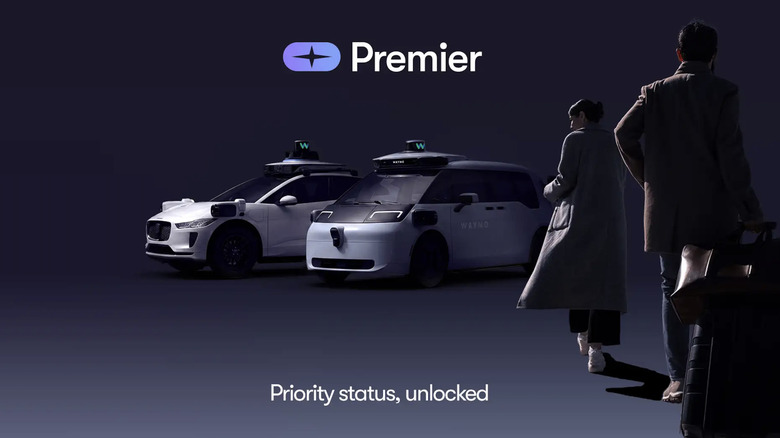
Want to be a member of the dorkiest club in America? Well, now's your chance, because Waymo is launching a $30 monthly membership program for its robotaxi service, called Waymo Premier, that promises faster pickup times and credit toward future rides, along with a handful of other perks that are geared toward its most prolific users. From Bloomberg:
Initially, the company is sending out app and email invites to "tens of thousands" of riders in San Francisco, Los Angeles and Phoenix who qualify, the spokesperson said. It plans to eventually offer the membership to riders in additional cities where the Waymo app is available.
The median fare for a Waymo ride in the San Francisco Bay Area was $17.25 at the end of 2025, according to a January study by rideshare pricing aggregator Obi. Assuming a fixed 10% cash back rate on that fare, a user would have to take about four rides per week to break even on the membership fee, according to Bloomberg calculations.
The program is a new way for Waymo to monetize its cost-intensive self-driving technology and maintain its lead in the US while expanding its passenger services to more markets domestically and globally this year. The company doubled the number of paid rides it operates per week to about 500,000 across 10 US cities in less than year, it said in March.
Right now, Waymo Premier is invite-only, but it includes priority pickups, 10% cash back on every trip in the form of ride credits, early access to Waymo in new cities and up to five free cancellations per month. The cash rewards can actually increase on trips taken during busy times, and it's "built for those who rely on us most," like commuters, according to a spokesperson. There's no word on who qualifies as a top rider.
4th Gear: Honda recalls over a million cars for a screwed up tire repair kit
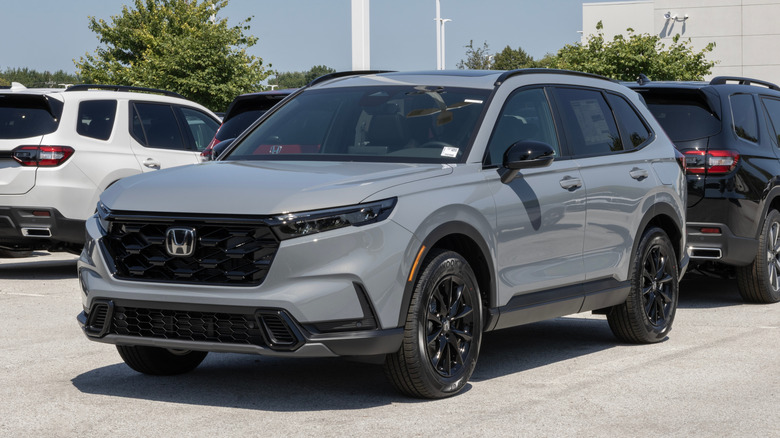
Honda just issued a massive recall, but it technically has nothing to do with the cars themselves, according to the National Highway Traffic Safety Administration. You see, the issue stems from the fact that 1,049,993 2023-2026 Accord Hybrids, 2023-2026 CR-V Hybrids and 2025-2026 CR-V Fuel Cell EVs may have been fitted with a faulty tire repair kit bottle cap that could become detached and lead to injury. From USA Today:
The bottle cap "can become a projectile and strike the user or others nearby," the recall notice stated. According to the safety recall report, eight injuries have been reported as of May 28.
The bottle cap may become a projectile due to pressure building inside the sealant bottle, according to the recall.
Honda dealers will replace the tire repair kit nozzle or sealant bottle for free, according to NHTSA.
Honda will send out letters to impacted owners, letting them know about the issue by July 27. Once a remedy is finalized, a second letter will go out.
Reverse: Shoutout to all my Filipino homies
 History.com
Two of my closest friends are both Filipino dudes named Dave. This one is for them. I hope they're celebrating today. I'll tell ya, it was a real trip when they met each other for the first time. That much Filipino Dave Power in one room can be dangerous.
The Fuel Up
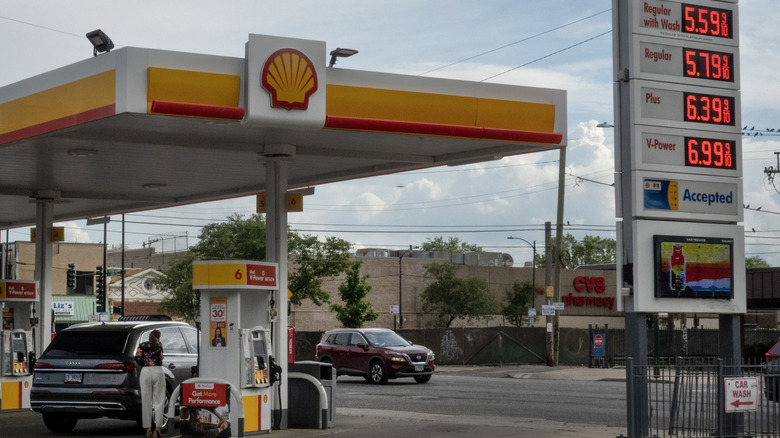
Much is still unclear about a peace deal between the U.S. and Iran to end the fighting in the Middle East. Trump has canceled plans for a strike and talked about progress being made, but Iran says no deal has been finalized. Still, gas prices have continued to come down. Obviously, they're nowhere near where they were when the war first broke out at the end of February. Another sign that things are moving in the right direction in the world of fuel prices is the fact that WTI Crude Oil futures and Brent Crude are both trending a bit lower today, currently sitting at $86 and $89, respectively, at the time of publication.
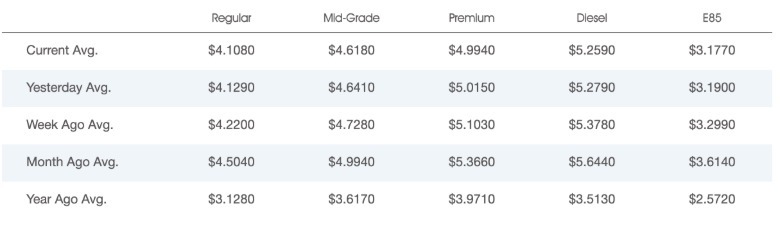
Here's where national average prices stand right now, according to AAA:
 AAA
AAA
This all shakes out to the average price of a gallon of gas dropping another 2 cents overnight to $4.11, according to AAA. We're now down 45 cents from the 2026 record that was set back on May 21, when gas hit $4.56 per gallon.
On the radio: Billy Joel - 'New York State of Mind'
The Knicks are one game away from immortality, baby. Let's close this thing out in San Antonio and celebrate at the River Walk Rainforest Cafe.