

Ford CEO Softens On Chinese EVs Coming To America, Says Overseas Partnerships Are A Must
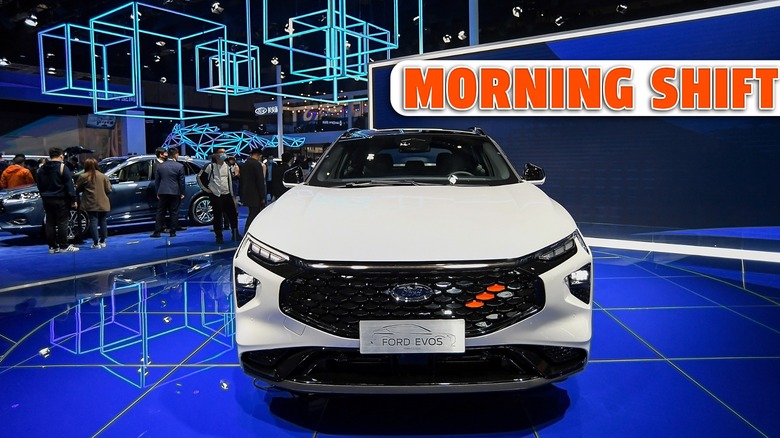
Good morning! It's Friday, April 17, 2026, and this is The Morning Shift, your daily roundup of the top automotive headlines from around the world, in one place. This is where you'll find the most important stories that are shaping the way Americans drive and get around.
In this morning's edition, Ford is going to partner up with Chinese automakers to build cars overseas as CEO Jim Farley changes his tune on the idea of their cars landing in the U.S., Polestar had a solid finish to 2025, the future of Stellantis' Brampton plant is up in the air as its Leapmotor plan falls apart and Kia and Genesis are recalling over 235,000 vehicles for a fuel leak.
1st Gear: Ford has big plans for its Chinese partnerships
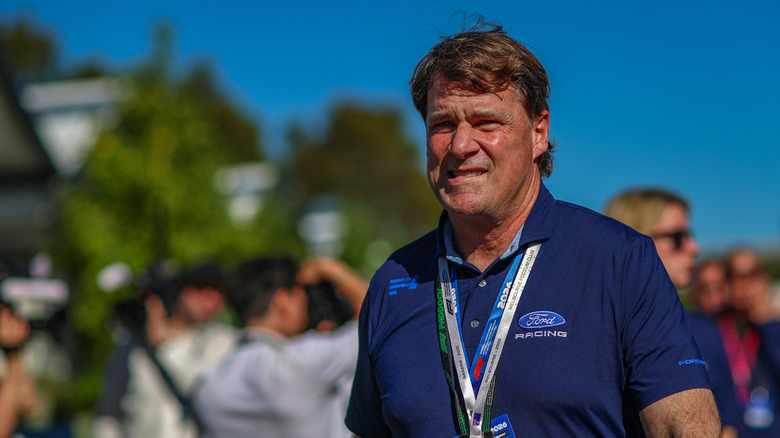
Ford CEO Jim Farley is coming around to the idea of Chinese EVs being sold in the U.S. just days after saying they would be "devastating" for U.S. manufacturing and a huge security liability, but he did insist that America and the Big Three need to have a plan to protect American jobs before Chinese auto imports and production could arrive. He also added that Ford must partner up with Chinese automakers overseas to maintain a global advantage because these companies are "leading the world in many ways" when it comes to tech, cost and speed.
Farley pointed to other countries that permitted Chinese imports too quickly and without a plan that soon "saw their factories and their jobs vanish." Of course, he didn't provide any examples of this happening, so I guess we've gotta take Chris's cousin at his word. From The Wall Street Journal:
"Having a plan before we go fast, either in local production or imports from China, is the most important moment. We're in that moment right now."
Farley's remarks are the strongest sign to date that U.S. automakers are adjusting to the rapid advance of Chinese companies—and seeking to partner with the companies rather than simply stave them off.
Ford will expand partnerships with Chinese companies outside the U.S., Farley said, "because we want to bring the best vehicles to market wherever it makes sense." Inside the U.S., he said, Ford aims to figure out how to better compete.
The executive pointed to China, as well as Japan and South Korea—which both allow the sale of Chinese cars—as examples of countries that successfully safeguarded their domestic auto industries.
His comments came a day after he said, in an interview on Fox News, that Chinese automakers would devastate the U.S. auto industry and should not be allowed in. "There is no way this is a fair fight," he said in the interview.
[...]
Their rise has been a source of deep angst for U.S. car executives, who say they can't compete on production costs and vehicle technology that are heavily subsidized by the Chinese government.
[...]
The U.S. has imposed hefty tariffs on imports of Chinese-made vehicles while banning Chinese connected-vehicle software in cars to keep the cars out of the U.S. market.
Farley has been quite vocal for a long time about the threats Chinese vehicles could pose to American automakers while also really digging the products they're selling, and his latest comments suggest the company he helms has come to accept the idea its Chinese rivals are going to get over here at some point.
In the meantime, the best thing it can do is fortify its own operations and build compelling products in an effort to compete.
2nd Gear: Polestar gets a bit of good news
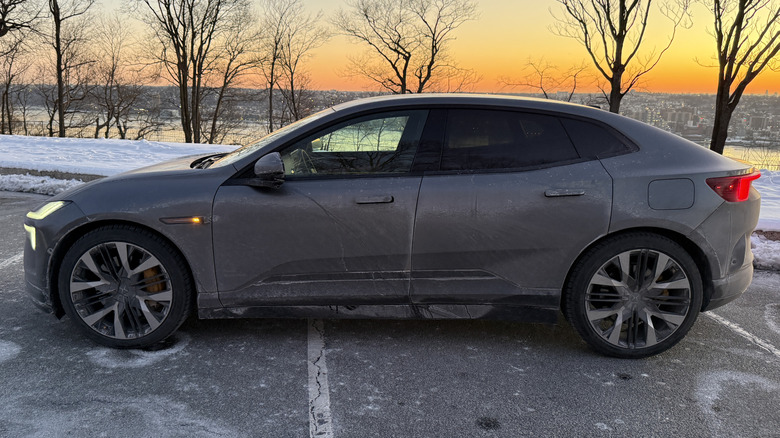
Polestar got some very solid news to end 2025. Well, at the very least, it got some news that showed things were trending in the right direction.The Swiss-Chinese automaker reported a sharp jump in fourth-quarter revenue and a narrower loss to close out 2025. That news came as the EV builder ramped up production, cut costs and focused more heavily on Europe.
The automaker's revenue jumped a whopping 54% to $887 million in the three months leading up to December 31 from the same period a year earlier. Its net loss narrowed to $779 million — which, to be fair, is a ton of money — but it's a huge step in the right direction from the $1.18 billion it lost in Q4 of 2024. From Reuters:
Polestar has shifted its focus to its home market of Europe over the past year, where demand for its lineup of battery vehicles has been strong, while other core markets including the U.S. have seen sluggish performance.
Economic uncertainty, sparked by the turmoil in the Middle East and the fallout from U.S. President Donald Trump's tariff policies, has also hampered Polestar's international expansion plans and contributed to its Europe-focused strategy.
The company expects market conditions to become more challenging "amid ongoing geopolitical developments", CEO Michael Lohscheller said.
Polestar did not provide any financial forecasts apart from the previously disclosed retail sales volume growth, which is expected to increase at low-double-digit rates.
It has been aggressively cutting costs by reducing headcount, optimizing its manufacturing processes and rejigging supply chains. The company had 1,686 employees at the end of 2025, compared with 2,547 at the end of 2024.
Polestar is expected to publish its 2026 first-quarter results during the first week of May. The company's cash position was about $1.16 billion when 2025 closed out, and its adjusted gross margin for the fourth quarter was 1.9%. Again, that might not sound super great, but it's a hell of a lot better than the negative 39% it saw in 2024.
3rd Gear: Stellantis' best-laid Brampton plans fall apart
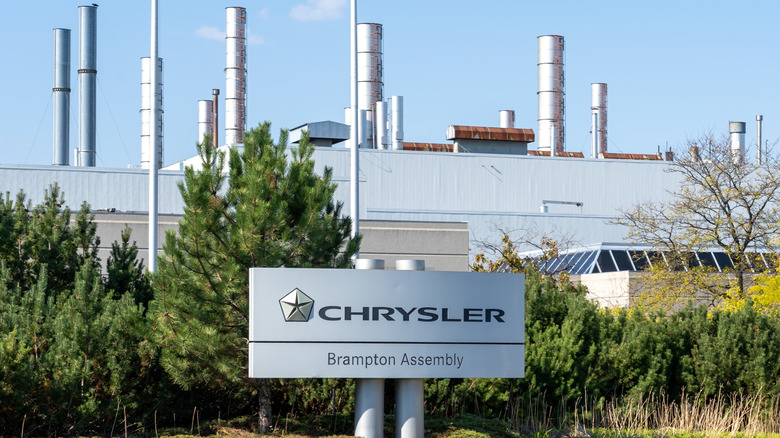
Stellantis has a real Brampton problem on its hands. After a months-long search for some product — any product — to build at its now-idled Brampton Assembly Plant in Canada, the company is stuck because the government and union leaders rejected a pitch to build Chinese electric vehicles from "complete knockdown kits" there. Now, the automaker must go back to the drawing board as it continues to weigh a "whole range of options." From Automotive News:
Citing the company's long-standing policy to not comment on future product, Longley declined to say whether the company proposed building EVs from CKDs provided by China partner Leapmotor.
News service Bloomberg first reported the proposal April 1, citing confidential sources with knowledge of the matter. It was the first signal in months that the company is making headway on using its Brampton plant.
But the union that represents hourly workers at the plant said the automaker's CKD pitch would employ only 200 to 300 members, compared with the roughly 3,000 who built Dodge muscle cars there previously. The plant was idled at the end of 2023.
"This option doesn't work," Vito Beato, president of Unifor Local 1285, told Automotive News Canada.
"There would be no body shop. There would be no stamping facility. There would be no paint shop. There would be no welding. There would be no skilled trades. There would be no supplier base."
[...]
Despite the lack of alternatives, the CKD pitch prompted swift condemnations from the federal and Ontario governments, which committed hundreds of millions of dollars to preserving Stellantis' local manufacturing footprint in 2022.
Canadian industry minister Mélanie Joly said federal support for production in Brampton hinges on a local supply chain.
The Brampton facility was originally slated to build the next-generation Jeep Compass following a two-year retooling process. However, Stellantis abruptly paused the project in February of 2025, saying it was reevaluating its product strategy. In October, the automaker moved production of the new crossover to the U.S. in response to Donald Trump's tariffs on vehicles imported from Canada.
4th Gear: Kia, Genesis recall over 235,000 vehicles for fuel leak
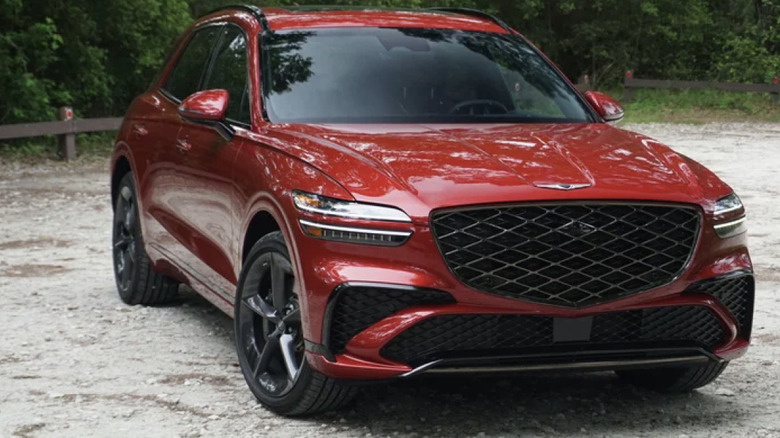
Kia and Genesis are recalling 235,792 vehicles because of a pesky little fuel leak issue, according to the National Highway Traffic Safety Administration. The Kia recall specifically impacts 141,032 2022-2026 Carnival minivans, while the Genesis recall is a bit more widespread — 94,760 2021-2026 GV70s, GV80s, G80s and G90s are impacted. Basically, it seems like it's anything with Hyundai Motor Group's 3.5-liter V6 under the hood. From Car and Driver:
According to the NHTSA documents, a suspected production deviation means that the crossover fuel pipe connecting the left and right fuel lines on affected models could feature retention fasteners that loosen over time. If the connecting fasteners get too loose, the connecting pipe may begin to leak, increasing the chance of a fire in the engine bay.
While the documents don't call it out explicitly, we believe the recall is specific to the Hyundai Motor Group's 3.5-liter V-6. The nonhybrid Kia Carnival is sold exclusively with a naturally aspirated version of the engine, while the Genesis models are all offered with a twin-turbocharged version of the same engine. A representative from Hyundai confirmed that the affected Genesis vehicles all feature the 3.5-liter V-6, and since the Kia documents don't mention the Carnival Hybrid, the affected Carnivals all presumably feature the 3.5-liter.
Both Kia and Genesis will reach out to owners of impacted models with instructions to head to their local dealers to get their vehicles inspected. From there, a technician will check out the high-pressure crossover pipe for any leaks and, if necessary, replace or re-tighten the connection. Kia's notification letters are expected to be sent out on June 2, and Genesis' will go out on June 8.
Reverse: Horse power
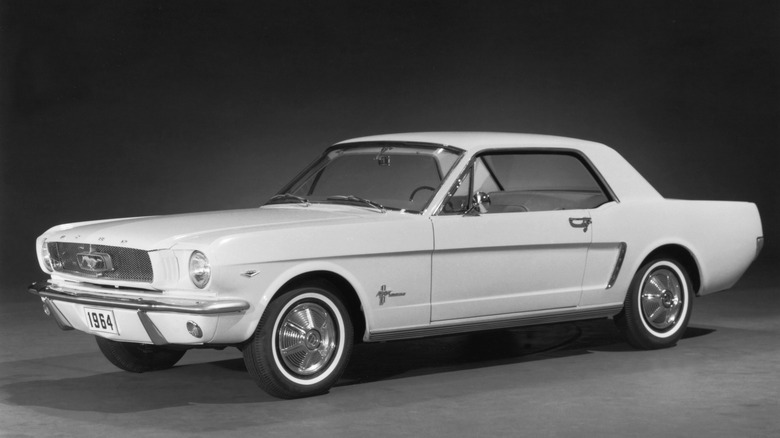
 History.com
It's hard to overstate just how significant the Ford Mustang was (and I guess, is) to American culture, and it all started at the 1964 World's Fair in Queens. I cannot imagine the impact of seeing a car like the Mustang for the first time over 60 years ago, especially when nothing else like it existed back then. What a thing that must have been. If you want to learn more about the Mustang's debut and the immediate buying frenzy that ensued, head over to History.com.
The Fuel Up
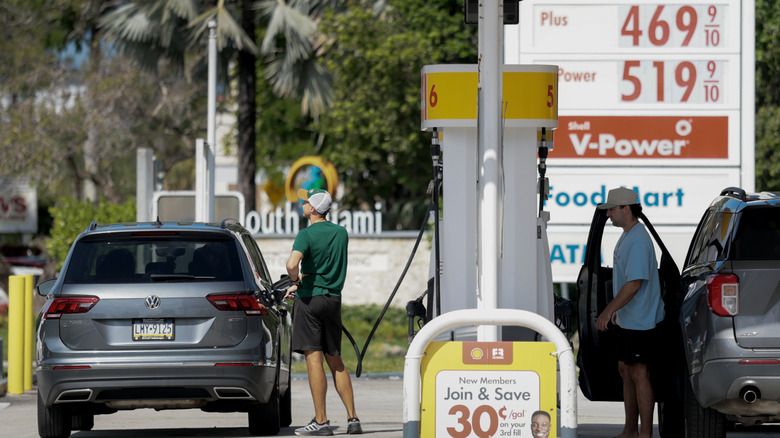
Things in the Middle East are holding steady for now, so gas prices are — thankfully — continuing to head back down to where they should be. It's slow going, but we'll take what we can get. In even more good news, with reports that the Strait of Hormuz is completely reopened, oil prices are dropping like a rock. At the time of publication, WTI Crude Oil futures was around $84 and Brent Crude was about $88.
All of this is to say that the average price of a gallon of gas decreased by another cent overnight to $4.08, according to AAA. It means that, overall, the price has dropped nine cents from its most recent peak on April 9, when prices hit $4.17.
Still, it's hard to ignore how elevated these prices are. The last time gas was over $4.08 per gallon was back in July of 2022, according to data from the Energy Information Administration. The average price of a gallon of gas is now up $1.10 — or about 36.9% — since the war first broke out on February 28, when it was $2.98.
Here's where national average prices stand right now, according to AAA:
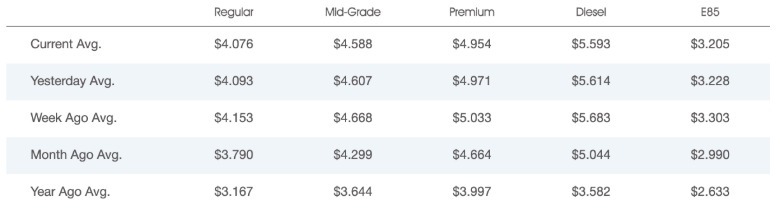 AAA
AAA
On the radio: Justin Bieber - 'Beauty And A Beat'
I'm not going to sit here and tell you that I'm some massive Justin Bieber fan. I mean, I like his music, for sure, but I'm not exactly a super fan. That being said, when he dropped the nonchalant gimmick during his Coachella set and remembered he's Justin Goddamn Bieber, I was transported right back to 2012, and it was glorious. The dude's still got it. That's for sure.