

Tesla Is Doing Nearly Nothing To Make Its California Robotaxi Dream A Reality
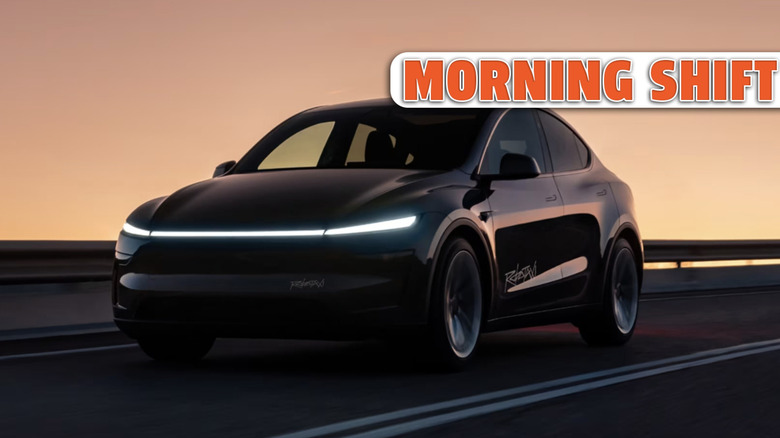
Good morning! It's Thursday, February 26, 2026, and this is The Morning Shift, your daily roundup of the top automotive headlines from around the world, in one place. This is where you'll find the most important stories that are shaping the way Americans drive and get around.
In this morning's edition, Tesla seems to be doing very little to actually get its California robotaxi service off the ground, and it must now face a lawsuit alleging anti-America bias in its hiring practices. Additionally, Stellantis just posted an over-$26 billion loss for 2025 because of its EV mess, and Aston Martin is giving up on the idea of increasing sales volume.
1st Gear: Tesla is procastinating on its California robotaxi promises
Elon Musk is always talking about how Tesla is just a few months away from actually delivering on the thing he promised years ago. One such example is Tesla's plans to launch its driverless robotaxi service in California. Apparently, the Austin, Texas-based automaker is just waiting on state regulators to give it the go-ahead. Here's the thing, though: Tesla isn't doing anything to actually make that happen.
2025 came and went without Tesla securing approval from the California Department of Motor Vehicles, and during that time, it logged precisely zero autonomous test miles driving on California roads — the sixth year in a row where that was the case, according to DMV records. As you may have imagined, documenting test miles is critically important for California's regulatory system for robotaxis. The state requires companies to progress through a series of permits before being allowed to operate a driverless ride-hailing service. Look at Alphabet's Waymo as an example of a company going through the proper procedures. From Reuters:
Much of Tesla's $1.5 trillion market value is tied to investors' belief that it will soon operate a vast fleet of robotaxis and sell millions of autonomous-driving software subscriptions. Operating driverless vehicles in California – the largest U.S. auto market – is a linchpin of those ambitions.
Bryant Walker Smith, a University of South Carolina law professor and autonomous-driving expert who has consulted for the California DMV, said Tesla is implying that "they are ready and regulators are not," while the reality is that "regulators are ready, and they are not."
[...]
On an earnings call in October, Musk told analysts that the company is "paranoid about safety" and that it takes a "cautious approach" to new markets. "We probably could just let it loose in these cities," he said, "but we just don't want to take a chance."
So far, Tesla operates only a small pilot robotaxi service in Austin, Texas, which has far fewer regulatory barriers than California.
In the San Francisco Bay Area, the company last July started operating what it called a "robotaxi" service that was not a robotaxi service at all. Instead, it is a chauffeur service with human drivers who use Tesla's "Full Self-Driving" driver-assistance software, which is not fully autonomous, according to the state regulator authorizing the service and Tesla's disclosures to customers.
In order to operate fully self-driving vehicles in California, like Waymo, Tesla would first need to obtain permits to test and operate driverless vehicles from the state's DMV and Public Utilities Commission, which regulates commercial ride-hailing.
So far, Tesla only has the entry-level DMV permit. It allows for testing of driverless vehicles, but only with human safety monitors in the driver's seat. A spokesperson for the DMV says Tesla has not applied for any additional permits. It would need to log at least 50,000 miles (which feels sort of low) of autonomous driving on public roads in California with a safety driver before applying for a different permit that would allow it to test without one, Reuters reports. Since 2019, Tesla hasn't logged any miles with state regulators, and if you go all the way back to 2016, only 562 miles show up.
On the other hand, Waymo has logged over 13 million test miles and received seven different regulatory approvals between 2014 and 2023. If Tesla has any intentions of ever catching up, it better get its act together quickly, but I sort of doubt that'll happen. Of course, the stock will remain unaffected and Musk's job will be as secure as ever, because none of this really matters to the board or shareholders.
2nd Gear: It's also gotta fight another discrimination lawsuit
Tesla can't help but fight wars on multiple fronts. The automaker will now have to face a discrimination lawsuit after a U.S. judge refused to dismiss it in court. It alleges that the automaker discriminates against American citizens during the hiring process so it can pay foreign workers less money. That being said, U.S. District Judge Vince Chhabria in San Francisco did say he was skeptical that the software engineer is sued would be successful, adding that Scott Taub — who filed the proposed class action in September — had offered up "just enough facts" about Tesla's hiring practices for the case to move forward. From Reuters:
Taub says the electric carmaker led by billionaire Elon Musk passed him over for an engineering job, part of its "systematic preference" to hire foreign visa holders in violation of federal civil rights law. He also says layoffs at Tesla have disproportionately targeted U.S. citizens.
Chhabria on Monday said Tesla must face Taub's claims that a recruiter for a staffing company told him that the engineering job he sought was "H1B only," referring to H-1B visas granted to highly educated foreign workers and heavily relied upon by the tech industry.
The judge dismissed claims by a second plaintiff, human resources specialist Sofia Brander, saying it was implausible that Tesla prefers to hire foreign workers for HR positions. He gave Brander two weeks to file an amended complaint fleshing out her claims.
[...]
The lawsuit says Tesla is dependent on holders of H-1B visas, including in 2024 when it hired an estimated 1,355 visa holders while laying off more than 6,000 workers domestically, the vast majority believed to be U.S. citizens.
Chhabria on Monday said that beyond the recruiter's comments, Taub has presented scant evidence of discrimination. The statistics from 2024, for instance, merely show that Tesla hired a substantial number of H-1B holders that year, but not that it preferred them over U.S. citizens, the judge said."All of this causes the Court to be somewhat skeptical of Taub's allegations," Chhabria wrote.
Tesla has unsurprisingly denied the claims in the lawsuit, calling them "preposterous" in court filings.
This is hardly Tesla's first rodeo when it comes to discrimination. Back in 2024, we told you about racial discrimination issues at Tesla's Austin factory. There was also a massive class action lawsuit with hundreds of black Tesla workers alleging racism at its Fremont factory, just one of a number of similar cases against Tesla.
3rd Gear: Stellantis posts massive $26.3 billion loss in 2025
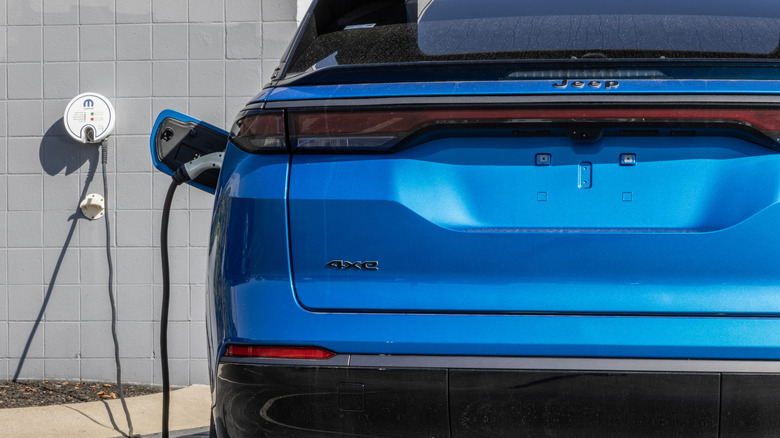
Earlier this week, we told you Stellantis was poised to post the first loss in its young history. Well, now it has, and it's diabolically big. In 2025, the Transatlantic automaker posted a $26.3 billion net loss, saying it was too eager to make the move toward electrification. The earnings follow the company's announcement that it would write down a loss of about $26 billion that was attributed to the cost of restructuring amid slower-than-expected consumer demand for EVs. Now, Stellantis is going all in on gas. From the Detroit Free Press:
The pivot away from electrification — which comes as federal programs meant to incentivize electric vehicles have vanished under President Donald Trump — has also caused significant losses for Ford Motor Co. and General Motors. Ford said the pivot would cost about $19.5 billion. GM reported about $7.1 billion in losses on its EV programs. Stellantis' write-downs are just shy of the sum of Ford and GM's losses combined.
[...]
Stellantis CEO Antonio Filosa pointed his finger squarely at a poor EV market as the reason the company lost such a large sum in 2025.
"Our 2025 full year results reflect the cost of over-estimating the pace of the energy transition and of the need to reset our business around our customers' freedom to choose from the full range of electric, hybrid and internal combustion technologies," Filosa said in a news release issued alongside the financial data.
He added that in 2026, he hopes the company can add "further momentum to our return to profitable growth," saying the company is currently paying for mistakes made in the past.
Filosa took over Stellantis about halfway through 2025, replacing the previous CEO, Carlos Tavares, who resigned in 2024 after years of poor company performance and high tensions with key stakeholders like dealers and the United Auto Workers.
Over the year, the company announced it would be discontinuing development of electrified products such as the EV Ram 1500 pickup truck and recently axed production of plug-in hybrid vehicles across all of its North American nameplates. The brand also revived several gas-guzzlers, such as the Ram 1500 TRX SRT and the HEMI engine, as well as an all-electric Jeep, the Recon, and several refreshed models of other familiar Stellantis vehicles.
Stellantis' $26.3 billion net loss looks even grosser when you compare it to the $6 billion profit it made in 2024. It also suffered a 2% net revenue dip year-over-year to $181 billion. On the bright side, vehicle shipments were actually up 1% in 2025 to 5.4 million vehicles. I guess that's something.
4th Gear: Aston Martin is rethinking everything in a quest to make any money
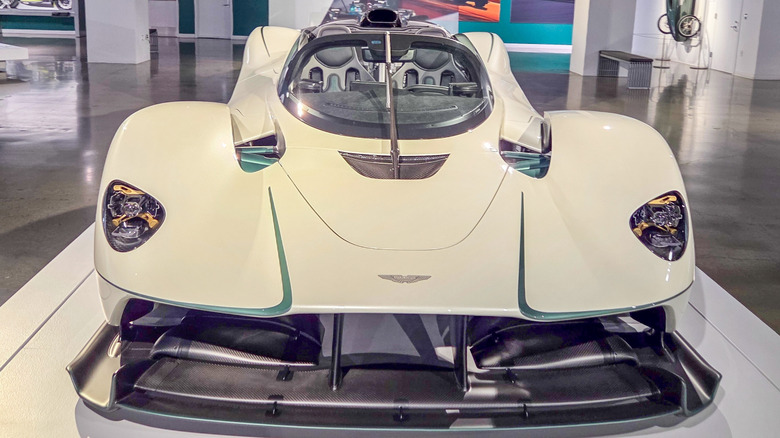
Aston Martin is giving up on its dream of chasing higher sales growth, and instead it'll focus on high-margin, low-volume supercars like the Valhalla. Because of that, the British automaker has halved its longer-term annual sales forecasts over the last eight years following a constant lack of profitability on its core range of vehicles.
Back in 2018, the company's CEO at the time said Aston would achieve 14,000 annual sales by 2025. In 2020, his replacement moved those numbers to 10,000 by 2024, and that clearly wasn't enough of a downgrade. In 2025, Aston's sales hit a measly 5,448 units, and its current CEO, Adrian Hallmark, seems fine with that numbers. From Automotive News:
"We don't see a path to 8,000 to 10,000 units a year," Hallmark told analysts on the company's full-year results call Feb 25. "We have reset our expectations and then rightsized the business to meet that new business model structure."
Hallmark did not give a specific medium-term target but told analysts the company is aiming for 5,500 to 6,000 sales of core models per year, with 250 to 500 specials on top. "We see that is a conservative and achievable level that we can continue with," he said.
Aston's wholesale numbers have been declining in recent years from a high of 6,620 in 2023. The 2025 figures were down 10 percent from 2024, hit by a 21 percent decline in sales in its Asia Pacific region including China to 968 units.
China itself contributed to just five percent of Aston Martin's sales in 2025, the company said, with U.S. top at 1868, amounting to 34 percent of the total. "Demand [in China] remained extremely subdued," Hallmark said.
Aston Martin has shifted to higher-end versions of its core models, including the DBX SUV as it looks to push up its average selling price and hit a target gross margin of 40 percent, at which the company says it can be profitable. Last year the automaker posted a gross profit margin of 29 percent and a £493 million total loss.
Aston Martin is currently only building the top-of-the-line DBX S 717hp performance version of the V-8-powered SUV, which sells for £216,500 in the U.K., compared to around £180,000 for the 542 hp standard model.
Aston is going through a bit of a contraction right now. Last year, it cut its global dealer network from 163 to 156, with the Asia-Pacifica region most impacted. It also just announced it would cut 20% of its workforce — about 600 people — to save about £40 million.
Reverse: Swoosh
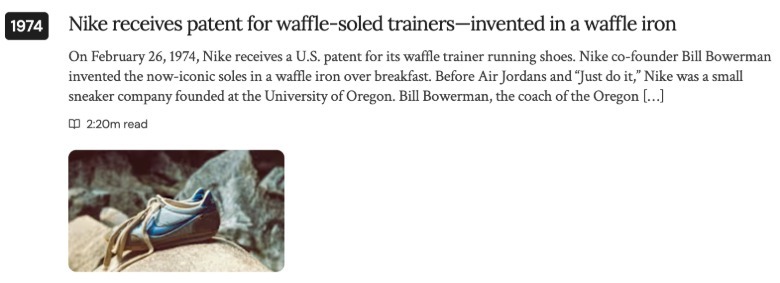 History.com
I don't consider myself a brand loyalist to a lot of things, but I will be wearing my Nike sneakers (particularly white Cortezs) until I die). I just love, em. Good on you, Phil Knight, you weird bastard.
On the radio: The Beatles - Good Day Sunshine
Man, I know it's not exactly a hot take, but it's really hard to argue that "Revolver" isn't one of the best albums of all time. Thank God my father was a Beatles guy when I was growing up and not like a Lynyrd Skynyrd guy.