

Korean Cars Are About To Get More Expensive As Trump Raises Tariffs To 25%

Good morning! It's Tuesday, January 27, 2025, and this is The Morning Shift, your daily roundup of the top automotive headlines from around the world, in one place. This is where you'll find the most important stories that are shaping the way Americans drive and get around.
In this morning's edition, President Trump is raising tariffs on cars made in Korea from 15% to 25%, Jaguar says it's sticking with its all-electric future, electric vehicles just outsold gas-powered cars in Europe for the first time ever, and General Motors just took a massive hit in the fourth quarter of 2025 because of EV business issues.
1st Gear: Trump drops the tariff hammer on South Korea

President Donald Trump has decided — because there's not enough going on right now — to raise tariffs on a number of South Korean goods, including cars, to 25% from the 15% level that was agreed upon last summer. This is going to end up being quite a headache for Hyundai, Kia, and Genesis, which will undoubtedly be displeased about having to either raise prices or eat the added cost of selling cars in the U.S. At the same time, it's probably very welcome news to Japanese automakers who get to keep the 15% tariff level.
Unsurprisingly, it has sent diplomats and lawmakers scrambling as the President justified his decision by saying Korea took too long to approve the July trade deal officially. Everybody is 12 years old. From Automotive News:
"Because the Korean Legislature hasn't enacted our Historic Trade Agreement, which is their prerogative, I am hereby increasing South Korean TARIFFS on Autos, Lumber, Pharma, and all other Reciprocal TARIFFS, from 15% to 25%," Trump wrote.
[...]
Even before Trump's latest volley, Japan's trade minister, Ryosei Akazawa, noted that Japanese automakers had a slight trade tailwind.
That is because Trump's original tariff agreement raised duties on South Korean vehicle exports from 0 percent to 15 percent, but raised Japanese duties to 15 percent from 2.5 percent.
"In a sense, this 2.5 percent difference gives us price competitiveness over South Korea," Akazawa said this month at a Japanese automotive industry new year's gathering.
In response, South Korea's government said it would dispatch the country's trade minister and industry minister to D.C. in order to discuss implementing the deal. The Trump administration had sent a letter to Seoul two weeks prior, petitioning the government to finalize the agreement, which includes an outline for $350 billion in U.S. investments for things like a $150 billion shipbuilding cooperation fund to acquire a U.S. shipyard.
Of course, before Trump's tariffs, South Korean cars came into the U.S. duty-free. While the Hyundai Motor Group recently opened an assembly complex in Georgia (that was instantly mired in ICE controversy), but the company still relies on South Korea for a majority of the vehicles it sells in the U.S.
2nd Gear: Jaguar says its sticking with all-electric future
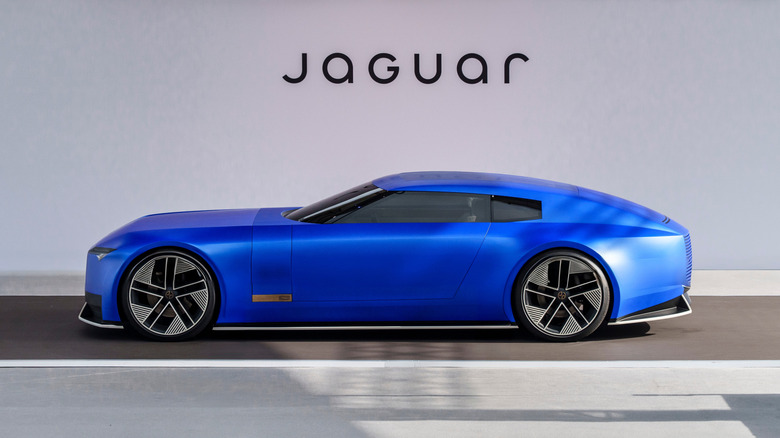
Jaguar is reaffirming its all-electric future following a report that the Indian-British automaker intends to reintroduce combustion engines with hybrid vehicles. While I think its plans are bold and forward-thinking (and its reliance on heritage is what got it in such a financial mess in the first place), it has faced criticism for its goal to become a fully-electric brand. From Automotive News:
Citing sources close to Jaguar, the Times of London said the brand is now investigating adding combustion engines to its new electric platform to create extended-range EVs. Extended-range EVs use a large battery and electric motor to propel the vehicle while a small gasoline engine recharges the battery.
In response to the report, Jaguar said it remains committed to the switch to electric-only. "Our plans to reinvent Jaguar as an electric-only luxury automotive brand are unchanged," a spokesperson told Automotive News Europe.
Jaguar will open orders for the first of three new high-performance EVs, a four-door grand tourer, in March or April, dealers say. Pricing will start at $130,000 (€112,000). The car was previewed by the Type 00 two-door concept unveiled in Miami in 2024.
Two other electric Jaguars are due after the GT, possibly a large SUV and either a sports car or a large luxury sedan. Those are scheduled to arrive between 2027 and 2030.
[...]
Previously, Jaguar has said that the new Jaguar Electric Architecture (JEA) that will underpin its future BEVs cannot easily be adapted to accept a range-extender combustion engine because the battery is packaged in a way that prevents it.
At this point, Jaguar has ended all combustion engine production as part of a commitment to exit the "mass-premium" segment and go upmarket. Basically, it's looking to be the next Bentley — targeting about 10,000 sales per year. I really hope Jag can pull this off, if only to annoy the "purists."
3rd Gear: EVs beat ICE in the EU
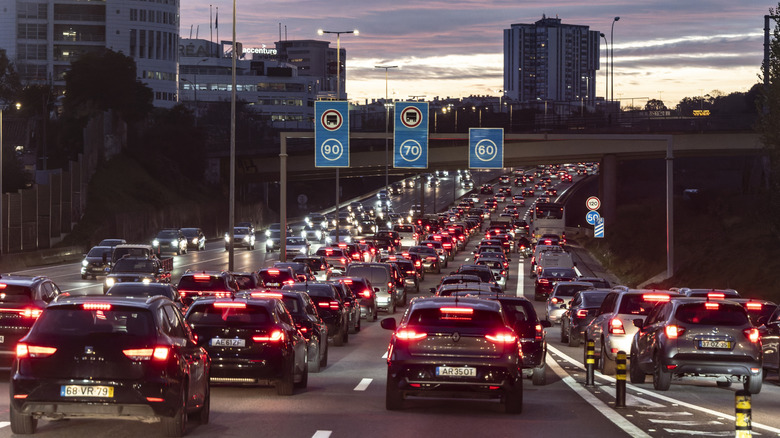
Electric vehicles just outsold gas-powered cars in the European Union for the first time ever in December, and it came as policymakers in the bloc loosened emissions regulations. Registration data shows that BEVs also overtook those of gas-powered cars in the broader European market (which includes Britain and Norway). It's expected that EVs are going to keep increasing their share as well.
Competition from Chinese automakers like BYD, Changan and Geely is heating up the race for market dominance in Europe, even as domestic companies like Volkswagen and BMW roll out new EVs. From Reuters:
Sales in the EU, Britain and the European Free Trade Association rose 7.6% to 1.2 million cars in December and by 2.4% to 13.3 million overall in 2025, hitting their highest volumes in five years though they remained well below pre-pandemic levels, ACEA data showed.
Total EU car sales rose 5.8% to almost one million vehicles in December, and by 1.8% to 10.8 million in the year.
December registrations of battery electric, plug-in hybrid and hybrid electric cars were up 51%, 36.7% and 5.8%, respectively, to account collectively for 67% of the bloc's registrations.
Independent automotive analyst Matthias Schmidt said fewer petrol sales partly reflect reclassification of some as "mild hybrids" which only modestly contribute to lowering emissions.
In December, overall registrations in Europe, Britain, and the European Free Trade Association rose 10.2% for Volkswagen, 4.5% for Stellantis, and a monsterious 229.7% for BYD. At the same time, Renault fell 2.2% and Tesla dropped 20.2%.
4th Gear: GM takes massive $3.3 billion hit in Q4

General Motors got slammed in the fourth quarter of 2025, thanks mostly to writing off the substantial costs of unused electric vehicle manufacturing equipment and China restructuring costs. In total, GM says it recorded a net loss of $3.31 billion in the final quarter of 2025.
Combined with recent filings, GM will have accounted for a $7.6 billion loss on backtracking EV production last year, but it says it expects 2026 to be better. I sure would hope so. From the Detroit Free Press:
GM forewarned the substantial hit to its earnings in a government filing on Jan. 8 that said the company would be taking on $6 billion in costs for unused electric vehicle investment related to the production changes the automaker made last year. GM said in that same filing that it anticipated a $1.1 billion charge from restructuring its China business.
[...]
In a letter to shareholders, GM CEO Mary Barra said the company anticipates margins will return to a range of 8% to 10%.
"We expect the U.S. new vehicle market will continue to be resilient, and with our compelling vehicles, technology-driven services and operating discipline, 2026 should be an even better year for GM," Barra wrote.
GM set its financial guidance of net income at a range of $10.3 billion to $11.7 billion and an adjusted net income range of $13 billion to $15 billion. GM's 2026 financial guidance also includes anticipated capital spending of $10 billion to $12 billion that includes the company's battery cell manufacturing joint ventures.
[...]
Here are the fourth-quarter numbers GM reported:
Net loss of $ 3.31 billion, a drop of 12% compared with the prior year's quarter of a $2.96 billion net loss.
Total revenues of $45.29 billion, down 5% compared with $47.7 billion in fourth quarter 2024.
Sales fell 6.9% in the fourth quarter to 703,001 vehicles compared with the same quarter in 2024.
Earnings before income and taxes (EBIT) of $2.84 billion, up 13% from $2.51 billion in the same quarter the prior year.
All in all, GM reported a net income of $2.7 billion in 2025 — less than half of the $6 billion it earned in 2024. Total revenue was at $185 billion — a 1.3% year-over-year dip, and earnings before income and taxes were at $12.7 billion — a 15% decline. There was one bright spot, though: sales actually rose 5.5% to 2,853,299 vehicles.
Reverse: Thanks, Carroll
 History.com
Nobody modified Mustangs like Shelby, and he knew it. That's why he put his name on everything, obviously. This also reminds me that I need to watch "Ford v Ferrari" again — what a movie. Anyway, if you want to learn more about Shelby and the GT350, head over to History.com.
Oh, it's also my mom's birthday today. Happy birthday, mom! Don't worry, guys — I already called her.
On the radio: Robyn - Hang with Me
I couldn't tell you the last time I heard this song, but then it popped up in "The People We Meet On Vacation," and I was reminded what a bop it was. The movie was a pretty cute little rom-com, too, though my fiancée says the book is better.