

'Getting Less For The Money' The Affordability Crisis Hits America's Used-Car Lots
Good morning! It's Tuesday, September 22, 2026, and this is The Morning Shift, your daily roundup of the top automotive headlines from around the world, in one place. This is where you'll find the most important stories that are shaping the way Americans drive and get around.
In this morning's edition, the rising tide of unaffordability lifts all boats, including used cars. Also, Mercedes-Benz says two of its German plants are under threat of closure due to being uncompetitive, Volkswagen is ramping up its restructuring program as workers stage protests across the country and CarMax just cut jobs for the third time in a year.
If you'd like a recap of the latest auto news sent to your inbox each weekday, you can sign up for Jalopnik's free Morning Shift newsletter here.
1st Gear: Americans can barely afford used cars at this point
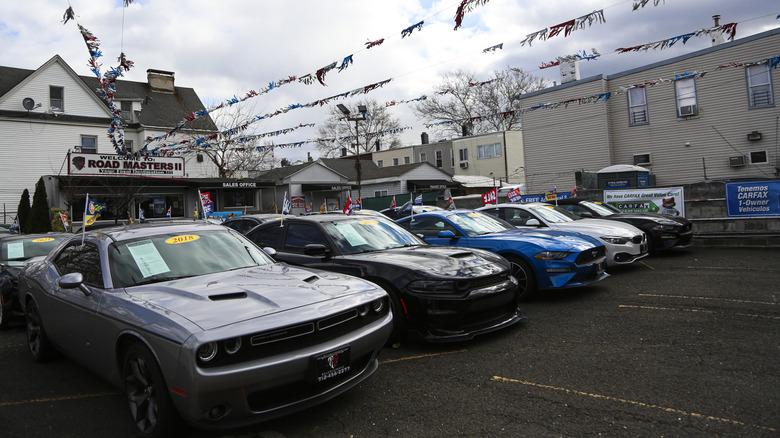
Like everything else in the U.S., used cars are getting more expensive at an alarming rate, and our money just isn't going anywhere near as far as it used to. Today, a used car priced between $10,000 and $15,000 is just about nine years old and has 98,000 miles on the clock, on average, according to Edmunds. Back in 2019, that same budget bought a car under five years old with about 58,000 miles.
Used car buyers are saying they're "definitely getting less for the money," and it's true. The squeeze starts from the top down. New car prices are at record highs, and when they finally do hit the used car market, they command a hefty premium. Buyers with tighter budgets are being forced into older, higher-mileage vehicles that are more likely to need repairs. From Bloomberg:
For two decades leading up to the Covid-19 pandemic, new models were affordable and more buyers were leasing. Competitive automakers pushed big rebates, cheap leases and 0% financing to ramp up sales. Those leases sent a parade of low-mileage cars to the used lots every year.
Problems with the supply chain during the pandemic hurt sales, but they taught auto companies a lesson: Producing fewer, high-priced models means better profits and rewards from stock investors.
After years of static share movement, General Motors Co. and Ford Motor Co. both have gotten investor attention in part with price-backed profit strength and raised earnings guidance this year. In its second-quarter earnings release, GM boasted about its average vehicle sale price of $52,000 and sales incentives that are below most competitors. Ford had similar results, saying net pricing helped lift its quarterly profit by $200 million.
GM is selling new versions of its Chevrolet Silverado and GMC Sierra pickups later this year. Since buyers pay more for redesigned models, GM Chief Financial Officer Paul Jacobson told investors at a Morgan Stanley investor event this month that "means there is pricing potential."
While that may sound like "greedflation" — favoring big margins over winning new buyers — some of it is necessity, said Diane Swonk, KPMG's chief economist. Trump's tariffs have cost automakers billions of dollars, and the war with Iran has increased energy costs, especially for diesel fuel that truckers need to ship parts and vehicles around North America.
The average new car now sells for $50,000. With cars losing around 40% of their value after three years, the average used vehicle sells for more than $30,000. In 2019, the sales price was about $20,000, says Edmunds.
Those inflated prices eventually land in the used-car market, which is getting lower inventories because of a drop in leases. Before Covid, Americans leased about 4 million vehicles a year, most of which sold as used after three or four years. This year, the industry is on pace to lease 2.5 million, which could tighten the used market for the foreseeable future, said Ivan Drury, director of insights at Edmunds.
He said automakers aren't offering low-interest lease deals like they used to because the incentives are too expensive in the current interest-rate environment and so they prefer to sell vehicles.
Used cars selling for under $20,000 are hard to find and they usually have high mileage. Even so, dealers have to fight for them, one dealer owner said. He described them as "like gold," and said they've got to pay record prices to actually acquire them.
It's the latest sign of how the traditional American dream is increasingly tougher to attain. Voters returned President Donald Trump to the White House partly on his vow to bring prices down. But inflation has been back above 3% — the level when Trump took office — since the president went to war with Iran in late February, sending energy prices soaring.
US mortgage rates last week climbed to the highest level in more than a year, and consumer sentiment slid below estimates in September. Polls show Democrats are leading in their bid to retake the House of Representatives in the November midterm elections and have a good shot at control of the Senate with Trump's approval ratings lagging.
This week, the Federal Reserve raised interest rates, and investors are betting more hikes are in store to cool inflation. That's going to make borrowing even more expensive for Americans already grappling with a structural change in the car market.
This is all bad, bad news. I'm not sure when this trend corrects itself — or if it ever actually will. As long as those tariffs are in place and automakers are making money while building fewer cars, I don't have much hope.
2nd Gear: Mercedes could close two plants in Germany
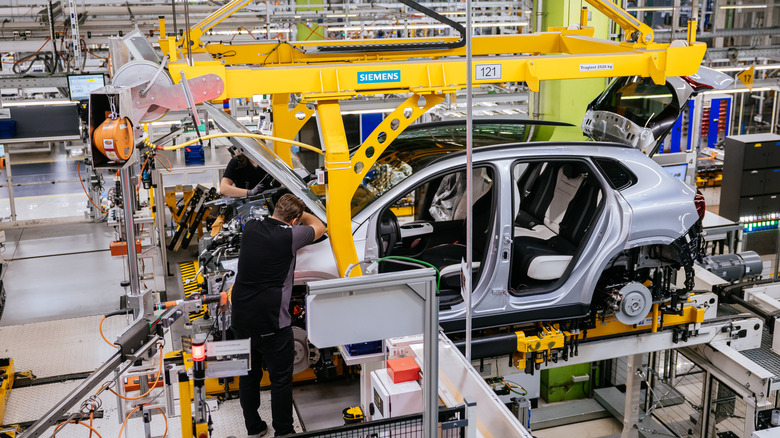
Mercedes-Benz says its production in Germany isn't competitive by international standards because of high labor costs, and it's now warning workers that it could close two plants. It says it wants to maintain plants and employment in its home country, but "to do that, we need framework conditions to boost productivity in Germany."
Earlier this week, production chief Michael Schiebe told workers gathered at the automaker's 111-year-old plant in Sindelfingen that these closures are coming if it couldn't find a way to bring costs down. From Reuters:
"Our clear goal is to maintain all of our German locations," Schiebe said, adding that this required a joint commitment to cost measures.
"If we are unable to do this, we will have to close one German assembly plant and one German powertrain plant," he said, according to excerpts of his speech shared by the company.
[...]
The workers' assembly took place against the backdrop of nationwide protests organised by the IG Metall union, in which tens of thousands of auto workers demonstrated against mass layoffs in their sector, which is battling to compete with low-cost Chinese rivals while absorbing steep US tariffs.
So far, Mercedes-Benz hasn't said which plants are in jeopardy of closure, but it does operate eight different facilities in the European country, employing nearly 53,000 workers.
3rd Gear: Volkswagen wants to get a move on with restructuring plan
Speaking of German automakers having a tough time... Volkswagen! It wants to ramp up its restructuring program as quickly as possible as German auto workers stage nationwide protests. The moves come less than three days after the company's profit warning highlighted sectoral challenges from high costs and tough Asian competition.
The protests and VW, BMW and Bosch are in response to massive job cuts, possible production relocations and plant closures. From Reuters:
"I had hoped that the measures agreed in 2024 would already be sufficient. Unfortunately, that has not been the case," Volkswagen brand head Thomas Schaefer told a staff meeting at the company's Wolfsburg headquarters.
"We have absolutely no time to lose and will therefore significantly step up our performance programme once again," he said, adding that the company and employee representatives will discuss how to proceed.
Europe's biggest carmaker plans to cut a further 50,000 jobs as part of a massive restructuring agreed with stakeholders this month, averting a full-blown dispute with powerful unions that still repeated calls on management to fix the issues.
Volkswagen works council chief Daniela Cavallo and IG Metall union head Christiane Benner called for stronger protection against unfair competition from China, a more effective European Union subsidy policy and continuation of a phased retirement programme.
"We expect corporate leaders and management teams to take responsibility for Germany as an automotive nation, for employees and for jobs," Benner told workers at Volkswagen's headquarters.
European automakers are facing increased competition from Asian rivals abroad and at home, creating a major problem for Volkswagen as it contends with overcapacity on the continent, US tariffs and plunging profits in China.
Last week, the Group cut its 2026 profit margin outlook to 1% at the most. It blamed the sluggish Chinese market and higher provisions for retirement while also lowering expectations for Porsche. A large part of the problem was going all-in on not-so-profitable electric vehicles and then not even keeping up with their development. Truly, it was a "worst of both worlds" strategy.
4th Gear: CarMax just cut jobs for the third time in 12 months
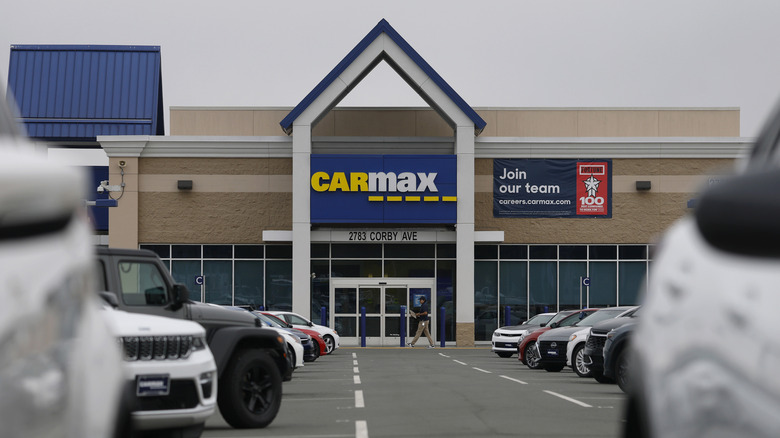
It's not just automakers having a tough time right now, either. Auto dealers are as well. CarMax just laid off 145 white-collar workers — about 4% of its corporate staff. The move comes as the company attempts to deal with the high prices and rising interest rates we talked about earlier. From The Wall Street Journal:
The cuts came at CarMax's Richmond, Va.-area headquarters as well as its offices in Dallas and Atlanta and at its Edmunds automotive research business Friday, [a spokesperson] said.
CarMax owns more than 250 used-car dealerships covering most major markets in the U.S. The company's revenue slid 2% to $25.9 billion, while gross profit per retailed vehicle fell 2.5%, to $2,253, in the fiscal year ended Feb. 28.
In recent years, the used-car space flourished as new vehicle prices crossed $50,000 on average. Now, amid higher interest rates and rising fuel prices, more people could opt to delay any kind of car purchase.
This was the third round of layoffs at CarMax in just 12 months, which isn't exactly great. Back in October of 2025, it laid off 350 people, and then in January of 2026, a further 230 jobs were cut. With the latest round, the total jobs eliminated now sits at 725.
Neutral: Get checked, folks

I know I'm famously the youngest Jalopnik staffer and have been since the day I started here in December of 2021, but even I'm getting old now. To ring in my 30th birthday, which is coming up in a few weeks time, I decided to schedule my first-ever colposcopy. Yeah, it's a bit early, but I've got a pretty lenghty family history of colon cancer, so I wanted to get my mom off my back.
Was it fun? No. Did I think they were going to find anything? No, but they did. Luckily, the doctors cut the tiny pre-cancerous sonofagun right out, so now I've got nothing to worry about. Who knows what could have happened if I waited another 10 years (or more) to get checked. All of this is to say, fellas, go get a camera stuck up ya' ass. It's better to be safe than sorry. Also, shoutout to my mom.
The Fuel Up
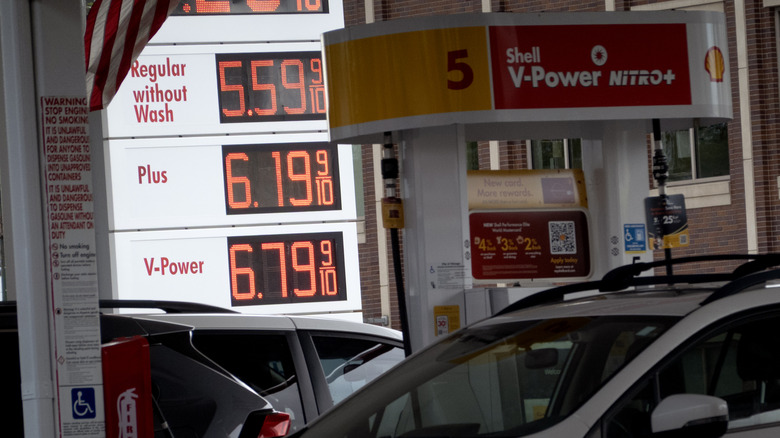
Bad news, friend. We live in hell! Strom Thurmond is our neighbor and New York financier Jeff Epstein has a house around the corner. There's one thing we've got going for us, though: fuel prices are lower here than they are on Earth. Sure, WTI Crude Oil futures and Brent Crude prices are down a bit from the highs we saw last week, sitting at $91 and $99, respectively, at the time of publication, but it hasn't done much to relieve our #PumpPain.
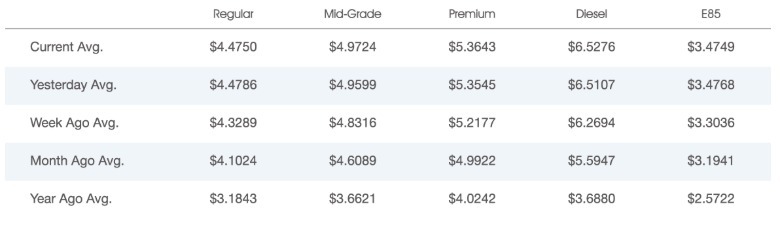
Here's where national average prices stand right now, according to AAA:
 AAA
AAA
All of this is to say the average price of a gallon of regular gas stayed largely flat overnight, dropping a cent to $4.48 from yesterday's price. We're still getting perilously close to the 2026 high of $4.56 we saw back in May, though. It's not all sunshine and rainbows, either, because diesel didn't get the same memo. It continued its unceasing upward trend, hitting another new record at $6.53. Gadzooks.
On the radio: David Byrne - Everybody Laughs
I was lucky enough to see David Byrne play at Forest Hills over the weekend, and it rewired my brain chemistry. What a talent. What a treasure. I don't know, man. There's just something so wonderful about Byrne's music, whether it's his solo projects or his Talking Heads discography. If you get the chance to see him... you need to do it.