

Volkswagen To Spend $18.6 Billion On Job-Cutting, Factory-Shuttering Restructuring
Happy Thursday! It's September 10, 2026, and this is The Morning Shift — your roundup of the top automotive headlines from around the world, in one place. This is where you'll find the most important stories that are shaping the way Americans drive and get around.
In this morning's edition, we're looking at the reported financial cost of Volkswagen potentially shutting down four factories and Cadillac dealers' fears that the automaker isn't pivoting back to gas-powered models fast enough. We'll also look at Porsche completing the sale of its stake in Bugatti and the Boring Company's Emirati investment windfall.
If you'd like a recap of the latest auto news sent to your inbox each weekday, you can sign up for Jalopnik's free Morning Shift newsletter here.
Volkswagen is willing to spend whatever it takes to restructure itself
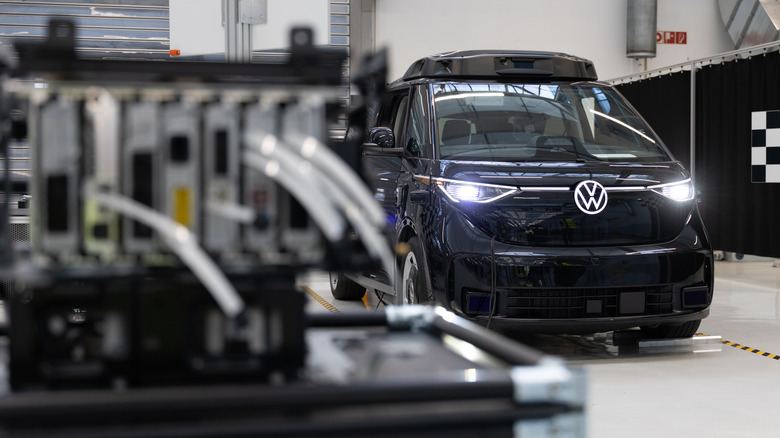
Volkswagen is in the midst of its largest-ever restructuring, which is a gentle way of saying several factories will close and thousands of workers will be laid off to defend the company's profits. However, you have to spend money to save money and Volkswagen will be doing a whole lot of spending. The German automaker's plan will cost an estimated $18.6 billion. From Reuters:
"Volkswagen estimates the total cost of job cuts and potential plant closures, part of a landmark restructuring pact struck last week, at around €16 billion ($18.6 billion), a person familiar with the matter said on Thursday.
...
The plan includes exploring alternatives for four German plants that will eventually run out of models during the next decade and a reduction of around 50,000 more positions than previously planned.
A Volkswagen spokesperson declined to comment on the costs, which were first reported by German magazine Der Spiegel.
The source told Reuters that phasing out production in Emden and Zwickau would cost about €1 billion each, while €2 billion each would be incurred at the Neckarsulm and Hanover plants.
About €10 billion would be set aside for costs related to cutting up to 60,000 jobs worldwide."
If desperate times call for desperate measures, Volkswagen is willing to do anything stay afloat financially. Along with the jobs and factory, the automotive behemoth might even cull half of its model lineup across all its brands.
2nd Gear: Cadillac dealers fear they will lose customers waiting for automaker to reintroduce gas models
While Cadillac dealers are glad to see the brand abandon its plans to become an EV-only automaker, they fear losing customers during the transition period over the next few years. Cadillac still needs to produce the gas-powered models it will sell in showrooms. The only thing the dealers can do is simply wait it out. From Automotive News:
"After killing the XT4 and XT6 crossovers last year and the CT4 sedan this summer, General Motors' luxury brand now is working to backfill those holes. Redesigned versions of the XT5, XT6 and CT5 are expected in 2027 and 2028.
Many Cadillac dealers are glad the brand won't force them into selling only electric vehicles before the luxury market is ready. But at the same time, they're concerned about the prospect of weak sales in the coming year because their offerings with internal combustion engines have gotten thin.
"It's the midsize crossover market that's going to be the challenge," said Ed Williamson, CEO of Williamson Auto Group, which operates a Cadillac dealership in Miami. "I think [GM CEO Mary Barra] did a disservice to the Cadillac dealers in not figuring out a way to reload XT5 and XT6 sooner.""
Industry analysts suggest Cadillac should overproduce its current ICE-powered models so the inventory glut can make the transition period smoother. The pivot back could be seen as a failure, but Cadillac was only second to Tesla in EV sales.
3rd Gear: Porsche completes sale of its 45% stake in Bugatti-Rimac
Porsche has officially offloaded its stake in Bugatti-Rimac, netting $1.2 billion for the financially beleaguered automaker. Close to a quarter of the proceeds will fund the company's pension obligations. Porsche is attempting to rebound from a rough 2025, when it cut roughly 1,900 jobs in Germany in response to declining sales and high tariffs. From Reuters:
"The company said the deal would help lift its 2026 automotive net cash flow margin forecast to 5.5%-7.5%, from 3%-5% previously. Porsche plans to allocate €250 million of the proceeds to further fund pension obligations.
The disposal forms part of Porsche's broader effort to focus on its core automotive business as the luxury carmaker faces weaker demand in China and a slower-than-expected transition to electric vehicles, issues that have pressured earnings across the European auto sector.
Porsche had held a 45% stake in Bugatti Rimac and a 20.6% stake in Rimac Group after helping establish the Bugatti Rimac joint venture in 2021."
While the sale will bolster Porsche's finances in the short-term, many of the market conditions that created Porsche's current predicament still exist. The automaker's sales in China are still declining. The focus of President Donald Trump's tariff tirades might have shifted to Canada, but all it could take is one bad phone call with Berlin or Paris for the EU to be back on the chopping block.
4th Gear: Elon Musk's Boring Company now valued at $23 billion after Emirati investment
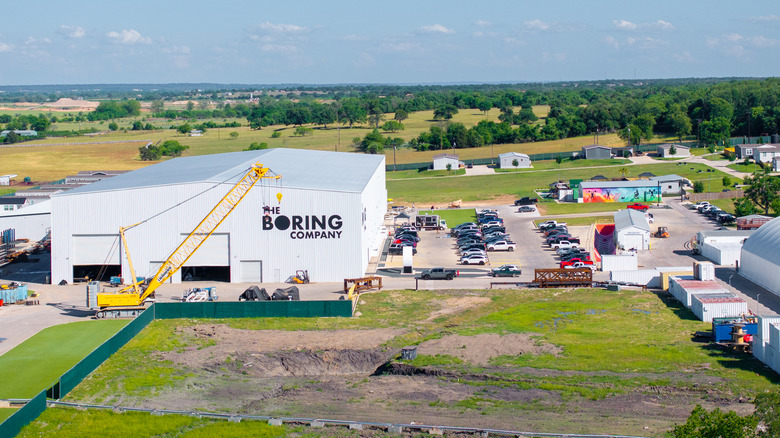
The Boring Company is suddenly worth $23 billion after a $675 million investment from the UAE. The Musk-led venture was previously valued at $5.7 billion in 2022. The company's only tangible claim to fame is building the world's worst subway system under the Las Vegas Convention Center. The funding has been earmarked for the construction of the Dubai Loop. From Quartz:
"The company said the capital is earmarked for constructing a network exceeding 150 kilometers of underground infrastructure throughout the UAE, extending the work already underway through the Dubai Loop project. Funds will also go toward hiring across engineering, production, and operations, and toward expanding Loop projects in Las Vegas and Nashville, as well as further development of the company's Prufrock tunnel-boring machines.
The UAE's role as lead investor coincides with its position as the primary customer for the largest project the funding will finance. The Boring Company signed a definitive agreement with Dubai's Roads and Transport Authority to begin construction of the Dubai Loop, an underground passenger transport system, at the World Governments Summit 2026. The first phase covers a 4-mile pilot route with four stations linking the Dubai International Financial Centre and Dubai Mall, at an estimated cost of $154 million. The full route would extend up to 14 miles and include 19 stations, at a total estimated cost of $545 million, the company said."
It might not be my money to burn, but the Tesla Model Y should be the backbone of any transportation system that costs $545 million. Whether it be in Nashville or Dubai, you can't convince me that an actual subway system wouldn't be a more cost-effective option.
Reverse: London cabbie becomes first drunk driving arrest
George Smith became the first person arrested for drunk driving on this day in 1897. The 25-year-old taxi driver had little defense after slamming his vehicle into a building in London. He got off light compared to today's standard. Smith was fined 20 shillings, or $227 in today's dollars. One last note: Smith's taxi was an electric vehicle. EVs were making history even in the late 19th century.
On The Radio: Rush - 'Tom Sawyer'
President Donald Trump might be plummeting U.S.-Canada relations to level not seen since 1812, but we can still appreciate Canada's national anthem on this side of the border.