

VW's Seat Could Be The First Casualty Of China's European Dominance And VAG's Restructuring
Good morning! It's Thursday, September 17, 2026, and this is The Morning Shift, your daily roundup of the top automotive headlines from around the world, in one place. This is where you'll find the most important stories that are shaping the way Americans drive and get around.
In this morning's edition, Volkswagen's Seat will likely get the axe as strong Chinese competition and the company's restarting plans take form, the EU is asking China very nicely to limit its hybrid exports, Volvo is planning to launch 13 models by the end of the 2020s in a bid to turn things around and Lucid is teaming up with Bolt to launch 25,000 robotaxis across Europe.
If you'd like a recap of the latest auto news sent to your inbox each weekday, you can sign up for Jalopnik's free Morning Shift newsletter here.
1st Gear: Seat may take a seat in VW's restructuring plans
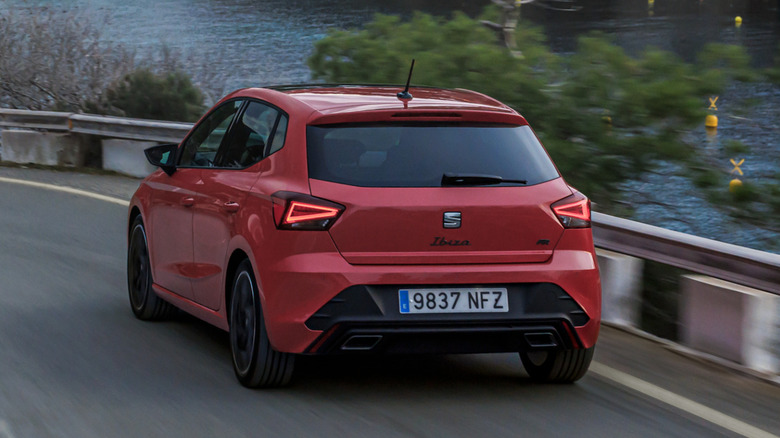
Volkswagen is in the midst of a major overhaul, and part of that could mean that its struggling Spanish brand, Seat, could be put out to pasture. It would mark the first major brand casualty since Chinese automakers began to proliferate the global market and the first major brand to disappear since the early 2010s when Ford killed Mercury, GM axed Saturn and Pontiac and Saab went bankrupt.
It's a clear sign that CEO Oliver Blume isn't playing around with his efforts to streamline VW Group's sprawling business and focus on its strongest brand. It comes as the company announces sweeping job cuts in the wake of a plunge in Chinese sales and a costly transition to electric vehicles that hasn't exactly panned out. From Reuters:
As part of the revamp announced earlier this month, Europe's largest automaker said Seat's future "beyond the current product cycle is still being evaluated", adding that "various scenarios remain possible beyond 2030".
A person involved in the discussions said Seat's fast-growing sister brand Cupra, which is going electric, will get all future products as Seat's combustion-engine models are phased out.
"We do not want to maintain two brand names," said the source, speaking on condition of anonymity because the talks are confidential.
[...]
Cupra offers three fully electric models, including the new Raval, which Seat-Cupra CEO Markus Haupt described in May as a "game changer". Seat, by contrast, has no fully electric models and none are planned.
Executives have repeatedly said the brand cannot justify the investment required for an EV programme because it is not profitable.
Seat — aka Sociedad Española de Automóviles de Turismo — was founded in 1950 as a state company during Spain's dictatorship, and it was bought by Volkswagen in 1986 as a low-cost brand for its burgeoning automotive empire. However, it hasn't launched a new model since 2020 and accounted for less than 3% of VW Group's global deliveries in 2025.
At the same time, Cupra, which launched in 2018, overtook Seat in annual sales for the first time last year. With this latest news, it's not entirely clear if Cupra will still make its planned entrance to the U.S., which is a shame, because it does make some really neat little cars.
2nd Gear: EU asks China to pweety pweeeze stop brining so many hybrids to Europe
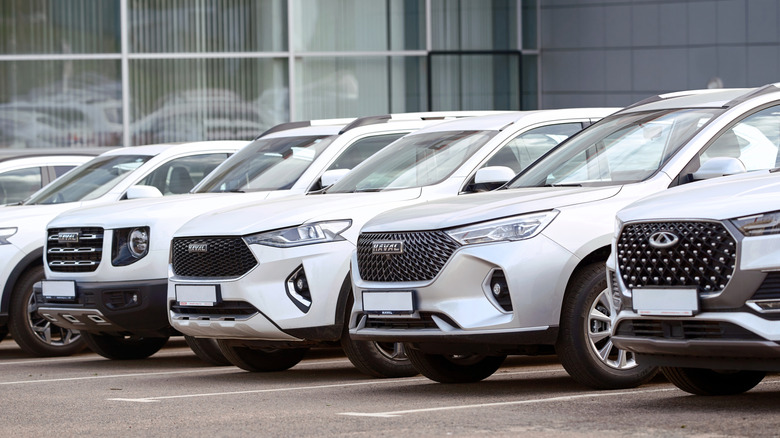
The European Union has asked China to — for the love of God — voluntarily restrict exports of hybrid vehicles as part of a deal to prevent a trade war between the bloc and the country. Tensions between the two sides are growing ahead of crucial meetings in Beijing next month as European automakers deal with mass layoffs while cheaper Chinese vehicles flood the market.
Brussels wants Beijing to rein in its industry or face higher tariffs. It's seeking a commitment from officials to restrict the sale of China-made hybrids to about 15% of the EU market compared with more than a third today. Sources say that Brussels has proposed a number of other products, like Chemicals, where it wanted China to show restraint. The bloc also wants China to buy more European exports. From the Financial Times:
"If they will not limit their exports to our market then we will," said an EU official. "This is about stopping deindustrialisation. We have to act. It's about managed trade."
[...]
The EU in June set an October deadline for "tangible results" in reducing its soaring trade deficit with China, with the two sides setting up the EU-China Trade and Investment Consultations (TIC) forum to try to tackle market access issues.
The EU's €1bn a day trade deficit with China had "reached a tipping point", European Commission president Ursula von der Leyen said on Wednesday.
The "second China shock . . . is already here", she said in her annual State of the Union speech.
"Let me be clear: we will use all the tools at our disposal to rebalance our relationship. Words are good. But deeds are better," she added.
[...]
One of the people familiar with the EU's position said that by suggesting China voluntarily limit its exports, the bloc is hoping to repeat the type of deal it struck with Japan in 1986, when Tokyo agreed to impose export restraints on Japanese vehicles — a policy that continued until 1999.
That encouraged Japanese companies such as Toyota and Nissan to invest in the EU or collaborate with domestic producers.
Such restrictions and even price controls were more common before globalisation accelerated in the 2000s with China's entry into the World Trade Organization.
One person familiar with the matter said the pressure for the EU to take further action now was "massive" as Chinese imports of hybrid cars to the bloc hit a high in the second quarter.
Brussels imposed anti-subsidy tariffs of up to 45 per cent on Chinese electric cars in October 2024, prompting retaliatory levies from Beijing on EU cognac, meat and dairy exports.
But while imports of battery EVs subsequently rose gently, imports of Chinese hybrid cars — which only pay a flat 10 per cent EU tariff — soared. Imports of hybrids have grown more than 10-fold from 3,800 vehicles in October 2024 to 50,000 in July 2026 while average prices have fallen.
[...]
Beijing has deployed a range of "Made in China" policies to boost domestic products and improve its technological prowess. It denies using subsidies, saying its competitive prices are the result of its efficient companies.
Automakers, including VW, have been calling for similarly punitive duties against imported hybrids. The Commission is hoping Beijing will agree to voluntary restrictions to vindicate its decision to seek a negotiated solution. However, a consensus is forming in Europe's two largest economies — Germany and France — for more forceful action against China after years of division over the issue.
This all seems a lot like the exact sort of issue lawmakers in the U.S. are hoping to avoid by not letting Chinese vehicles in in the first place.
3rd Gear: Volvo planning 13 vehicle launches by 2030
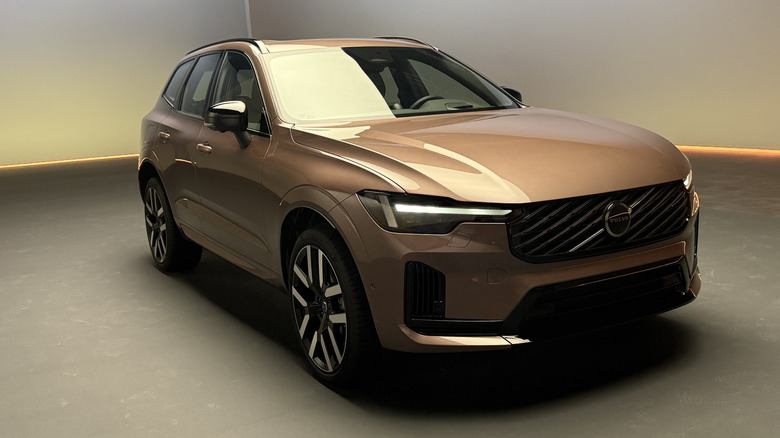
Volvo says it is making its largest-ever product push — launching 13 new models by the end of the decade in an effort to turn itself around. The Swedish-Chinese automaker laid out its roadmap to navigate an ever-toughening automotive market that is meant to deliver on its long-term goals of driving sales and higher profitability.
Currently, it's stuck between a rock and a hard place, with U.S. tariffs on one side and pricing pressure due to the rise of truly Chinese vehicles on the other. Volvo initially looked to cost-cutting as a way to protect profitability, but if the short-lived (in the U.S.) EX30 is any indication, that didn't go well. Now, the company will look to a massive product offensive. From The Wall Street Journal:
Volvo said it would roll out seven new car models for Western markets and six for China by 2030. It currently sells 14 models, with different variants of each.
The company aims to double its market share through a regionalized portfolio with electrified and all-electric cars, as well as a new generation of hybrid models, it said.
Volvo Chief Executive Officer Hakan Samuelsson said the auto industry is grappling with challenges stemming from its electrification shift, the end of globalization and heightened competition amid Chinese carmakers' international expansion.
The automaker said its renewed model lineup would be a key lever in its efforts to drive strong growth and cash flows over the long term, as well as an operating profit margin—a key profitability metric in the industry—above 8%.
In Western markets, new models will use existing computing platforms and vehicle architectures. That'll theoretically allow Volvo to invest more heavily in its technology stack and manufacturing to decline from current levels. In China, its plan is to work with Geely on shared platforms and supply chains to boost efficiency.
4th Gear: Lucid, Bolt want to have 25,000 robotaxis in Europe
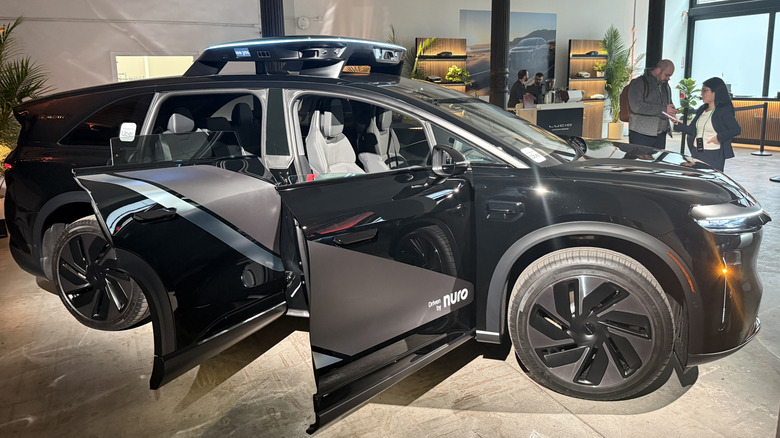
Lucid is teaming up with European shared mobility platform Bolt to roll out self-driving ride-share vehicles across Europe as they look to tap into the bloc's burgeoning robotaxi market. The partnership reflects how robotaxi development is moving from pilot programs to commercial development — especially in Europe — as competition intensifies while companies race to scale their products. The new joint venture plans to deploy 25,000 fully autonomous Lucid vehicles across European cities as part of a broader push to grow its AV fleet to 100,000 vehicles by 2035. From Reuters:
Uber, Verne and Pony.ai launched robotaxi rides in Zagreb in August, while Alphabet-owned Waymo is testing autonomous vehicles in Munich ahead of a planned launch in Germany in late 2027.
[...]
Lucid and Bolt will co-develop an autonomous-driving-system-ready vehicle platform designed for SAE Level 4 automation, meaning the vehicles can operate with no intervention within defined operating conditions and areas.
Bolt's autonomous-driving unit will help set vehicle, software, safety and rider-experience requirements, while also building the fleet infrastructure, operating systems and city partnerships needed for a broader rollout. Bolt intends to own and operate the fleet.
The companies said they would also work with autonomous-driving technology partners, European regulators and policymakers to support the rollout.
Lucid has a separate US robotaxi partnership with Uber and autonomous-driving firm Nuro, under which Uber committed to deploy at least 35,000 Lucid vehicles, including the Gravity SUV and models from its upcoming Midsize platform, starting this year.
The vehicles will be based on Lucid's upcoming mid-size platform, which has yet to be seen by the public. I, however, have seen it, and it looks sick as hell. The vehicle is expected to use Nvidia's Hyperion automotive-vehicle architecture.
Reverse: They fixed everything!
 History.com
I might have only been on the cusp of turning 15 in September of 2011, but I was still acutely aware of the injustices of our world and its financial system. At least, I thought I was. I can remember being so excited when Occupy Wall Street first spun up. I really felt like it was going to make a difference. Hell, I remember talking to my friends about going down to Lower Manhattan after school one day to check it out. You can imagine my shock and displeasure when nothing ever came of it. Anyway, if you want to learn more about this "movement," head over to History.com.
The Fuel Up

I'm sorry to be the one to tell you this, but things are not getting better in the world of fuel prices. Hell, they're getting worse. Global fuel supply chains are, in a word, f****d, and they're going to continue to be for the foreseeable future. At the very least, WTI Crude Oil futures and Brent Crude prices are down ever so slightly, sitting at $101 and $103, respectively, at the time of publication.
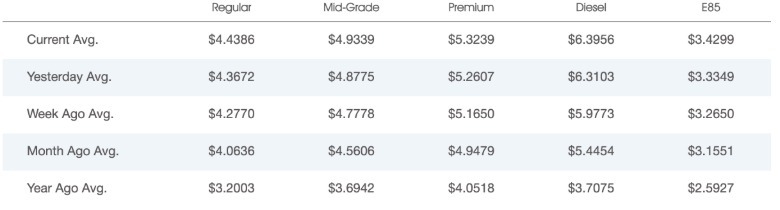
Here's where national average prices stand right now, according to AAA:
 AAA
AAA
This all shakes out to the average price of a gallon of regular gas jumping 7 cents overnight to $4.44, according to AAA. Diesel was also up another 9 cents overnight to $6.40 — another all-time record. I've got no clue when we'll get off this train, but it's not soon.
On the radio: Macklemore & Ryan Lewis - Thrift Shop feat. Wanz
Macklemore, it's not that I was unfamiliar with your game, I just didn't appreciate it enough. Buddy, you best believe I'll be listening to "The Heist" all week in your honor. Good on you for having principles and beliefs, big dog.