

Ford Wants To Somehow Sell 100,000 Ford Fathom EVs In Its First Year
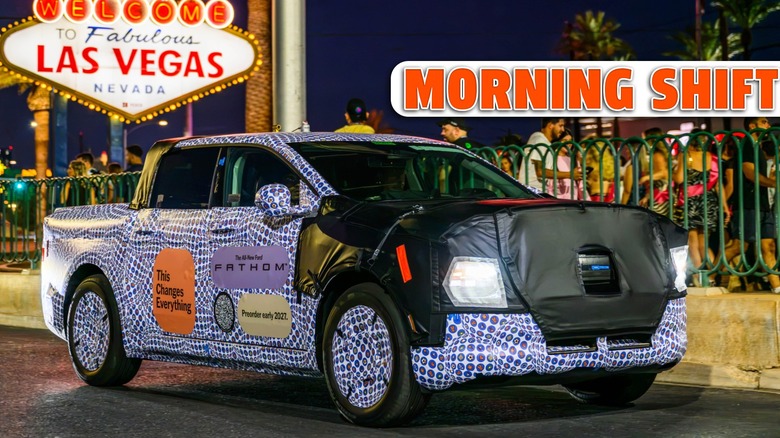
Good morning! It's Thursday, September 3, 2026, and this is The Morning Shift, your daily roundup of the top automotive headlines from around the world, in one place. This is where you'll find the most important stories that are shaping the way Americans drive and get around.
In this morning's edition, Ford has designs on 100,000 Fathom EV sales in year one, Uber is laying off 3,300 employees in its biggest cuts since Covid, The Blue Oval must pay $2.3 million to settle a racial harassment case at its Buffalo Stamping facility and longer working weeks probably won't fix Volkswagen's issues.
If you'd like a recap of the latest auto news sent to your inbox each weekday, you can sign up for Jalopnik's free Morning Shift newsletter here.
1st Gear: Ford aims to sell 100,000 of its $30,000 EV pickups in year one
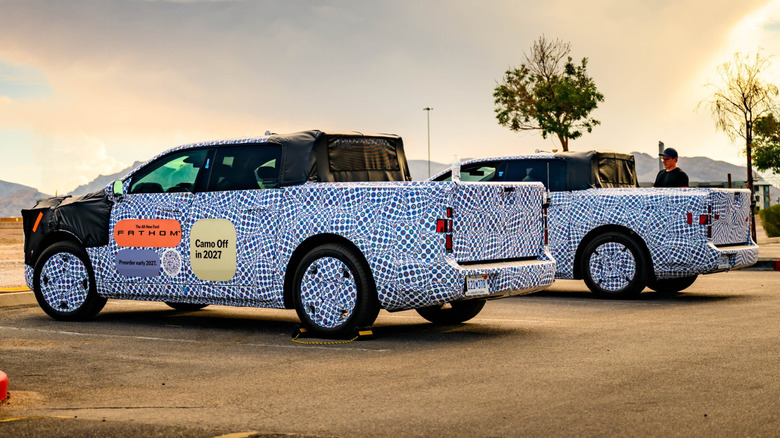
Ford is shooting for the stars with its yet-to-be-revealed Fathom electric pickup truck. The automaker has apparently set a sales goal so lofty that it's only really been met by Tesla in the U.S.: selling over 100,000 vehicles in its first year. That is a hell of a tall order, even for a vehicle that is supposed to start at $29,945 when it goes on sale next year. I mean, the F-150 Lightning and Mustang Mach-E have never sniffed even a fraction of that type of sales success.
If it were to actually meet those targets, the Fathom (a good name) would immediately become one of the best-selling EVs in the U.S. Outside of Tesla, no other automaker has sold over 100,000 units of a single model in the U.S. in a year. Of course, Tesla sold 357,000 Model Ys and 190,000 Model 3s, but that's besides the point. I mean, across three different brands, General Motors managed to only sell 170,000 EVs in 2025. From The Wall Street Journal:
Expectations are high. Ford's earlier EVs, including an electric version of its F-150 pickup, often sold well in their respective segments but never achieved the high volumes of its gas and hybrid cars. Behind the scenes, they racked up billions of dollars in losses. Ford halted production of the electric F-150 Lightning late last year.
Ford says it has learned many lessons since then. Chief Executive Jim Farley has said those vehicles had more parts and costs than are necessary for EVs. The Fathom is designed with fewer components and will be assembled through a manufacturing process that has been overhauled to keep costs in check. He has called the truck Ford's new "Model T moment."
The projected sales target for 2027 illustrates the big bet Ford is making on an all-electric vehicle in a country where EV enthusiasm has waned, following policy changes by the Trump administration and Congress.
[...]
Ford executives say the Fathom's $30,000 price range will help it succeed where other EVs—which often cost $50,000 or more—didn't. The automaker also says its new assembly line for the EV will lower costs and increase efficiency.
[...]
Andrew Frick, president of Ford's electric- and gas-vehicle divisions, said in a recent interview that the company believes it will attract gas-powered and hybrid-vehicle owners to the Fathom.
There isn't a ton known about the Fathom right now — which is sort of hard to fathom for a car that's this important and this close to launch. But it'll apparently have more passenger room than the Toyota RAV4, Apple Maps built into the vehicle's navigation system and Ford's excellent BlueCruise Level 2 hands-free driver assist system. It'll also have in-bed power outlets, a possible mid-gate and a NACS charging plug.
I don't know if 100,000 sales is in the cards, but the Fathom does seem to be pretty damn cool for under 30 grand.
2nd Gear: Uber cuts 10% of its staff to deal with robotaxi onslaught

Uber is set to lay off nearly 3,300 employees, marking its largest job cuts since Covid, and the ride-share company says it's all being done in an effort to navigate the rise of robotaxis cutting in on its business. The cuts are meant to flatten management layers, and that will theoretically reduce organizational complexity that was built up while it experienced a period of rapid growth.
CEO Dara Khosrowshahi said in a note to employees earlier this week that this complexity was providing a hurdle to decision-making. That must be really hard for him. From Reuters:
Unlike several tech executives, Khosrowshahi did not blame the cuts on AI even as a push to adopt the technology and the efficiencies it can unlock have driven large cuts in the industry this year, with tracking website layoffs.fyi putting the overall number at over 123,000 across nearly 390 companies.
"A leaner organization will mean clearer ownership, faster decisions, and more time spent building rather than coordinating. It will also generate savings that we intend to reinvest in growth, innovation, and the capabilities that will matter most over the coming years," Khosrowshahi said.
[...]
Some of the concern stems from reports of growing tension between Uber and Waymo, the biggest U.S. robotaxi operator, which runs its cars through Uber's app in Austin and Atlanta.
Waymo has also been expanding into new markets without Uber, while rivals such as Tesla double down on robotaxis, feeding fears that a growing fleet of driverless cars could erode Uber's lucrative role as the middleman between vehicles and riders.
To defend its position, Uber plans to put more than $10 billion into robotaxis in the coming years, backing the companies developing autonomous-driving systems and positioning itself as a go-to marketplace for driverless rides.
[...]
As part of Wednesday's overhaul, Uber will reduce the number of employees positioned seven or more reporting layers below the CEO by 20% and cut the number of teams with only one or two direct reports by nearly half. It will also combine some teams and concentrate much of its staff presence around key hubs.
Uber is also limiting fully remote roles to about 1% of staff (boo), while also maintaining its three-day in-office policy. All in all, about 10% of its 34,000-strong workforce are losing their jobs.
3rd Gear: Ford will pay $2.3 million to settle racial harassment case, conduct anti-discrimination training
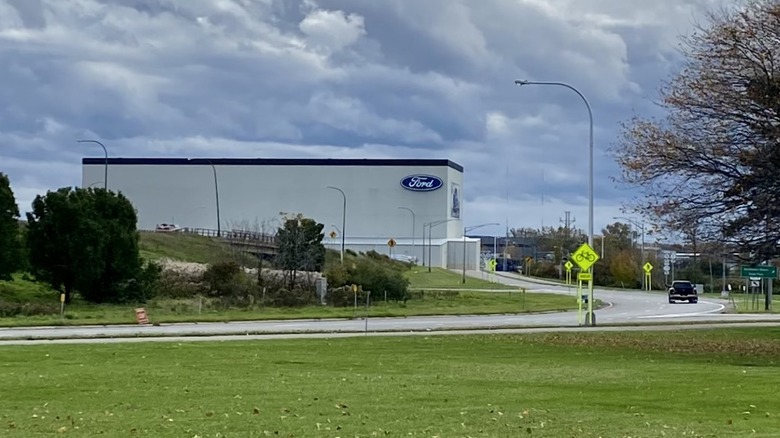
Ford has agreed to pay $2.3 million and will do extensive anti-discrimination training as part of a settlement for a 2021 charge, investigated by the U.S. Equal Employment Opportunity Commission, that alleged racial and national origin harassment claims at its stamping plant in Buffalo, New York, that employees about 800 people and makes body panels for various vehicles. Here's what the EEOC found. From the Detroit Free Press:
In a media release, the federal agency said its investigation found reasonable cause to believe that Ford personnel at the plant subjected numerous employees to harassment and discrimination based on race and national origin.
The EEOC said during its investigation it found graffiti targeting Black employees and employees of various national origins, including Native American and Hispanic workers, scrawled in several employee areas throughout the plant, including bathrooms and break rooms.
[...]
"We appreciate Ford's cooperation throughout this process and the proactive steps taken to improve conditions at the facility during the investigation. Their willingness to engage constructively demonstrates a genuine commitment to fostering a workplace free of discrimination," Arlean Nieto, acting director of the EEOC's New York District, said in a statement.
Bryce Currie, chief manufacturing officer for Ford, visited the plant to meet with all shifts and outline the steps the automaker was taking.
"As soon as concerns were brought forward, we took action to improve accountability, strengthen employee support, and upgrade the workplace environment," Currie told the employees, according to a transcript of his speech at the plant that Ford provided exclusively to the Detroit Free Press. "Under new plant leadership, we enhanced on-site (human resource) resources and invested more than $3.5 million in facility and security improvements. Those investments included installing 326 high-definition cameras throughout the plant, applying specialized anti-graffiti coatings in restrooms, and implementing a strict rapid-response process to report and remove offensive material."
Now, Ford will pay $2.3 million in cash to eligible claimants, and it has agreed to post information explaining the anti-graffiti protocol, conduct regular training at the plant and report any discrimination complaints or graffiti at the facility over the next three years to the EEOC. It also took voluntary steps to upgrade surveillance, coat the restrooms with graffiti-repellent materials and is in the process of developing a "rigorous" graffiti reporting and removal protocol.
4th Gear: Longer work week probably isn't the answer at VW
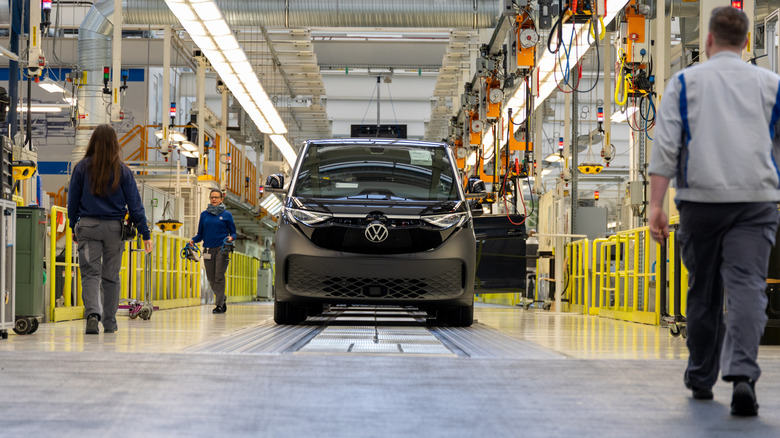
Tensions are rising between Volkswagen's management and the unions that build its cars as the automaker looks for ways to right itself. Now, attention is turning to the industry's 35-hour work week — the full-time standard for many production workers in Germany's metalworking industry that has stood since the '80s. From Reuters:
In Saxony, where Volkswagen's Zwickau plant is threatened with closure, state premier Michael Kretschmer said a 40-hour week should be seriously considered, and praised Mercedes-Benz, where management is pushing unions to agree to longer working hours for the same pay.
Kretschmer and Chancellor Friedrich Merz, a fellow conservative, have both warned that the 35-hour week harms German competitiveness, although any change to labour contracts must be negotiated between unions and employers.
According to Oliver Wyman's Harbour Report, Germany has some of the highest automotive labour costs in the world, at about $3,307 per vehicle versus $955 in Spain and $597 in China. The authors say this is down to strong unions and labour regulations.
Using an example hourly labour cost of €65, auto industry analyst Ferdinand Dudenhoeffer calculates that increasing the standard working week to 40 hours for the same pay could reduce labour costs by some 13%, helping German auto plants maintain or even increase current production.
However, ING chief economist Carsten Brzeski said five more contractual working hours a week would not close the structural gap with low-cost industrial locations like China.
Volkswagen also has a demand problem, and this is not solved by working more, according to unions and some industry observers.
With Volkswagen currently in the process of removing around half a million vehicles' worth of excess annual capacity from its European network and considering the closure of four German plants, if anything workers would need to work less, they argue.
As you might have guessed, the unions aren't exactly on board with this idea. IG Metall has pushed back strongly. There is some precedent for cooperation, however. In 1994, an agreement was struck in between VW management and their unions that reduced pay in exchange for a 28.8-hour, four-day work week. It bought the automaker time to restructure and introduce leaner production methods, helping it ride out a sales slump that could have killed tens of thousands of jobs. Perhaps something like this is on the horizon once again.
Reverse: H-Day, the day Sweden got it right by switching to driving on the right
On September 3, 1967, the whole country of Sweden switched up their driving to the right-hand side, joining the roads of 65% of the world.
Neutral: Time's flying

Looking back at some old photos, I realized that today marks four years of my fiancée (then girlfriend) and I living together. Since then, we've moved to a bigger place, got a third cat, traveled the world, got engaged and are now planning a wedding and our future together. It feels like just yesterday, but I suppose time flies when you're having fun.
The Fuel Up
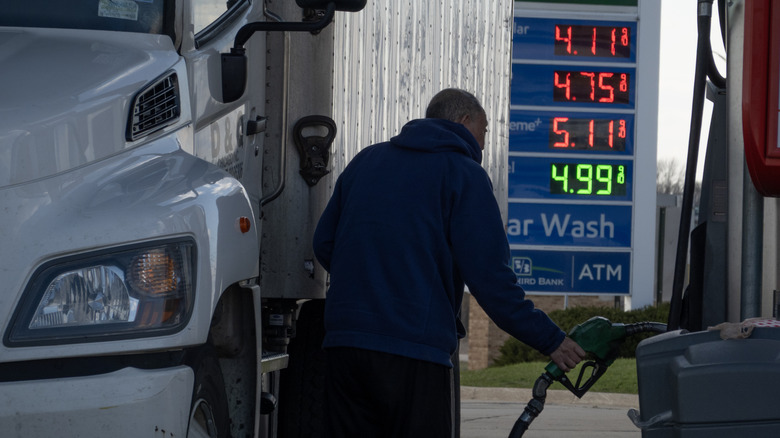
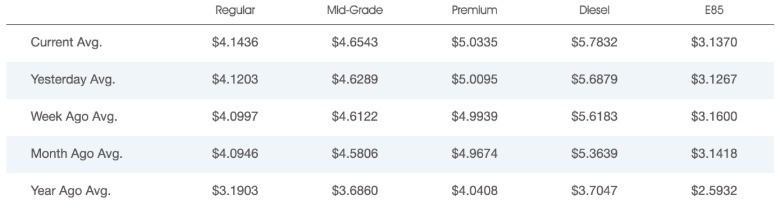
The average price of a gallon of gas is on the rise once again, but that's not what we're concerned about today. As WTI Crude Oil futures and Brent Crude prices remain elevated — sitting at $92 and $97, respectively, at the time of publication — the price of diesel has quietly skyrocketed in recent weeks, far outpacing the price of gasoline. Today, the average price for a gallon of diesel is $5.78 — meaning it jumped a whopping 10 cents overnight. It's now just 3 cents away from breaking the all-time record high that was set back on June 19, 2022. Not good!
Anyway, here's where national average prices stand right now, according to AAA:
 AAA
AAA
In terms of regular gas prices, those are up pretty significantly, too. The average price of a gallon of gas rose another 2 cents overnight to $4.14, according to AAA. After over a month of prices hovering around $4.10, this is certainly a bit of a cause for concern, and I wouldn't be too surprised if we start heading back toward the 2026 high of $4.56 we saw back in May.
On the radio: Dolly Parton - Islands In the Stream
It has been over a week since Dolly's passing, and it hasn't become any less of a massive bummer for both the music world and the world at large. How about we listen to some "Islands" to get us through the day?