

Uber Drops $500 Million On Autonomy Startup: Report
Happy Thursday! It's June 4, 2026, and this is The Morning Shift — your daily roundup of the top automotive headlines from around the world, in one place. This is where you'll find the most important stories that are shaping the way Americans drive and get around.
In this morning's edition, we're looking at Uber's latest autonomy investment, as well as BYD's latest sales numbers. We'll also look at Volkswagen's take on international relations, and UK car sales.
1st Gear: Uber reportedly spent half a billion dollars on AV startup Nuro
Self-driving cars are all the rage right now, and few companies are more interested in winning the autonomy race than rideshare services. Case in point: Uber, which just dropped nearly half a billion dollars on an autonomy startup. From Reuters:
Uber has committed close to half a billion dollars in self-driving startup Nuro, two sources directly aware of the matter told Reuters, detailing the extent of a major investment by the ride-hailing company in developing commercial robotaxis.
After years of false starts, the robotaxi industry is re-accelerating development, testing and early commercial deployment, led by companies including Tesla, Alphabet's Waymo and Amazon's Zoox.
Uber has been positioning itself as a platform for the nascent industry and has partnered with many autonomous vehicle companies, including Chinese tech giant Baidu, U.S. electric vehicle maker Rivian, and British startup Wayve. It also is working with Waymo in some U.S. cities.
One of Uber's commitments is a three-way partnership with Nuro and electric vehicle company Lucid to roll out 35,000 robotaxis, opens new tab using Lucid's Gravity SUVs and upcoming midsize vehicles, Nuro's technology and Uber's platform.
Remember when rideshare companies' entire business plans revolved around solving autonomy? Back in the day, Uber and Lyft were just burning investor cash to undercut traditional taxis and become known players in hopes that autonomy would show up and remove those pesky personnel costs. Hasn't happened yet, but Uber and Lyft will continue to dream.
2nd Gear: BYD is struggling at home, but doing great abroad
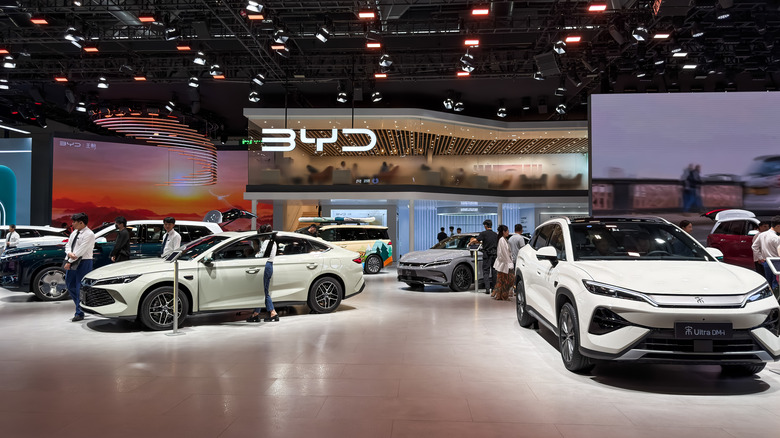
BYD has taken the automotive industry by storm in the past few years, particularly outside of the brand's native China. Now it's really going to have to keep that momentum up, because domestic sales are fading as the Chinese government reworks its approach to EV subsidies. From Bloomberg:
BYD Co.'s total vehicle sales rose for the first time in nine months in May, buoyed by strong international demand as high oil prices spur the switch to electric cars.
The Shenzhen-based automaker delivered 383,453 vehicles last month, up 0.3% from a year earlier, according to a statement Monday. Of that, 160,644 were sold in overseas markets, underscoring the importance of BYD's global expansion as demand at home cools. The company is aiming to sell 1.3 million cars outside China this year, around 25% more than in 2025.
The data helps lift investors sentiment after BYD reported a steep profit decline in the previous quarter, as it continues to struggle with the phase-out of government subsidies and mounting competition from rival Chinese automakers.
With Canada now accepting Chinese cars, perhaps BYD will lay claim to that market too. Good, cheap cars are always likely to be a hit.
3rd Gear: Volkswagen would like lower tariffs, please
Volkswagen makes a good chunk of its cars in Mexico, which makes the U.S.'s tariffs on Mexican auto imports a major frustration. Volkswagen's solution? Ask the President of the United States to change his mind. From Automotive News:
Much has changed since Kjell Gruner took over as Volkswagen Group of America CEO in December 2024.
...
Gruner spoke with Staff Reporter Jack Walsworth. Here are edited excerpts.
...
We are in very close and constructive conversations with the government. We provide information wherever it's needed on the cost situation.
In theory, it's so easily said, "Well, move your production to the U.S." But [there is] additional investment, higher cost, etc.
So we are always there and see good collaboration. From everything we hear, the relationship between the U.S. and Mexico is very good and they've been very constructive conversations. We just hope, and do everything that is within our power, to make sure this also bears fruit in terms of at least the U.S. and Mexico having the same tariff as Korea, Japan or EU. Mexico is our neighbor here from the U.S., and USMCA also encouraged this collaboration.
[Bringing] that [Mexico tariff] to the same and equal level as to these other countries would help tremendously. Not just for us. I mean it's the entire U.S. automotive industry, either sourcing parts, powertrain or entire vehicles from Mexico. It would help the entire industry. Plus, last but not least, the consumer in the U.S. benefiting from affordable vehicles.
I would hope the ingoing position into the USMCA conversations would be a 15 percent tariff as a first step and then hopefully bringing that back to a level that allows lower costs and better prices for consumers.
United States President Donald John Trump is, of course, famous for listening to industry experts and not steadfastly holding his first opinion on a matter forever regardless of what anyone else says. It's a bold move for Gruner, let's see how it works out for him.
4th Gear: The UK is selling cars at pre-pandemic levels
Car sales nosedived (nosedove?) during the Covid-19 pandemic, as parts shortages made it tough or impossible to build enough cars to meet demand. Now, the UK is beating its pre-Covid sales numbers thanks to electric cars. From Reuters:
Britain's new car sales rose 7.1% in May, the strongest for the month since 2019, driven by resilient retail demand, especially for electric vehicles, according to industry data released on Thursday.
EVs have been gaining ground in Europe as rising fuel costs, largely driven by global oil shocks from the Iran war, steer customers toward alternatives.
Overall new car registrations in Britain rose to 160,662 vehicles last month, the Society of Motor Manufacturers and Traders (SMMT) said. Battery electric vehicles (BEV), the biggest under EVs, climbed 34.2%, the most among all car categories.
"We're seeing surging interest linked to macro shocks earlier in the year now materialise into real consumer demand," said Melanie Lane, CEO of EV charging provider Pod.
We're really seeing a repeat of the aughts here, where folks rushed to swap out their gas-guzzling Hummers for Prii. And then nothing bad happened to the economy.
Reverse: Trains good
I think we should have more trains, personally. I want to ride to Seattle or Vancouver in a sleeper car, I think that'd be fun.
The Fuel Up
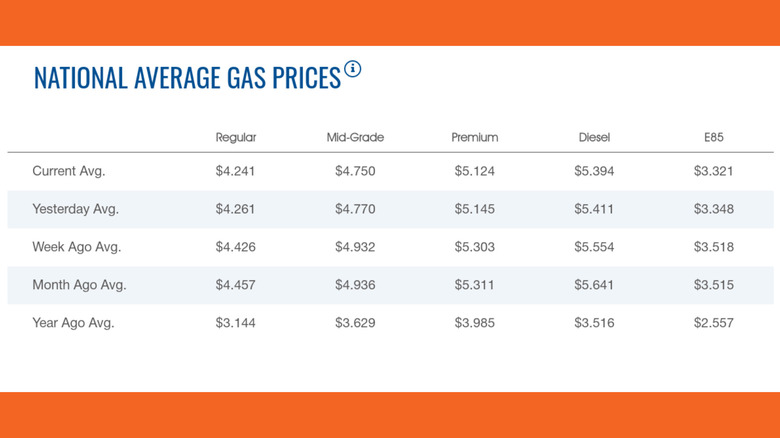
Prices are still trending down, as they will forever. Buy a Ford Excursion and get your Polymarket bets in now, or whatever it is the kids are doing.
On The Radio: Beastie Boys - 'An Open Letter to NYC'
C'mon baby, Knicks in four.