

These Are The Best Chinese EVs, According To An American Who's Driven Dozens Of Them
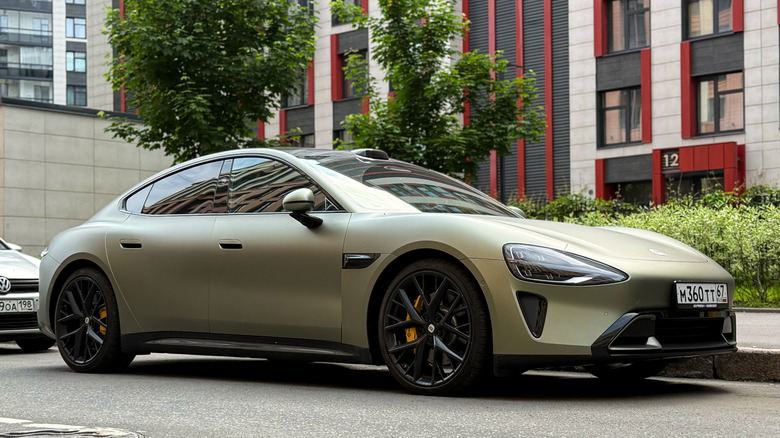
When you see stories about electric automakers in China quick-swapping batteries, building megawatt chargers that can add 250 miles of range in five minutes, and selling EVs that cost way less than even the cheapest electric options in the U.S., it's easy to get jealous. Especially since the U.S. just handed Iran control of the Strait of Hormuz, ensuring both instability and higher gas prices going forward. And from Rivian CEO RJ Scaringe to Ford CEO Jim Farley, even American auto executives tell us Chinese EVs are better. But which Chinese EVs are actually worth buying?
Currently, the U.S. bans Chinese EV sales and has even gone as far as to ban Polestar and threaten Mercedes-Benz, so there aren't many auto journalists in the States who have driven enough Chinese EVs to compare them. Our friend Kevin Williams, who writes for InsideEVs, though, is one of the few exceptions. He's traveled extensively to China and has driven more than two dozen Chinese EVs in just the last two years. That's not every single EV that China has ever produced, but it's still far more direct experience than the vast majority of Americans have with these cars. And conveniently, InsideEVs recently published a list of the six Chinese EVs he's liked the most.
We're missing out on a lot
InsideEVs' list of the six best Chinese EVs it's tested doesn't appear to be ranked or done in any particular order, nor is it exhaustive, but as the intro put it, "We're missing out on a lot. These six cars were my absolute favorites—ones that would be in my driveway, if that were possible. And I think they could resonate with other Americans too."
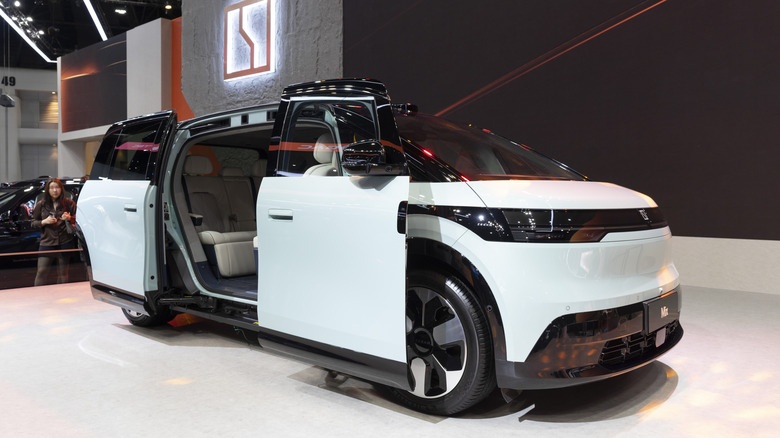
The Volkswagen ID. Buzz may have enough of a sales flop to almost immediately get canceled in the U.S., but if you like the idea of an electric minivan, China has the Zeekr Mix — one of Kevin's favorites — and apparently, it's better than the VW in every single way.
While they both share one-box van designs with sliding doors, that's where the similarities end. The Mix takes the modern van idea a step further, with three sliding doors (and one forward-hinged one), and a truly pillarless open-air design. Add in the seats that swivel around, the motorized center console with its optional table, and some impeccable finishes, and the Mix does its best impression of a rolling high-end living room. It really is an exquisite experience, and it feels like a rolling space meant for relaxing and entertaining in ways that I've never seen from any other car.
U.S. buyers probably won't flock to minivans in huge numbers just because there's an appealing electric one, but it certainly wouldn't hurt to have an option with a cabin that "bests what we've seen from full-on-luxury brands like Audi or BMW." With regulatory approval, it would be pretty easy for Zeekr to start selling cars here, since it shares a parent company with Volvo and could take advantage of the dealer network that already exists.
Small price, big appeal
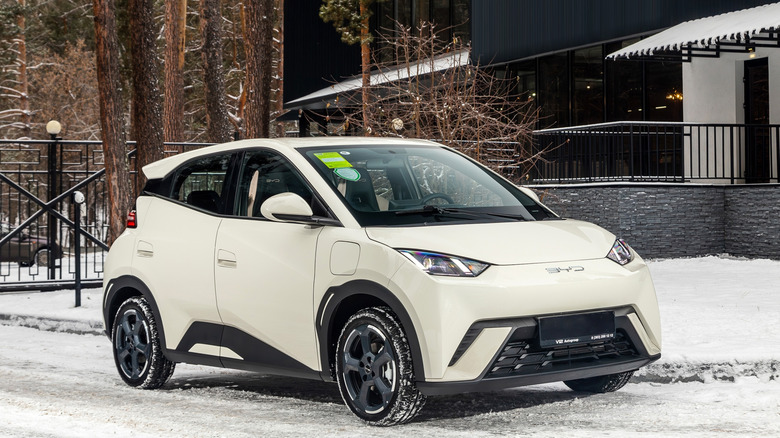
Of course, auto journalists are going to love weird, expensive minivans that don't even sell that well in their home markets. But the list includes several more-affordable EVs, as well, including the famously inexpensive BYD Seagull. Turns out, it may be slow and about the size of a Mini Cooper, but according to InsideEVs, it still packs a huge amount of value into its tiny, budget-friendly package:
It's small, cute, and well packaged, and during my test I quickly understood why at one point it was China's best-selling car. It offers a ton of value; at around $8,000 in China, you get heat, A/C, a surprisingly responsive infotainment system, and room for four adults in a remarkably comfortable package. In my experience, the Seagull never felt cheap, or poorly made, or as if BYD had cut any corners.
In fact, the Seagull even makes InsideEVs' list if you assume it would cost a lot more than $8,000 by the time it made it to the U.S.:
True, the Seagull's featherweight price has not tracked outside of China. As BYD has exported the Seagull to other markets, either as-is or in upgraded form as the Dolphin Surf (or Atto 1), prices have roughly doubled. The car I tested in Suzhou cost about $10,000 to Chinese consumers. Still, I could absolutely see myself paying $20,000 for the same experience. I predict that at that price, the Seagull could make other Americans take a look, too.
Whether BYD would sell the Seagull in the U.S. at that price still remains to be seen, but it's been several years since you could buy any new car for less than $20,000. If you want to see the rest of the list, though, you're going to have to head over to InsideEVs to give the original article a read. After all, they're the ones who drove all these cars, and they deserve the clicks.