

Automakers Are Changing How They Roll Out Over-The-Air Updates
Good morning! It's Thursday, August 6, 2026, and this is The Morning Shift, your daily roundup of the top automotive headlines from around the world, in one place. This is where you'll find the most important stories that are shaping the way Americans drive and get around.
In this morning's edition, automakers are rethinking the way they're doling out over-the-air updates to their cars, Uber reaffirms its committment to robotaxis, Honda's plants in Japan will be shut down for a few more weeks following an earthquake, and two ex-Volkswagen employees plead not guilty to insider trading over the company's Rivian joint-venture.
If you'd like a recap of the latest auto news sent to your inbox each weekday, you can sign up for Jalopnik's free Morning Shift newsletter here.
1st Gear: OTA updates shift from frequency to actual value
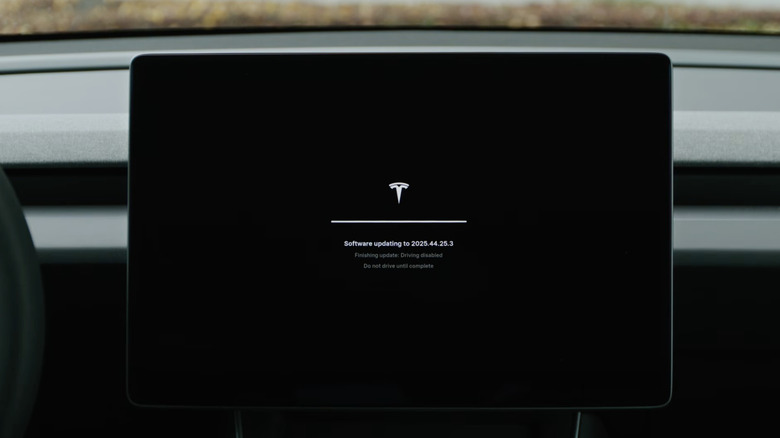
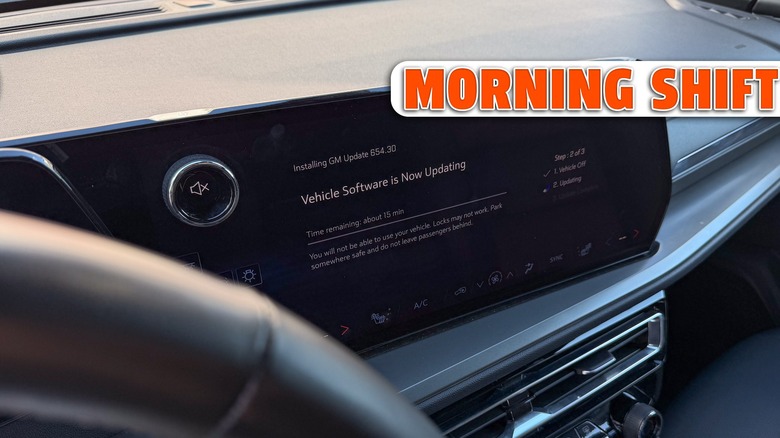
Automakers are changing the way they roll out over-the-air updates to the software-defined vehicles they've got on the road — shifting the focus from update frequency to updates that actually provide real value to the car and its owner. These updates are expected to get more comprehensive as well, moving beyond simple infotainment tweaks to things like battery management, suspension calibration and cybersecurity systems.
At the end of 2025, there were more than 450 million connected vehicles on the road, and 94% of them were equipped with some sort of built-in wireless connectivity for OTA updates. These mechanisms allow automakers to address about 70% of software-related recalls without the need for owners to go to service centers, and all of this added together means that these car companies can have a lot of effect on a car long after it has left their clutches.
There's also another angle to this: paying for otherwise locked features as a subscription — something you're not going to be a fan of. From Automotive News:
The shift reflects automakers' struggle to monetize software while meeting consumer expectations shaped by smartphone update experiences. How companies navigate this tension will define competitive advantage in the SDV era, experts say.
Gartner predicts features as a service will lose a lot of their relevance because drivers reject paying monthly fees for features such as heated seats or rear-wheel steering when the physical components are already built into the car. "Simply put, in many cases, drivers don't understand why they need to pay extra for a feature that is already embedded in the vehicle, but locked," Gartner Vice President of Research Pedro Pacheco said.
Despite consumers' resistance to paying for locked features, they increasingly expect continuous vehicle improvement through software updates. As consumers assess cars based on the speed at which new features are added and how continuously vehicles evolve during their lifespan, OTA support is gradually transitioning from a differentiator into a baseline expectation, Leena Khandelwal, senior product owner at SBD Automotive, said in a research paper. "The true differentiator is no longer just the ability to deliver updates, but the capacity to continuously create customer value through software," Khandelwal said.
But as OTA updates become more common, their benefit may decline unless they continue delivering meaningful user experience improvements, Khandelwal said.
Automakers such as Tesla show what other automakers will be able to achieve with OTAs in the future: fast rollout of many new features and functionalities, as well as continuous improvement of those. And this could be an improvement or a recall, Pacheco said.
[...]
While Tesla focuses on continuously introducing new capabilities, Ford adopts a different approach, focusing on reliable software operations and customer adoption, Khandelwal said. Instead of monthly software releases, Ford has adopted a quarterly or tri-annual update in the U.S. and Europe, respectively.
It'll be interesting to see where this all goes. For the most part, I think the whole "feature locked behind a subscription" thing for basics like heated seats and alike is pretty much dead. Customers aren't going to put up with that, but I wouldn't be surprised if automakers don't give it a try at least one more time. It's clear that they've got the tech to do it.
2nd Gear: Uber doubles down on robotaxi future
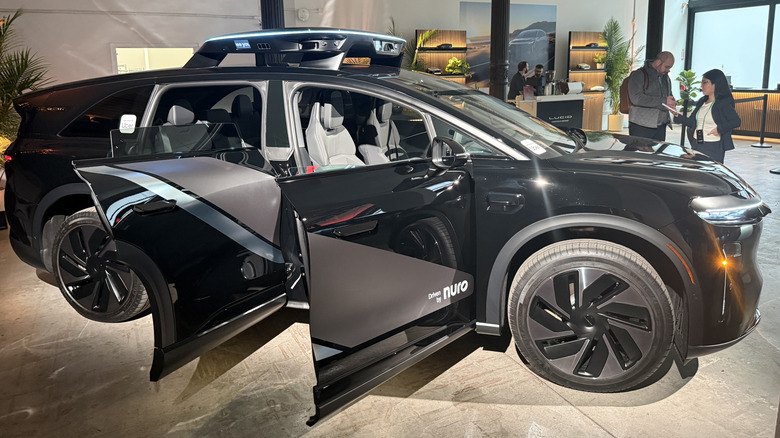
Uber is all-in on robotaxis and cementing its position by outlining its plans to spend over $10 billion on the self-driving shuttles in the coming years. It also says Waymo is still an important partner despite the fact that the Alphabet-owned company said it was ending their alliance, so something weird is going on there.
The company announced earlier this week that investment in robotaxis would largely comprise equity investments in autonomous-driving partners and balance-sheet support for fleet operators and vehicle commitments. From Reuters:
Uber CEO Dara Khosrowshahi, on a conference call with analysts, brushed off reports of Waymo considering ending their partnership, saying he expected the companies to continue operating together in Austin and Atlanta, while the ride-hailing company expanded ties with other autonomous vehicle developers.
[...]
"The $10 billion investment figure is in line with my own thinking," said Adam Ballantyne, senior analyst at Uber shareholder Cambiar Investors, adding Uber would need billions of dollars over the next four to five years to support autonomous-driving partners as they scale.
It forecast third-quarter gross bookings of $58.25 billion to $60.25 billion, broadly in line with analysts' expectations of $59.21 billion, according to data compiled by LSEG.
[...]
Uber's second-quarter gross bookings of $58.02 billion topped analysts' estimates of $57.06 billion, while adjusted core earnings also exceeded expectations.
Uber's second quarter was helped mightily by the World Cup, which had folks traveling across the U.S. who had no way of getting around other than calling one of their taxis. Revenue rose 12% to $14.19 billion, and the company said it added more first-time users over the past year than during any comparable period over the past five years. Not bad.
3rd Gear: Earthquake shutters Japanese Honda plants through late August
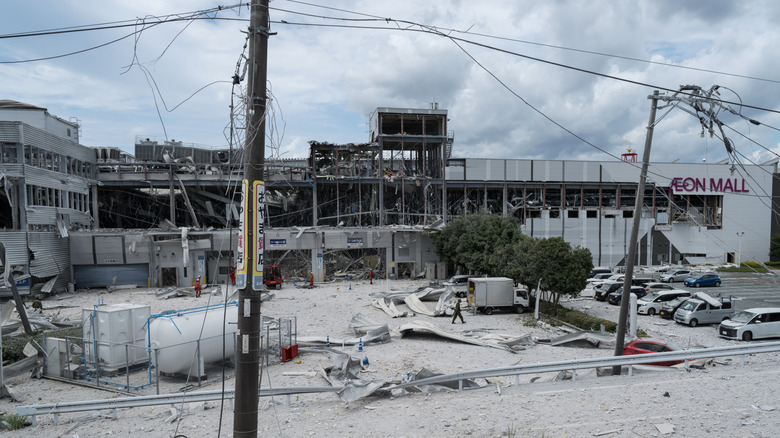
Honda's two plants in Japan are still shuttered and will remain so through mid-August as the automaker struggles to secure parts from a damaged supplier following a deadly earthquake at the end of July. The news comes despite the fact that Toyota, Nissan, and Mitsubishi have all come back online this week.
Honda will be down in Japan through August 19 at the very least, and there's no timeline for restarting production after a 7.1-magnitude earthquake hit the southwest main island of Kyushu — snarling the bulk of Japan's auto industry. It deeply hurt the supply of everything from door components to semiconductors. All in all, the factory suspensions will likely impact the output of about 20,000 vehicles. From Automotive News:
Even as much of Japan's auto industry returned to normal, Honda said its two assembly plants in Japan, the Yorii plant in Saitama north of Tokyo and the Suzuka plant in Mie south of Nagoya, would remain down through Aug. 19. The shutdown will result in only six days of lost output at Yorii and five as Suzuka, however, because it overlaps with summer holidays the week of Aug. 10.
CFO Masao Kawaguchi said Aug. 5 that dampers remain one of the key affected components. One bottleneck is a damaged plant operated by Honda-affiliated supplier Astemo.
[...]
Honda is still evaluating when it might restart auto output and did not specify how many vehicles it might lose.
Yorii makes the Civic compact car, Prelude coupe, Freed minivan, HR-V and ZR-V compact crossovers and Step WGN family hauler. The Suzuka plant specializes in minicars, including the Super-One sporty mini EV.
At the very least, we shouldn't feel much of an impact Stateside. American Honda says there is no impact on U.S. inventory, and the automaker only exports a handful of vehicles from Japan to the U.S., like the Civic Type R and Prelude. In fact, in the first half of 2026, Honda imported just 5,637 vehicles from Japan — accounting for less than 1% of its total U.S. sales.
4th Gear: Ex-VW workers plead not-guilty to Rivian joint venture insider trading
A couple of former Volkswagen engineers have pleaded not guilty to charges that they made a combined $300,000 off of trading on secret information that the German automaker was planning a $5 billion joint venture with U.S. electric vehicle maker Rivian. From Bloomberg:
The engineers, Michael Stamp and Marcus Plank, both in the US on assignment from Germany, are charged with conspiracy and securities fraud. They entered not guilty pleas at a hearing in Manhattan Tuesday.
The deal between Volkswagen and Rivian was announced June 26, 2024, causing Rivian's stock price to jump 23%. That allowed Stamp to make $250,000 while Plank cleared $50,000, according to the government. Plank is also alleged to have passed the information to a family member who made $12,000.
Stamp, 31, and Plank, 45, who were both living in San Jose, California, face as much as 25 years in prison if convicted of the most serious counts. They're each free on $500,000 bond.
Stamp's lawyer told the judge Tuesday that his client is likely to relocate to the New York area to await trial, which may take place in early 2027. Stamp is unemployed as a consequence of the charges and is living in an Airbnb, with roommates.
Federal prosecutors said the duo's internet search history around the time of Rivian and Volkswagen's tie-up showed that they knew their conduct was illegal, according to a separate Bloomberg article. Stamp apparently searched for "statute of limitations insider trading" just eight days before the announcement, and Plank's family member searched in German "how is insider trading prosecuted?" after the deal was announced.
It doesn't exactly sound like these guys were Jordan Belfort.
Reverse: The GOAT
 History.com
Nobody was moving like LBJ while he was in office. You just sort of have to ignore the Vietnam stuff, which was — admittedly — very bad. If you do that, he's one of the most progressive Presidents in history. Who knows where this country would be without him, especially in the wake of the Kennedy assassination. If you want to learn more about Johnson and the Voting Rights Act, head over to History.com.
The Fuel Up
Friends, we're moving in the right direction. Gas prices are coming back down — inching ever-closer to that magic $4 mark as a deal to reopen the Strait of Hormuz comes into focus. At the same time, WTI Crude Oil futures and Brent Crude prices have retreated slightly, and were sitting at $76 and $81, respectively, at the time of publication.
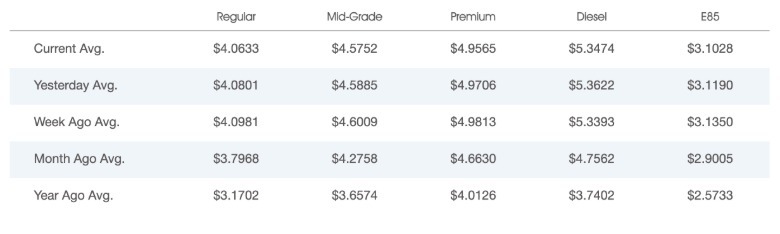
Here's where national average prices stand right now, according to AAA:
 AAA
AAA
This all means that the average price of a gallon of regular gas dropped another 2 cents overnight to $4.06, according to AAA. We hit a plateau around $4.10 for over a week, but whatever was keeping prices there seems to have come undone.
On the radio: Oasis - Acquiesce
It has now been about a year since I saw Oasis in concert, and I so desperately need them to go back on tour. Fellas, please remember how much you like money. I want to give you more of it. Please.