

Don't Believe Their Lies, Lots Of Great Cars Were Made In The '70s
Nostalgia is a hell of a drug. Your vision of everything through the rose-tinted glasses of age is a memory, a facsimile of reality. It didn't really go down like that. If you lived through it, you're remembering the glory of youth. If it was before your time, it was always simpler back then.
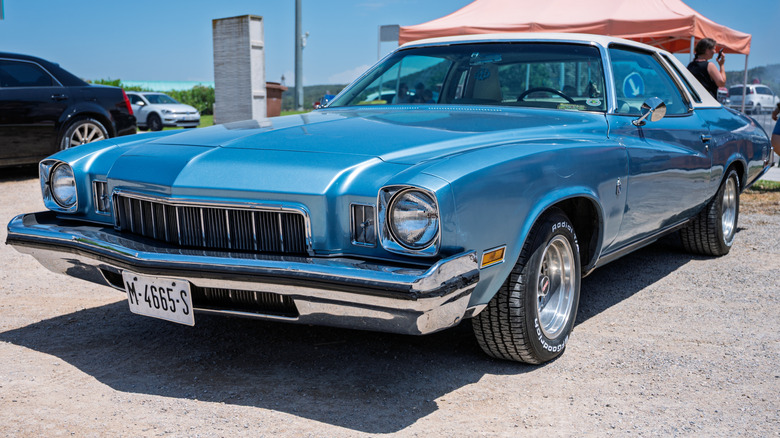
So 1990s cars weren't as good as you remember. This is even more true for cars of the '80s. Both are highly revered decades for automotive enthusiasts, but 1970s car seem to have gotten something of a bad rep, at least partially due to the dual oil crises and the rise of the Environmental Protection Agency's emissions regulations. When you think of cars from the 1970s, you're probably thinking about the Buick Regal shown here, a big bloated V8 boat with less horsepower than some modern three-cylinder economy cars. And when people do look fondly on the '70s, their love usually stops at 1973.
The thing is, cars from the 1970s are way better than you remember them to be. Not everything was perfect, but there was greatness. So let's see if we can't jog your memory with a trip through some of the era's greatest cars. Here are three from each auto-making region to represent the era, one each from a trio of tax brackets: one affordable, one attainable dream, and one expensive.
Before you keep scrolling, do a quick mental exercise. Try to think of some truly great pieces of automotive history that were born in the 1970s. This thought exercise isn't for cars carried over from the 1960s that happened to still be made when the '70s hit, but new or substantially revised cars of the decade. Whaddya got?
The Americans
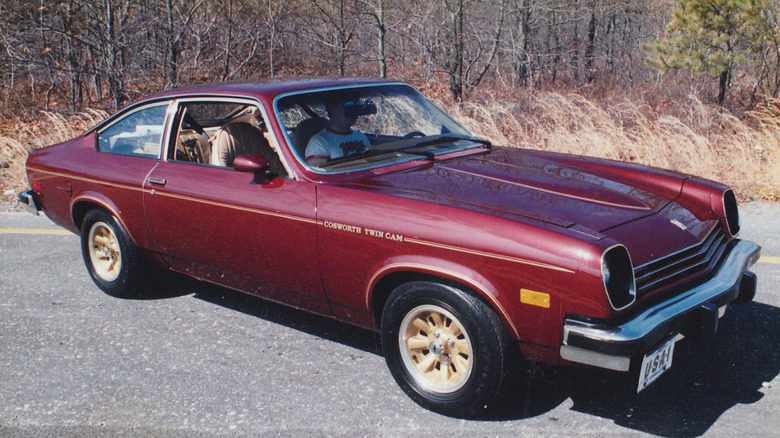
1976 Chevrolet Cosworth Vega
Less than a fifth of 1% of Chevrolet Vega production across 1975 and 1976 received a Cosworth-sourced alloy-block four-cylinder with a twin-cam cylinder head. The engine was a little gem, removing some 60 pounds from the front of the car while producing an impressive 110 horsepower and redlining at 6,500 rpm. Early Vega models were prone to rust and consumed head gaskets with alacrity, but by the time the Cosworth rolled out in 1975, those issues had mostly been handled.
As Hemmings put it in a period review, "Two million Vegas were built between 1971 and '77, and if they'd started out with the power and build quality of this one, the Vega name would have been a legend rather than a punchline."
1979 Ford Mustang Indy 500 Pace Car
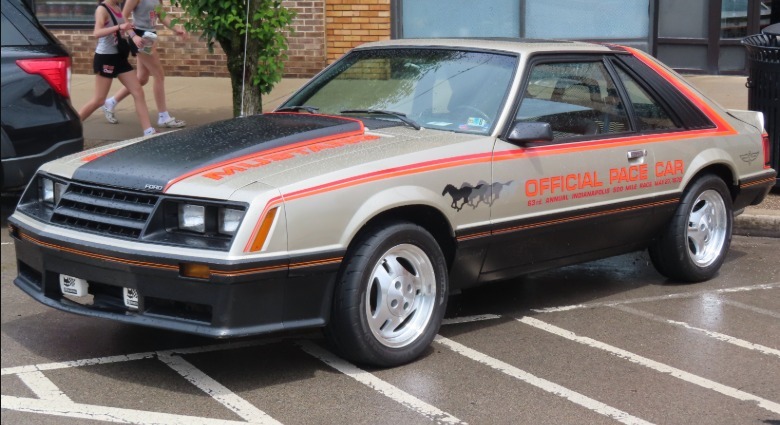
While the mid-1970s Mustang II was a knee-jerk response to the oil crisis, Ford got it right with the 1979 introduction of the now-revered "fox body." On launch Ford pulled out all the stops and pushed the car to be the Indianapolis 500 pace car. You could order it with either the 2.3-liter four-cylinder turbo engine (130 hp) or the 5-liter V8 (140 hp), both with four-speed manual transmissions. Ford made 10,479 pace cars, all with a unique air dam, fog lights, a cowl-induction hood, and Recaro bucket seats.
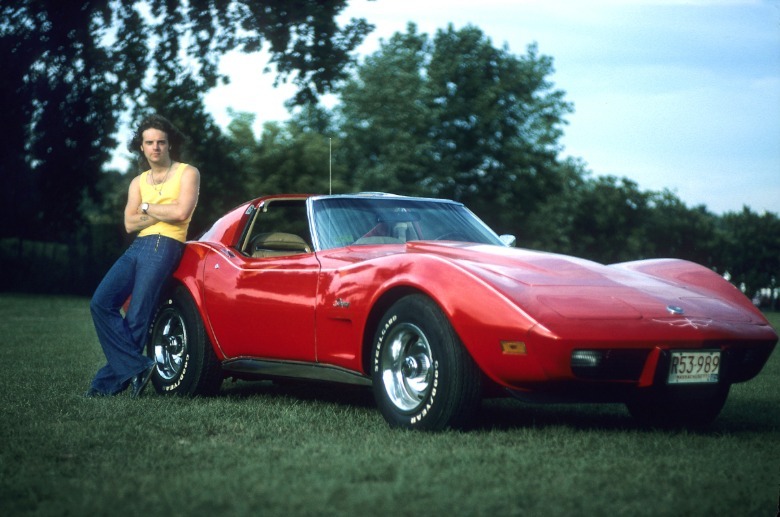
1974 Chevrolet Corvette 454
 Ron Pownall/Getty
Following the oil crisis, 1974 was the last year for the short-lived 7.4-liter big-block Corvette, and the first year of the car's urethane rear bumper covers. It was a time of transition for America's sports car, but it weathered the storm well. It was big and heavy, but among the quickest things on the street in its day. Big engine can't lose, except at the pump.
The Japanese
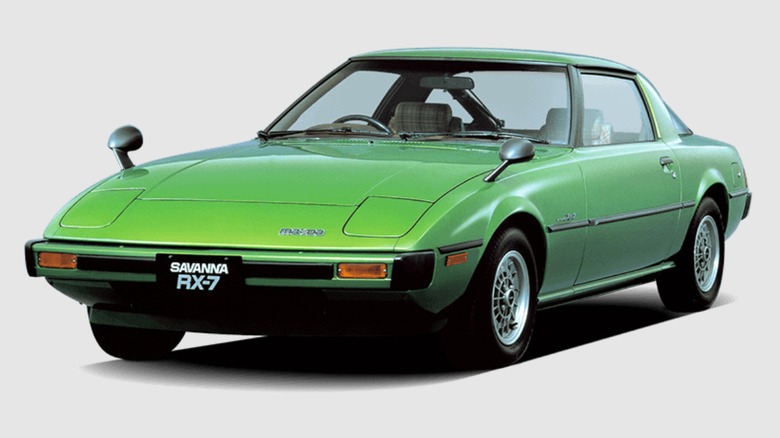
1978 Mazda Savanna RX-7
It took much longer than it should have for Mazda to build a small, lightweight sports car follow-up to its Cosmo of the 1960s. While the company had built plenty of rotary-engined cars between them, they were more upright sedans and coupes. The now-iconic RX-7 started out as the simple, wedgy Savanna. The tiny 12A twin-rotor engine produced around 100 horsepower and revved like mad. While America was all-in on economy cars in this period, Japan was innovating in the land of sports cars and fun.
1976 Honda Accord
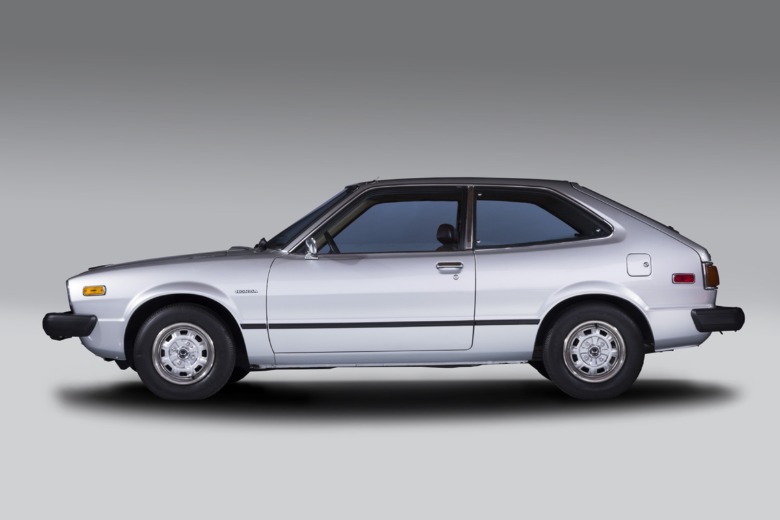
The first-generation Honda Accord was little more than a long-wheelbase Civic, and sold well because of its ability to fit a family while achieving stellar fuel economy. The 2,000-pound machine wasn't exactly quick or particularly fun to drive with just 68 horsepower, but this was the car that really mainstreamed Japanese machines for the American market.
1973 Nissan "Kenmeri" Skyline GT-R
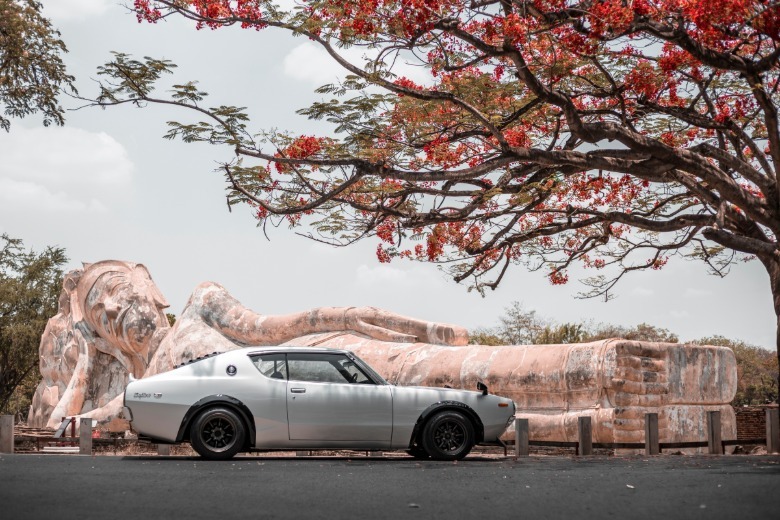 Serialone/Shutterstock
Produced for just four months in 1973 before meeting its death at the hands of Japan's stringent emissions requirements, the 2-liter S20 inline-6-powered second-generation Skyline GT-R was equal parts beautiful and powerful. With 158 high-revving horsepower in a 2,524-pound package, the GT-R was a riot on the street and a beast on the track. Unfortunately fewer than 200 examples were built.
After the demise of the Kenmeri, Skyline GT-R production ended until the well-regarded R32 generation bowed 16 years later, in 1989. Of the six generations of GT-R Nissan produced, I still think this is the best-looking. I often wonder what the GT-R might look like today if Nissan had continued developing the car with an emissions-compliant engine instead of killing it off.
The Euros
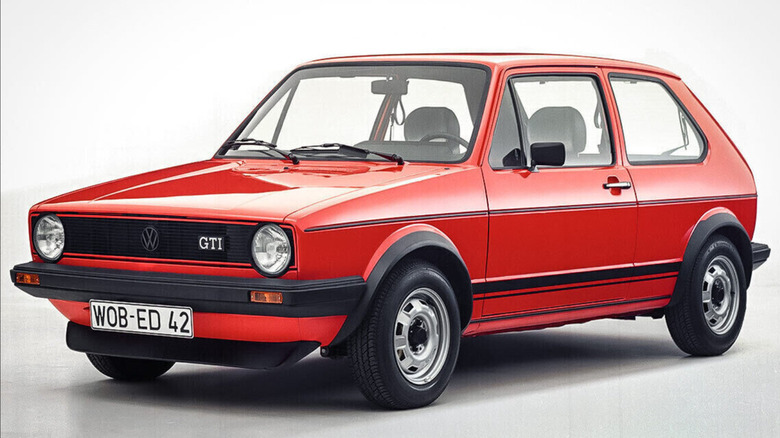
1976 Volkswagen GTI
Come on, hot shot, this is acclaimed as the first hot hatch to ever hit the market. You didn't think it would be left out, did you? Volkswagen's follow-up to the iconic Beetle people's car was the innovative, wonderful front-wheel drive Golf/Rabbit. The hopped-up GTI model was the perfect car for the 1970s, delivering quick and engaging driving without burning too much fuel, and it remains one of the most fun cars on the road today. For me, this is the high-water mark of this list.
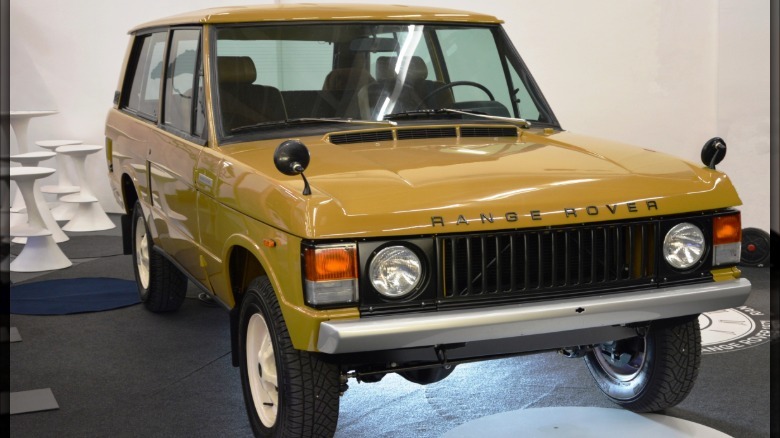
1970 Land Rover Range Rover
 AJ165/Shutterstock
For all its influence on the car market today, the original Range Rover is maybe the most important car on this list. Without it, the world might never have known the joys of off-road driving in a comfortable environment. A '70s Range Rover won the first Paris-Dakar Rally, for Pete's sake. There was nothing like it on the roads, and arguably there still isn't. This was the ultimate in British engineering, and it still looks tremendous all these years later.
1974 Lamborghini Countach
Marcello Gandini's original LP400 Periscopio Countach is, in my opinion, the best styled supercar of the era, perhaps ever. It looks quite pure without the later impact bumpers, the massive fender flares, the wing, and the power bulge on the engine lid. This, to me, embodies the 1970s Italian aesthetic, with wedgy but simple styling and entirely too much power for the chassis to handle. There aren't enough superlatives to throw at the early, unadorned Countach models. Just give yourself over to the magnificent sound and vision of this piece of art.
Obviously there are many more — these are just nine of the great cars the 1970s offered. Maybe you'll remember the decade a little more fondly now.