

Here's How A French Rally Driver Won The First Paris-Dakar In A Range Rover
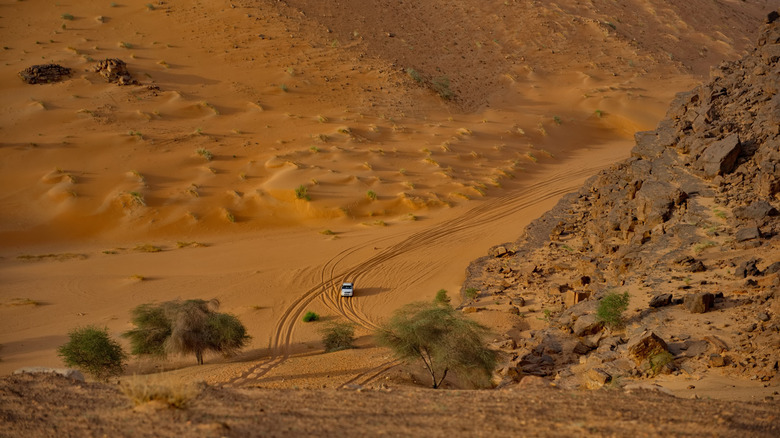
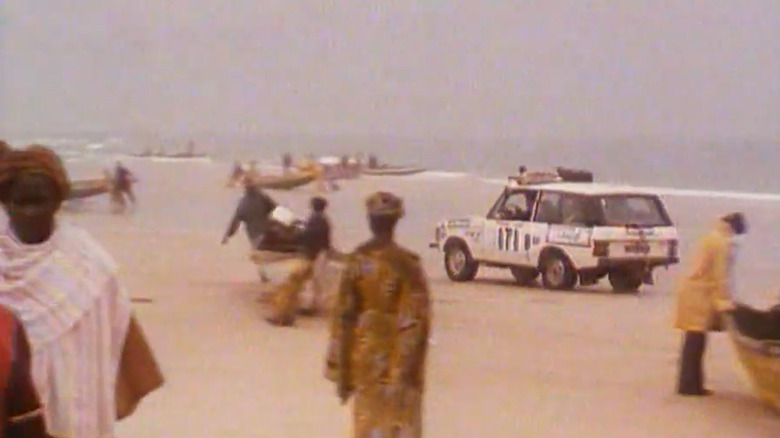
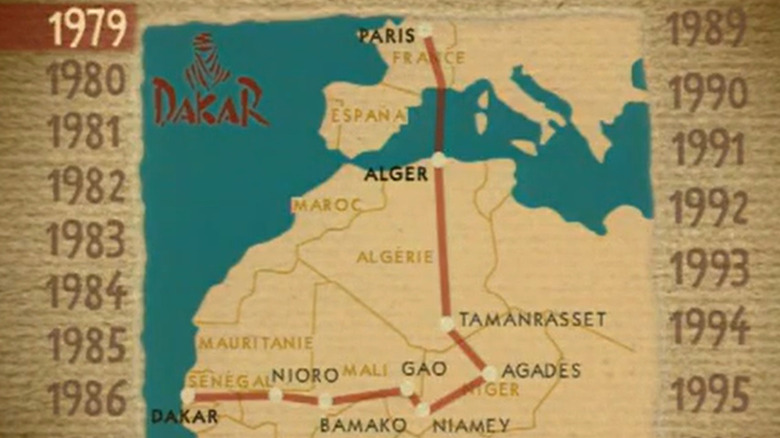
Only one major international rally raid has risen to the standard of household name. Even people who don't know very much about racing have heard of the grueling Dakar. The first one kicked off the day after Christmas in 1978, with some 182 vehicles convening at the start line in Paris. Only 74 of them made it to the finish line in Dakar, Senegal. After over 6,200 miles of competition, with many competitors losing the path, the first four-wheeled vehicle to cross the line was the remarkably unremarkable No. 162 Range Rover of Frenchmen Alain Génestier, Joseph Terbiaut and Jean Lemordant.
Génestier was working as a power line supervisor in the region, meaning he drove over 60,000 miles per year across much of West Africa, earning knowledge of the terrain and navigating the unpaved arena. As a Datsun enthusiast, he'd previously driven a number of Z cars in rally competition as a non-professional entrant. When Theirry Sabine announced the first Paris-Dakar Rally, Génestier knew he needed to compete.
Team financier Terbiaut was convinced to fund an effort in the inaugural Dakar. Despite his affinity for Z cars, Génestier wanted a 4x4 to cross the gnarly dunes and scrub of Saharan Africa. The team sourced a used Range Rover V8 and handed it off to Génestier's usual rally co-driver, Jean Lemordant, a Mini/Austin specialist shop owner in Paris, to prepare for the event. Prep was minimal, with three racing buckets installed for the trio, a second fuel tank and steering dampers added, and a winch bolted to the front, though reportedly never used. Otherwise it was pretty much a stock Range Rover. They even retained the stock wheels.
How did the rally go?
On the December 26, 1978 the rally began with a short trek to the Autodrome de Linas-Montlhéry for the first stage of the race. The racetrack played party to the only European stage of the inaugural event, with each team setting an opening time on the 3.6-kilometer track to help set running order once they entered Africa. Being a mostly stock Range Rover did the 162 team no favors, setting just the 80th fastest time, mostly behind the field of motorcycles.
When the rally moved on to Algeria, the Range Rover started its assault on the rankings with good finishes across the first week of competition. With just two days of competitive driving under their belt, the team had moved into the overall lead at the close of January 3 with impressive runs into In Salah and In Guezzam (though winning neither). The next day, however, was a disaster as the truck bogged down to its axles in fech fech, a very fine clay-limestone powder found in Niger. The trio of Frenchmen had neglected to pack so much as a shovel, and thus had to trek to a nearby town to purchase one.
The team managed to overcome much of its time lost digging out of the sand, but the fastest of the two-wheelers had pulled ahead. Among the four-wheeled competition, they faced off against Christophe Neveu (brother of eventual five-time motorcycle-class winner Cyril Neveu) — also in a Range Rover — and the Marreau brothers in their Renault 4 rally car. At the end of January 14 the French trio pulled their Range Rover into Dakar just behind the Motorcycle podium as the first four-wheeled winner of the rally.
So what was their secret?
The trio's choice to use a Range Rover wasn't a unique one, as it was among a field of 13 Range Rovers in various states of preparation. With V8 power and four-wheel drive it's a torquey and maneuverable effort on every terrain. It wasn't ever really the fastest car on the course, as the trio only won a single day's stage of the three-week rally. But aside from a few hours stuck in the fech fech, the team never really faced much in the way of adversity.
By getting near to the front in the first desert stage, Génestier's team had early morning start times every day, finishing each stage before nightfall. They never strayed from the course, never got lost, never pushed the car too hard, never broke anything, and found time each night to rest and eat before attending to the car's needs. His familiarity with African roads and terrain certainly helped as well, avoiding getting stuck and hitting the worst of the sinkholes. It wasn't outright speed that won them the event, but consistency and smooth driving.
In spite of their victory, neither Terbiaut nor Génestier ever competed in the Dakar again. Lemordant would come back twice, finishing 43rd in 1983 and DNFing in 1984. Monsieur Terbiaut apparently took the Range Rover with him to South America when he moved there for work. The Range Rover was a winner of perhaps the most important rally raid in history — significance that still continues.
In an era when major international motorsport was still something you could do with a few friends, a stock car, and a wild idea, they won.