

EV Sales Only Fell A Little Bit In May, And That's Actually An Improvement
Good morning! It's Monday, July 20, 2026, and this is The Morning Shift, your daily roundup of the top automotive headlines from around the world, in one place. This is where you'll find the most important stories that are shaping the way Americans drive and get around.
In this morning's edition, EV registrations are down, but they're not down as much as they could be, and that's a positive sign for the segment. Also, Canadian Ford workers have ratified a new three-year union contract, Honda is thinking about adding a new factory in North America and the Blue Oval has issued three new recalls covering over 620,000 vehicles.
Oh, and if you want a recap of the latest auto news delivered to your inbox each weekday morning because life is busy and you can't always head to our website, you can sign up for Jalopnik's free The Morning Shift newsletter right here.
1st Gear: EV registrations are only sort of down year-over-year
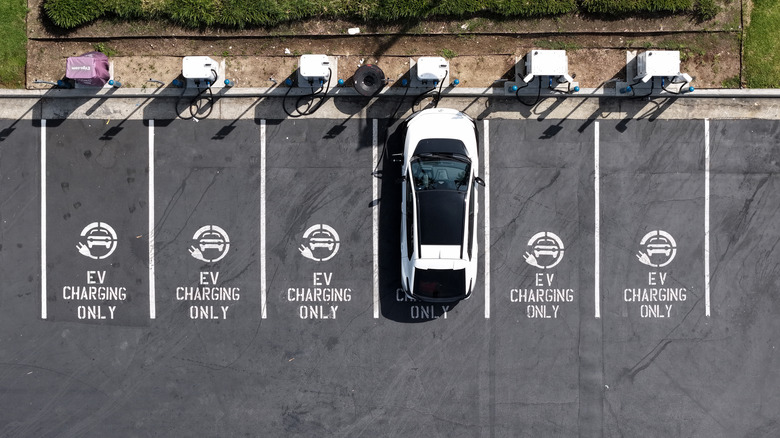
Usually, when we tell you something's sales were down year-over-year, that's categorically a bad thing, but have you ever considered that might not always be the case? What if past sales have been so dismal that even a slight downturn could be looked at as a positive? That's exactly what we're dealing with when it comes to new electric vehicle registrations. They somewhat rebounded in May following a looooong slump that was brought on by the death of the federal tax credit at the hands of President Trump. Buyers have slowly returned to the EV market as automakers pile on incentives.
May 2026 EV registrations were down just 0.7% from the same in 2025 to 98,684 vehicles. That marks the smallest decline in eight months, according to data from Mobility Global. The recovery was driven by the short memories folks seem to have when it comes to Tesla, which enjoyed a 55.2% share of the EV segment — a 12% increase YoY. That being said, it wasn't the only automaker doing comparatively well. From Automotive News:
Hyundai's May registrations also rose 27 percent to 6,027, good for second place. Toyota saw a 234 percent jump to 3,867 vehicles, claiming the No. 6 spot among EV brands in May, the data showed.
Overall, battery-electric models captured 7 percent of the light-vehicle market in May, a decline of 0.1 percentage point from a year earlier. The data does not include gasoline-electric hybrids.
"Title: US hybrid registrations jumped in March 2026 – ongoing trend or reaction to fuel price anxiety?" target="_blank">[...]
In the January-to-May period, EV share of the light-vehicle market fell to 5.9 percent from 7.3 percent a year earlier as registration volume dropped 23 percent to 392,136 vehicles, the data showed.
Mobility Global forecasts 2026 EV share at 6.8 percent, below 2025's 7.8 percent and 2024's 8 percent. Libby expects only "very slow growth" in EV share through the early 2030s.
Industry analysts had expected the EV market to stabilize this year after the wild swings in the second half of 2025, when consumers first rushed to qualify for the EV tax credit, followed by a plunge in demand.
The recovery has been slow but steady. EV registrations fell 41 percent in January from the year-earlier month, 37 percent in February, 25 percent in March and 9.8 percent in April, Mobility Global said.
[...]
Average incentives for new EVs in May were mostly unchanged from a year earlier at $7,611 per vehicle, while the average transaction price fell 4 percent from a year earlier to $54,532, Cox said. Incentives represented 14 percent of the average EV price in May.
The top five automakers in May in terms of EV registrations were Tesla with 54,448 registrations (up 27%), Hyundai with 6,027 registrations (up 27%), Rivian with 4,686 registrations (up 21%), Chevrolet with 4,462 registrations (down 47%) and Cadillac with 4,037 registrations (up 3%).
2nd Gear: Unifor union workers lock-in contract with Ford
5,150 Unifor union-represented autoworkers in Canada have officially ratified a new three-year contract with Ford following a 74% vote in favor of the new agreement. The agreement is set to run through September 19, 2029, and it is expected to give union members a 3% wage increase in each year of the contract, improve job security and increase pensions, among a slew of other benefits.
In a statement, Ford CEO Jim Farley said the contract is about investing in Ford's employees and Canada's future. As part of the contract, Ford will invest half a billion dollars in its Windsor Operations and Essex Engine Plant, where it builds engines for the F-Series. It'll also pour $400 million into retooling its Oakville Assembly complex to bring in a new stamping operation, as production of the Super Duty is expected to start at Oakville in the third quarter of this year and continue through the lift of the agreement. From the Detroit Free Press:
"With this agreement and our continued investments in Oakville, Windsor and Essex, we're building on more than a century of manufacturing leadership in Canada and strengthening Ford's ability to compete and win for years to come," Farley said. "A strong, integrated North American manufacturing system is essential to our competitiveness, and a revised USMCA (United States Mexico Canada Agreement) is critical to fending off the cost and currency advantages enjoyed by imported vehicles from Korea and Japan."
The new contract means production employees' base wages will grow to more than $50 an hour over the life of the agreement. Skilled trades workers' base wages grow to more than $62 an hour. But union leaders point to Ford's investment as the biggest win.
[...]
The agreement's job security provisions also include the renewal of a no closure agreement and program commitments at all Ford facilities, including adding a third shift at the Essex Engine plant forecasted for 2029.
[...]
The union entered talks knowing it would likely not win the same 2023 record-setting wage gains this time around given the economic uncertainties. But members were seeking fair economic progress on wages and pensions, the promise of products for job security and the union said it will not make concessions in this next contract.
In the states, the UAW's contract with Detroit automakers does not expire until May 1, 2028, but the union and lawmakers are watching what Unifor wins closely.
In fact, ahead of negotiations, as the Detroit Free Press reported last month, Payne had called the talks "the most consequential" of Unifor leaders' lifetimes. That's because of the challenges the auto industry faces this year as the United States Mexico Canada Agreement continues unchanged, the U.S. war in Iran remains unresolved and there continues to be 25% tariffs put in place by President Donald Trump for all vehicles and car parts imported into the United States.
I'd just like to wish all of my fellow workers of the world a very happy "Solidarity Forever."
3rd Gear: Honda looking at another North American factory
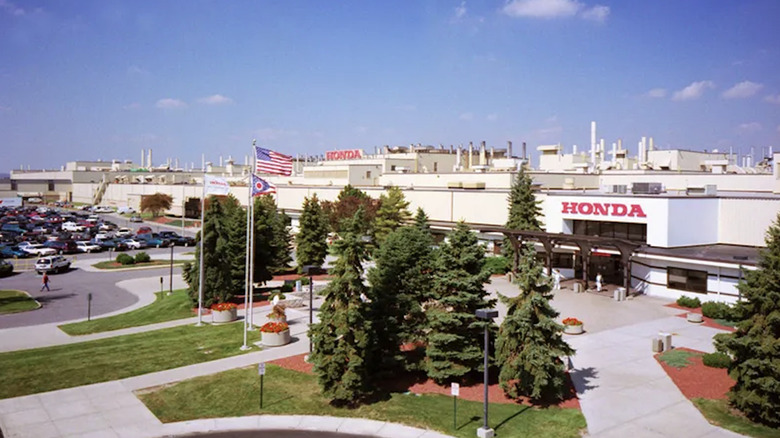
According to CEO Toshihiro Mibe, Honda is mulling over the idea of spinning up an eighth assembly plant in North America. After all, North America is Honda's largest and most profitable market — accounting for just about 40% of the company's global sales last year, and its factories in the U.S., Mexico and Canada are already running at maximum capacity.
Another plant could certainly be useful for Honda — adding in critical breathing room for supply chain resilience and sales growth, something it'll definitely need if it wants to keep up the domination it's been seeing with vehicles like the CR-V. From Automotive News:
"It's almost in full production," Mibe told Japan's Yomiuri Shimbun. "If you don't have a buffer, you can't recover production."
[...]
"I want to increase the number of sales in North America a lot," Mibe said in the interview published July 18. "The basic idea is to produce in a place where there is demand."
In the U.S., American Honda is targeting more than 9 percent market share in 2026 and expects to outperform the industry.
Honda's U.S. factories in Ohio, Indiana and Alabama operate at 85 percent of their 1.2 million total vehicle capacity, according to GlobalData. The automaker's total North America factory utilization rate stands at about 90 percent of a maximum 1.8 million units.
A Honda spokesperson said the company is "continually evaluating" its production requirements.
"The possibility of a capacity increase is always a consideration for the future growth of our automobile business in North America," the spokesperson said. "However, no decisions have been made regarding a new U.S. plant."
This strategic reset comes just a couple of months after Honda indefinitely suspended plans for a $15 billion electric vehicle and battery production hub in Ontario — part of a broader strategic do-over toward a lineup more heavily reliant on hybrids rather than EVs. All in all, the company tallied up about $15.8 billion in write-offs, handing it its first annual loss in nearly 70 years, and it nearly cost Mibe his job.
4th Gear: Ford recalls close in on 13 million
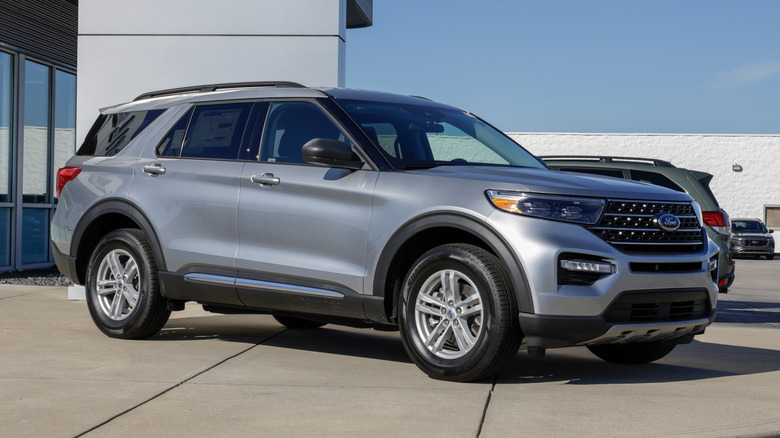
July hasn't been kind when it comes to Ford recalls. The automaker just issued three separate do-overs impacting a total of 621,540 vehicles. The first involves roof rail covers detaching from 288,314 2016-2019 Explorers, the second has to do with a trailer brake light issue on 315 integrated trailer model kits and the third impacts 387,911 2020-2027 Aviators and 2020-2026 Explorers with second row seats moving unexpectedly. Here's what the National Highway Traffic Safety Administration says about each:
Summary:
Ford Motor Company (Ford) is recalling certain 2016-2019 Explorer vehicles. The roof rail covers may come loose and detach from the vehicle.
Remedy:
Dealers will inspect the roof rail covers and as necessary, repair or replace the push-pins, rail clips, or roof rail covers, free of charge. Interim letters, notifying owners of the safety risk, are expected to be mailed August 24, 2026. Additional letters will be sent once the remedy is available, anticipated in September 2026. Owners may contact Ford customer service at 1-866-436-7332. Ford's number for this recall is 26S54. This recall expands previous NHTSA recall number 21V316. Vehicle Identification Numbers (VINs) involved in this recall became searchable on NHTSA.gov on July 16, 2026.
Trailer Brakes and Lighting May Be Lost
Summary:
Ford Motor Company (Ford) is recalling certain ITRM accessory kits with part number RL3Z-19H322-AA, ML3Z-19H322-AA, AB, BA, BB, CA, and CB that were sold as aftermarket accessory kits for Ford 2021-2026 F-150 vehicles. The integrated trailer module (ITRM) may lose communication with the vehicle, causing a loss of brake function, turn signals and brake lights. As such, these vehicles fail to comply with the requirements of Federal Motor Vehicle Safety Standard number 108, " Lamps, Reflective Devices, and Associated Equipment."
Remedy:
Dealers will update the ITRM software, free of charge. Owner notification letters are expected to be mailed August 3, 2026. Owners may contact Ford customer service at 1-866-436-7332. Ford's number for this recall is 26C35.
Second-Row Seat May Move Unexpectedly
Summary:
Ford Motor Company (Ford) is recalling certain 2020-2027 Aviator and 2020-2026 Explorer vehicles. The switch for the easy-entry second-row outer seats may bind or stick, resulting in the seats unlatching, tipping, or sliding unexpectedly.
Remedy:
Dealers will inspect and replace the bezel around the switch as necessary, free of charge. Interim letters explaining the safety risk are expected to be mailed July 27, 2026. Additional letters will be sent once the remedy is available, anticipated in January 2027. Owners may contact Ford customer service at 1-866-436-7332. Ford's number for this recall is 26S52. This recall expands Recall 25V393. Vehicle Identification Numbers (VINs) involved in this recall became searchable on NHTSA.gov on July 16, 2026.
These three now mark recalls number 57, 58 and 59 for Ford so far in 2026, and they bring the Blue Oval's total recalled vehicles for the year to a whopping 12,873,721 units. That's, uh, a lot.
Reverse: Was it worth it?
 History.com
I love "Die Hard." It's one of the quintessential '80s action movies, and I'm eternally thankful it made Willis a star, but if I could do it all over again, I'd make sure this movie was never made for one simple reason: I hate the "Is 'Die Hard' a Christmas Movie?" discourse with every fiber of my being. It's like the "Is a hot dog a sandwich?" conversation. I don't care. It's a boring conversation, and anyone who thinks it's interesting is a boring person. Talk about literally anything else. I'm begging you. Anyway, if you want to learn more about "Die Hard," head over to History.com.
The Fuel Up
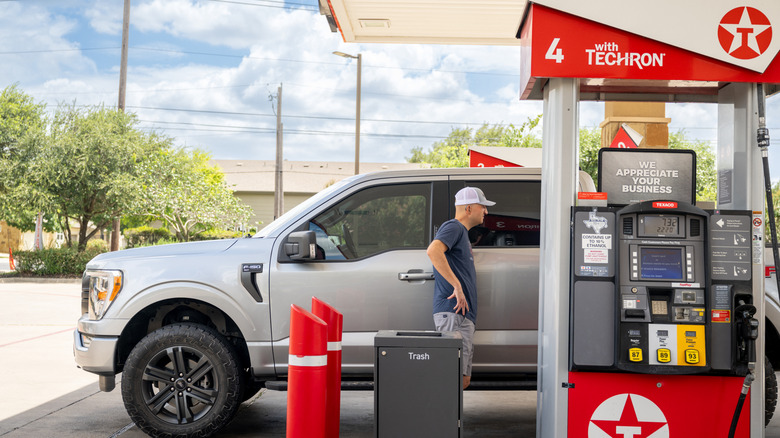
Welp, we should have all seen this coming from a mile away. The average price of a gallon of gas has once again hit the wrong side of $4 as the U.S. and Israel's war with Iran continues with no real end in sight. Fuel costs across the world are up, with WTI Crude Oil futures and Brent Crude prices hitting $81 and $88, respectively, at the time of publication.
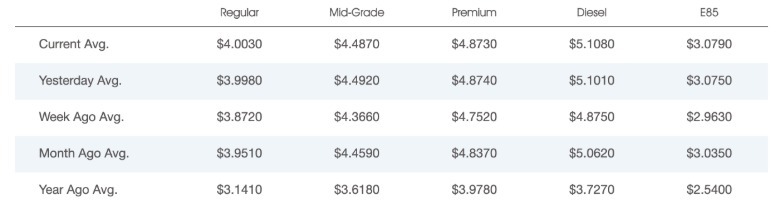
Here's where national average prices stand right now, according to AAA:
 AAA
AAA
What this all means is that the national average price for a gallon of regular gas was up another fraction of a cent overnight — currently sitting at $4.00 flat, according to AAA. At least we're still down 56 cents from the 2026 record we set back on May 21. It's just a matter of time, though.
On the radio: Bruce Springsteen - 'Born to Run'
My dear friends, Holly and Frank, got married this weekend at the Jersey Shore, and there may be no greater feeling in the world than belting this song out with a group of your closest buddies. I'll be chasing how this made me feel for the rest of my life, because it was truly magical.
Congrats, guys. I love yous.