

Big Three Automakers Accuse The EU Of Blocking Full-Size Truck Imports And Going Against The 'Spirit' Of Trump's Tariff Deal
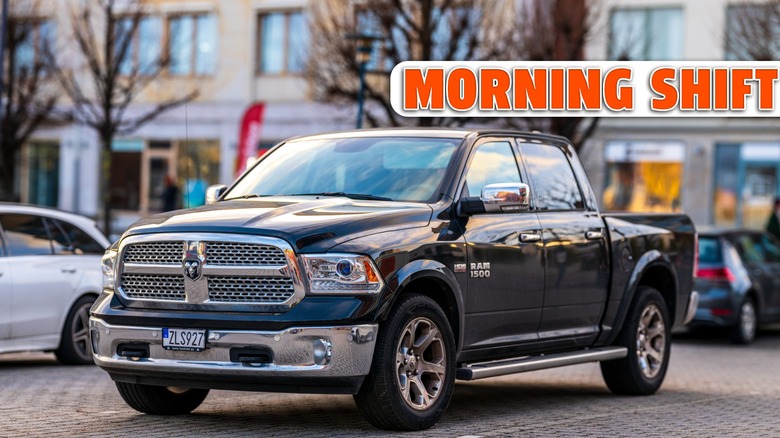
Good morning! It's Wednesday, April 8, 2026, and this is The Morning Shift, your daily roundup of the top automotive headlines from around the world, in one place. This is where you'll find the most important stories that are shaping the way Americans drive and get around.
In this morning's edition, the Big Three automakers say the European Union is blocking their massive trucks from entering the bloc and violating tariff deals, the Trump administration tells Ford to get bent over aluminum tariff relief, Stellantis wants its dealers to actually know what the hell they're selling and it's in advanced talks with China's Leapmotor to build an Opel EV.
1st Gear: Big Three are ticked at the EU over truck tariffs
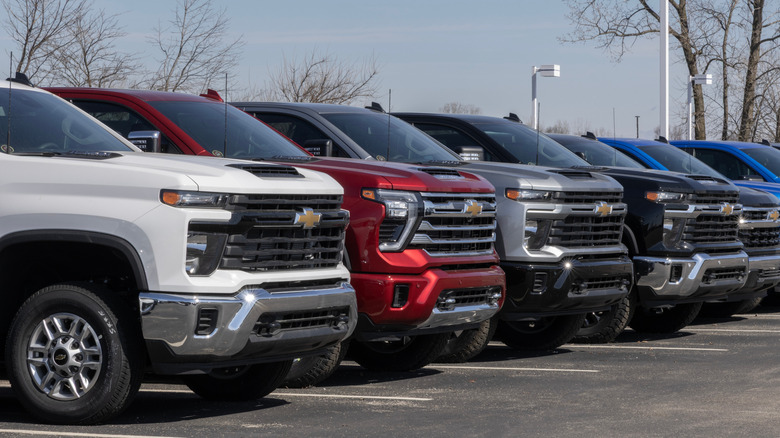
The Big Three automakers are none too pleased with the European Union, accusing the bloc of keeping their full-size pickup trucks off European roads, and leading to one unnamed executive to claim the EU is in "a better position" than the U.S. in the trade war started by President Donald Trump. Of course, this is all a bit silly.
I mean, these trucks account for less than 0.1% of the entire European car market, and now its threatening to overshadow a broader trade deal between the U.S. and Europe, in which Trump agreed to cut European import duties from 27.5% to 15%. That agreement was actually finalized last year, but the EU has delayed its ratification.
Andrew Puzder, the U.S.'s ambassador to the EU, said that the bloc's plans to change safety rules could breach the spirit of the trade deal if they end up preventing some American vehicles from being sold over there. Perhaps the lesson to be learned here is that Europe takes its safety more seriously that we do, but that's a story for another day. From the Financial Times:
"Right now Europe is in a better position than the US," said an executive at one Detroit carmaker, if the EU secured lower tariffs and US vehicles were shut out.
The EU agreed last August to reduce its tariffs on US vehicles from 10 per cent to zero, while the US will charge 15 per cent on EU car imports.
[...]
The dispute centres on the EU's Individual Vehicle Approval scheme, which allows certain bespoke or rare models, including those produced for other markets, to be imported under less stringent standards.
[...]
The European Commission is now close to finalising changes to tighten the scheme, which US carmakers fear would shut out the small number of large pick-up trucks currently allowed.
The changes, they claim, would run counter to the trade deal, under which the EU agreed not only to cut tariffs on US imports to zero but also to recognise American car standards, opening the door to more US-built vehicles.
"We would hope . . . issues like the IVA will be resolved in the spirit and consistent with the terms of that agreement," Puzder said. "You can't have low tariffs and massive non-tariff trade barriers and claim you've got a functioning relationship."
The executive at the US carmaker said: "The US administration is aware that not only is Europe dragging its feet on the trade agreement, but they're also looking at restricting US products and limiting customer choice in Europe."
In a letter to commerce secretary and guy who spent at least one afternoon on a boat with Jefferey Epstein, Howard Lutnick, the American Automotive Policy Council (lobby group for Ford, GM and Stellantis) urged the Trump administration to block the EU's decision to tighten IVA rules.
The Commission initiated a reform of the scheme in 2024 to close loopholes it said could allow unsafe cars on EU roads. The launch of the revised scheme is expected in 2027.
Since the EU-US trade deal was finalised, the Transport & Environment group has warned that allowing more "monster" US pick-up trucks on European roads would increase the risks for pedestrians, cyclists and other drivers.
Of the 7,000-ish Big Three pickup trucks sold in the EU in 2024, Ram — by far the worst selling of the Big Three in America — accounted for nearly 5,200. The Commission's report characterized the Ram's hood as "so high that children aged up to nine year old standing directly in front cannot be seen by the average driver." That sort of thing is par for the course in the U.S., obviously, but European regulators aren't quite as keen.
2nd Gear: Trump admin tells Ford to kick rocks over aluminum tariff relief request
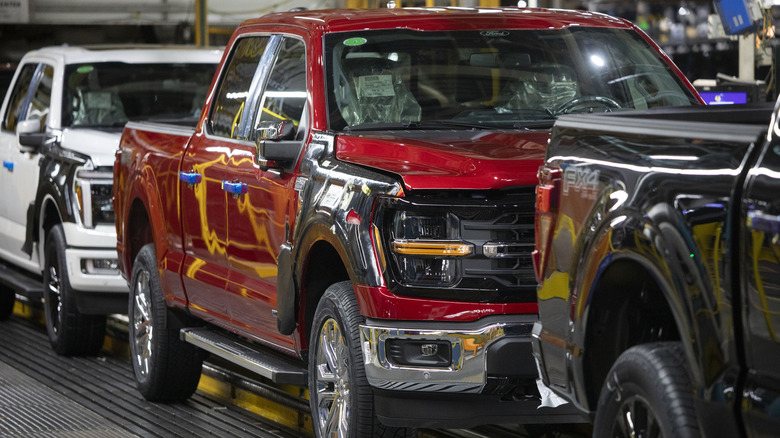
Despite some executive kowtowing to Trump, the administration has refused requests to give Ford and other automakers relief from steep aluminum tariffs after fires ripped through the Novelis aluminum manufacturing facility in upstate New York last September. That SNAFU has created a major supply bottleneck, especially for key vehicles like the F-150. The facility is expected to be offline until at least this June. From The Wall Street Journal:
The plant is the largest domestic supplier of aluminum sheet for the U.S. automotive industry, serving about a dozen companies including Ford, Stellantis, General Motors and foreign automakers with U.S. production facilities.
Atlanta-based Novelis, a unit of India's Hindalco Industries has been making up for the lost production at Oswego with aluminum from its plants in Europe and South Korea. But the company's imported metal is subject to a 50% duty under President Trump's tariff regime. That cost is passed along to automakers when they purchase the aluminum.
The disruption has most affected Ford, which relied on the plant for the aluminum exterior of its F-150 truck, the longtime best selling automobile in the country.
Now, Ford is petitioning the Trump administration for assistance, asking officials for relief from duties as the plant returns to full service. Unfortunately for Ford and its customers Trump's official line has pretty much been "cry about it." Conversations continue, but officials have apparently told these companies that they've already provided some relief from other national security tariffs last year, when they allowed them to recoup some of the tariff costs that they paid for automotive parts.
A White House official said that while Ford and other automakers "have raised supply concerns in light of the Novelis incident, they have not requested tariff relief on this matter in a particularly pronounced way."
[...]
Ford, which hosted Trump in January for a factory visit outside Detroit, said in February that it had already taken a $2 billion hit from the fires and expected to spend $1 billion more this year on imported aluminum.
Automakers and other users of steel and aluminum products could be on the hook for even higher tariffs in the coming months, after the Trump administration overhauled the metals tariffs last week. Under the changes, many finished products containing aluminum and steel will be subject to a 25% duty on the full value of a product, instead of a 50% levy on just the value of metal. The tariff costs for many products are likely to increase with a lower tariff assessed on the entire product.
Imported rolled aluminum sheet remains subject to a 50% tariff as a metal commodity material. That 50% tariff is already generally reflected in the cost for domestically produced aluminum, as well. Buyers pay a separate charge on their metal purchases that covers various costs for delivering aluminum, including the tariff. This delivery premium is now about $2,500 a metric ton, according to S&P Global Energy.
Currently, Ford and other aluminum buyers in the U.S. are paying the tariffs in the premium, and that's regardless of whether the aluminum they're using is made in the U.S. or imported. As you may have guessed, this hurts customers, too. The rising market price for aluminum has driven up buyers' costs for the metal and, in turn, the delivery charge with the tariff.
3rd Gear: Stellantis wants its dealers to actually be good
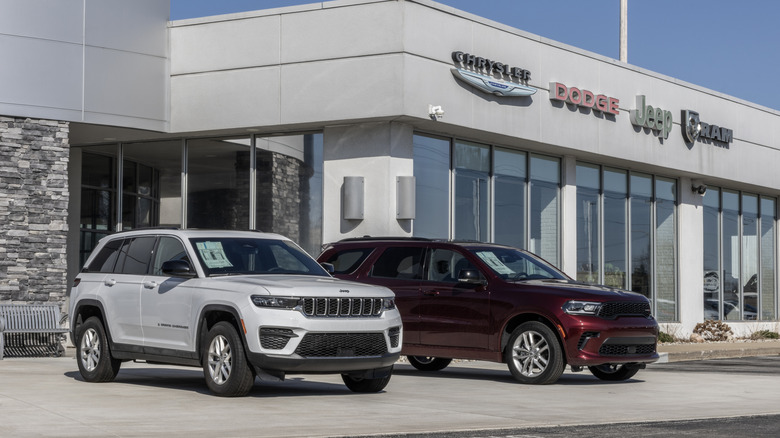
Have you ever walked into a car dealership and immediately clocked that you knew more than the sales guy did? Well, Stellantis wants to fix that. As it overhauls its lineup, the company is aiming to give its dealer personnel from coast to coast an immersive, hands-on experience with its latest models to get them up to speed.
The automaker is kicking off a 20-city tour that'll put dealer staff behind the wheel of the Ram 1500, Dodge Charger Sixpack, Jeep Cherokee, Jeep Grand Wagoneer and Chrysler Pacifica so they can get to know the products they're selling better. Even the Dodge Durango SRT Hellcat Jailbreak and Ram 1500 SRT TRX will be around for sampling. Honestly, this is just so refreshing to hear, as we've all got stories about dealers just having zero clue about the cars they're selling. From Automotive News:
The one-day training programs include educational sessions in addition to the driving opportunities. Stellantis aims to train 14,000 people during the three-month program. Other tour stops include Los Angeles, New York, Detroit, Chicago, Houston and Phoenix.
The "Unstoppable 2026 Spring Training Tour" is part of a broader operational realignment that includes hiring more than 2,000 engineers to enhance quality and improving dealer support by adding over 200 sales, service and parts representatives to its field operations.
[...]
Stellantis will give participants a chance to drive competing models to get a better sense of what they're up against.
[...]
The training sessions are broken into modules with various topics.
One is dedicated to the revived Cherokee and what Stellantis said is its unique value proposition. The Cherokee is Jeep's first hybrid in North America and has a combined fuel economy rating of 37 mpg.
Another is focused on the Ram 1500, offering a chance to experience the Hemi V-8 and Hurricane inline-six engines and compare the pickup with competitors. This module also details the differences between the 420-hp standard-output Hurricane and the 540-hp high-output variant.
The company also will explain the new Hurricane inline-four that debuted in the refreshed 2026 Grand Cherokee and the range-extended electric technology powering upcoming variants of the Grand Wagoneer and Ram 1500.
The automaker is apparently encouraging all dealership employees, not just salespeople, to join in. It's also the first time the company has done any sort of widespread training program since 2013. There was a small-scale program for electric vehicles last year, but with how those are selling, it doesn't seem like that was totally necessary.
4th Gear: Leapmotor and Stellantis could build an Open EV
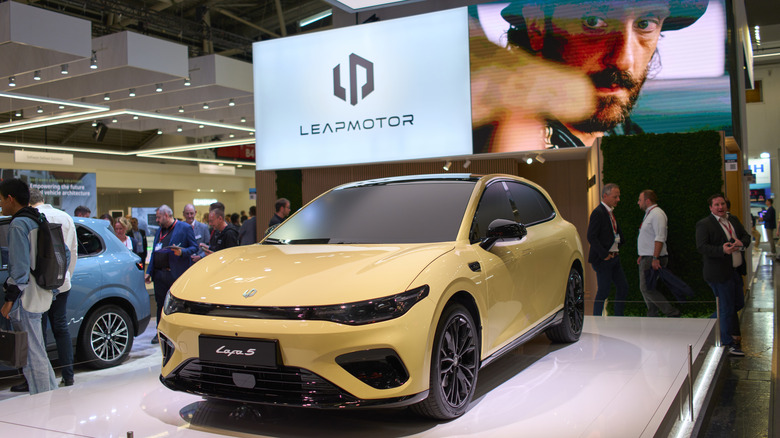
It's a busy morning for Stellantis, clearly. The Transatlantic automaker is in advanced talks with China's Leapmotor to jointly develop an Opel-branded electric SUV that would make use of Leapmotor's technology but be produced at Stellantis' Zaragoza plant in Spain.
Production of the new model is slated to start in 2028 with an annual output target somewhere around 50,000 vehicles. From Reuters:
The deal, if finalised, would help Stellantis cut the cost and time to develop a new EV model, as the French-Italian automaker shifts focus to petrol-electric hybrid cars. Earlier this year it announced a $25 billion writedown related to scaling back its EV plans.
It is also seeking to fend off competition from BYD and other Chinese brands in Europe and improve the utilisation rate at its European plants. Stellantis CEO Antonio Filosa, who took the top job in June last year, will present a new long-term business plan on May 21.
Stellantis formed a partnership with Leapmotor after acquiring around a fifth of the Chinese company in 2023. They also have a joint venture, Leapmotor International, that is in charge of the sales and production of Leapmotor cars outside China.
The new model would share a common architecture with the Chinese automaker's B10 compact SUV, which will also be assembled later this year for the European market at the Zaragoza plant, two of the sources said.
[...]
Under the terms being discussed, Leapmotor would supply key technologies and components including electronic and electrical parts, while Opel would design the exterior, one of the sources said, adding that a significant portion of the vehicle's development would take place in China.
These talks between the two companies on the Opel project apparently started in late 2025, and if all goes according to plan, an official agreement could be reached as early as this month. Stellantis said that there has been "regular engagement" between the two about ways to expand their collaboration, but it didn't go into specifics.
Unfortunately, I wouldn't expect whatever model vehicle that comes out of this tie-up to ever make it to the U.S. because of everything going on right now.
Reverse: There's a fish in the percolator!
 History.com
"Twin Peaks" really is one of the best shows of all time (as long as you ignore most of the second half of season two after they figure out Laura's murderer). If you haven't watched it, you've really gotta give it a try. I know David Lynch's style certainly isn't for everyone, but the world of "Twin Peaks" is just so rich, fascinating, weird and wonderful. I'm sure it's streaming on something. Take tomorrow off and watch the first season. You won't regret it. Anyway, if you want to learn more about the show, head over to History.com.
The Fuel Up
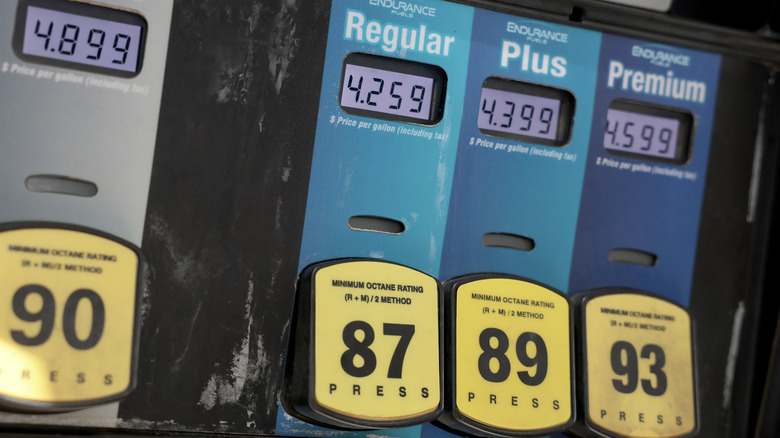
Despite what the median American voter probable believes, last night's two-week ceasefire in the U.S. and Israel's war with Iran hasn't immediately made gas prices drop. That being said, there are now ships flowing through the Strait of Hormuz, according to The Wall Street Journal, and WTI Crude Oil futures and Brent Crude are back into the low-$90 range, so it's possible we do see some relief at the pump soon — barring any nasty developments.
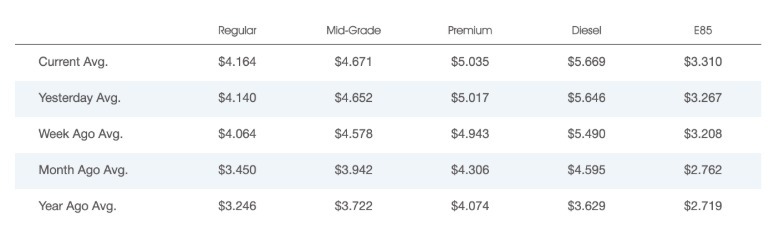
Still, it'll take some time to actually see any downward changes in gas prices at the pump, as the average price of a gallon of gas rose again overnight by two cents — from $4.14 to $4.16, according to AAA.
The last time gas was over $4.16 per gallon was back in July of 2022, according to data from the Energy Information Administration. The average price of a gallon of gas is now up $1.18 — or about 33.1% — since the war first broke out on February 28, when it was $2.98.
Here's where national average prices stand right now, according to AAA:
 AAA
AAA
On the radio: This Is Lorelei - 'Dancing in the Club (MJ Lenderman Version)'
As a white guy in his 20s, I'm getting on a big MJ Lenderman kick. I know, I know. It's very predictable, but I cannot help it. This sort of music just calls to me like a moth to a flame. Won't you please join me on this journey?