

These Are The Least Satisfying Cars And SUVs Of 2026, According To Consumer Reports

Automakers spend an enormous amount of time and money convincing buyers that their latest models will make their daily driving easier, more exciting, or even just less annoying than whatever is already in the driveway. Sometimes that promise holds up. Other times, once the new-car smell fades and the reality of living with a vehicle sets in, owners are left wishing they had chosen something else.
Each year, Consumer Reports surveys its members to see which vehicles actually deliver on those promises and which ones leave drivers less than thrilled with their purchase. Today, we're having a look at their data-driven insights and using our own hard-earned expertise to get to the heart of why these (mostly) perfectly promising vehicles may have failed to impress. This isn't about the cars that Consumer Reports testers disliked; it's about the people who ultimately matter most–the ones who actually bought the cars. So let's go ahead and dig into the 10 Least Satisfying Cars and SUVs of 2026, according to Consumer Reports.
Volkswagen ID.4
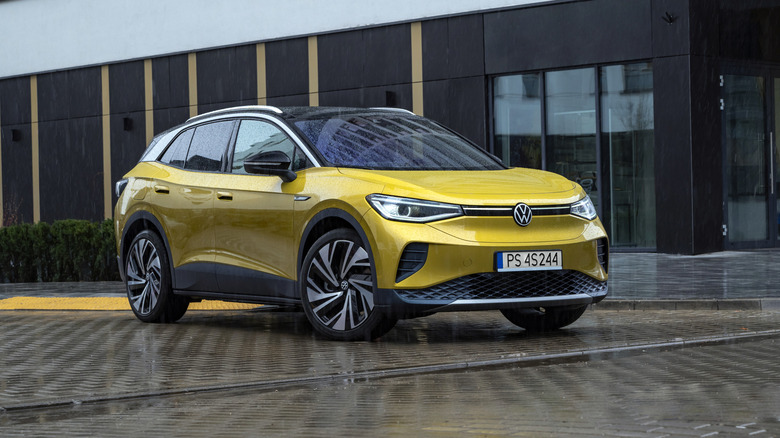
Volkswagen's ID.4 has long been a "good enough" EV, and despite a steady stream of incremental improvements, recent model years continue to unite buyers and car reviewers under one broad consensus: it's underwhelming. Car and Driver called it low on "verve." MotorTrend broke out the thesaurus and went with "anodyne." Neither had any particularly strong feelings in either direction.
Honestly, we're not sure what more a buyer would expect or demand from an entry-level electric crossover. Power and range have steadily improved over the years, slightly outperforming the promised EPA estimates, and recent updates have allegedly improved a mildly annoying infotainment system, so while we're not surprised that people aren't screaming ID.4 praises from the rooftops, its too bad that it's buyers apparently feel a bit "meh" about it. That's why we've come to you with more than commentary. We've got solutions. Because questionable touchscreens and annoying window switches aside, we're just going to point out that the Volkswagen ID.4 is secretly a Baja Bug for the modern day. If that's not a cure for the common crossover, we're not sure what is.
Chrysler Pacifica Hybrid
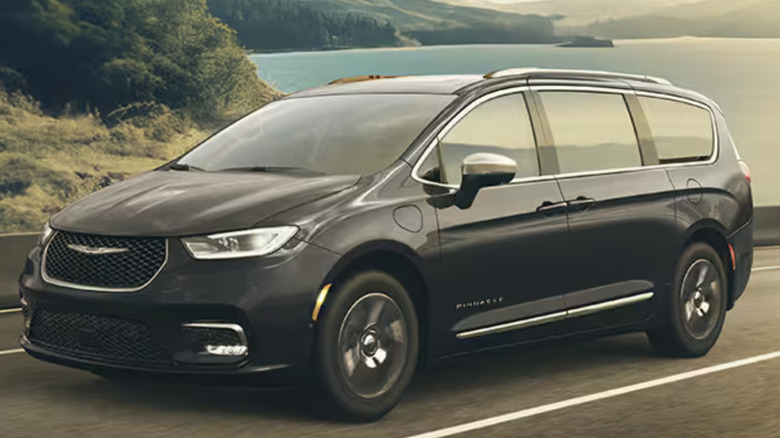
For anyone who hasn't paid attention to the trend over the last decade, Chrysler is a minivan company now. We don't mean that in the sense that minivans are their bread and butter or that minivans are the lion's share of their revenue. We mean that, as of 2026, the entire Chrysler lineup is the Pacifica (a minivan) and the Voyager (a slightly different minivan) . Anyway, we say all that just to say this: if you're going to have such an intense focus on one thing, you'd better nail it. And by many accounts, Chrysler has indeed nailed it with the Pacifica, a relentlessly practical vehicle that makes no claims to excitement but delivers on its premise as well as anyone.
But not the hybrid. When it comes to something like a minivan where practicality is paramount, subpar reliability is a dealbreaker among dealbreakers. A well-documented history of poor reliability, much of it related to the hybrid powertrain and associated electronics, has left plenty of Pacifica owners wishing they'd opted for the gas-only model. Even the Pacifica's longstanding killer feature, Chrysler's proprietary Stow 'n Go seating, is taken from hybrid buyers. (That battery has to go somewhere, but still.) It's a vehicle that's purposefully built to make life easier for busy families. But to paraphrase an aging political operative, "It's the reliability, stupid!"
Cadillac Escalade
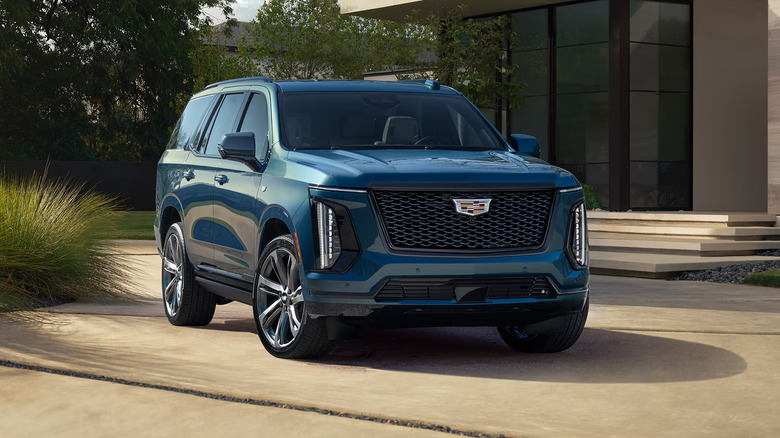
Tony Soprano used to rock an Escalade, which is relevant here for the context that these vehicles have been around and keeping up with the competition for a very long time. And not for nothing, the Escalade cachet really hasn't faded. It remains gigantic, expensive, and imposing. Available trims make it more powerful than ever. They're easily heavy enough to qualify for shady tax depreciation deductions that are often very important to the types of people who buy such things.
So what gives? An Escalade buyer wants it all, gets it all, but still feels disappointed? It might be because once you've finished using your Escalade to look imposing in traffic and admiring it taking up half your driveway, you also have to live with the thing. That means dealing with maneuvering and parking an unrepentantly large vehicle, filling a tank that's going to deplete at a rate of around 13 miles per gallon, and generally knowing that you've paid a properly staggering amount of money for the privilege, especially if you've ventured into the keeping-up-with-the-Joneses trim levels. It really comes down to just how much you're willing to put up with to get that Tony Soprano feeling behind the wheel.
Mazda CX-70 Plug-In Hybrid
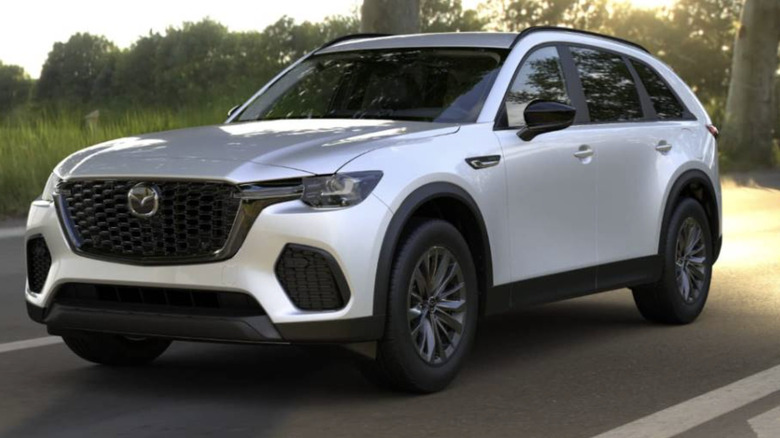
If the Escalade is a cautionary tale around how zero compromise doesn't necessarily translate into great personal satisfaction, this is perhaps the other side of that coin. It's the very definition of compromise, as the Mazda CX-70 is essentially just a CX-90 with only two rows of seats and a different name. And while that's the kind of thing that might make perfect sense on paper (or on a vehicle manufacturer's spreadsheet), it seems that maybe a three-row SUV with only two rows isn't a winning value proposition on its own.
Still, reviewers generally acknowledged the logic behind it, even if the CX-70 didn't bring anything new to the table that the CX-90 didn't. The satisfaction problem, and you may be sensing a theme here, seems likely tied to the Plug-In Hybrid model in particular, where an awkward hybrid powertrain that runs on even all-electric power through the eight-speed transmission, leaving drivers caught off guard by shifts that wouldn't exist at all in a more traditional electric configuration. Add in clumsy infotainment and a price tag that approaches the comparable Lexus NX Hybrid, and you've got a recipe for second-guessing yourself down the road.
Toyota Corolla Cross
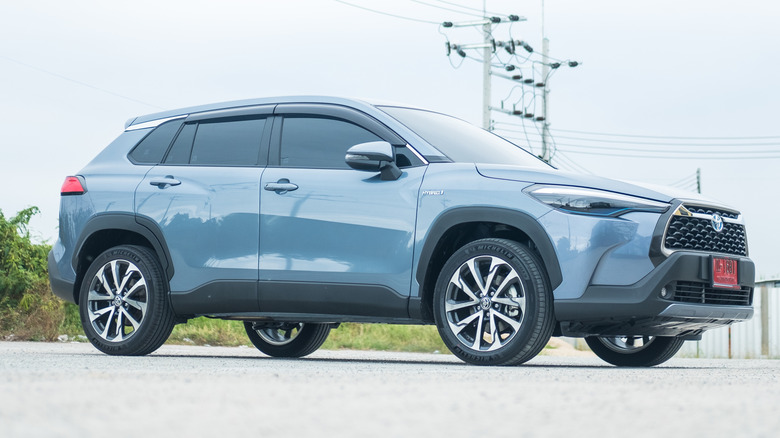
If the 2026 Toyota Corolla Cross got a beefier, angrier design to address a tepid response to its previous model years, the mission was not accomplished. The question begged here is likely one of expectations. Taking the quiet credibility of the Corolla and upsizing it into a reasonably sized crossover with a starting price that barely cracks $25,000 feels like a pretty appealing ethos, right? Except it appears that the implementation was less "Corolla upscaled into a comfy crossover," and more "a crossover dumbed down into an economy car."
It isn't surprising that at the intersection of expectation and reality, buyers landed with a bit of a thud. Clearly, anyone who thought the Corolla Cross would be a spirited or tossable experience like a Nissan Juke or a Hyundai Kona would surely be disappointed by its driving dynamics. Car and Driver characterized the Cross as "fun's biggest enemy," and the mainstream car review community certainly reached a similar consensus. Here at Jalopnik, we were perhaps more effusive in our praise than most, boldly declaring the driving dynamics "sufficient."
Acura ADX
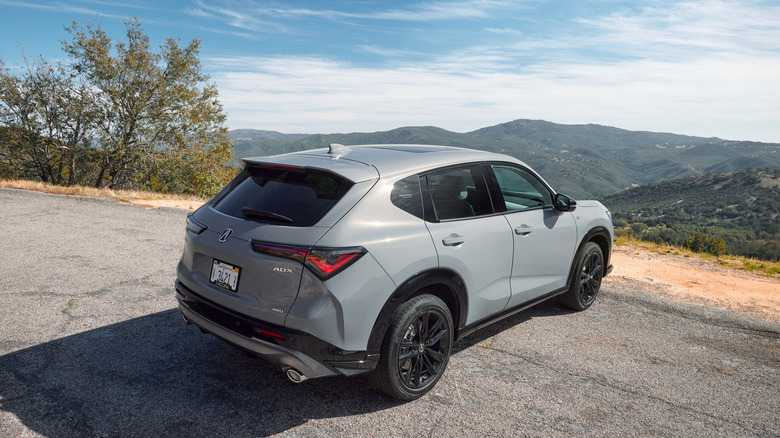
The Acura ADX ends up on this Consumer Reports list almost predictably, because it represents Acura playing in a market segment that's doomed to disappoint: entry-level luxury. Frankly, there's really no such thing. There are plenty of options in the established luxury SUV and crossover space (Acura included), but none of them are hamstrung by needing to his a $25,000 starting MSRP or build on a platform shared by the Honda HR-V. As a result, Acura ends up having to erode the high-end experience coming and going, forced to scale back on luxury by leaning into the Honda interior while also missing the mark on some fundamentals, like poor power, weak tech, and unrefined interior noise.
So sure. The Acura ADX is a sharp little crossover with a turbo and lots of potential, but "potential" doesn't do you a ton of good if it's already sitting in your driveway. Especially if you've optioned your "entry level" luxury up to the $43,850 mark, it's probably not hard to imagine some other choices that would have made a better impression.
Audi Q4 e-tron
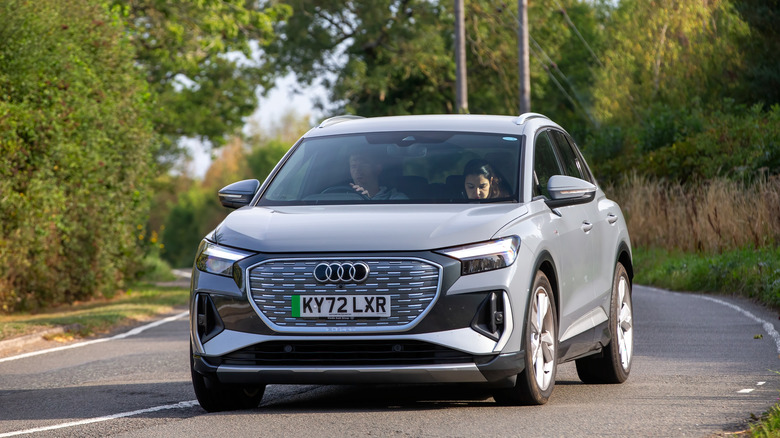
The Q4 E-Tron is Audi's bid for a volume EV, and you could call it that. But with an Audi badge and expectations to match, it's understandable if buyers were expecting a bit more for their money than a premium-adjacent experience that doesn't seem particularly differentiated. Ultimately, if you want a day-to-day EV, there are lower-end options that'll give you more interior room and a similar electric experience for less money. And unfortunately, if you're looking for a luxury experience, you might be disappointed by some of the clear Volkswagen provenance of much of the interior. Taken together, you end up with a luxury EV that's neither great at luxury nor great at being an EV.
Oh, and one final thought on the "not great at being an EV" note. The level three fast charging speeds are significantly lower than competing models, setting the stage for a frustrating experience if you aren't charging at home. We've said that the 2022 Audi Q4 e-tron could be the car of the future if it fixes these problems, but like our "high potential" Acura, that doesn't do you much good if you've already picked one up.
Honda Prologue
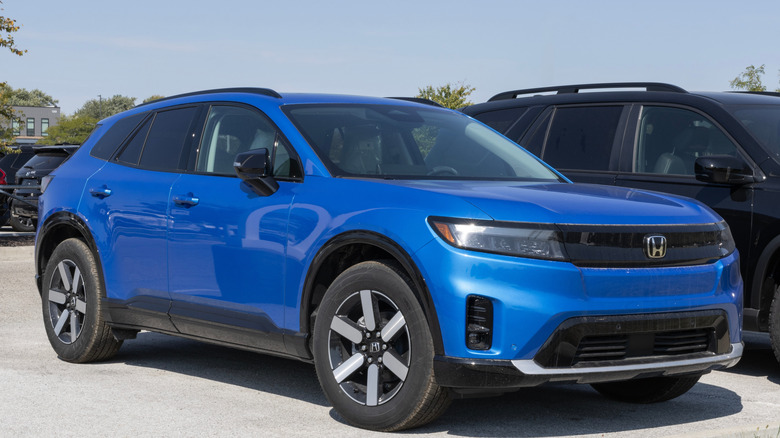
Call us crazy, but when somebody buys a Honda product, we're pretty sure it isn't because they want something from General Motors. It's obviously not without precedent for Honda to do a little platform sharing, but teaming up with GM for their long-awaited foray into the full-electric vehicle market was certainly a choice. And while indeed it's true that the Honda Prologue (and the Acura ZDX for that matter) are outselling their General Motors cousins, at some point, they have to ask at what cost.
Early impressions agreed that the Prologue paired a decidedly un-Hondalike driving experience with a whole lot of readily recognizable GM parts, which makes perfect sense considering that, well, it wasn't built by Honda and it's full of GM parts. Drivers have reported a stiff ride, poor visibility, and uninspired acceleration, which, taken together, paint a picture of something that might be a good enough electric vehicle, but a Honda in badge only. So like we've said before, the Honda Prologue lives up to half its name.
Mazda CX-90 Plug-In Hybrid
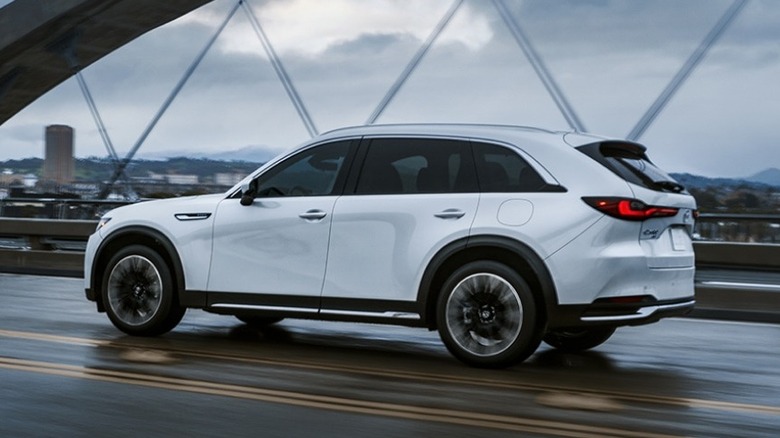
If nothing else, this entry at least goes for it. The CX-90 feels like a bona fide luxury SUV, and that's an impressive accomplishment in its own right. But at a relatively family-friendly price point and boasting a third row to make intentions clear, the expectations–and thus the stakes–might be a little different here. It's a Mazda SUV, and people are going to want to use it like a Mazda SUV, right down to putting actual humans in the third row (perhaps even regularly). That means that quality of life items like a third-row seating that borders on being a glorified parcel shelf and dated infotainment are certainly likely to wear on the kinds of no-nonsense, practicality-oriented owners who gravitate towards vehicles like this over something with a more premium badge on the front.
But there's also the powertrain, yet another underwhelming implementation of electrification that's probably as close as we're going to get to a recurring theme with the vehicles that landed poorly in these consumer satisfaction ratings. You can drive the plug-in hybrid using electric power only for something like 25 miles, but keeping it in electric mode is a delicate exercise that requires avoiding applying any acceleration that would automatically summon the gas engine back to life. The result is a clunky and stuttering driving experience that may have left buyers annoyed and frustrated, not just because the CX-90 Plug-In Hybrid falls short of being a great luxury SUV, but because it falls short of being a great Mazda.
Jeep Grand Cherokee 4xe
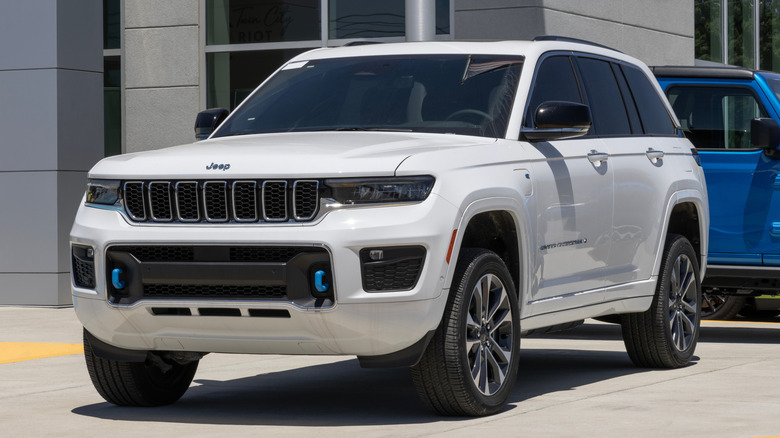
Look, Jeep owners have an impressive reputation for knowing exactly the deeply compromised vehicle situation they're putting themselves into, doing it anyway, and not complaining when it bites them in strange (or totally expected) ways. The Grand Cherokee 4xe, however, seems to have pushed beyond the limit of what is "a Jeep thing" and what's just needlessly frustrating. That said, before we get into the 4xe, let's just touch on the Grand Cherokee in general. As a general and completely arguable premise, you might describe the all-ICE Grand Cherokee as a hyper-capable off-roader (by factory standards) that leaves some room for complaints as the grocery-getter that most will realistically be. Just understand that last year's base model Grand Cherokee started at $39,090, while you aren't getting into the game with the 4xe for less than $62,485 MSRP.
The real issue is that the addition of the hybrid drivetrain just doesn't get you that much more. You do get some electric-only range, but overall impact to fuel economy is almost nonexistent, and reviewers report a clunky experience at low speeds. The 4xe also includes no option for a third row, sucking just a bit more utility out of your expensive sport utility vehicle. Mostly, it just feels like the PHEV treatment has added cost and clunkiness without delivering all that much in return. Take it all together, and you get fewer surveyed buyers of the Jeep Grand Cherokee 4xe reporting that they'd buy another than for any other vehicle on their list. Joke's on them, though, because Stellantis is canceling all of its plug-in hybrids for the 2026 model year anyway.