

EV Restructuring Has Cost Automakers Over $70 Billion So Far
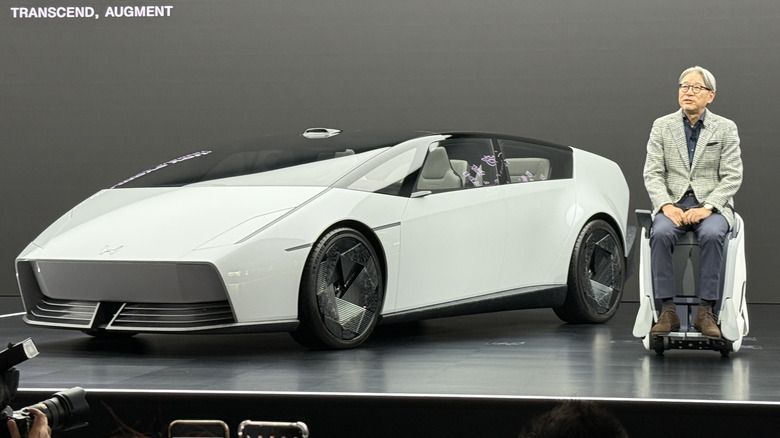
So far, five automakers have majorly overhauled and restructured their electric vehicle strategies, and the cost of all of this reneging equates roughly to the GDP of Uganda. General Motors, Ford, Stellantis and now Honda have all said they will write down billions of dollars in investments related to EV factory capacity, vehicle programs and battery manufacturing, and the total cost is now approaching $70 billion.
Honda was the latest automaker to add to the total — writing down $15.7 billion — when it canceled its 0 Series SUV, Saloon and Acura RSX. It joins GM's small-by-comparison $6 billion writedown, Ford's $19.5 billion loss and Stellantis' massive $26.5 billion hit, all of which we've covered in the past. Oh, and just for fun, Porsche also announced its own $4.5 billion EV write down earlier this week, according to EuroNews. In total, these writedowns account for about $72.2 billion in losses for just four automakers. These losses are very clearly a symptoms of an EV market that hasn't come anywhere close to developing the way automakers had banked on. They come after President Trump and his merry band of Republicans decided to cancel the $7,500 federal EV tax credit that helped buyers and lessees afford new models. He also made federal fuel economy standards far less stringent than they once were, giving automakers less of an incentive to chase better emissions.
In December, EV registrations dropped 48% year over year to 75,427 vehicles, according to Automotive News, and their share of the light-vehicle market fell to 5.3% from 9.9%. Things didn't improve much when the calendar flipped to 2026. As we reported, January's EV registrations also fell year-over-year by 41% to just 59,802 vehicles out of nearly 1.2 million in total, and their marketshare dropped to just 5.1% from the 8.3% they enjoyed the year prior.
The changes
Honda is the first non-Big Three automaker to dip its toe into the pool of multi-billion dollar EV writedowns. It's completely throwing in the towel on its 0 Series SUV, 0 Series Saloon and Acura RSX, all of which were meant to be built in the U.S. and were very far along in the development process. We first saw 0 Series concepts back at CES in January of 2024, and the company has shown off a few more production-ready versions of the cars since then, but it seems the "concept" phase is where they'll be frozen. It's a similar story with the RSX, which Acura first showed off in January of 2025 along with a near-production prototype that August. That ain't happening anymore, either. As for the $100,000+ Sony Honda Mobility Afeela 1, well, it's technically in production as of this January, but I don't have much hope it'll be much of a success, to be honest.
Now, Honda says it's going to focus mostly on hybrid development, which is sort of similar to what Ford is doing. It's killing the electric F-150 Lightning with a range extending hybrid F-150 that'll use a gas-powered motor to recharge a battery. It's also scrapping a next-generation electric truck and van while pivoting hard to other hybrid models, as we reported. It expects the global mix of hybrids, EREVs and pure EVs to hit 50% by 2030.
GM's plans are a bit less focused. It's going to pivot its Orion assembly facility — previously slated for EV production — to building the Escalade, Silverado and Sierra. It'll also reduce battery cell production capacity, slash shifts and lay off hundreds of workers at its Factory Zero EV plant. Its hybrid plans are sort of murky, as well. Earlier this year, CEO Mary Barra told Automotive News that the company was "evaluating" plug-in hybrids, but nothing has come of that so far. At the moment, the only hybrids that GM builds are the Corvette E-Ray and ZR1X, and those aren't exactly economy cars.
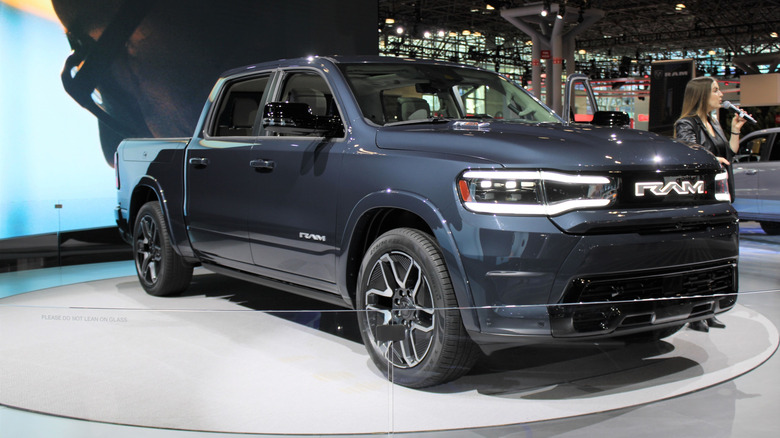
Stellantis is selling a 49% stake in its joint battery venture to LG Energy Solution, and it has canceled the all-electric Ram 1500 REV — making it a plug-in range-extending hybrid instead. It'll be similar to what Ford has done with its F-150 Lightning. It's also going back to what it knows: the Hemi V8. Expect to start seeing the big bruiser of a motor in just about everything once again.
Porsche's $4.5 billion writedown seems almost tiny in comparison to these behemoths, but they come with a lot of movement from the automaker. It't had to completely rethink its electric 718 Boxster and Cayman strategy — electing to develop a gas-powered variant alongside it. The company is apparently considering turing the Panamera and Taycan into one model and its kept the gas-powered Macan going long after its expiration date.
I'm not sure how long it will take these companies to recuperate these losses, because I'm just about the furthest thing from an accountant that there is, but they've gotta be very sure that there's no near-term future for EVs if they're willing to just chuck this much money away in the hope something better is coming. For their sake, I hope they're right