

January's EV Registrations Fell 41% As The Full Weight Of Trump's Policy Changes Hit Home
Good morning! It's Friday, March 13, 2026, and this is The Morning Shift, your daily roundup of the top automotive headlines from around the world, in one place. This is where you'll find the most important stories that are shaping the way Americans drive and get around.
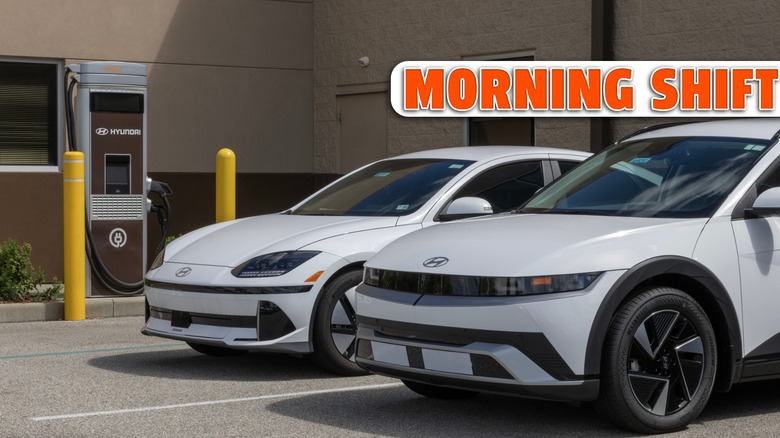
In this morning's edition, electric vehicle registrations fell off a cliff to begin the year, history says the U.S. and Israel's war with Iran will be disastrous for our auto industry, the Honda Prologue will soon join its newly canceled electric siblings in heaven and the Trump administration is suing California over its zero-emission vehicle and greenhouse gas rules. So much for states' rights.
1st Gear: EV registrations drop 41% in January
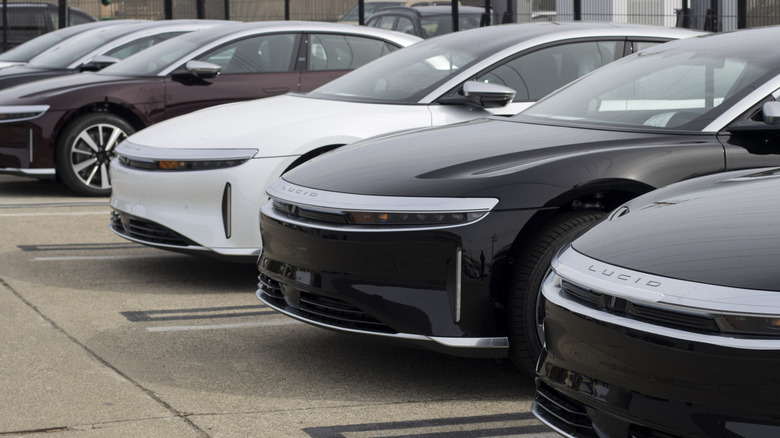
We're now really starting to see the full effects of the Trump administration's war on electric vehicles as U.S. registrations fell a staggering 41% year-over-year in January — causing gas- and hybrid-powered vehicles to regain marketshare. Just 59,802 EVs were registered during the first month of the year out of a total of just under 1.2 million vehicles, according to data from S&P Global Mobility.
Electric Vehicles' share of the marketplace fell to a scant 5.1% in January — down from 8.3% a year earlier. At the same time, internal-combustion-powered vehicles rose 2.3% to 76.6% of the market, and hybrids gained 1% to hit 14.7%. Things are not looking too hot for our battery-powered friends, and it certainly explains why so many automakers are taking huge losses right now. From Automotive News:
Some automakers have used aggressive promotions to keep electric vehicles moving off dealership lots, while other brands have discontinued EV models and halted development of new ones.
Honda Motor Co. canceled three EVs planned for the U.S., the company said March 12. Tesla will end production of the Model S and Model X in the second quarter, and Ford killed off the F-150 Lightning in December.
[...]
Rivian and Lucid are launching new EVs this year, as are legacy brands including Toyota and BMW, but their appeal could be limited without the tax credit, analysts said.
The Republican-led Congress voted in July to repeal the credit, which took effect in 2009. The legislation also eliminated penalties for automakers failing to meet federal fuel economy standards.
"There's going to be a shakeout to the new reality with no federal EV incentives, which was the carrot, and no greenhouse gas penalties, which was the stick," said Karl Brauer, executive analyst at iSeeCars.
With electric vehicles on a more level playing field with gasoline and hybrid models, Brauer said, demand for full EVs is now settling at about 5 percent of the market.
Of course, some automakers fared better than others, but hardly any of them were left unscathed, as Auto News explains:
Registrations for Tesla, the top EV seller, fell 26 percent in January from a year earlier, to 32,123 vehicles, the data showed. But its share of the shrinking electric segment rose 11 percentage points to 53.7 percent in January.
[...]
Model Y registrations fell 4.5 percent in January to 22,831 vehicles, the data showed. The Model 3 sedan dropped 62 percent to 5,269, and the Cybertruck slipped 48 percent to 1,458 pickups.
[...]
Cadillac, at No. 2 among EV makers, grew its registrations by 8.1 percent in January to 3,189 with its expanded portfolio. The Vistiq three-row crossover had 737 registrations versus none a year earlier. The Lyriq midsize crossover fell 47 percent to 1,040 registrations.
[...]
No. 3 Hyundai's registrations fell 23 percent to 3,027 in January. Its bestselling model, the Ioniq 5 crossover, slid 22 percent to 2,101 vehicles. The Ioniq 9 crossover, which was not on sale in January last year, had 547 registrations.
[...]
Ford was No. 4 among EV makers, with registrations down 67 percent in January to 2,772 vehicles, S&P Global Mobility said. The Mustang Mach-E crossover, its most popular EV, fell 63 percent to 1,762 vehicles.
[...]
Chevrolet rounded out the top five. Its EV registrations fell 55 percent in January to 2,658 vehicles, the data showed, and its market share declined 1.4 percentage points to 4.4 percent.
Even though these companies were in the top five, the fact almost all of them saw double-digit percentage drops is incredibly alarming.
There were plenty of other notable losers during the month, as well. Rivian's registrations dropped 25% to 2,232 units. BMW, Kia and GMC saw drops of 60%, 58% and 315 respectively. Honda also saw a massive 85% drop to just 658 Prologue registrations in the month. We also can't look away from Volkswagen, which saw a 90% drop, Mercedes-Benz with an 84% drop, Audi with an 82% drop, Polestar with a 34% drop and Nissan with an 88% drop.
One bright spot — I guess — was Maserati. It enjoyed a 140% rise in EV registrations in January... to a whopping 12 vehicles.
2nd Gear: History tells us the war with Iran could be a disaster for the U.S. auto industry
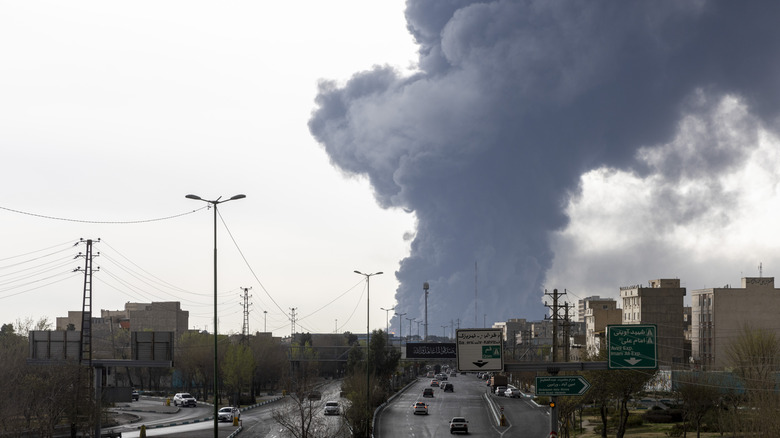
There's a real chance that the U.S. auto industry could see a lot of fallout from our war with Iran, and all you've got to do is look at history to see why. A lot of it has to do with rising gas prices — something we've covered extensively (and will even get into a bit later in this edition of The Morning Shift).
In the past, high gas prices and oil crises have had disastrous effects when it comes to new car sales. When you add in the fact that automakers are winding down their electric vehicle efforts, buddy, there's a storm brewing. It's not even just gas prices, though. Folks just tend to spend less on cars during wartime. From the Detroit Free Press:
In six past instances of oil crises, auto sales dropped by more than 10% of average sales. Three of those times, they plunged by 40% or more of average sales, according to Anderson Economic Group.
The group notes that it is impossible to predict what might ultimately happen as a result of the war in Iran, but past episodes that involved wars and oil embargoes had significant effects on U.S. auto sales.
"History shows that Americans cut back sharply on buying cars when wars, invasions, and oil embargoes occur," Patrick Anderson, CEO of Anderson Economic Group, said in a statement. "While we don't know how long this war will last or what the effects will be, at least six times since the 1970s, an event such as this has caused a sharp drop in auto sales."
That said, there are some key differences in how vehicles are made and used today that could shield the auto industry from a sales plunge compared with how the cars were made and consumers used them during the crises of the 1970s and 1990s, Anderson said. For one thing, vehicles are a lot more reliable and fuel-efficient than they were decades ago.
"Second, a lot of people work from home at least part of the workweek," Anderson said, reducing their need for as much gasoline as in the past. "Third, the U.S. is now energy sufficient overall. All these factors reduce, but do not eliminate, the United States' vulnerability to oil supply shocks."
Finally, about 1% of the active fleet today is electric vehicles giving consumers that option as well as merely holding onto their existing cars longer, he said.
Still, there's no getting around the fact that every time there's an oil spike or major conflict in the middle east, car sales drop by double digits. During the 1973-1974 Arab Oil Embargo, domestically produced vehicle sales dropped a whopping 44.7%. When the 1979-1980 Iranian Revolution and Second Oil Shock happened, overall sales dropped by 40.9%. During the 1990-1991 Gulf Crisis when Iraq invaded Kuwait, auto sales were down 18.6%. Following the 2008 global financial crisis, sales dropped a massive 45.5% When the 2011 Arab Spring and Libya supply shock happened, it dropped U.S. sales by 19%. Most recently, when Russian invaded Ukraine in 2022, gas prices rose exponentially — hitting an all-time record of $5.02 per gallon, according to AAA, and it send sales tumbling 12.7%.
3rd Gear: The Honda Prologue will soon have an epilogue
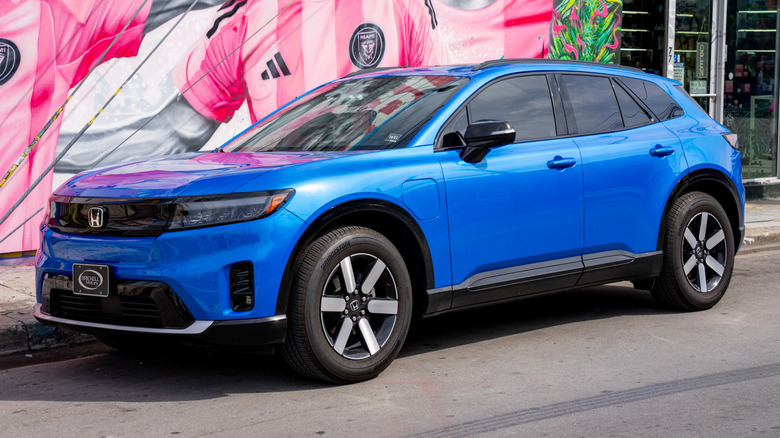
On March 12, Honda announced it was throwing in the towel on its upcoming all-electric 0 Series sedan, SUV and Acura RSX crossover — giving up on its EV future in the U.S. Now, it seems to be giving up on its EV present as well. The Japanese automaker is expected to drop its last remaining electric vehicle in the U.S., the Prologue, after its current production run ends in December.
There are no plans for a second generation of the Chevy Blazer-based midsize crossover, according to industry forecaster AutoForecast Solutions. It killed the Prologue's twin, the Acura ZDX, in September of 2025. From Automotive News:
Killing the Prologue, built at a GM factory in Mexico, would mark the latest retreat in Honda's U.S. EV push and cap a brief but volatile chapter for the brand's first major battery-electric offering in the market.
Honda on March 12 canceled plans to build three upcoming EVs in the U.S. and warned of up to $15.8 billion in write-downs and expenses tied to the change in strategy.
The Prologue, launched in 2024, came out of the gate strong, posting nearly 39,000 U.S. sales in 2025 amid aggressive discounts and the benefit of a federal $7,500 tax credit.
But volume collapsed after the Trump administration eliminated the tax credit, with sales so far in 2026 tumbling 74 percent from a year earlier.
Honda has already cut Prologue production in half for 2026, and it now anticipates selling just 17,900 vehicles this year. As I mentioned in 1st Gear, Honda registered just 658 Prologues in January of 2026, so even getting to 17,900 might be a big ask. If you don't mind the Chevy rebadge, I wouldn't be too surprised to find some screaming deals on these things as we get further into the year.
4th Gear: Federal government sues California over strict emissions rules
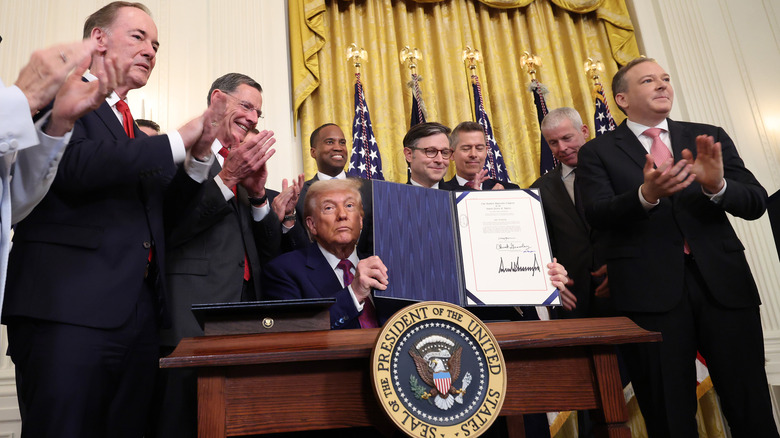
The Trump administrations is suing the state of California, claiming its zero-emission vehicle and tailpipe greenhouse gas emissions rules are illegal and superseded by more lax federal law. The California Air Resources Board is now going to have to go to court against the U.S. Department of Transportation because of rules that remain in place after Trump signed legislation last year to overturn the state's Advanced Clean Cars II rule. Its aim is to phase out new gas-powered cars by 2035. Obviously, Trump isn't a fan of that. From Reuters:
The lawsuit wants a ruling declaring that all zero-emission vehicle mandates by California are unlawful and unenforceable.
"This litigation will help automakers design and produce cars and trucks to meet one federal fuel economy regulation," said Jonathan Morrison, who heads the National Highway Traffic Safety Administration.
California won approval in 2022 from the Environmental Protection Agency for its current vehicle rules known as Advanced Clean Cars I, which the state says remain in effect.
The California Air Resources Board declined comment. A spokesperson for California Governor Gavin Newsom said the lawsuit is meritless and the state will not back down.
He added as Americans face higher gasoline prices since the start of the Iran war, "the Trump administration sued California for advancing cleaner, cheaper cars that free drivers from the grip of foreign oil markets and the bad actors who stand to profit from global instability."
[...]
California's rules require automakers to sell a rising number of electric vehicles and meet increasingly stringent limits on tailpipe emissions.
Those rules are much stricter than those imposed by the Trump administration, which plans to roll back federal fuel economy rules.
California contends the fuel savings for consumers from the rules far exceed the higher upfront costs of EVs.
Congress rescinded authority for California to outlaw traditional gas-powered vehicles after 2035 after Toyota and the Detroit Three lobbied Congress and the White House for significant relief from California's emissions regulations.
The White House also significantly weakened federal tailpipe rules and Congress passed legislation to stop collecting penalties for not meeting vehicle tailpipe standards.
The legal move is the latest effort in a series of escalations from the Trump administration to bar California from setting its own vehicle rules. Back in August of last year, it sued the Golden State to stop it from enforcing tighter emissions standards for heavy-duty trucks.
Reverse: Eisner supremacy
 History.com
Sure, the Disney Corporation has seen unimaginable growth under Bob Iger's two stints as CEO, but he never captured the magic (and, admittedly, the mayhem) that Michael Eisner brought to the table. He may not have been nearly as effective a CEO, but he brought a way better vibe than ol' cost-cutting Bob. Lets just hope Iger's second replacement, whenever they're brought in, recaptures some of that magic.
No, I'm not a Disney adult. I'm a Defunctland adult. Those who know what that means will absolutely understand. Anyway, if you want to learn more about Iger's disgustinly corporate stints as Disney's chief executive, head over to History.com.
The Fuel Up
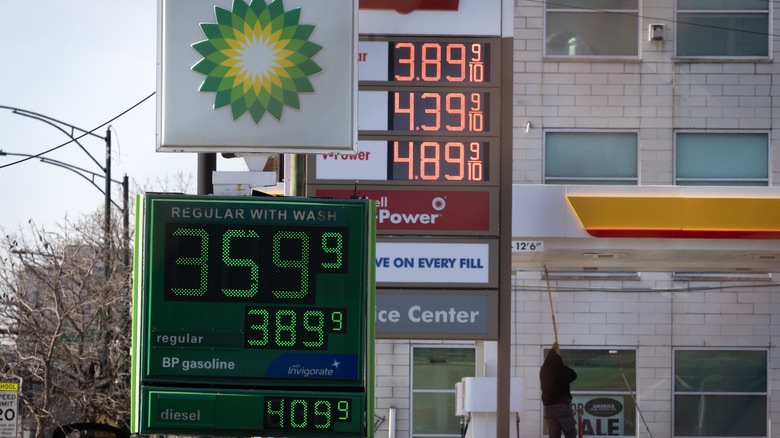
After a brief retreat into the $80-range, crude oil prices are back above $90 a barrel, and it means gas prices are accelerating upward rapidly once again — as they pretty much have been since the U.S.-Israeli war with Iran started on February 28.
Overnight, the average price of a gallon of regular gas rose about 3 cents overnight across the country to $3.63, according to AAA. The last time gas was over $3.60 for a gallon of regular was back in May of 2024. In any case, the average price of a gallon of gas is now up 65 cents — or about 19.7% — since the day before the war broke out, when it was $2.98.
Here's where national average prices stand right now, according to AAA:
 AAA
AAA
These five states have the cheapest gas in the country:
 AAA
AAA
These five states have the most expensive gas in the country:
 AAA
AAA
On the radio: Hilary Duff - Growing Up
Hilary Duff is sort of the LeBron of the music industry. She was great in the early 2000s when I was just a kid, and now, over 20 years later, she's still great. We don't see longevity like this very often. We need to enjoy and appreciate greatness when it's right in front of us.
Plus, that Wagoneer is sick as hell.