

Volkswagen Group's Miserable 2025 Saw Operating Profits Fall By More Than 50%
Good morning! It's Tuesday, March 10, 2026, and this is The Morning Shift, your daily roundup of the top automotive headlines from around the world, in one place. This is where you'll find the most important stories that are shaping the way Americans drive and get around.
In this morning's edition, Volkswagen lost billions of dollars in 2025 as it dealt with U.S. tariffs and dwindling global demand, one automaker is getting special treatment in Canada when it comes to U.S.-made vehicles, Nissan and Uber are about to pen to paper for their Wayve-powered robotaxis and Mercedes-Benz just settled a union-busting case at its plant in Alabama.
1st Gear: Volkswagen had a 2025 to forget, and 2026 ain't looking much better
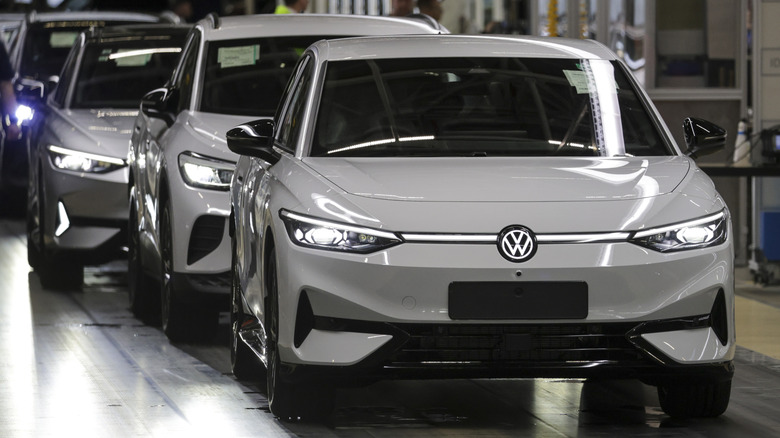
Volkswagen Group is gearing up for another year of disappointment as tariffs and a huge downturn in China kill profitability. Europe's largest automaker reported a 54% slump in operating profit for 2025, and it says there's only going to be a modest recovery this year.
It seems to be getting hit on all fronts. U.S. tariffs are costing it billions stateside. Meanwhile, its marketshare in China — the world's largest car market — is eroding like a beach during a hurricane. Not that it's really the biggest concern in the region, but the U.S.-Israel war with Iran is hurting VW's luxury sales in the Middle East at a time when Audi and Porsche could use all the sales they can get. From Reuters:
"We are noticing that the business model that carried us for decades no longer works in this form," CEO Oliver Blume said. "We are simply seeing how volatile and fragile our world is, with new issues arising every month."
Undergoing a major product offensive and sweeping cost cuts, the German auto group has a steep climb to its targeted operating margin of 8% to 10% by the end of the decade.
The company expects an operating margin of between 4% and 5.5% in 2026, after 2.8% in 2025. Analysts polled by Visible Alpha expect a 5.2% margin this year, at the higher end of the company's forecast range.
The carmaker's operating profit more than halved in 2025 to 8.9 billion euros ($10.4 billion), missing analysts' forecast of 9.4 billion euros, dragged by tariffs and a costly strategic shift at Porsche, which paused its transition to electric last year amid weak demand.
Revenue was flat at 322 billion euros, with scant hopes for growth in 2026, when the company expects revenue to develop in a range of 0% to 3%.
Again, analysts' expectations were at the higher end of the scale.
CFO Arno Antlitz said product launches and restructuring measures in 2025 were important to boost Volkswagen's resilience.
Antlitz added that a 4.6% operating margin — even when adjusted for restructuring — isn't sustainable over a long period of time.
Back in January, VW reported a 2025 net cash flow of €6 billion ($6.98 billion). That was a major movement from an earlier forecast of zero cash flow, and, while it was good news, it did draw criticism from trade unions who questions the result as the company carried out sweeping job cuts. I can certainly see where they're coming from. VW Group plans to make about 50,000 job cuts by 2030 in Germany alone.
2nd Gear: Mystery automaker gets special tariff treatment in Canada
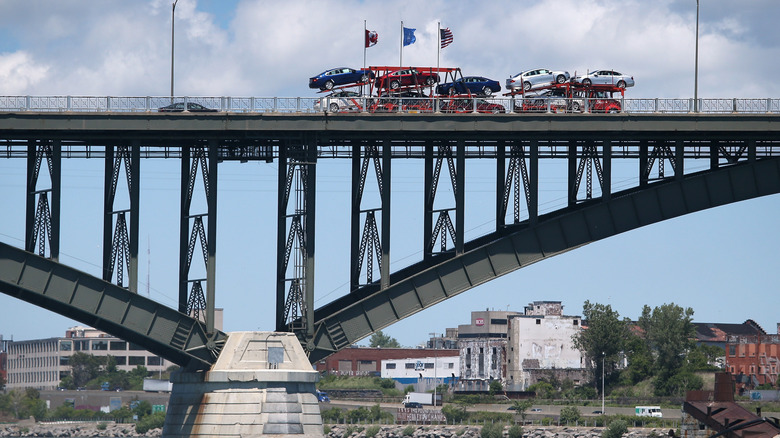
Canada and the U.S. are feuding over tariffs right now — especially when it comes to auto manufacturing. However, there's one automaker importing a higher quota of U.S.-made vehicles without tariffs because the company is selling and building more cars in Canada than first expected. That company? Well, it's a secret.
Our neighbors up north may have dropped the bulk of their counter-tariffs agains the U.S. in September, but they kept the 25% import duty that must be paid on U.S.-built vehicles that aren't compliant with the Canada-U.S.-Mexico agreement on trade. There are a certain number of vehicles per automaker that can be imported into the country tariff-free, based in part on their level of auto assembly in Canada, and those quotas are reviewed every three months. I guess there's one automaker that is far exceeding expectations, but we're not allowed to know who it is because of "confidential financial concerns."
Boo! I promise I won't tell anyone. From Automotive News:
An order-in-council decision dated Feb. 26 said an automaker asked for a higher quota level during the July to September review period because its sales in 2025 were stronger than expected.
The request was granted in part because the company's level of domestic manufacturing was higher as well.
[...]
Finance Canada spokesman Benoit Sabourin said in an email Monday that Ottawa is reviewing the auto tariff remission program to find more ways to encourage carmakers to invest in Canadian production. That review started Feb. 27 and is expected to wrap by April 13.
Aside from the auto sector, Canada also has kept up counter-tariffs of 25 per cent on steel and aluminum coming from the United States.
Sabourin said this specific remission framework is "unique to the automotive sector" and relies on companies maintaining production in Canada and following through on planned investments.
Minister of Industry Mélanie Joly did mention Honda and Toyota when asked about her decision to raise the quota limit, but — just to be clear — she didn't say either of those automakers were the ones who are seeing tariff reprieve. Instead, she said the idea of giving more tariff-free access to automakers that boost Canadian production is central to Ottawa auto strategy.
"We will actually support those who invest in us," Joly told reporters in Ottawa. "So when Honda and Toyota increase their production in Canada, we will make sure that they have greater market access. Period."
3rd Gear: Nissan, Uber get serious about autonomous partnership
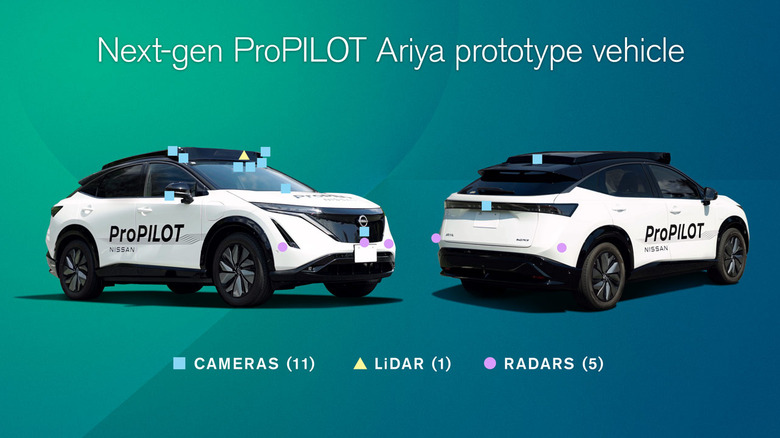
Nissan is getting very close to signing a partnership deal with Uber that would deploy autonomous vehicles for the ride-hailing service with the collaboration of UK-based self-driving tech company Wayve. Uber just so happens to be an investor in the company as well.
The aim of the three companies is to release autonomous vehicles in urban environments sometime during the 2027 fiscal year. In early 2028, Nissan plan to launch its AI-powered next-generation ProPilot system in Japan and North America. The Nissan-Wayve partnership centers on a hands-off, eyes-on systems that is modeled after Tesla's Full Self-Driving software, with no geographic restrictions. Lets just hope it works better that. From Automotive News:
While some systems lean on high-definition maps and millions of hand-coded rules, Wayve trains a neural network to drive using footage from the vehicle's onboard cameras. It learns continuously from real-world fleets and simulated data, allowing it to handle congested traffic and edge cases without requiring roads to be premapped.
Nissan's next-generation ProPilot system, integrating Wayve's AI Driver software, is expected to offer advanced assisted driving functions beyond the Level 2 capabilities of today's ProPilot, which requires driver supervision, and could approach higher autonomy levels over time.
The technology is planned to have compatibility with several key Nissan utility models, including the full-size Armada, midsize Pathfinder and compact Rogue, the company's U.S. volume leader.
Nissan trails some rivals in the autonomous race but is accelerating efforts amid sales pressures in core markets. The tie-up with Uber could provide a high-profile platform to showcase the technology and help the brand regain momentum.
At the same time, Uber is teaming up with other automakers like Lucid to develop a driverless fleet to take on Waymo and alike. Uber expects to deploy 20,000 or more Lucids with Nuro's self-driving system over six years across multiple locations. I suppose Uber doesn't want to put all of its eggs in Nissan's basket.
4th Gear: Mercedes settles union-busting case in Alabama
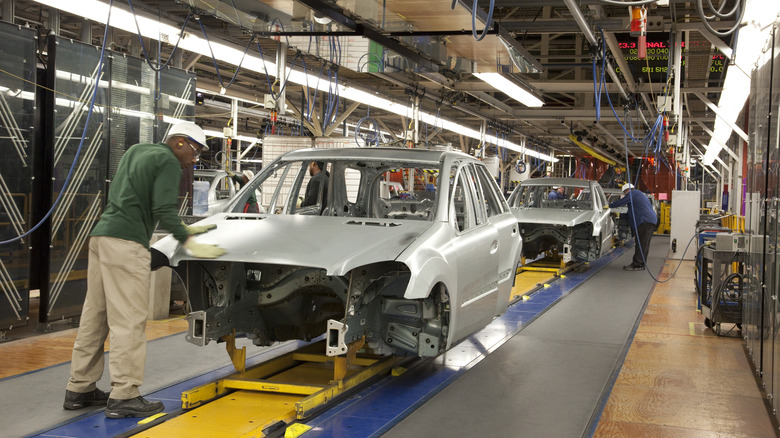
Mercedes-Benz has promised to not make any more anti-union threats as part of a deal to resolve a National Labor Relations Board case over the automaker's response to an organizing drive at its plant near Tuscaloosa, Alabama. Under the NLRB settlement, Mercedes says it will distribute, and adhere to, a notice about employee's union organizing rights. From Bloomberg:
That notice [...] includes statements such as "WE WILL NOT threaten you with the closure and/or relocation of the facility to a non-union location, like Mexico, or anywhere else, if you choose to be represented by a union."
Alabama Mercedes employees voted 2,642 to 2,045 against joining the United Auto Workers in a 2024 election, a major setback for the recently reinvigorated union's efforts to expand its ranks. The UAW alleged that illegal interference by the company — including retaliation against union supporters — prevented a fair vote.
[...]
As part of the new settlement, Mercedes agreed to revoke discipline it had issued to one employee. The company also agreed not to threaten employees with loss of benefits if they unionize, "unlawfully surveil or interrogate" them about distributing union materials in non-work areas during their breaks or otherwise "interfere with, restrain, or coerce" employees from exercising their organizing rights.
The settlement could fuel additional scrutiny on Mercedes in the US and Germany, where the UAW has been urging government agencies and elected officials to make the company comply with its own official principle that it "shall remain neutral" when unions try to organize.
Naughty, naughty, Mercedes!
In an emailed statement, Mercedes said it didn't admit wrongdoing as part of the settlement. "We look forward to working directly with our team members on measures to ensure we remain an employer of choice and provide a safe and supportive work environment," the company said. In an emailed statement last month, Mercedes said it "has not interfered with or retaliated against any team member in their right to pursue union representation."
[...]
NLRB prosecutors approved the settlement this week despite the objections of the UAW, which deemed the terms insufficient, according to the records viewed by Bloomberg. The union had argued that Mercedes management should be required to read the notice aloud to employees, but the agency concluded that was not necessary, an NLRB regional director said in a letter to UAW attorneys last week.
All hope is not lost for the UAW's organizing efforts at the plant. Another case, in which the union petitioned the NLRB to overturn that razor-thin 2024 election result, is still pending. Lets hope things turn out the right way.
Reverse: Thanks for the spam calls
 History.com
Because Bell didn't want to go to another room, I've not got to deal with approximately 2,000 spam calls a day about my personal loan request for $46,000. Thanks a lot, Alex. Ugh. If you want to learn more about this important moment for the world, head over to History.com.
The Fuel Up
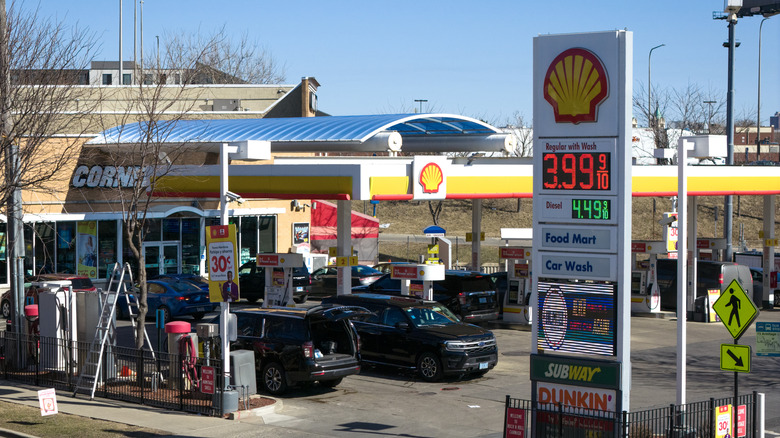
Sure, oil prices retreated on March 9 after hitting over $100 a barrel over the weekend, but that did very little to cool gas prices, which have been steadily rising since the U.S.-Israeli war with Iran started on February 28.
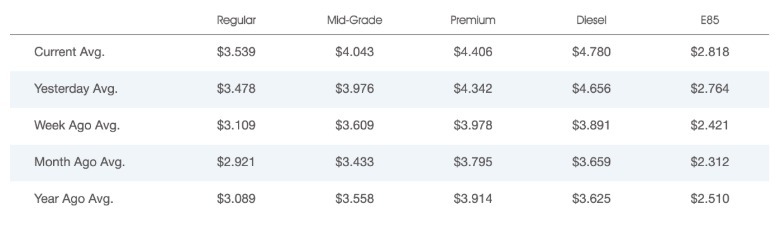
Overnight, the average price of a gallon of regular gas rose about 6 cents across the country, and it's now up 56 cents — or about 17.2% — since the day before the war broke out.
Here's where national average prices stand right now, according to AAA:
 AAA
AAA
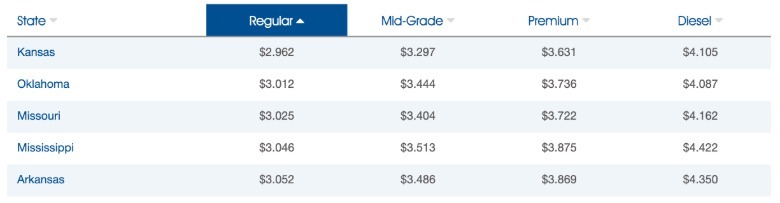
These five states have the cheapest gas in the country:
 AAA
AAA
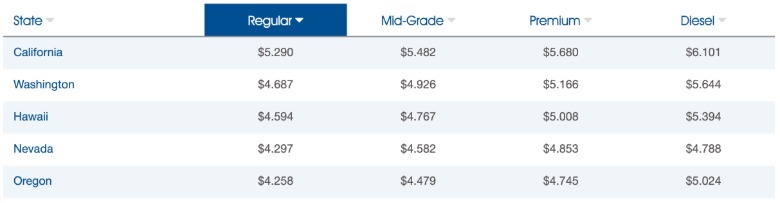
These five states have the most expensive gas in the country:
 AAA
AAA
On the radio: Geese - Cobra
I know the lead singer's name is Cameron Winter, but this song has a distinctly Spring-y vibe to it. It's gonna be in the mid-70s here in New York today, so I'm going to be outside as much as possible enjoying that.