

Stellantis Takes Massive $26.5 Billion Hit On EV Pullback
Good morning! It's Friday, February 6, 2026, and this is The Morning Shift, your daily roundup of the top automotive headlines from around the world, in one place. This is where you'll find the most important stories that are shaping the way Americans drive and get around.
In this morning's edition, Stellantis is dealing with a massive $26.5 billion writedown because of its retreat from EVs, Toyota is replacing its CEO following a massive tariff bill, Range Rover is readying a "unique" small EV and Ford tells its dealers that more vehicles under $40,000 are on the way.
1st Gear: Stellantis' $26.5 billion EV writedown
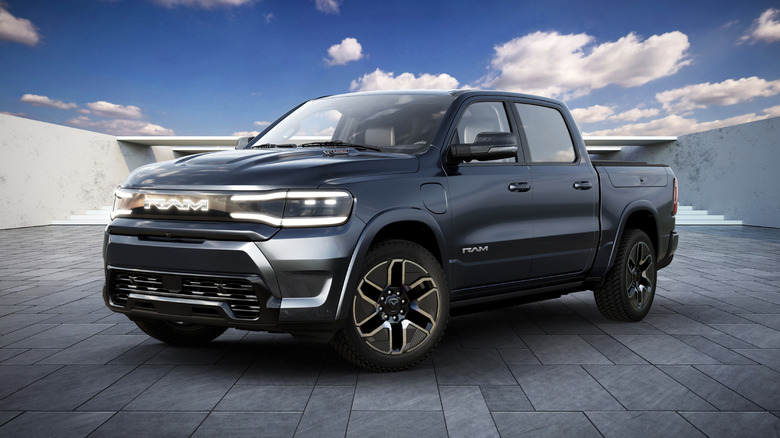
Stellantis just announced it got kicked in the nuts so hard it threw up a little bit. Well, actually that might be underselling what's going on. You see, the company just took on €22.2 billion (about $26.5 billion) in charges related to its electric vehicle program pullback. That number dwarfs writedowns suffered by Ford and General Motors that have come in response to changing regulations from the Trump administration and an overall cooldown of the EV market.
The news caused the Milan-listed stock to drop nearly 25% to their lowest levels since the group was created in 2021. In a statement, CEO Antonio Filosa said the charges are largely a reflection of overestimating the pace of the EV transition that "distanced us from many car buyers' real-world needs, means and desires." From Reuters:
"The reset we have announced today is part of the decisive process we started in 2025, to once again make our customers and their preferences our guiding star."
Alongside tariffs, slower demand in top market China, and cheap competition from Chinese manufacturers, legacy automakers are having to grapple with a slower-than-expected take-up of EVs, particularly in the U.S. where President Donald Trump has rolled back subsidies and dismissed green technologies.
[...]
Fabio Caldato, portfolio manager at AcomeA SGR, which owns Stellantis shares, told Reuters that higher-than-expected charges had become more likely after hefty impairments by GM and Ford in recent months.
[...]
The charges, booked in results for the second half of 2025, mainly relate to re-aligning models with customer preferences and new emission rules in the U.S., "reflecting significantly reduced expectations for EV products", Stellantis said.
They also reflect reductions to the group's EV supply chain, revised estimates for contractual warranty provisions due to poor product quality, and previously announced job cuts in Europe.
The writedowns include about 6.5 billion euros in cash payments expected to be spread over four years from 2026.
Filosa got to work right away with scaling back Stellantis' EV ambitions when he took over for former-CEO Carlos Tavares last year. Part of that includes the news that the company will sell a 49% stake in a battery joint venture it has in Canada to South Korean partner LG Energy Solution.
It's now expected that Stellantis' preliminary net loss will be between €19 and €21 billion in the second fiscal half of 2025, and it won't pay a dividend this year. Cash burn is also expcted to be between €1.4 and €1.6 billion in the second half.
For those keeping score at home, the $26.5 billion writedown Stellantis is taking far exceeds Ford's at $19.5 billion, General Motors at $6 billion and Volkswagen/Porsche at $3.5 billion. It's rough out there.
2nd Gear: Toyota reshuffles the deck

Toyota's current CEO, Koji Sato, is stepping down from his position at the world's largest automaker on April 1 after just three years as it reports a drop in quarterly profits. Taking his place is current CFO, Kenta Kon — a close ally and former secretary of Chairman and Trump buddy Akio Toyoda. Sato will then become vice chairman and take on a newly created role as the automaker's chief industry officer.
Toyota just posted a net profit of 1.257 trillion yen — roughly the equivalent of $8 billion — for the final three months of 2025. That sounds pretty good until you realize it was down 43% from the previous year, and at a company like Toyota, that's really not good enough. Hell, sales actually rose 4.6% to a record 11.3 million vehicles in 2025, but that doesn't seem like it was enough to keep his job. From Reuters:
Kon, known for keeping a tight lid on costs, is widely seen as the architect of a planned buyout of forklift subsidiary Toyota Industries. The deal, which would tighten the Toyoda family's grip on the group, has drawn opposition from minority investors who say it lacks transparency and is significantly underpriced.
Kon served as Toyoda's secretary from 2009, when Toyoda became CEO, until 2017, when Kon was appointed head of the accounting division. Toyoda, the founder's grandson, led Toyota for almost 14 years before naming Sato as his successor.
The leadership change was announced alongside third-quarter results, with Toyota raising its full-year operating profit outlook by almost 12%, helped by a weaker yen and cost cuts.
Kon's main focus will now apparently be on internal company management, and Sato will concentrate on broader industry issues. These are changes that are designed to speed up decision-making at the company as it tries to fight off Chinese competitors that have been far more agile.
3rd Gear: EV LL RR OTW
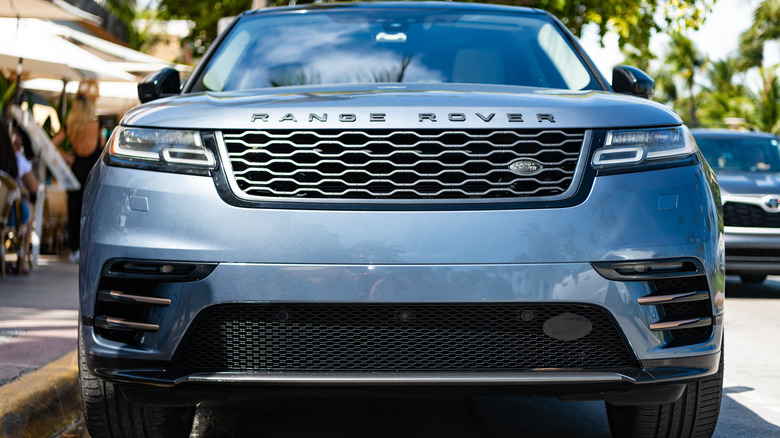
Jaguar-Land Rover is expected to unveil a smaller electric Range Rover at some point this year, and it's set to be the first vehicle on the company's new Electric Modular Architecture. It'll apparently be a "unique" vehicle in Range Rover's lineup, according to JLR finance boss Richard Molyneux, but he didn't give many details beyond that.
It's widely speculated that the new model will replace the Range Rover Velar in the RR family with a longer, lower body in an effort to improve aerodynamics and driving range. I don't know about you all, but that sort of sounds like we're about to get an electric Range Rover wagon, and that's something to be excited for. From Automotive News:
Prototypes that have been seen uner going tests suggest its body style will take design cues from station wagons.
JLR will build EMA models at its Halewood plant in northwest England, which has recently been overhauled to support the new platform. The Range Rover Evoque and Land Rover Discovery Sport are built in Halewood.
Molyneux said JLR is moving into a "busy launch period for over the next couple of years."
The company will unveil the first model in its Freelander-branded SUV range this year, Molyneux said. The new Freelander brand has been developed in collaboration with Chery and its models will be built at a joint venture plant near Shanghai operated by a JLR-Chery joint venture.
The first new-generation Freelander will be a plug-in hybrid developed on Chery's T1X platform, which is shared with the company's Jaecoo, Omoda and Tiggo brands. It will launch in China, with a global rollout to follow.
Of course, we're still waiting on the full-size electric Range Rover to officially debut. It'll supposedly be out this year at some point and will feature an 800-volt architecture with a 117 kWh battery back and over 300 miles of range. The issue is, I was told this SUV was just a few months away when I went on the first drive for the new Range Rover back in April of 2022. As you can tell, it — like most things from JLR — has been heavily delayed.
4th Gear: Ford promises more affordable cars are coming
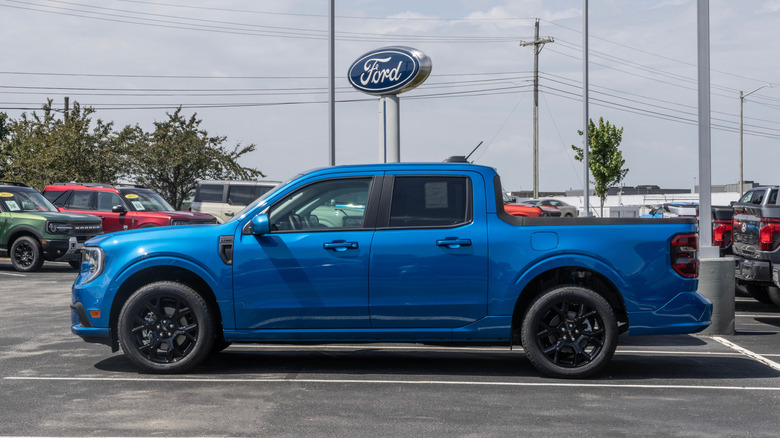
Ford execs say that there are going to be some more affordable vehicles coming down the pipeline, much to the relief of both dealers and customers. While speaking the the brand's National Automobile Dealers Association meeting in Las Vegas, executives said that there are five models priced under $40,000 that'll be added to the automaker's portfolio by the end of the 2020s — starting with a midsize electric pickup truck next year. They'll apparently get all sorts of powertrains, according to Andrew Frick, president of Ford Blue and Model e. From Automotive News:
"It will be across our lineup of cars, trucks, SUVs, vans, and it will be multi-energy," Frick told Automotive News, adding that the products will all be new nameplates, not redesigns. "That'll start to fill in the product side, but we have work to do to help affordability in the near term more tactically."
Affordability has become a key issue for Ford dealers since the company stopped making its entry-level nameplate, the Escape crossover, in December.
Executives at the Feb. 4 meeting detailed plans to boost the mix of entry-level trims on vehicles including the Explorer and Bronco, as well as leaning further into certified pre-owned vehicles, extended-term financing and a first-time buyer program. Ford also plans targeted incentives for current Escape customers to keep them with the brand.
"I would say there's probably 10 actions that we'll do to help affordability," Frick said.
Dealers were told the company hopes to keep a vast majority — roughly 70 percent — of Edge and Escape customers from leaving the brand, according to two retailers who attended the meeting. They said Ford also hopes to boost CPO sales through the Ford Blue Advantage program by as much as 30 percent this year.
It feels sort of crappy that sub-$40,000 cars are what counts as "affordable" these days, but I guess that's the world we live in now. I suppose it's better than nothing... barely.
Reverse: That sucks
 History.com
I'll tell you what, friends. I really wish that this hadn't happened, becuse we'd be living in a far different world today if The Gipper's parents were doing literally anything else on February 6, 1911. Unfortunately for all of us, they had a damn kid, and if you want to learn more about that fiasco, head over to History.com.
On the radio: The Cure - 'Friday I'm In Love'
Folks, it's bitterly cold outside in New York City today, but that doesn't change the fact it's Friday. We've got to take the wins where we can get them, right? Enjoy your weekend... and go Seahawks.