

2026 Subaru Outback Wilderness Turns The Subaru-Ness Up To 11
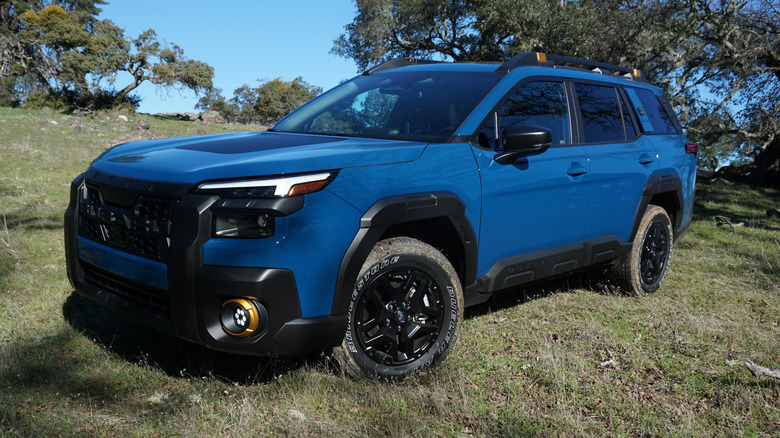
The new Subaru Outback is already an immensely capable vehicle, able to tackle far more right out of the box than any lifted wagon (or crossover) has any right to. So, when it came time to develop the Wilderness version, Subaru's engineers had their work cut out for them. They needed to take a car that could already do pretty much anything the average person could throw at it, and make it even more extreme. In essence, they needed to take it up to 11, because sometimes, 10 just won't do.
Thanks to a raised and retuned suspension, electrically controlled dampers, a more rugged exterior, reinforced underbody protection, beefier tires and a slew of other off-road-focused bits and bobs, the 2026 Subaru Outback Wilderness is ready to tackle whatever trail you've convinced yourself you're ready to go down. While its looks certainly aren't for everybody, and people will bemoan the fact it's slightly less wagon-ish than before (an argument I'm not interested in having), it's hard to argue that the Outback Wilderness doesn't do exactly what it set out to: be the most realized and idealized version of an off-road Subaru.
Full Disclosure: Subaru flew me out to Napa, put me up in a lovely hotel and fed me a lot of meat, all so I could drive the 2026 Outback Wilderness
Make it wild
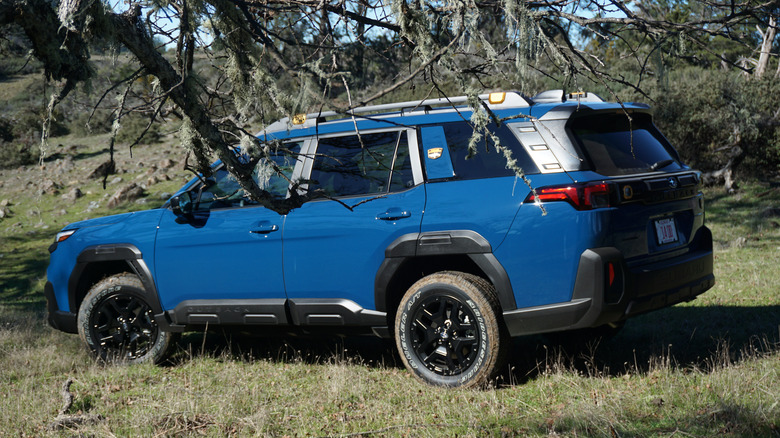
Unlike the previous-generation Outback, the new one was designed from the start with the Wilderness trim in mind, and Subaru's designers and engineers say that gave them a lot of room to play and make a vehicle that was truly capable of hanging with the best of them when the going gets rocky. The biggest difference between the Wilderness and the normal Outback — under the skin at least — is a revised chassis and suspension. The Wilderness has 9.5 inches of ground clearance, whereas the normal car has 8.7 inches. Between that and the redesigned front and rear bumpers, its approach, departure and breakover angles are all improved. The Outback Wilderness also features electronically controlled dampers, which Subaru says help the car absorb smaller bumps and remain stable during high-speed cornering or traveling on uneven terrain.
 Andy Kalmowitz / Jalopnik
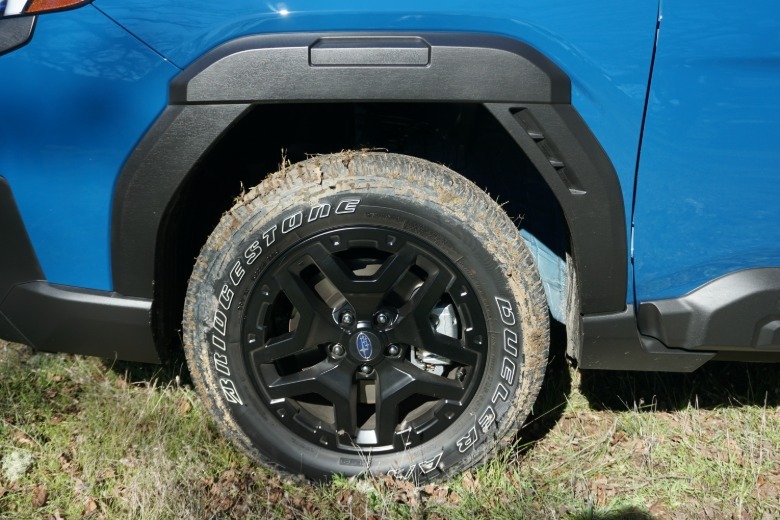
Helping the off-road effort mightily is a set of five (yes, there's a full-size spare) 225/65R16 Bridgestone Dueler all-terrain tires, as well as a Wilderness-specific dual-mode X-Mode, Subaru's name for its off-road driving mode. The two modes are fairly simple: Snow/Dirt and Deep Snow/Mud. They can basically be summed up as stuck and screwed. Subaru also shortened the final drive ratio ever so slightly from 4.11 to 4.44 and added a transmission cooler, rear differential temperature sensor, and a whole bunch of underbody protection to make the Wilderness a bit more capable when the pavement ends.
Driving to the Wilderness
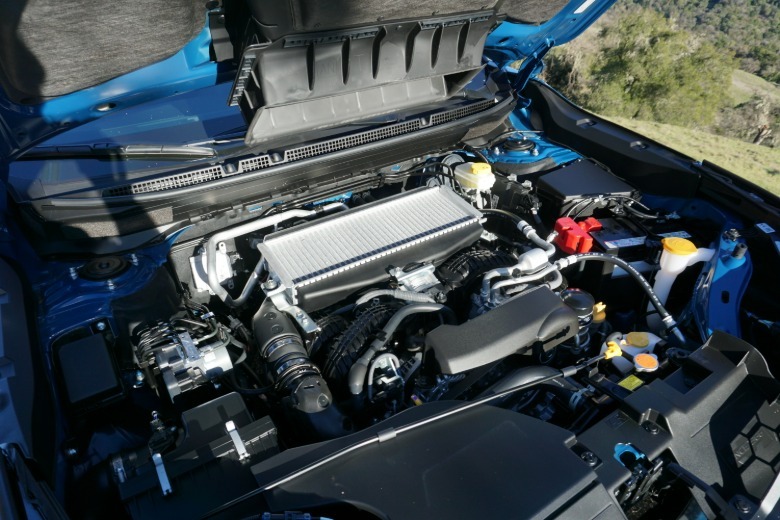
All Outback Wildernesses are thankfully powered by Subaru's turbocharged 2.4-liter Boxer flat-four engine, putting out a solid 260 horsepower and 277 pound-feet of torque. It is, of course, mated up to a continuously variable automatic transmission with eight fake gears, and power is directed to all four wheels through the Japanese automaker's tried and true Symmetrical All-Wheel-Drive system. This 3,973-pound beast isn't exactly a barn burner in its current form, with my butt estimating a 0-to-60-mph time in the low-to-mid-6-second range, so I cannot even imagine how slow it would be with the naturally aspirated 2.5-liter Boxer engine of the standard car. In any case, despite its brick-like aerodynamics and chunky tires, the Wilderness still gets 21 miles per gallon city, 27 mpg highway and 23 mpg combined, according to Subaru. That's not stellar for a four-popper, but I've certainly seen worse from off-road-focused vehicles.
 Andy Kalmowitz / Jalopnik
The Wilderness' electronic dampers do a fairly solid job of keeping things steady on the road, but a corner carver, the Outback Wilderness is not. There's no steering feel at all, but the wallowy-ness of the standard car is kept somewhat in check. It feels a bit more progressive in that way. Everything sort of happens in slow motion, and it's very predictable. There's also very little in the way of side-to-side body movement in the chassis, but there is plenty of roll. None of this matters, though, since no one is going to hustle an Outback Wilderness down a twisty road anyway.
What they will do is cruise down the highway or drive around town, and for that, it is wonderful. Other than some added noise from the taller roof rails and all-terrain tires, it drives down the road pretty much like the standard Outback, which is a great thing. That means it's quiet and comfy, and you won't tire of driving it after a long trip. Aiding in this is Subaru's excellent suite of driver safety and assist technology. Unfortunately, the Wilderness doesn't get the company's new Level 2 highway driving system seen on the XT Touring, but all of the other EyeSight components we've come to expect from Subaru are accounted for and work as expected.
 Andy Kalmowitz / Jalopnik
Off-road is where this car really shines, though. It's hard to explain just how good it is — you'll just have to take my word for it. Subaru brought us to a massive rain-soaked ranch in Northern California to put the Outback Wilderness through its paces, and despite some rugged terrain and a hell of a lot of mud, it remained steadfast. That extra ground clearance certainly made a difference, as did the beefed-up X-Mode and more off-road-oriented tires.
At no point did this car ever feel even close to getting stuck, and when grip let go on one tire, I could hear the system's active torque vectoring moving power from wheel to wheel. It was really something to behold. I'm not saying the Outback Wilderness is a rock crawler that can keep up with a modified Wrangler, but you'll have to be a real sicko to get this thing stuck, and if you do, it's almost certainly going to be your fault.
Not so wild inside
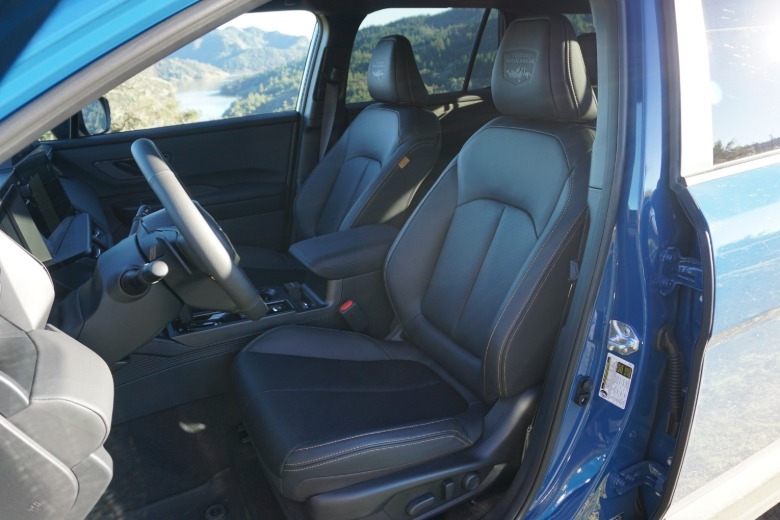
Most of the Wilderness-y changes to the 2026 Outback have been kept to the exterior and under the skin, so there aren't a ton of differences in the Wilderness' interior over the regular Outback's, but that's not necessarily a bad thing. The new Outback is a wonderful place to spend time, and I'd go so far as to say it's the nicest interior Subaru has ever made.
 Andy Kalmowitz / Jalopnik
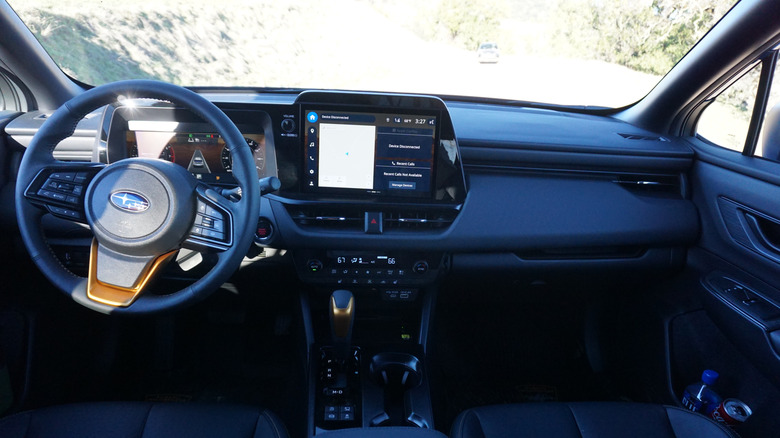
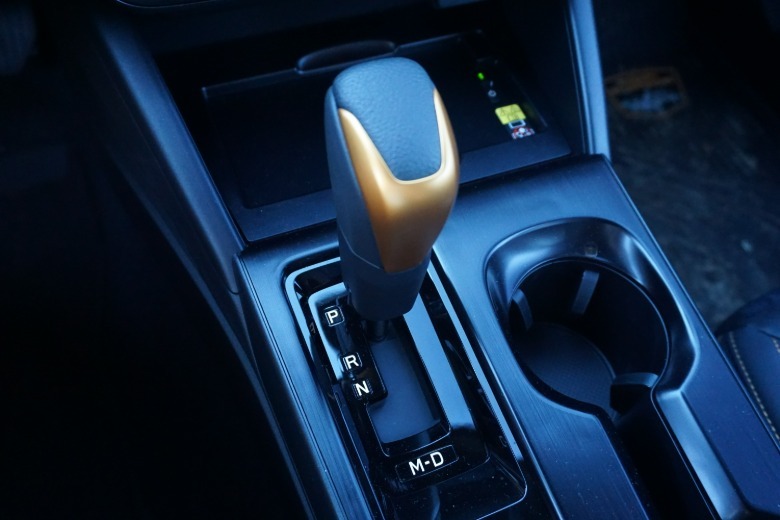
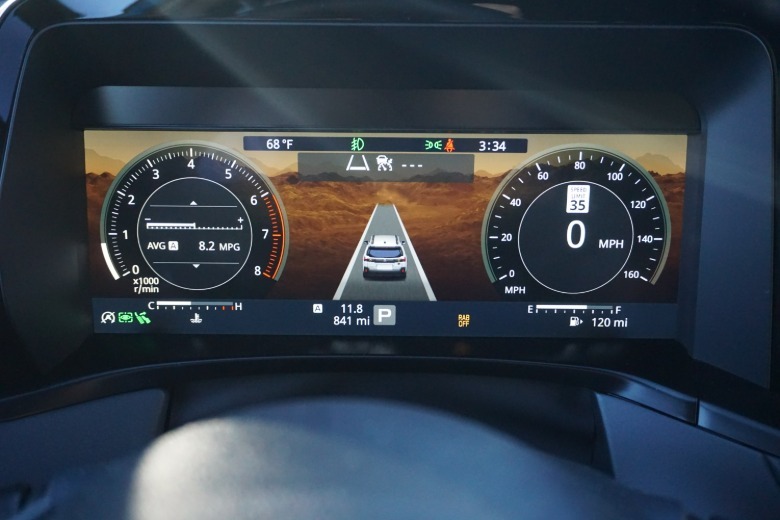
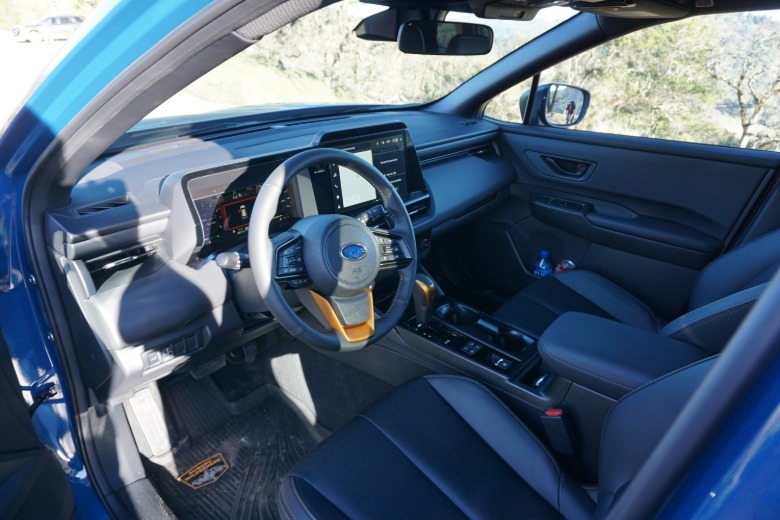
Still, there are a few Wilderness-specific items inside. The 12.3-inch digital gauge cluster gets a new bespoke desert background, as does the brilliant 12.1-inch central touchscreen. The Wilderness also comes standard with Subaru's StarTex seating material, but if the buyer is feeling fancy, slate black Nappa leather is also available. The big difference between the two cars is the addition of anodized copper accents. It's mostly in the stitching, but a few seconds of looking around will reveal all sorts of copper touches on surfaces like the steering wheel and shifter. Of course, there are plenty of "Subaru Wilderness" badges to be found as well.
 Andy Kalmowitz / Jalopnik
Other than that, the Outback Wilderness' interior is still just as great a place to be as the regular car's, getting all of the tech upgrades we saw when we first drove the new car in November of last year. Gone is the old, crappy 11.6-inch vertical infotainment screen, replaced by the aforementioned 12.1-inch horizontal display. It's both incredibly easy to use and very useful, coming with both wireless Apple CarPlay and Android Auto. And even though it's bigger than the old screen, Subaru added real buttons back to the Outback's interior, namely for climate functions. There are also plenty of hard buttons for stop/start, camera activation, auto brake hold and traction control. It's hard to find fault with this car's layout. Knowing where buttons are is always very comforting when you're out on the trail and don't want to look like a goofus.
 Andy Kalmowitz / Jalopnik
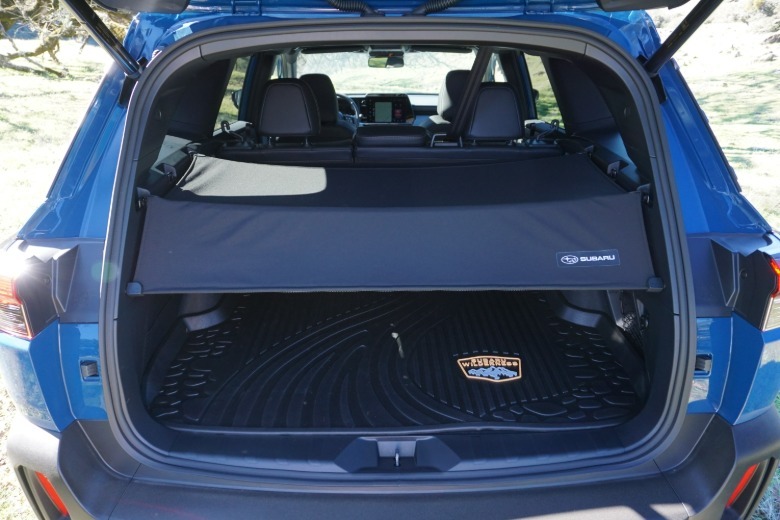
The Outback Wilderness also maintains the quiet, comfy qualities the new Outback brought with it. Redesigned front seats, improved sound deadening and an overall refresh of material quality really helped toward that. There's still plenty of room for four adults (and one small adult sitting in the middle seat), and everyone at the corners even gets heated seats as standard. Trunk space remains the same as the standard Outback, with 34.6 cubic feet — up two cubic feet from the regular car because it's 1.4 inches taller now.
A wild exterior
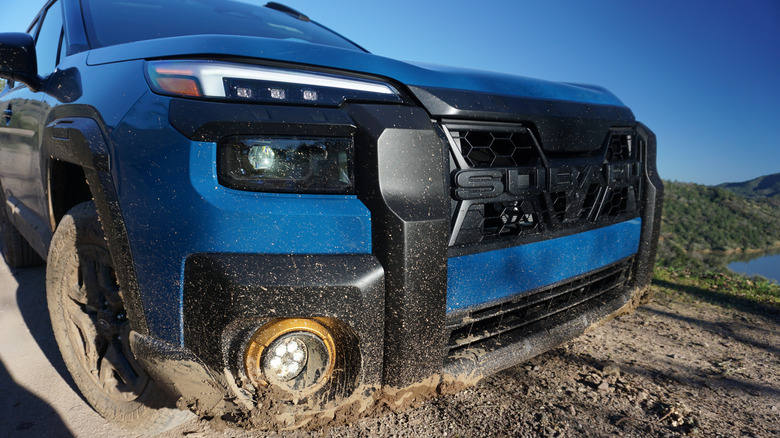
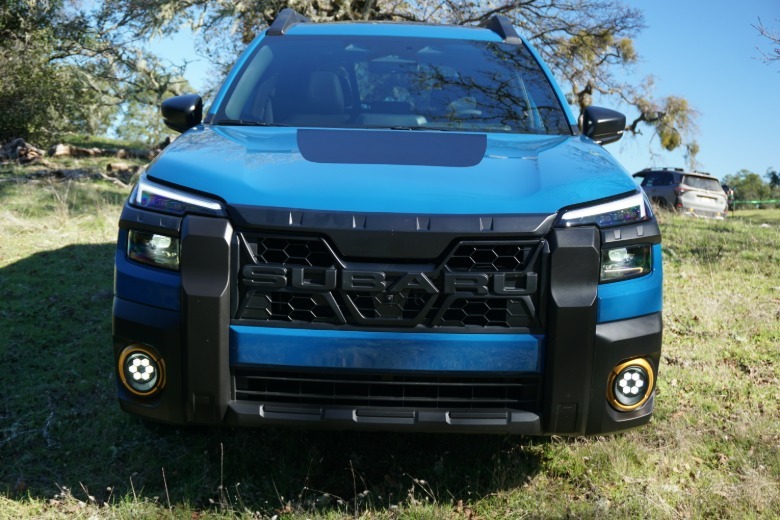
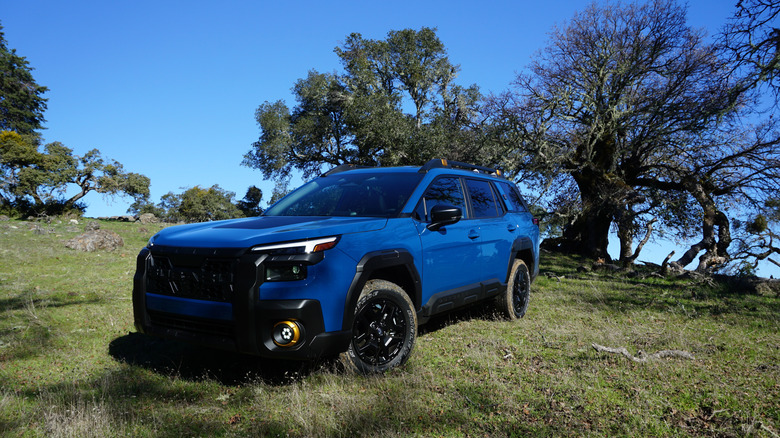
The Outback Wilderness' exterior gets a far more drastic makeover than its interior does, though it's still most certainly a Subaru, and it continues with the anodized copper styling touches we saw on the interior. The front fascia is far more butch than the standard Outback's, and its designers decided to set it apart by getting rid of the traditional badge and replacing it with "SUBARU" lettering in a more "trucklike" horizontal grille. Those are their words, not mine. Subaru also threw on a matte black hood decal, which looks aggressive and is meant to cut down on glare when going off-road. To help throw glare to other drivers, the automaker added hexagonal "heritage" LED foglights to the corners of the bumper, in keeping with Outback tradition.
 Andy Kalmowitz / Jalopnik
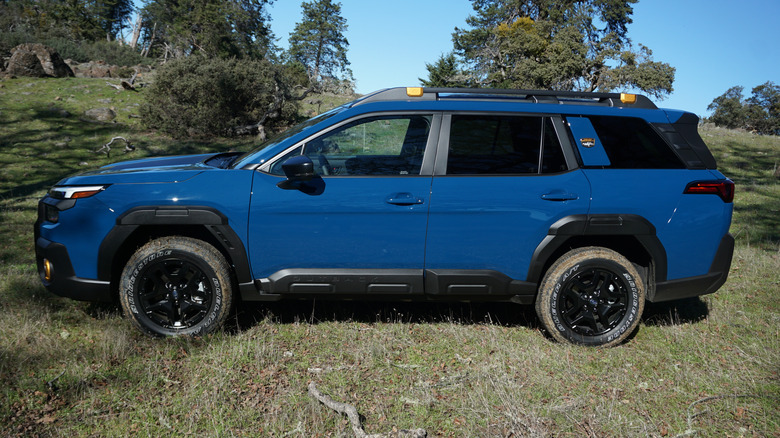
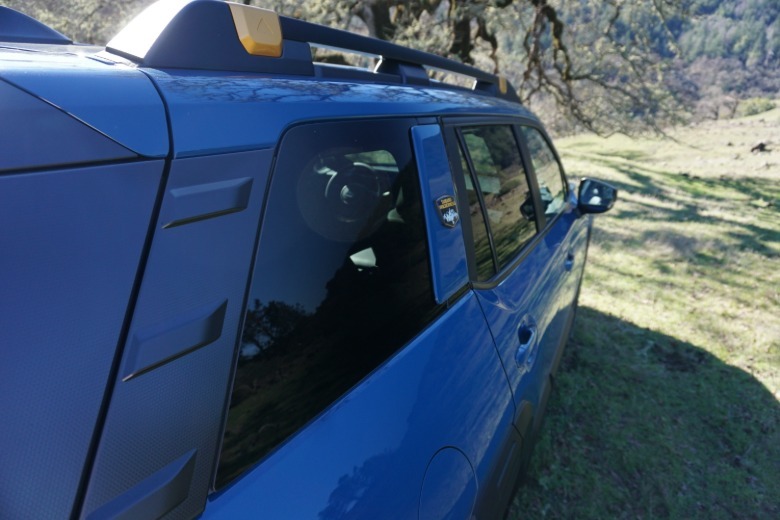
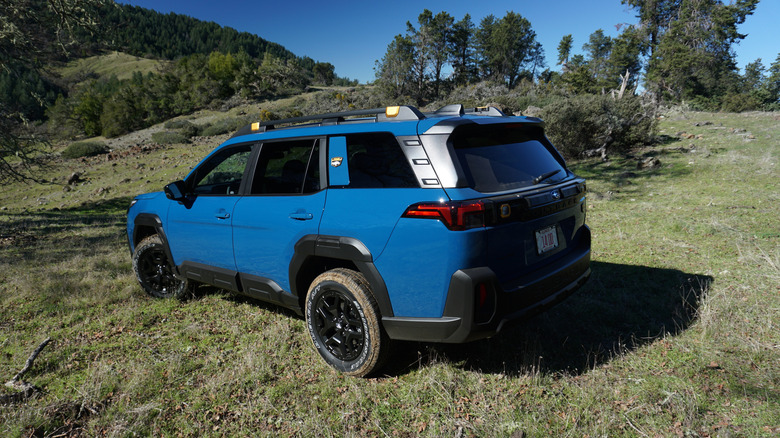
Around the side, Subaru tidied up the plastic cladding over the wheel wells, gave the Wilderness more rugged rocker panels and threw on a couple of Wilderness logos on the C-pillars. It also gave the Outback Wilderness bespoke 17-inch wheels (meant to look more off-roady than the old car's) wrapped in all-terrain tires. The raised roof rails can hold up to 800 pounds of whatever the hell you want, and they can deal 220 pounds of lateral load, meaning you can tie a hammock to it and relax. They also come with integrated tie-down hooks to make loading the gear you're definitely going to use even easier.
 Andy Kalmowitz / Jalopnik
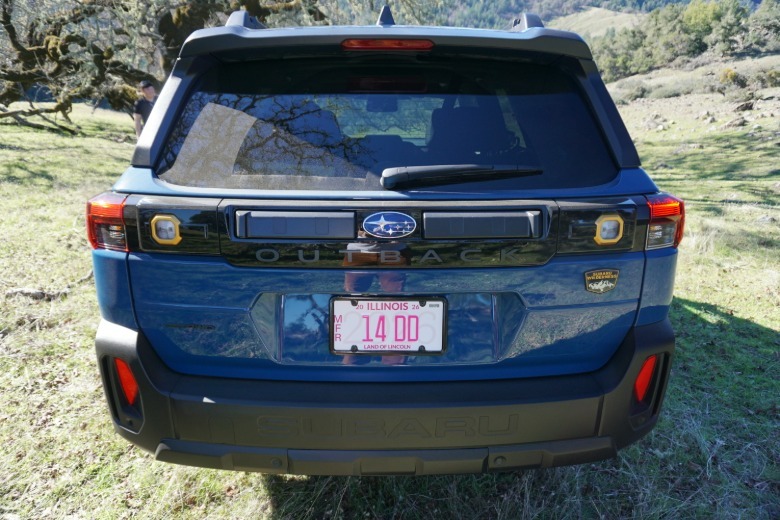
Out back, the horizontal, truck-like look continues, and Subaru fitted a hitch-ready bumper (which itself has been redesigned) that'll allow you to tow up to 3,500 pounds of your crap. The tailgate itself has a more rugged, Wilderness-appropriate look, and the real neat add-on back there is the "Utility Cladding," those two black bars flanking the Subaru logo on the tailgate. They're meant for you to lay your skis or other gear against them, and the tough material they're made out of isn't supposed to get damaged. It's the perfect rough and tumble trim piece for your rough and tumble life.
 Andy Kalmowitz / Jalopnik
All in all, the Wilderness isn't a massive departure from the already more aggressive Outback, but the things Subaru did change on this car certainly help to make it stand out just that little bit more. Its looks certainly won't be for everybody, but I can't recall a single Subaru that has ever won a beauty contest.
Equipping your equipment
From the get-go, the 2026 Outback Wilderness comes with a hell of a lot as standard. Trim levels don't work the same as the standard car. Instead, there's the base Wilderness and a couple of equipment packages to choose from. Still, from the jump, buyers get all of the Wilderness-specific off-road goodies, those excellent screens on the inside, a 10-way power driver's seat, heated front and rear seats, LED lights all around, Subaru's EyeSight safety suite, dual-zone climate control, fog lights, a leather-wrapped steering wheel, a power tailgate and StarTex interior trimmings. All of that comes to $46,446, including destination.
 Andy Kalmowitz / Jalopnik
From there, Subaru offers Optional Package 22, which gives buyers a power moonroof, navigation and a 360-degree surround-view camera. The first two are take it or leave it, but the camera system is incredibly useful, especially off-road. That triumvirate of features costs $2,045 and seems like a good middle ground.
Finally, there's Optional Package 23. In addition to everything from the standard Wilderness and the 22 package, it adds luxury features like Nappa leather, a 12-way power adjustable driver's seat with memory and leg extension, ventilated front seats and power-folding rearview mirrors. This kit doesn't come cheap, though, costing $4,090 and bringing the total price to $50,535. That's certainly a lot of money, but the Outback Wilderness is a lot of car, and that's just about what the average car costs these days anyway.
Outback overkill
Nobody needs an Outback Wilderness to be as capable as it is. Hell, nobody really needs a regular Outback to be as capable as it is, but we live in a world of overkill these days, and the Wilderness is harmless as far as overkill is concerned. Sometimes, it's just nice to know a car can drive over that big rock, even if it never actually will. Maybe it's got something to do with Americans' yearning for Manifest Destiny. I can't say for certain.
The 2026 Subaru Outback Wilderness is for the outdoor adventurer in us all who wants to take the road less traveled. Most of us have a deep, primal desire to make a hard left off the road and disappear into the woods every once in a while. The Outback Wilderness is great at that. And, for all the times we keep it on the straight and narrow, it'll be more than up to that task, too.