

5 Car Brands You May Be Pronouncing Wrong
The auto industry is filled with global players, so Jalopnik readers have probably gotten used to seeing us talking about brands from all over the world. Literally talking about them out loud can be a bit trickier, though, especially if the only language you speak is English. And even one of this country's own iconic auto brands — considered by some as American as baseball, hot dogs, and apple pie — isn't pronounced the way it looks: thanks to Louis Chevrolet's Swiss-French roots, his eponymous brand ends with a "lay" sound, not a "let."
The list of names to know is getting longer all the time, too. For example, the Chinese auto industry has seen pretty amazing growth in recent years, with a number of that country's brands now among the world's sales leaders, and, already, the onslaught of Chinese cars is coming in Europe. Plus, even though Chinese EVs won't cost $10,000 in the U.S., plenty of Americans are interested in vehicles built in China — and some are already driving them, since both the Buick Envision and Lincoln Nautilus are made there.
With that in mind, let's learn how to deal with five of the harder-to-pronounce car brands, including both some new names and some old ones. You'll be speaking Jalopnikese in no time!
Tesla
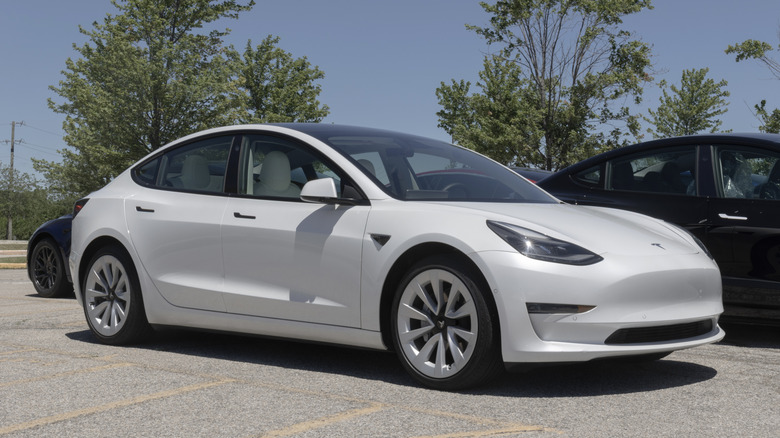
This one may seem pretty simple, but, apparently, there are many people out there who think that Elon Musk's car company should be pronounced with a "z" — like "Tezla." It's technically the difference between an unvoiced "s" sound — as in snake or super — and the voiced "s" you hear in words like cars or toys.
Now, going back to the source, Nikola Tesla, the Serbian-American inventor for whom the car brand was named, used the unvoiced "s." That is the standard pronunciation of it in Croatia, where he was born, as well as in other South Slavic languages. Additionally, the few words used in American English with a similar pattern of letters, such as "legislator," generally have the soft "s" sound. But Musk has had a tendency to use the voiced version for...reasons. Some people attribute it to his accent since Musk actually grew up in South Africa after his Canadian father moved the family there to support the country's brutally racist Apartheid government. For what it's worth, even today Starlink wants an exemption from South Africa's laws about Black ownership (which would negatively impact the business of Musk's white-owned satellite Wi-Fi venture).
This is where we'd usually add some happy tidbit about Tesla's current business, but Musk's off-the-field behavior, and seeming lack of interest in expanding the car brand, mean that Tesla sales are still dropping all around the world. Nor did it help that Germany's TÜV SÜD — a major quality-analysis organization — named the Tesla Model Y the most defective car this year.
Geely
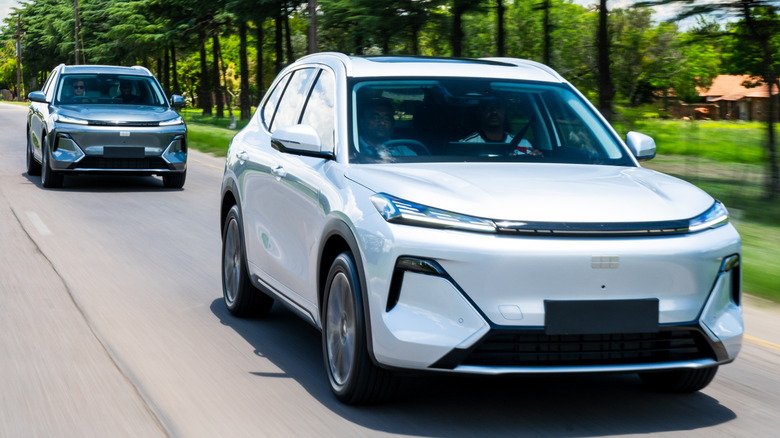
Much like Toyota and Ford, China's Geely is the name of both a company and a brand. In fact, the situation is that the Zhejiang Geely Holding Group is the lead shareholder of Geely Automobile Holdings Ltd., which, in turn, has a majority ownership stake in the brand Geely Auto; Geely Automobile owns the Zeekr and Lynk & Co. auto brands as well, but their pronunciation is pretty straightforward (Zeeker and Link). Geely, though, is pronounced with a soft "g" in all cases. There's a lot of discussion about this online, with many folks supporting the hard "g," but that's incorrect. Geely is an English transliteration of the Chinese word "jílì," meaning "auspicious" or "good fortune."
History-wise, the Zhejiang Geely Holding Group was founded in 1986 in Zhejiang, China, to make refrigerator components, but it didn't take long for the company to expand into the transportation sectors. Geely started with motorcycles in 1994 before becoming the country's first privately owned automaker in 1997, producing its first car the year after.
Another milestone for Geely came in 2010, when it purchased Volvo. As a result, through the Swedish nameplate, Geely got an early foothold into the European and U.S. markets. Just keep in mind that, while Volvo has Chinese plants for that country's markets, it still relies on European and U.S. production for other parts of the world. On the other hand, the Smart ForTwo is coming back, and Geely is building that car in China — in a partnership with Mercedes-Benz.
Rimac
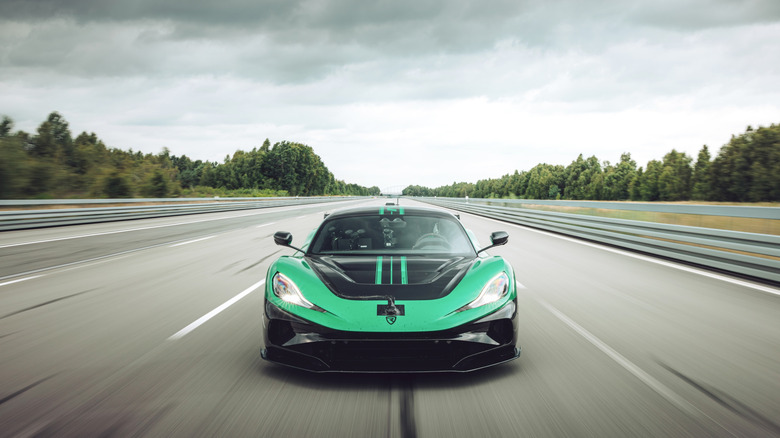
Founded in 2009 as Rimac Automobili, this is a small brand that makes big news with its all-electric hypercars: Remember when we got to watch the Rimac Nevera pass fast cars on the Nürburgring like they're standing still? Or how about when the 2,107-HP Nevera R set 24 new performance records and dropped a sub-8-second quarter-mile time? It's about what you'd expect from a company that was originally founded with a specific goal of creating the world's most powerful electric hypercar — yet you might not expect the way Rimac is pronounced.
That's the last name of the company's Croatian founder, Mate Rimac, and it's pronounced "ree-mahts" in the Croatian language. That said, Mr. Rimac is on record as saying he doesn't mind if folks use whatever pronunciation is easiest for them. As for Nevera, that's Croatian for summer storm.
We can also use Rimac's plans to revisit the pronunciation of Bugatti, another brand that sometimes confuses people: Is it Buh-gotti or Boo-gotti? Well, it's the latter, which means you now know how to say Bugatti Rimac, which is the name for a recent partnership between the two iconic brands — one that's supposed to be the most advanced hypercar company in the world. We'll reserve judgment until we get seat time in the Bugatti Tourbillon V16 Hybrid hypercar that's the first fruit of the partnership. FYI: That's "tour-be-on," the French word for whirlwind.
Xiaomi
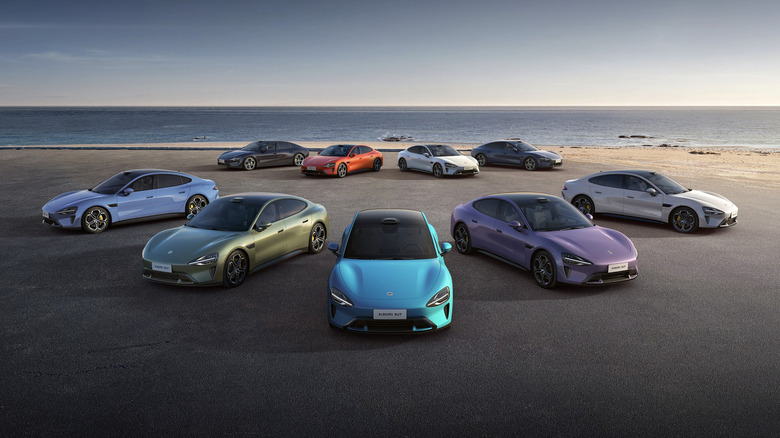
This is the brand that out-Appled Apple. It was founded in 2010, not as an automaker, but as a consumer electronics company focused on smartphones and other connected gadgetry. Xiaomi didn't start developing electric vehicles until 2021, but it showed off its first EV — the SU7 prototype — in December of 2023. By June 2025, a prototype showed it was faster at the Nürburgring than any production car in history. Apple's much-touted electric car, on the other hand, was announced in 2014, and the project was dead in a decade. It's too bad, too, because it was going to be a sick van with gullwing doors.
Further, Xiaomi's plans weren't just vaporware. Its sleek hyper sedan has been in production now long enough to help the company tally more than 300,000 overall deliveries through July 2025 – with some assistance from the company's second production vehicle, the Xiaomi YU7 SUV that debuted earlier this year. Setting the stage for more growth, Xiaomi opened its first European R/D and design center in Germany in September. Yet at the same time, Xiaomi continues to sell everything from hair clippers to TVs to cooking robots.
That kind of momentum gets people talking, so if you want to do your share, keep this in mind: It's pronounced "show me."
Hyundai
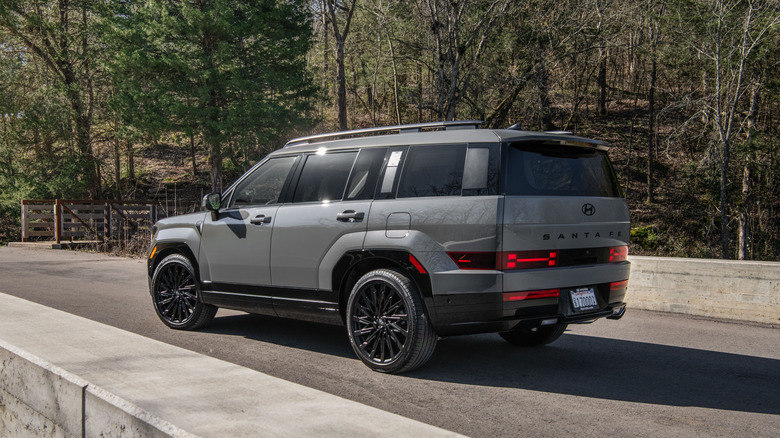
Yes, yes, we know that Hyundai launched a whole ad campaign in 2009 about how to pronounce its name. But give us a minute here. Hyundai began exporting cars to the United States in the mid-1980s, and, after some ups and downs, claimed its first North American Car of the Year Award less than two decades later, with the Hyundai Genesis. That, in turn, set the template for the launch of Hyundai's Genesis luxury division, which more recently showed off an extremely cool wagon concept that could easily go into production.
To celebrate its award, the company decided it was time to make sure everybody got its name right: So, in an ad that debuted on a Super Sunday, during Super Bowl XLIII, Jeff Bridges confidently informed us that "It's Hyundai, like Sunday." But it turns out that commercial wasn't quite accurate.
Hyundai comes from the Korean word for "modernity," and in that language, it sounds like "HYUN-day." Who knows, maybe that was originally thought of as too difficult — or just too foreign — for U.S. customers, but the company has begun pushing English people to use the latter pronunciation, just like the rest of the world. As Hyundai put it, it was a "change from the anglicized pronunciation of 'Hy-un-dai' to the global pronunciation: 'Hyun-day.'" And if you're wondering about "Hy-un-dai" that was apparently how it was pronounced in the United Kingdom. Which comes into play because the marketing behind this was aimed at Great Britain — for now.