

14 Car Repair Terms You Need To Know Before Visiting A Mechanic

Even within automotive circles, not everybody is a wrencher with an exhaustive understanding of what's going on under the hood. Whether you're knowledgeable about cars or not, there's usually some amount of angst, confusion, and mistrust that goes along with navigating the sometimes high-stakes conversations that take place between you and a mechanic. And even if you're at a reputable shop where there's no reason to have your guard up, there are still some car repair terms that you're going to want to understand before you hand over the keys.
Giving the best possible care to your vehicle and protecting yourself from repair shop shenanigans means knowing what your mechanic (or service writer) is talking about, how they usually describe certain things, and what it typically means for you, the consumer. The goal isn't to make you suspicious of every shop. It's to make sure you know when to ask a follow-up question. This list focuses on the words you're most likely to hear or see when you drop off your car. It's not obscure acronyms or deep shop jargon. These are the terms that show up on inspection sheets, estimates, and work orders, which quietly determine how expensive your day is about to get. Because while there are certainly some car maintenance mistakes that are keeping your mechanic rich, not knowing how to talk the talk doesn't need to be one of them.
Timing belt/timing chain (engine component)
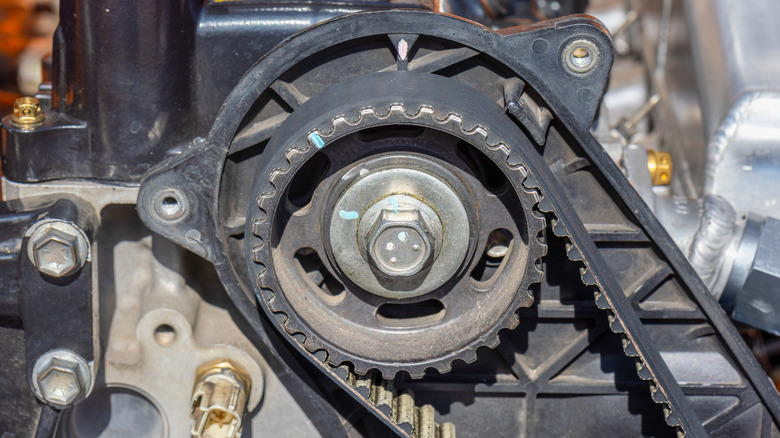
The timing belt or timing chain is responsible for keeping an engine's internal parts moving in sync. Its job is simple and unforgiving: make sure the valves and pistons never try to occupy the same space at the same time. When everything is synchronized, the engine runs smoothly. When it isn't, the engine experiences what you might call mechanical consequences.
A timing belt is generally considered to be a wear item, the kind of thing that should be replaced at regular intervals, like brake pads or tires. A timing chain is more robust and should last much longer, and there isn't typically a regular replacement interval for them.
Mechanically, timing belts and timing chains do the exact same job, though. And because the consequences of a failure can be catastrophic, a mechanic's recommendation regarding either the timing belt or chain should always be taken seriously. That's also why you should care if your car uses a timing belt or a timing chain.
Serpentine belt (engine component)
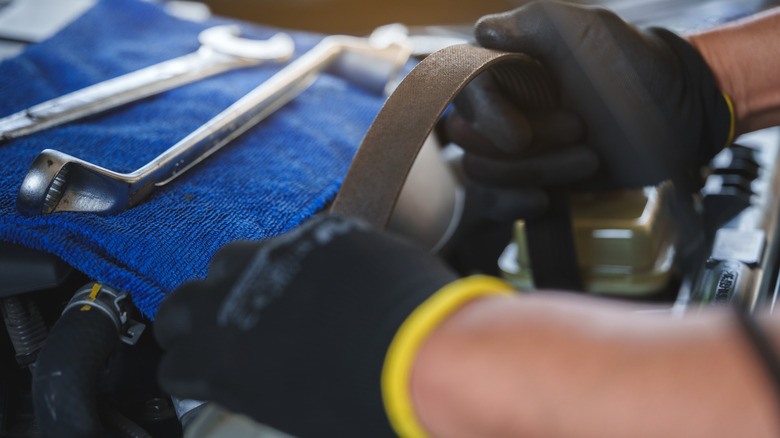
You know all of that nonsense under your hood that isn't exactly engine but still looks expensive and can be kind of hard to Google? A lot of that stuff needs power, and that power comes from your engine, often thanks to your serpentine belt. It's a long rubber belt that drives important components like the alternator, power steering pump, and air conditioning compressor. Because you've got this one belt winding like a serpent through these critical components, having one slip or break can instantly cause a lot of issues simultaneously.
Since most of us don't want to get a taste for instantly and concurrently losing AC, steering assistance, and all those electronics we take for granted, it's the kind of thing you want to address before it fails. Fortunately, this isn't typically a super expensive item, so staying ahead of it isn't the worst, and your mechanic bringing it up doesn't need to make your stomach drop to the floor. In any case, you're going to want to deal with it properly and should definitely stay away from all the horrible things you should never use to quiet a noisy engine belt.
Oil leak versus oil seep (engine condition term)

An oil leak and an oil seep are not the same thing, even though they're often treated as interchangeable. An oil leak means oil is actively escaping the engine and dripping or collecting somewhere it shouldn't. An oil seep usually refers to light residue or dampness around a gasket or seal without significant oil loss. The biggest difference, practically speaking, is that the leak is something you'll likely want to deal with during your visit, whereas a seep is something that you may get away with keeping an eye on until next time.
Since we're giving you some tacit permission to sleep on the seeps, at least for now, let's get serious about evaluating the leaks. That means knowing whether that fluid under your car is a problem. Much of that comes down to what's leaking. Bright colors — think yellows and greens — can point to a coolant leak, likely coming from a hose, water pump, or radiator. Dark browns and blacks typically mean oil — think seals and gaskets. Red is very likely a transmission or power-steering fluid leak. Oh, there's also water. That's usually not a huge deal and is likely normal condensation from your AC.
Coolant consumption (cooling system condition)
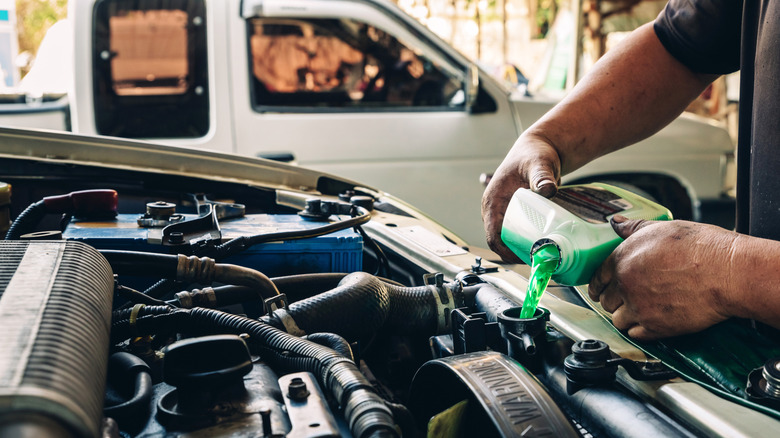
Coolant consumption is one of those concepts that sounds a little different than it is. Fuel is consumed — you burn it up, it makes your car move, and the nasty bits get spit out the back (more or less). But low coolant usually has less to do with consumption and generally points toward a leak. It's a closed system that usually operates pretty much like it's supposed to, so low coolant typically means that it's found a way to escape.
In any case, the nice part about this is that diagnosis is generally straightforward. As far as how complex (expensive) the solution will be, that's going to come down to where the problem is. A leaking hose connection may be trivial, whereas a cracked radiator could get spendy.
So, basically, when you hear coolant consumption, it's worth slowing the conversation down and figuring out what you're up against before you panic. Also, this is probably as good a time as any to point out that coolant is something that should be changed from time to time, and you don't want to find out what can happen if you never change your coolant.
Pull the head (engine procedure)
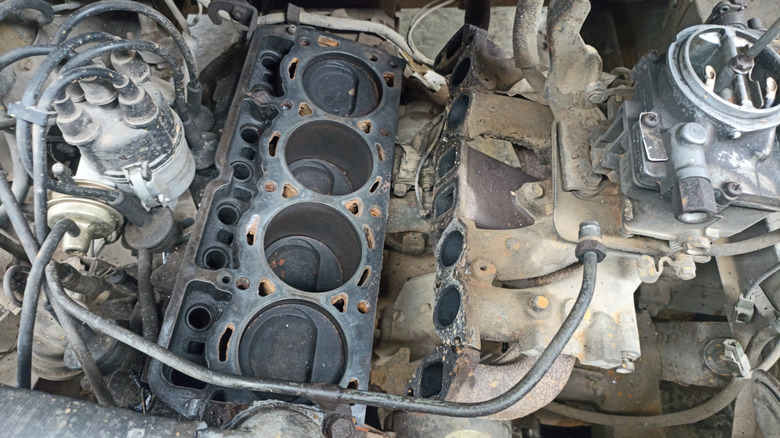
Just to be clear, the phrase "pull the head" in an auto shop should have the exact same effect as saying "time out" in a football game. Things just got real, and you're going to want to take a moment to collect yourself before going any further. At the most basic level, your cylinder head (the head) keeps the explosions inside. It seals the cylinders, creating the cozy environment necessary for the combustion bit of that whole internal combustion thing. It also contains complicated moving parts like your valve train and other stuff that makes this a task that separates the casual DIY types from proper home mechanics.
While pulling the head doesn't necessarily indicate a mechanical fiasco, especially when it comes to modern motors, there is probably going to be enough wiring, hoses, and fasteners involved to mean that you're getting into significant labor rate territory if nothing else. You're also going to need new gaskets, which are essentially the mechanical glue that keeps the whole thing sealed up tight, and no, that isn't going to be the time to finally decide to learn how head gasket sealer actually works.
Transmission service (transmission maintenance terms)
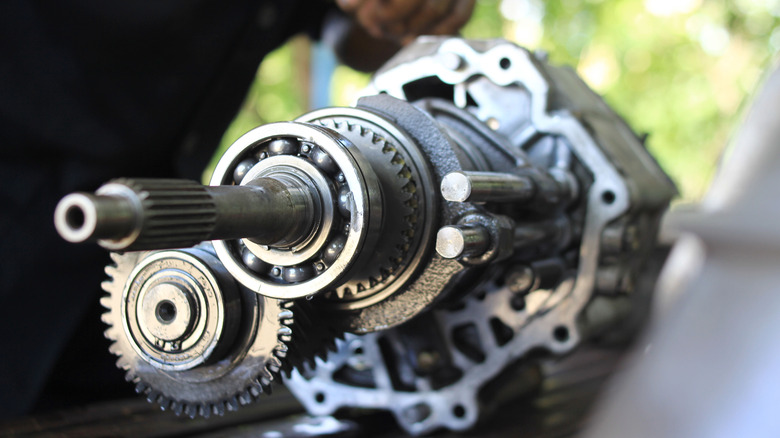
A transmission is one of those components where there's a really wide gap between routine maintenance and an actual problem — maintenance is usually no big deal, while repairs can get ugly and costly quickly. That's because a transmission is nearly as complicated as your car's engine and even less accessible. Repairs can be complex, and even getting to the thing can be a chore in itself. Hopefully, you're just going to be talking about routine care like checking or changing automatic transmission fluid, an important maintenance item that will hopefully help you avoid ever needing to do anything else.
Unfortunately, a genuine transmission problem can go from a repair to a replacement quite quickly, with the latter easily running into the thousands of dollars. And while it's tempting to think you're getting the hard sell on swapping the whole thing out, it's worth pointing out that modern transmissions can be a real bear to deal with and that it's probably not your mechanic's fault that they can't fix your transmission.
Transmission flush (transmission procedure)
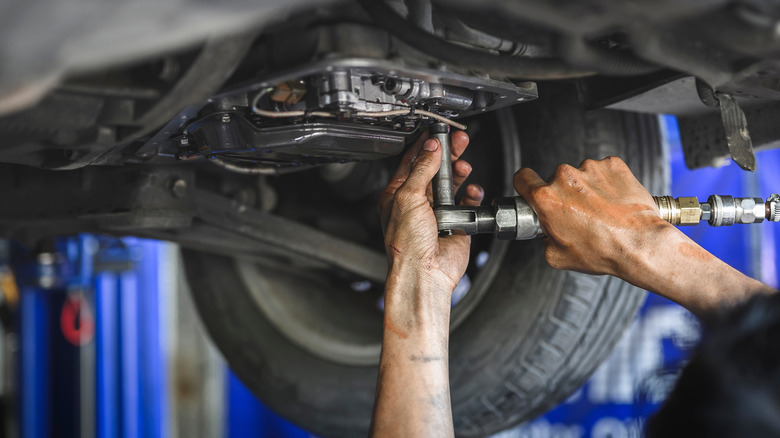
A transmission flush replaces fluid using pressurized equipment rather than letting it drain out naturally. The idea is to exchange more of the old fluid in one go. While a quick fluid change usually replaces about half of the stuff, a flush is going to purge 100% of it and replace it with new fluid.
In some vehicles, under the right conditions, this can be beneficial. In others, especially high-mileage transmissions, it can cause more harm than good, with some manufacturers even going as far as to make blanket prohibitions on them as a service standard. So, yes. It turns out that your gearhead uncle who warned you that your aging beater's transmission would be worse off after you flush it wasn't coming from nowhere.
Anyway, the term flush itself is deceptively tidy, and you'd be forgiven for thinking that it'd be impossible for there to be any downside. If a flush is recommended, it's fair to ask why it's appropriate for your vehicle and whether a simpler drain-and-fill is an option. This isn't second guessing. It's acknowledging that transmissions have long memories, and they don't always appreciate surprises. Heck, avoiding the conversation altogether is perhaps a benefit when you're considering if you should just change your transmission fluid yourself.
Torque converter (transmission component)
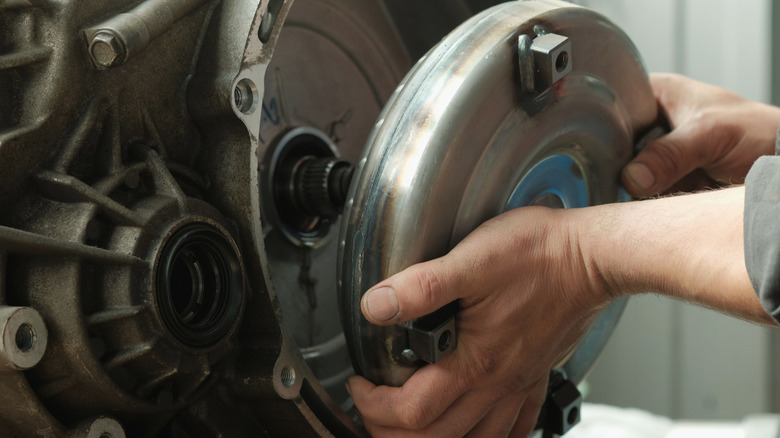
If you're driving a manual vehicle and you come to a stop, you push in the clutch. The engine and the transmission are temporarily separated and you can idle happily without stalling out. Simple, right? Inside an automatic transmission, things aren't as simple. A torque convertor sits between the engine and the transmission, quietly doing two jobs at once. It allows the engine to keep running when the car is stopped, and it multiplies torque when you pull away from a stop. When it's working, you never think about it. When it's not, it suddenly becomes a likely culprit when diagnosing a variety of wonky transmission headaches. If you're hearing a heavy knock or an almost musically percussive pounding sound, it may be an issue with your torque convertor. Slipping gears could mean the same thing.
So, when you hear torque converter coming from someone who is also likely to ask you for money soon after, what matters is how the conclusion was reached. Was it based on specific symptoms tied to known failure patterns, or is it being floated as a possibility because other easy explanations have been ruled out? The difference determines whether you're looking at a targeted repair or the beginning of an expensive guessing game. The torque converter isn't a villain, but it's often treated like one, mostly because it's invisible, complicated, and attached to a hefty labor estimate. Still, it's a pretty fascinating component, and it's an ingenious part of how your automatic transmission knows when to switch gears.
Alignment (suspension/steering service)
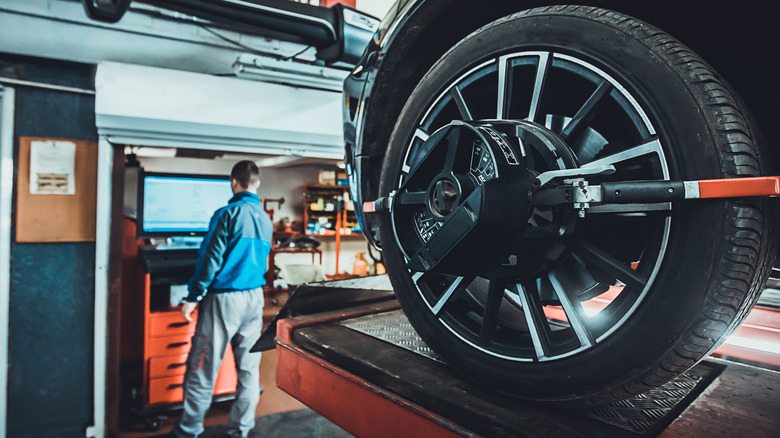
An alignment adjusts the angles of your wheels so they meet the road the way the vehicle was designed to. Those angles affect handling, steering feel, and tire wear. When the alignment is off, tires wear unevenly, the car may pull to one side, and steering can feel less precise. So, while it's easy to take for granted that your wheels are just going to point where they're supposed to, it turns out that if left to their own devices, they don't quite do that. And while hearing things like "tire wear" or "affecting handling" can sound vaguely esoteric, in reality, tire wear can mean trashing one or more of your brand new tires, and that slightly janky handling can be the difference between you being able to stop before rear ending someone and not.
What we're saying is that you should probably get the alignment when your mechanic suggests it, at least when you're talking about a shop visit that includes new wheels, new tires, and new or adjusted suspension components. Ultimately, it's all about geometry, and in the real world, geometry adds up. That's why you should get your alignment done even though you may not want to.
Control arm bushings (suspension wear item)
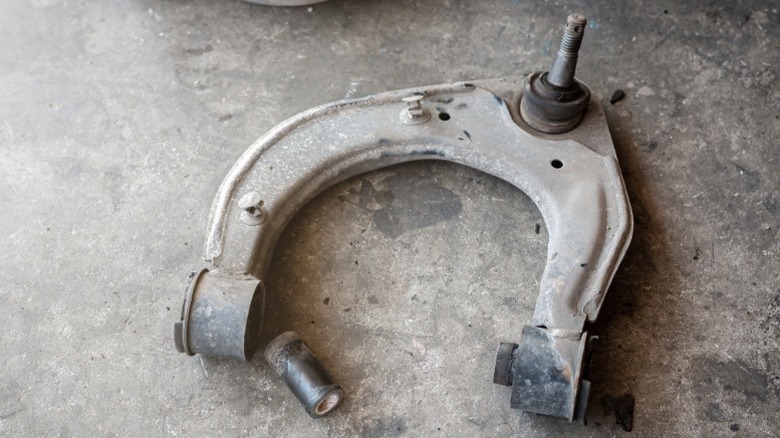
Have you ever heard a bit of a ka-chunk when zipping around a turn or bouncing over a bump? Your control arm bushings are what's supposed to keep that from happening, and feeling or hearing that sort of thing can be a sign that they're going bad. Basically, they're slightly squishy suspension components that help provide the give that your suspension needs to stay in steady contact with the road while isolating you in the cabin from some of that sensation.
Before you suggest that this is getting a bit far in the weeds for a list like this, just know that everything from uneven tire wear to a steering wheel that doesn't remain straight can quite often be traced back to a control arm bushing (or maybe the control arm itself). The bushings can wear out and the arms can get bent, so your mechanic probably isn't coming out of nowhere if this topic comes up.
Suspension components live hard lives, and bushings are no exception. They're meant to wear out eventually.
Brake bleeding (brake procedure)
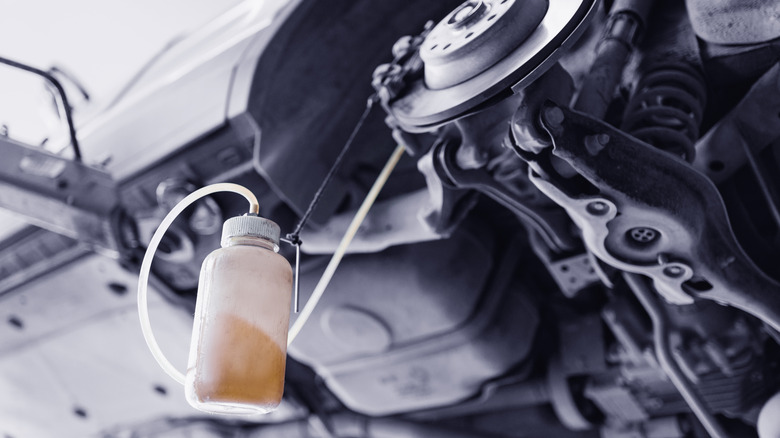
Brake bleeding removes air from the hydraulic brake system. Air compresses. Brake fluid does not. If air is present, the brake pedal can feel soft or inconsistent, which is why bleeding is required after certain types of brake work. This is one of those times when being dialed in to the feel of your vehicle can help you realize that something is off before even your mechanic would. If the brake pedal just feels wrong when you press on it, you may be feeling a squishy sponginess that's coming from those little air bubbles throughout your brake lines.
Obviously, your brakes are really important, so it isn't the kind of thing where you want to mess around, but this is one where you may be able to notice, diagnose, and address the problem all on your own. So, here's how to bleed your brakes by yourself if you want to avoid the conversation altogether. Otherwise, if it does come up during a service visit, think back to your pedal feel and decide if you've noticed any reason to think there may be an issue going on.
Courtesy inspection (intake process term)

A courtesy inspection is a visual check performed when your car first arrives at a shop. It's often free, quick, and framed as a helpful bonus. And to be fair, it can be helpful. A second set of eyes can catch obvious issues, worn components, or maintenance items you may not be thinking about. The important thing to understand is what a courtesy inspection is not. It is not a comprehensive diagnosis. It is not a guarantee that everything was checked thoroughly. It's a snapshot, taken quickly, usually without disassembly, measurements, or testing. That's not a flaw. It's just the nature of the thing.
Trouble starts when the results of a courtesy inspection are treated like final conclusions instead of preliminary observations. A list of items to address can quietly turn into a sense that everything on the page is urgent, even if some items are minor, long-term, or simply informational. Courtesy inspections generate leads, not verdicts. They're meant to start conversations, not end them. Knowing that helps you sort the genuinely important findings from the ones that can wait without turning every visit into a crisis review.
Estimate (pricing term)

This is the thing where you hold your breath a little bit while you scan the page looking for the number at the bottom. An estimate is a projected cost based on the information available at the time. It's an educated guess, not a binding promise. That distinction matters more than most people realize, especially once a repair gets underway and new information emerges.
Estimates define scope. They list what work is expected, what parts are involved, and what labor is anticipated. What they don't do is lock the price forever. Changes, discoveries, and additional approvals are part of the process, which is why reading the estimate carefully is more important than just the grand total.
This is where vague language can quietly cause problems. Broad descriptions leave room for interpretation. Specific line items leave room for discussion. Knowing what's actually included helps prevent the surprise of learning that the thing you thought was covered was, in fact, merely implied.
Work order (authorization term)

The work order is the document that turns conversation into action. It should, at a minimum, include the agreed-upon estimate for all repairs and service, the scope of each, and the vehicle's odometer reading. Once it's signed or otherwise authorized, the shop has permission to perform the listed repairs and charge for them. Everything before this point is discussion. Everything after it is commitment.
That's why this term matters so much. A work order isn't just administrative. It's the legal backbone of the repair transaction. It defines what work will be done, what parts will be used, and what costs have been approved. If it's not on the work order, it's not authorized.
The good news is that clarity here protects everyone. A clear work order keeps expectations aligned and reduces surprises on both sides. It's not about distrust. It's about shared understanding. If there's one term on this list that actually moves money, it's this one. Everything else is just talk.