

2027 Audi Q7 And SQ7 Are, Like, Reeeeally Good
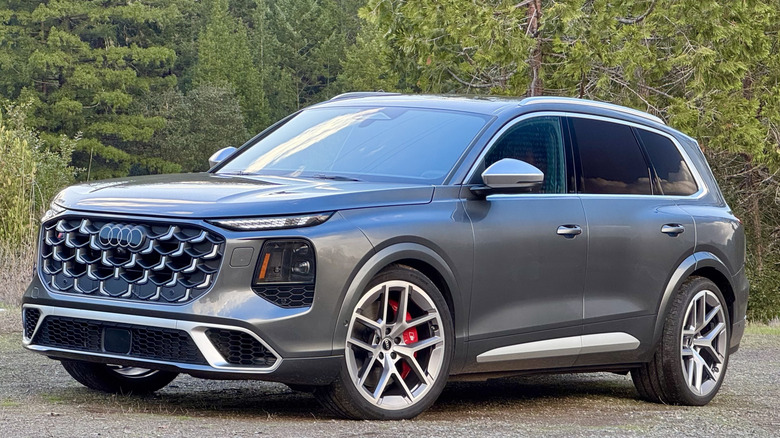
It may feel like the Audi Q7 has existed forever, and in the world of modern cars, it kinda has. The first-generation Audi Q7 debuted 20 years ago now, making a name for itself as a chicer and more car-like option among three-row luxury SUVs such as the Volvo XC90, Land Rover LR3, and Mercedes-Benz GL. The second-gen Q7 has been around for 10 years, and over its lifespan Ingolstadt's three-row SUV has faded into the background of the now much more competitive segment, so it's about time the Q7 got a good redesign.
Luckily for Audi, the third-gen 2027 Q7 and its performance-focused SQ7 sibling are two fantastically compelling options for the luxury SUV buyer to consider. If you need even more space than the Q7 offers, Audi also recently introduced the excellent new Q9 and SQ9, which thoroughly impressed me during my first drive review. My colleague Andy Kalmowitz accurately and eloquently described the Q9 as "a new-generation Q7 that took half a Viagra," so you'll see a lot of similar specs and conclusions in this review — like its longer sibling, the new Q7 is really damn good.
Full disclosure: Audi wanted me to drive its redesigned Q7 and SQ7 so badly that it flew me to California's wine country, put me up in a swanky hotel, and kept me fed for a couple of nights.
Q7, take three
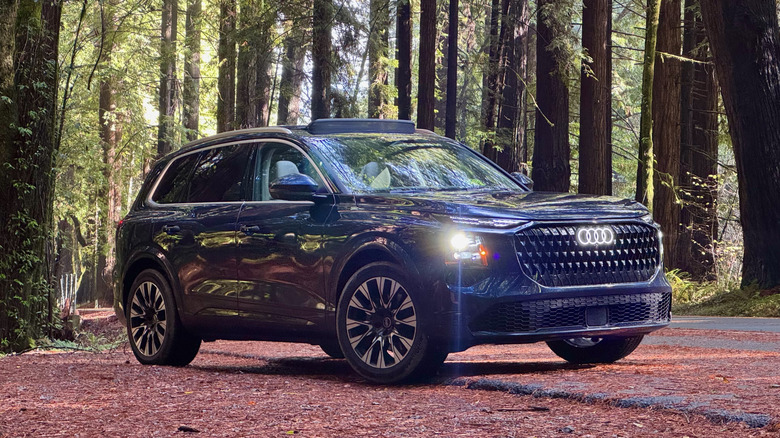
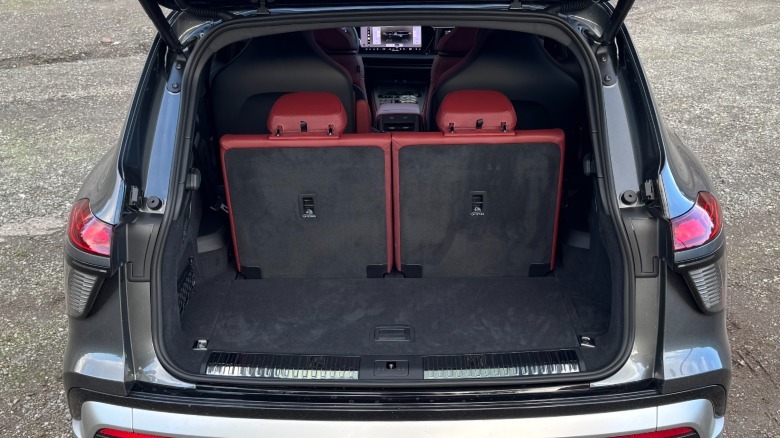
The third-generation Audi Q7 is 199.1 inches long, only 0.2 inches shorter than the outgoing model, but the new Q7 is 2.7 inches taller and 1.5 inches wider. Interior dimensions have only changed slightly as well, with the new one offering slightly more cargo space and second-row legroom, but slightly less front seat headroom and third-row legroom on paper. This all varies, though, since the second row of seats slide forward and back to allow for the best combination of space for your family's unique needs.
In standard Q7 form the SUV is powered by a twin-turbocharged 2.9-liter V6 that sends 429 horsepower and 442 pound-feet of torque through a slick-shifting eight-speed automatic transmission. From there, naturally, the power goes to all four wheels through a new Quattro all-wheel-drive system with a limited-slip center differential. This standard powertrain is capable of a 0-to-60 time of 4.8 seconds, which Audi claims is the quickest in the segment, and in practice it's plenty powerful. That's a lot of standard performance baked into the Q7's base price of $72,295.
 Logan K. Carter/Jalopnik
There's also a lot of luxurious features included as standard at that price, including an opening panoramic sunroof, 14-way power front sports seats with four-way lumbar and memory, Audi's array of three screens, LED lights with three different daytime running light designs, natural wood inlays, three-zone automatic climate control, a power tailgate, power-folding third-row seats, a surround-view camera system, and leather upholstery.
My test car was a top-trim Q7 Prestige with a price of $91,435, which included the 21-inch wheel package, the 4D audio system, a trailer hitch, and second-row captains chairs.
It's the S
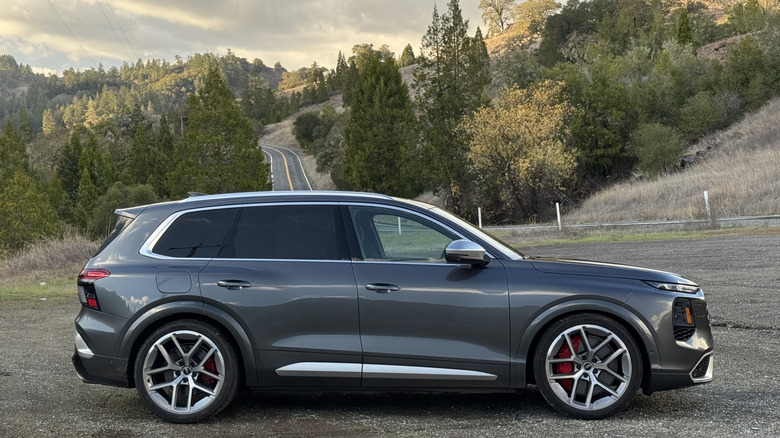
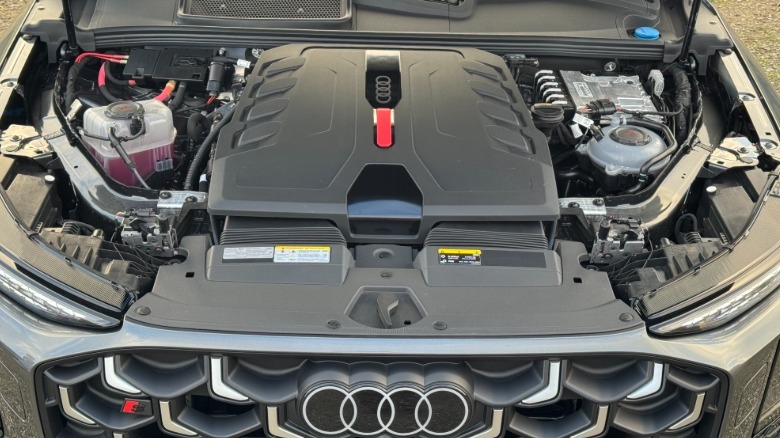
The SQ7, like the SQ9, is powered by a reworked twin-turbocharged 4.0-liter V8 that sends 591 horsepower and 590 lb-ft of torque through an eight-speed automatic transmission to a new rear-biased Quattro system with an electronically locking rear differential. If that sounds like a lot of power to you, you're wrong. I think it's the perfect amount of power for a three-row family SUV, and it's a valuable safety feature to be able to complete the 0-to-60 sprint in an Audi-claimed 3.7 seconds. You know, just in case.
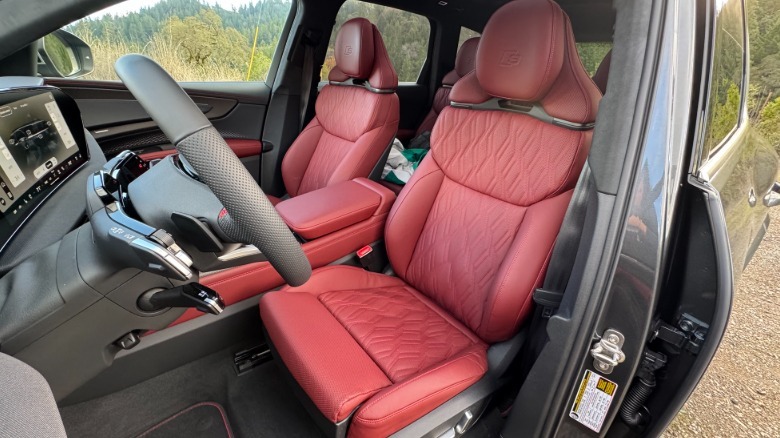
All that power comes with a base price of $100,095, but that includes some features that are only found on upper trim levels of the Q7, including Audi's new hands-free highway driving assistant, a Bang & Olufsen 3D stereo, Nappa leather ventilated and massaging front seats, adaptive air suspension, all-wheel steering, and heated outboard second-row seats.
 Logan K. Carter/Jalopnik
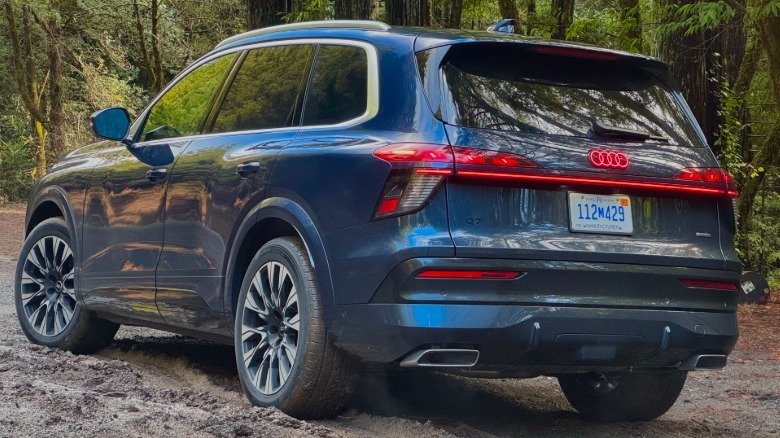
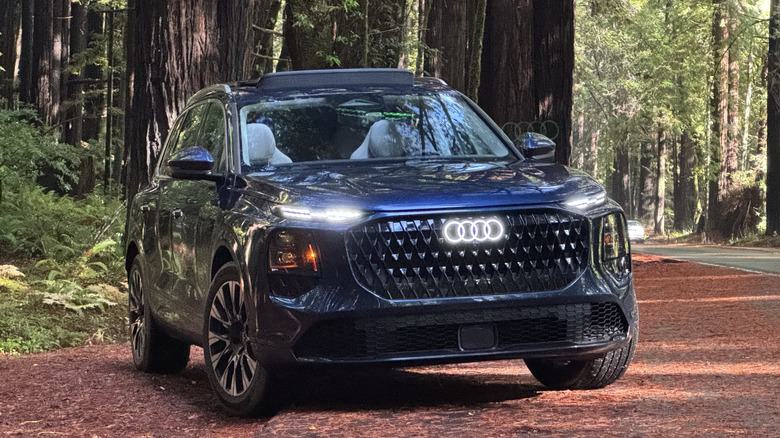
Like the Q9, both of these smaller SUVs can also be optioned with a Luxury package that includes automatic doors, digital OLED tail lights, eight digital DRL signatures, and an illuminated grille to luxe things up. Both are also offered with Audi's Digital Matrix LED headlights that are finally allowed in the U.S.; these will allow drivers to leave their high beams active while the car identifies and selectively dims some of the lighting elements in order to prevent blinding other cars, and it blocks the beam from hitting street signs that could reflect the beam and dazzle the driver. My test car was a decked-out SQ7 with the 23-inch wheel package, 4D audio, a trailer hitch, second-row captain's chairs, and the Luxury, Executive, Vision, and S Sport packages. It had a total price of $117,085.
The Q7 delivered a delightful drive
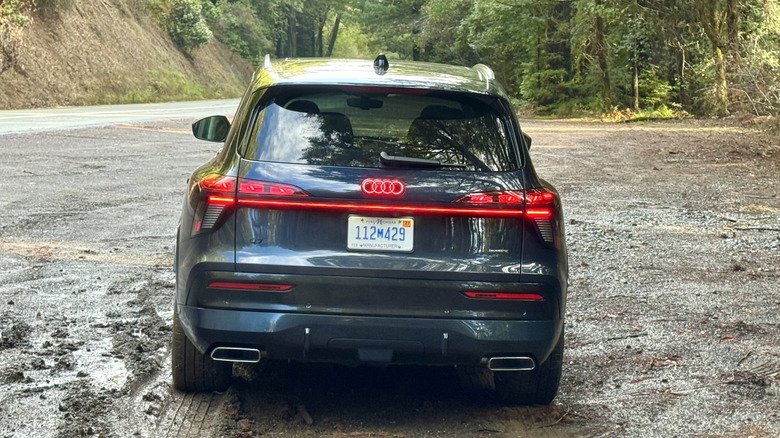
During my drive on the winding roads around California's wine country, through the redwood forests and along the rocky northern coast, the new Q7 and SQ7 revealed themselves as excellent luxury SUVs. The Q7's base powertrain, if you can call it base, was more than punchy enough to get the nearly 5,200-pound three-row SUV up to freeway speeds lickety-split. Audi's 4.8-second 0-to-60 claim felt almost like an underestimation to the butts of myself and my co-driver, and that estimation is also 0.7 seconds quicker than the outgoing V6-powered Q7, so there's a lot of extra shove hiding under the more upright hood of the new car.
Activating launch control unlocks the most exhilarating acceleration, and it's easily done. Just press the traction control button once and tap the shifter down to engage S mode, then stomp on the brake pedal, floor the gas, and release the brakes.
 Logan K. Carter/Jalopnik
Twisty roads may not appeal to most three-row SUV drivers, but they will be a delight to anyone who drives a new Audi Q7 because it is one well sorted driving machine. Whether in the default Balanced drive mode or the zestiest Dynamic mode, the Q7 was not just capable but felt happy to dance through the damp curves and swerves that wound us through the downright verdant Redwoods State Park and along the breathtaking cliffs of Cape Horn.
Some of the credit for my test Q7's excellent driving dynamics must go to its top-tier Prestige trim level, which equips the Q7 with one of the most natural feeling and effective all-wheel-steering systems I've ever experienced. It made the Q7 feel significantly more agile than its girth leads one to believe when getting frisky in the twisties, and it made low-speed maneuvering a breeze, even in the tight, small-town parking lots of Ukiah, California.
It's luxurious but with a sporty side
The Q7 Prestige trim also includes front sport seats with power adjustable bolsters, which provided prestigious levels of comfort over the course of my seven-hour long drive day. They're actually the same seats that come standard on all SQ7s, and they also happen to have one of the most effective massage functions of any car on the road.
As a whole, the Q7 provided an experience that was befitting of a $90,000 luxury SUV, with exceptional comfort, a stress-free driving experience, and a smooth and gutsy powertrain. The only two demerits that could potentially put luxury buyers off are a taut ride quality that doesn't isolate passengers from roadway imperfections quite as much as other comfier SUVs, and a bit more road noise than some competitors. Both of those factors could have been down to the large wheels and tires on my test car, though.
The SQ7 is a seriously athletic machine
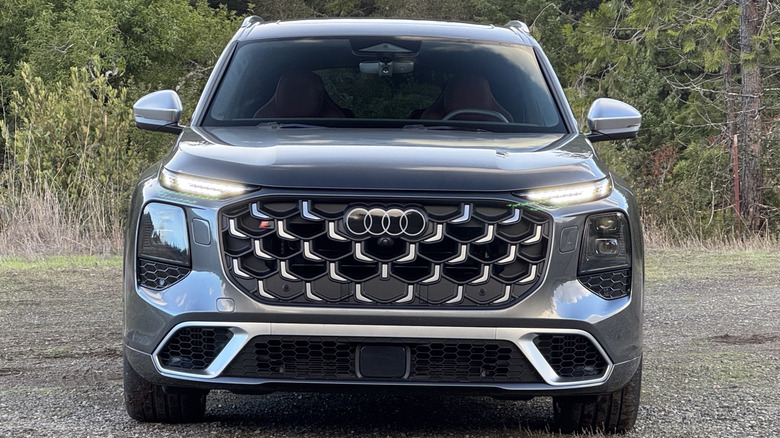
Much the same as its bigger SQ9 sibling, the SQ7 is mind-bendingly quick and adept at bombing down a back road. The SQ7's twin-turbo V8 sounds fantastic from both outside and inside the cabin, where its deep bellow and occasional off-throttle burbles were just loud enough to put a devious smirk on my face without being intrusive or overbearing.
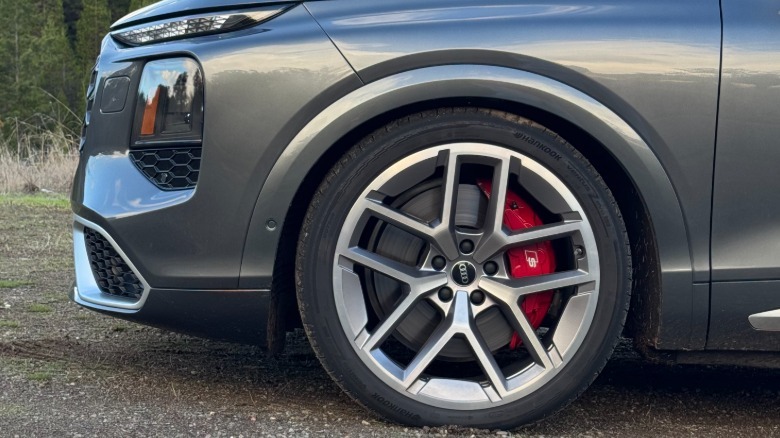
My test car was fully loaded, including the $1,200 S Sport air suspension that also gets you racy red-painted brake calipers, and the setup was paired with the $2,500 23-inch wheels that are shroud in 285/35 front and 315/30 rear Hankook Ventus evo SUV summer performance tires, which look downright sick but likely contributed to the stiffer ride.
 Logan K. Carter/Jalopnik
The S Sport air suspension felt a bit chattery over broken pavement in Balanced mode, and that slight chatter was amplified in Dynamic mode. Over a few particularly bumpy spots, Dynamic mode's suspension tuning made the SQ7 feel like a pebble skipping across the surface of a lake, so I kept it in Balanced modem which was already firm enough. The steering wasn't overly communicative, but it was exceedingly direct without feeling frantic or darty, and I was still able to ascertain when the front tires were beginning to lose their fight with the laws of physics.
Despite the overly stiff suspension, I was utterly floored by the way the entire package came together to make a 5,500-pound SUV handle like it was on rails, a journalist cliché that is apt here. My co-driver was a self-proclaimed "coaster head," and he said the SQ7 really felt like a roller coaster when I was driving very sensibly down a tantalizingly rolling and winding road.
 Logan K. Carter/Jalopnik
It also elicited a similar response when we found space to put Audi's 3.7-second 0-to-60 claim to the test and do a few launches. It's a good idea to secure any loose items in the vehicle before you activate launch control, because they'll rapidly become high-speed projectiles as the SQ7 shoves its occupants into the quilted leather thrones with dizzying force until the driver chickens out and lifts their right foot. It launches with the ferocity of an EV, but with all the good old fashioned drama that comes with several thousands of precisely timed explosions per minute and an occasional muscular kick from a gear change. It rocked — and it sucked gas. The trip odometer showed a dismal 12.5 mpg after my three-hour drive that mixed highway and a fair amount of admittedly intense backroad blasting, so it's no gas saver.
Some ergonomic nitpicks, but overall the Q7 is a winner
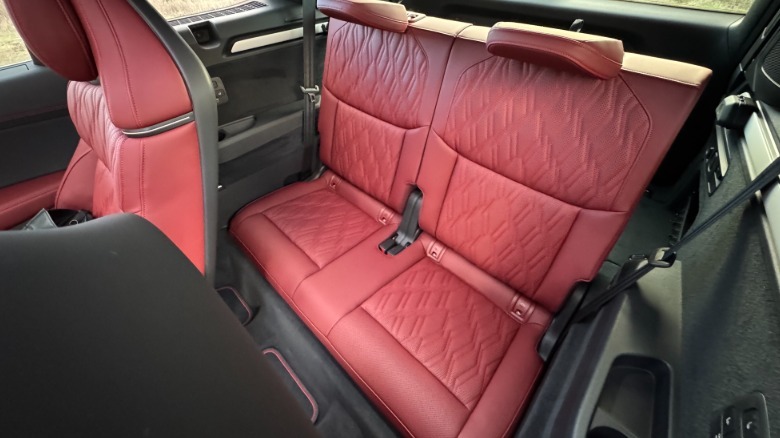
I'm sure you're tired of hearing me talk about how great the new Q7 and SQ7 are by now, and though they are both truly top tier vehicles, there are some little faults. The Q7 is still a sort of 'tweener model that straddles the midsize and full size classes; Audi reps described it as a do-it-all model that offers a small family the option to occasionally tote around three rows worth of children, but not it's necessarily meant for full-time three-row duties. I'd concur with that assessment, since it was difficult to squeeze past the second-row captain's chairs to climb into the third row, and once I got back there I realized the seat bottoms sit virtually on the floor of the car, so I ended up in an upright fetal position. The Q7's third row is still best suited for smaller humans with youthful joints.
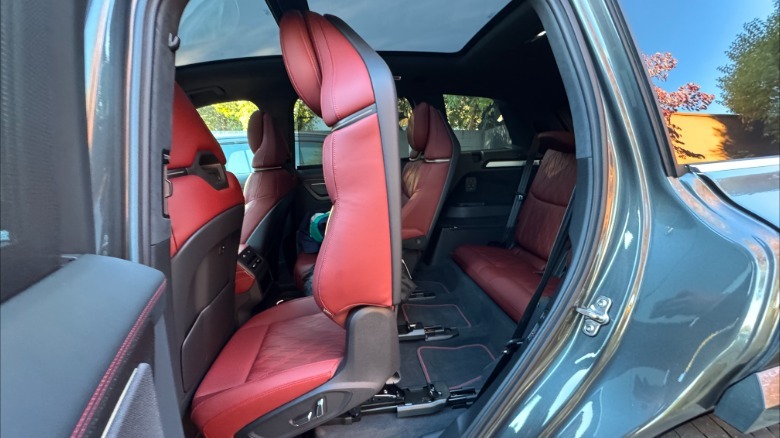
Both of the cars I drove were optioned with the second-row captain's chairs, which look fantastic and are respectably comfortable, but there is no way to option ventilated second-row seats, and the seats did not recline far enough for true long-distance comfort. I sat in the second row of a Q7 for the two-hour drives from the airport to the hotel and vice versa, and I kept checking to make sure the seat backs didn't recline any further because I could not believe how limited their recline was. Second-row legroom was reasonable, but if the front seats were scooted back too far, it impinged upon the second-row space more than one may expect from such a large vehicle. I'm 6-foot-8 and mostly legs, so I'm definitely an outlier, but I try to think about more reasonable body shapes and sizes as well, and I still think the Q7's second row isn't as spacious as it could be.
 Logan K. Carter/Jalopnik
It must be said that things looked and felt fantastic inside the Q7 and SQ7, with leather covering the entire door cards down to the generously sized door bins that easily accommodated my oversized Emotional Support Water Bottle. The use of black plastic trim has been kept to a minimum, aside from the giant bezels that surround the strangely shaped touchscreen arrangement, and I'm happy to report that the Q7's interior felt as solid, high-quality, and luxurious as an Audi ought to. The same goes for the materials in the second row, which isn't as common, and even the Q7's rear doors bring the leather all the way down to the door bins.
It's not perfect, but it is close
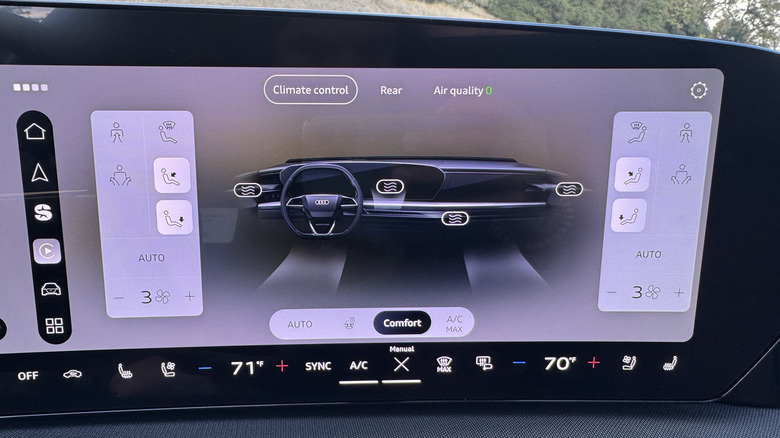
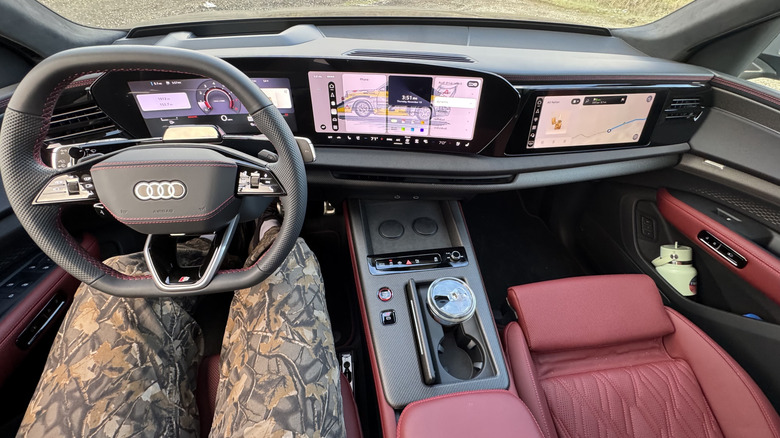
The Q7 uses Audi's current array of screens, and unfortunately that means there are no physical climate controls and not even any physical air vent adjustments — everything has to be done through the touchscreen. This shouldn't pose too significant of an issue for owners, since they will likely set their preferences and save them to their driver profile or the seat memory settings, but I'll never prefer adjusting my air vents through a touchscreen over a simple physical toggle.
The standard passenger screen is gimmicky to me, and anyone who read my Q9 or Mercedes-Benz GLE review will know that I hate when the passenger screen doesn't include passenger-specific controls. For example, the sport seats in my test cars all had adjustable side bolsters and thigh support, but the only way to adjust those functions was through the center infotainment screen. The passenger screen did incorporate controls for the passenger's massage settings, but forcing the passenger to reach across the dashboard and commandeer the entire center infotainment screen just to make a simple seat adjustment was infuriating. Plus, the infotainment screen is rather dramatically aimed at the driver, so it can be difficult to see and navigate from the passenger seat.
 Logan K. Carter/Jalopnik
Beyond those gripes, though, the Q7 and SQ7 are exceptionally good midsize three-row luxury SUVs. In fact, I think they might be the most compelling cars in their segment, though I have yet to experience the new BMW X5. Some of Audi's recently revised products haven't exactly embodied the chic, stylish, and high-quality attributes that Audi's greatest models once did, but the Q7 and SQ7 are a return to form. They're stylish, well-priced, luxurious, solid-feeling, and exhilarating to drive, so I have to give it to the Ingolstadt team — they've outdone themselves on the new Q7.