

GM Pays $220 Million To Settle Lawsuit Alleging It Violated Drivers' Privacy For Profit

Good morning! It's Friday, October 30, 2026, and this is The Morning Shift, your daily roundup of the top automotive headlines from around the world, in one place. This is where you'll find the most important stories that are shaping the way Americans drive and get around.
In this morning's edition, General Motors will pay a $220 million settlement for allegedly violating the privacy of folks who drive its vehicles, Volkswagen is suspending work on the electric Golf because of cost cuts, Aston Martin has now lost $3 billion since Lawrence Stroll took over, and Audi has been promised tariff relief by the Trump administration in order to secure a plant in the U.S.
If you'd like a recap of the latest auto news sent to your inbox each weekday, you can sign up for Jalopnik's free Morning Shift newsletter here.
1st Gear: GM settles privacy suit to the tune of $220 million
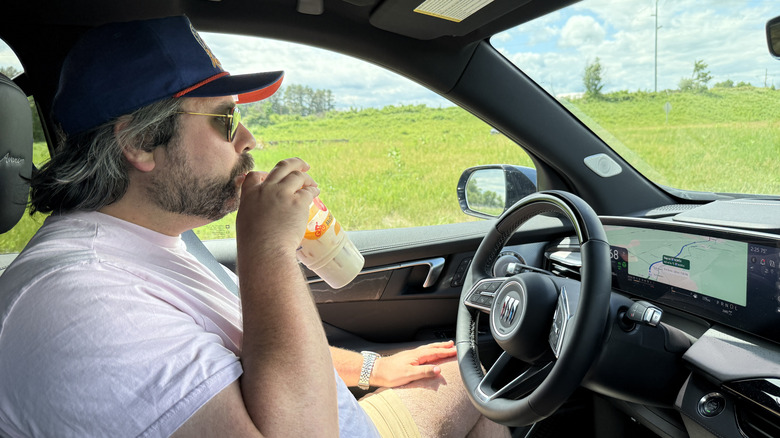
General Motors is going to pay $220 million to settle allegations that it had illegally collected and sold drivers' private behavior and location data to brokers, who then sold that information to insurers that used it to set and sometimes increase rates. Not a very cool move, if ya ask me. The settlement resolves claims made by 35 U.S. attorneys general over the automaker's Smart Driver program, which enrolled millions of drivers between 2016 and 2024 — when it was discontinued. Other regulators have also been reviewing GM's handling of driver data.
The automaker was accused of pitching Smart Driver as a program to help people improve their personal driving safety, but GM quickly violated their privacy by reneging on its promise not to sell their data without permission. Many folks who signed up were also enrolled in GM's OnStar safety, navigation and diagnostic service. From Reuters:
The settlement also requires GM to limit driving data it collects, and obtain drivers' express consent before collecting or sharing that data.
A GM spokesperson said the settlement reinforces other steps the Detroit automaker has taken to strengthen privacy.
"Safer, more helpful and personalized experiences are enabled by connected vehicle data, and GM is committed to being clear about what information is used, how it's protected, and the choices customers have about what they share," the spokesperson said.
Insurers such as Allstate, Progressive and Berkshire Hathaway's Geico use so-called telematics in monitoring drivers' habits. They say the technology rewards good driving through lower premiums.
This settlement comes after a May agreement where GM paid $12.75 million to settle a California investigation into its alleged sale of driver data to two brokers. In January of last year, GM agreed with the U.S. Federal Trade Commission not to disclose vehicle geolocation and driver behavior data to consumer reporting agencies for five years, and we thank it for that amazing gesture.
2nd Gear: VW pauses work on ID Golf as the sky continues to fall
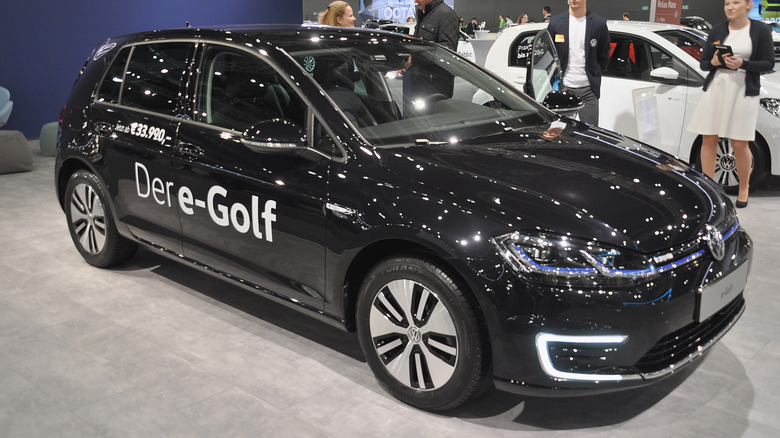
Volkswagen is slamming the pause button on development work for the all-electric Golf at its headquarters in Wolfsburg, Germany, as widespread cost-cutting measures hit home. Just yesterday, VW reported its largest quarterly loss in more than a decade with an operating loss of $6.6 billion in just three months. It has prompted even more fervent calls from stakeholders for the automaker to accelerate its restructuring program.
Volkswagen's work council said the suspended development of the ID Golf wouldn't actually delay the model's eventual launch, and the company pledged to make up for lost time. I'm not totally sure how that'll work, and I've got a feeling VW isn't exactly sure either. From Reuters:
"However, the freeze on spending for preliminary work on the ID. Golf is yet another sign of how strained the group's financial situation is," the works council said in an emailed statement shared with Reuters.
The ID. Golf is one of the first vehicles planned for Volkswagen's next-generation SSP software architecture, a group-wide platform designed to reduce complexity and lower production costs.
The German automaker isn't oblivious to how important a vehicle like the Golf is, not just to Volkswagen, but to the German economy as a whole.
"I know what the Golf means for Volkswagen and for Wolfsburg. That's why this decision was really not an easy one for us," said Thomas Schaefer, CEO of the German group's volume brands, in a memo seen by Reuters on Friday.
"We simply can't afford this work right now," he added.
That is bleak.
You've also got to keep in mind that this car has already been delayed. It was actually supposed to launch at some point this year, but that hasn't happened... clearly.
3rd Gear: Aston Martin is a money-losing machine
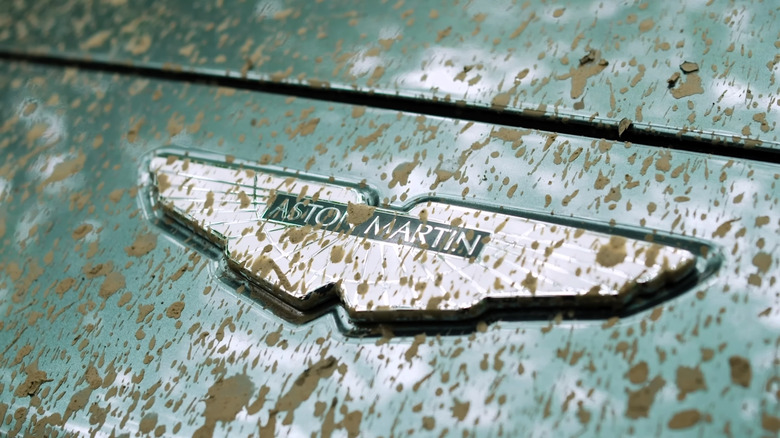
There goes Aston Martin, pooping down its own leg again. The British sportscar maker just posted a $102 million pretax loss for the third quarter of 2026, showing a complete inability to right the ship as debt continues to pile. Thus far, Aston (the automaker, not the F1 team, which is its own mess) has lost over $3 billion after taxes since Canadian billionaire Lawrence Stroll took over about 6 years ago.
At the very least, that $102 million quarterly loss is less than it was a year ago, but it did nudge debt up to $2.1 billion. Its stock is also down a cool 40% this year on London's stock market. Not great. From Bloomberg:
Canadian billionaire Stroll led a rescue of Aston Martin, but has struggled to make the company profitable. Since the deal, the carmaker has issued a series of profit warnings, been hit by model delays and tapped investors for capital on multiple occasions. US tariffs and a China slump have added to the pressure.
More recently, the company faced a backlash from some creditors after it struck a £550 million debt deal with HPS Investment Partners that sidelined them. Bondholders like Arini Capital Management have sought discovery in US courts to support their case in the UK against the deal.
On a call with analysts, Chief Financial Officer Doug Lafferty said there wasn't any more to say on conversations with bondholders.
There are a few bright spots, though. Revenue apparently rose 36% year-over-year in the quarter to $521 million after Aston sold more high-dollar vehicles like the $1 million Valhalla hypercar. It's also said to be making progress in reducing cash burn, but I suppose time will tell.
4th Gear: Audi will get a sweet tariff deal out of its U.S. factory
The Trump administration has promised to relax tariffs on overseas automakers that commit to more U.S. manufacturing — a policy change that has emerged during talks to get Audi to build a sprawling $4 billion assembly plant in Georgia capable of producing 200,000 vehicles per year, according to folks familiar with the situation.
Audi execs headed to DC in previous weeks in an effort to get some tariff breaks, which makes a lot of sense. Last year, Audi imported all of its U.S. cars from Mexico and Europe, paying more than $1 billion in duties in the process. Now, it could be getting some tariff relief to go along with that new factory. From The Wall Street Journal:
Officials are still working out details of the plan, which is likely to allow companies that invest in U.S. factories to receive exemptions or offsets for tariffs on imported vehicles or parts, said the people. Companies must commit to starting factory construction before the end of next year to qualify, one of the people said.
The Audi factory has been touted as a win for Trump's industrial policy ahead of midterms that are expected to be highly contentious for his party. The administration has used tariffs as a bargaining chip for winning manufacturing investments, even as they have driven up the cost of many goods.
Tariff relief, in turn, bolsters automakers slammed by billion-dollar tariff bills that are eating into profits, upending their global supply chains and forcing them to rethink manufacturing strategies. Many automakers have since unveiled significant investments in U.S. production.
The tariff-relief program is likely to be similar to one that the Commerce Department established for its tariffs on polysilicon, a key ingredient in solar panels. Under that program, solar companies can submit plans to reshore production to the Commerce Department and receive tariff exemptions for certain products upon approval.
[...]
Company representatives also made several trips to Georgia to see the site, Lewis said. Audi evaluated more than 70 locations before settling on the Georgia site, executives have said.
Audi desperately needed this win, too, to be fair. It's been a rough go for a while now.
In January, Volkswagen Chief Executive Oliver Blume said the company couldn't afford a new Audi U.S. plant while footing the big tariff bill.
Audi is on a bleak run in the U.S. The U.S. tariff hit has forced the automaker to raise prices on several models, and its U.S. business is hit by falling sales and financial losses. Last year, the company announced plans to cut up to 7,500 jobs in the hopes of saving money.
The plan still needs a sign-off from VW's Supervisory Board, half of which is composed of workers and labor-union representatives.
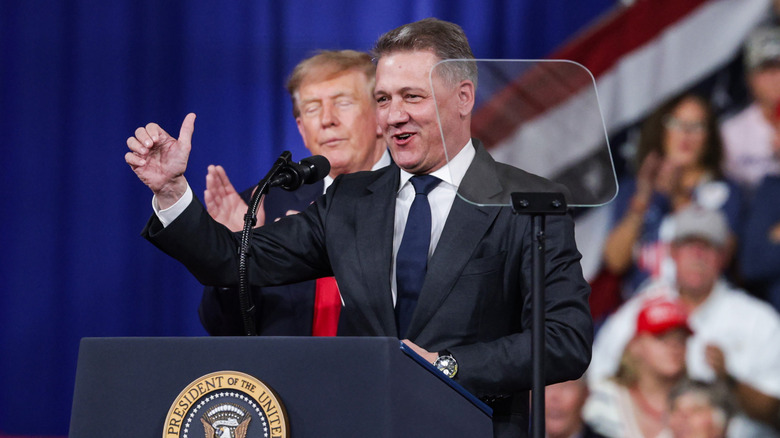
IG Metall, a German metalworkers' union with several seats on the company's supervisory board, criticized Audi CEO Gernot Döllner for joining Trump onstage at a political rally.
"The way Gernot Döllner has presented himself and Audi in the U.S. is highly embarrassing, politically unacceptable, and unworthy of the company," Christiane Benner, the union's leader, said.
Yeah, I see what they're saying.
Reverse: The hubris of man
 History.com
George Clooney really should have listened to Mary Elizabeth Mastrantonio. It was so dumb for the Andrea Gail to be out there during that storm, man. I do feel terrible for those guys and their families, but woof, what a bad judgment call. At least it spurred one of the biggest bummer movies of all time. Anyway, if you want to learn a little more about the perfect storm, head over to History.com.
The Fuel Up
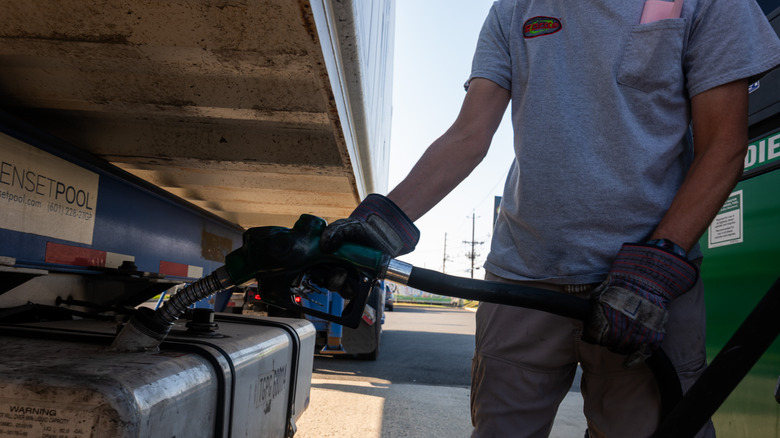
We're ending the work week on a high note. Gas prices continued to come down a bit overnight, despite the fact that both WTI Crude Oil futures and Brent Crude remain well over $100 — sitting at $104 and $113, respectively, at the time of publication. Those prices at least partially explain why the cost come-down has been so slow.
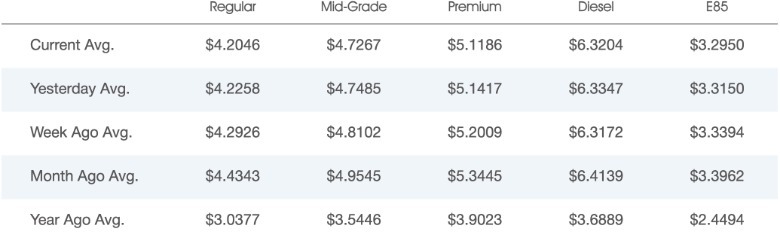
Here's where national average prices stand right now, according to AAA:
 AAA
All of this is to say that the average price of a gallon of gas dropped another 2 cents overnight to $4.20 (nice), according to AAA. It's a similar story with diesel, which saw its average price drop about a cent to $6.32. If oil futures remain high, I don't expect the downward pace to accelerate anytime soon.
On the radio: Harry Styles - Dance No More
Tonight, my fianceé and I are heading to Madison Square Garden to see Harry Styles perform, and it's technically one of his "Harryween" shows, so you best believe we are dressing up... as Nathan Fielder and Elizabeth Holmes. See you all on Monday.